There is a brown ring on the ceiling, or you hear a steady drip somewhere above the bedroom during a storm. You know water is getting in, but when you look at the roof from the yard, everything seems fine. Roof leaks are frustrating because the spot where water shows up inside is often several feet away from where it actually gets through the roof.
This guide shows you how to limit the damage right away, rule out the problems that only look like roof leaks, trace the water from the attic, confirm the source with a hose test, and patch it until a permanent repair. You will also find the most common leak sources and what roofers typically charge to fix each one.
Quick answer: Start in the attic with a bright flashlight during or right after rain, and follow water stains, wet insulation and dark wood uphill from the ceiling stain to the highest wet point. Check the nearest roof penetration (plumbing vent, chimney, skylight, roof vent) or a nail that missed the rafter. If you can’t find it, have a helper run a garden hose over one small section of roof at a time, starting low, while you watch inside. Cover the area with a tarp or a dab of roof cement until it can be repaired.
First, limit the damage inside
Before you go hunting, protect the house. A few minutes here can save a ceiling.
- Catch the water. Set buckets or bins under drips and move furniture, rugs and electronics out of the way.
- Turn off power to wet fixtures. If water is coming through a light fixture or ceiling fan, switch off that circuit at the breaker panel and leave it off until an electrician says the fixture is dry and safe.
- Drain a bulging ceiling. If drywall is sagging with trapped water, place a bucket below and poke a small hole at the lowest point with a screwdriver. Controlled draining is better than a sudden collapse.
- Take photos. Document stains, drips and damaged belongings before you clean up, in case you file an insurance claim.
Is it really a roof leak?
Several problems create ceiling stains that look exactly like a leaking roof. Rule these out first, especially if the stain appears when it hasn’t rained.
| What you notice | Likely cause | How to check |
|---|---|---|
| Drips only during rain, worse in wind | Roof leak, often flashing or a vent | Trace from the attic, then hose test |
| Water on sunny winter days, after a cold snap | Attic frost melting (condensation) | Look for frost or droplets on nail tips and sheathing across a wide area |
| Stain near exterior walls only in winter | Ice dam | Look for thick ice and icicles at the eaves |
| Stain under a bathroom or near a fan | Bath fan duct condensation or a plumbing leak | Check the fan duct in the attic and run the shower or toilet |
| Water near an attic furnace or air handler | Clogged condensate line or drain pan | Inspect the drain pan and line |
| Wet wall below a window | Window or siding leak | Hose the window alone, not the roof above |
Attic condensation is the most common impostor in cold climates. Warm, moist air from the house leaks into the attic, frosts on the cold sheathing and nail tips, and then melts on the first sunny day, raining onto the insulation. If you see frost spread evenly across the underside of the roof, the fix is air sealing and ventilation, not roofing. Winter stains near the eaves usually point to an ice dam; our guide on how to prevent ice dams covers that problem.
How to trace a roof leak from the attic
Water rarely drips straight down. It enters at one point, runs along the underside of the sheathing, down a rafter or across the top of a ceiling joist, and drips where gravity finally wins. Your job is to follow that path backward and uphill.
- Go up during or right after rain. Active water is much easier to follow than old stains. Bring a bright flashlight or headlamp.
- Find the spot above the ceiling stain. Measure from an outside wall downstairs, then find the same spot in the attic.
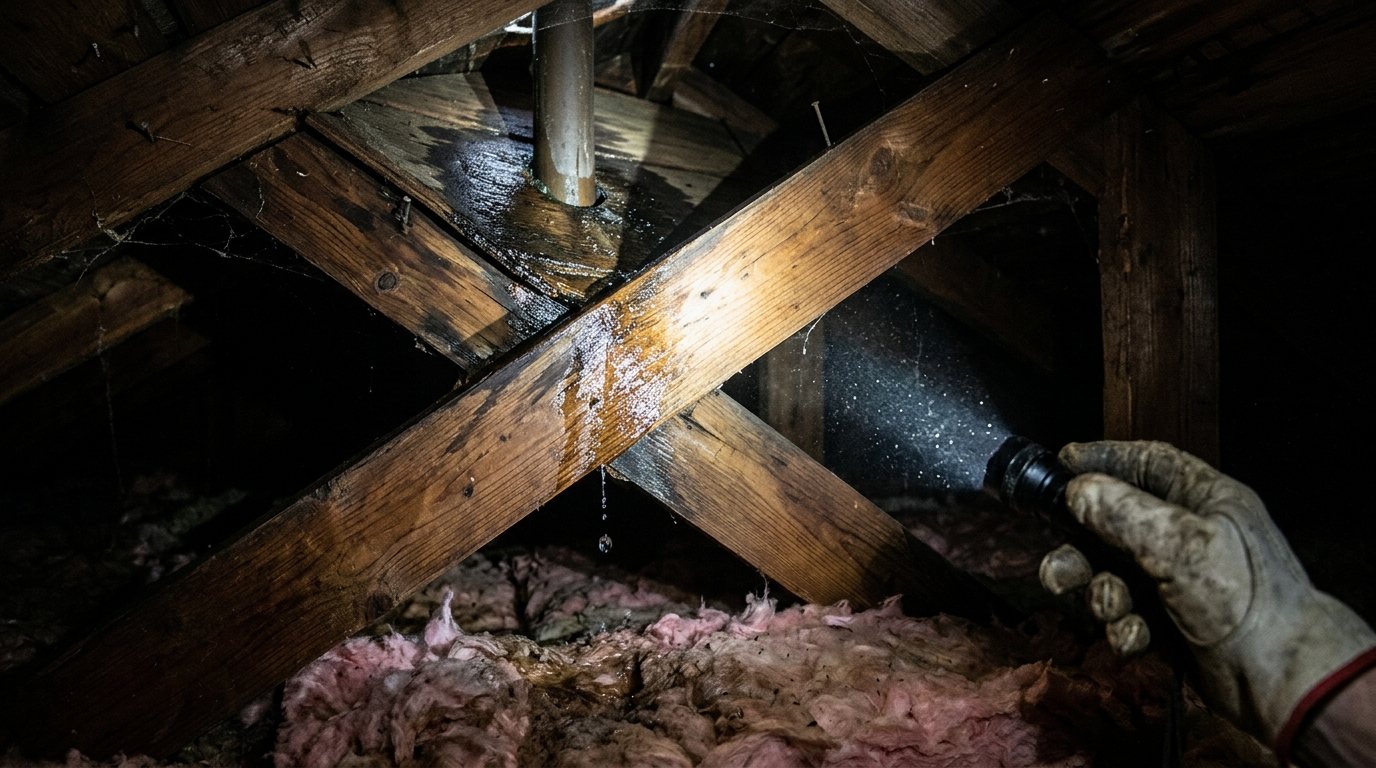
- Look uphill. Shine your light on the rafters and sheathing above that point. Look for wet or shiny wood, dark streaks, water trails, white mineral deposits, mold or rust on nail tips.
- Check the insulation. Wet, matted or stained insulation often marks the drip point. Pull it back gently with a gloved hand to see the drywall.
- Follow the trail to its highest point. The highest wet spot is usually close to where water enters. Look for daylight around vents and pipes, and for nails that missed the rafters.
- Mark the location. Measure from the entry point to a landmark you can see from outside, such as the chimney, a plumbing vent or the ridge. Write it down for the outside inspection.
Safety note: In the attic, step only on joists or flooring, never on the drywall between them, which won’t hold your weight. Watch for roofing nails poking through the sheathing, and wear a dust mask, gloves and eye protection around insulation. Avoid touching wiring that is wet.
The most common roof leak sources
Most leaks happen where something interrupts the shingles. Check these spots first, starting with whatever is closest to the wet area you found.
Plumbing vent boots
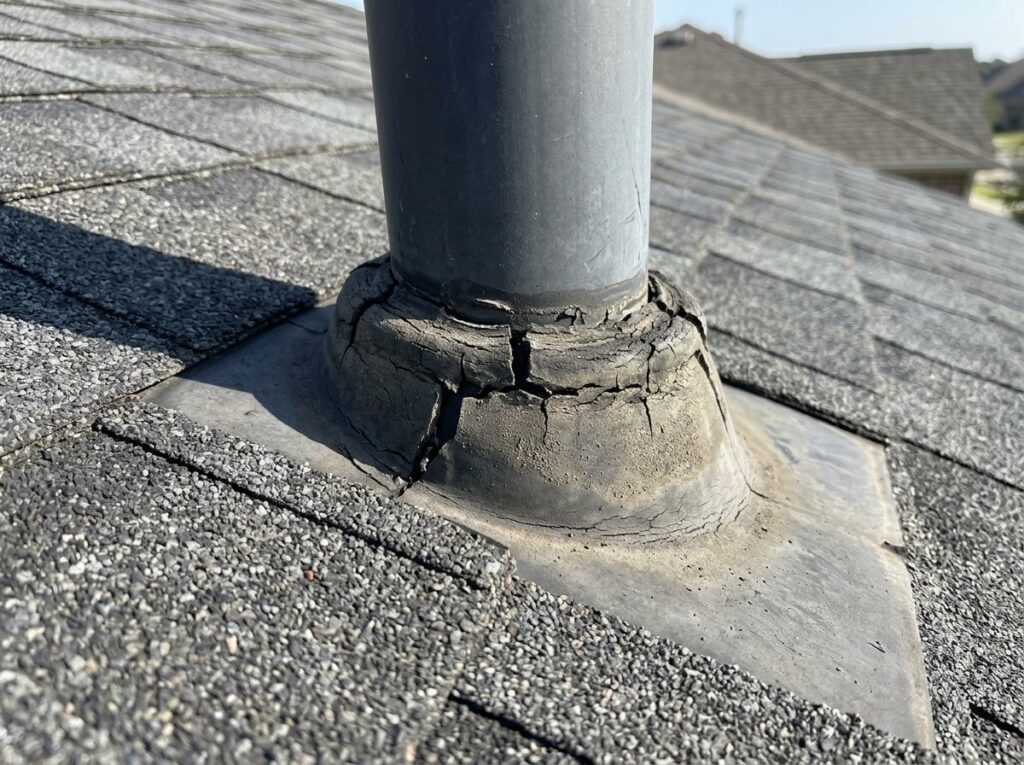
Every plumbing vent pipe passes through the roof inside a flashing boot with a rubber collar. Sun and cold crack that rubber over time, and water runs down the pipe into the attic. A wet trail on the vent pipe in the attic is a giveaway. Replacing the boot or adding a slip-on rubber collar is one of the cheapest roof repairs.
Flashing at walls, dormers and chimneys
Metal flashing seals the joints where the roof meets a wall, dormer or chimney. Leaks start when flashing rusts, lifts, loses its caulk or was never installed with the overlapping step pieces it needs. These leaks often appear only in wind-driven rain, when water is pushed sideways under the metal.
Chimneys
Besides flashing, chimneys leak through cracked mortar joints, porous brick and a cracked crown or missing cap at the top. If the wood around the chimney is wet but the flashing looks tight, the masonry may be soaking water through.
Skylights
Skylights leak through failed flashing, broken seals or cracked glazing. Before blaming the roof, check for condensation on the inside of the glass, which can drip and look like a leak.
Nails and nail pops
A nail that missed the rafter (“shiner”) collects frost in winter and drips when it melts. Nails that back out over time lift the shingle above them and let water in. Exposed nail heads on the roof surface also leak if they aren’t sealed.
Damaged or missing shingles, valleys and roof vents
Wind can crease or tear off shingles, exposing the nails and underlayment. Valleys carry a lot of water and leak when debris dams them or shingles are worn. Box vents and ridge vents can let in wind-driven rain if they are damaged or poorly installed.
How to do a hose test with a helper
If the attic doesn’t reveal the source, simulate rain. You need dry weather, a garden hose and a helper, plus a phone or walkie-talkie so you can talk.
- Station one person in the attic with a flashlight, near the area where you found water.
- Start low. The person outside soaks the roof just above the gutter below the suspect area, using a gentle flow rather than a jet nozzle.
- Isolate small sections. Run water on one area, such as the downhill side of a chimney, for several minutes. Spraying the whole roof at once tells you nothing.
- Work upward slowly. Move to the sides of the chimney or vent, then the uphill side. Give each section several minutes, and longer for flashing.
- Stop as soon as drips appear. The last section you soaked is your culprit.
Pro tip: Whoever handles the hose should stay on the ground or a properly set ladder whenever possible. If they must be on a low-slope roof, they should stand uphill of the wet area in soft rubber-soled shoes and never on wet or steep shingles. Don’t spray upward under shingles, which can create a leak that isn’t really there.
Temporary fixes until it’s repaired
Temporary patches buy you time. They aren’t meant to last more than a few weeks or a season.
Tarp the area
A heavy-duty tarp is the standard emergency cover for damaged shingles or a large leak. Cover well beyond the damaged area, run the top edge up and over the ridge if you can, and secure the edges by wrapping them around 2×4 boards fastened to the roof, rather than putting screws through the middle of the tarp. Only do this in dry, calm weather; in a storm, wait or call a roofer for emergency tarping.
Roof cement or sealant
For a small hole, an exposed nail head or a lifted shingle edge, roofing cement or a roof sealant from a caulk gun can stop water quickly. Apply it on a dry day, press lifted shingle tabs down into a dab of cement, and cover exposed nail heads. Some products are rated for wet surfaces, but adhesion is always better when it’s dry.
Quick vent boot fix
If a cracked rubber collar is the problem, a slip-on repair collar that fits over the existing boot can stop the leak in minutes. It’s a reasonable DIY job on a low, walkable roof.
Tools and materials
- Bright flashlight or headlamp and a tape measure
- Buckets, towels and plastic sheeting for inside
- Garden hose and a phone or walkie-talkie for the hose test
- Heavy-duty tarp, 2×4 boards and roofing nails or screws
- Roofing cement or sealant and a caulk gun
- Extension ladder, soft-soled shoes, gloves and safety glasses
Typical roof leak repair costs
Once you know the source, you can get a better repair quote. These are typical national ranges from Angi’s roof repair cost guide and Fixr’s roof leak cost guide. Prices vary with roof pitch, height, materials and region.
| Repair | Typical cost |
|---|---|
| General roof leak repair | $360 to $1,550 |
| Vent boot replacement | $100 to $600 |
| Flashing repair | $200 to $500 |
| Missing or damaged shingles | $150 to $450 |
| Nail pops | $200 to $500 |
| Skylight leak | $300 to $800 |
| Valley repair | $300 to $1,500 |
| Chimney leak | $200 to $3,500 |
| Roof inspection | $75 to $600 |
Emergency or after-hours service usually costs more; Angi notes an emergency fee of roughly $100 to $300 or more is common.
When to call a pro
Call a licensed roofer if:
- The roof is steep, two stories or higher, wet, icy or covered in moss.
- Water is coming through light fixtures, or the ceiling is sagging.
- You see soft or spongy decking, rot, or mold in the attic.
- The leak is around a chimney or skylight, or you can’t find the source.
- Shingles are curling, cracking or losing granules across the roof, which suggests an aging roof rather than one bad spot.
A roofer can spot problems that are hard to see from below and will often do the hose test for you. If the roof is near the end of its life, our guide to the signs you need a new roof will help you decide between repair and replacement.
Frequently asked questions
Why does my roof only leak in heavy rain or wind?
Light rain runs down the roof normally, but heavy, wind-driven rain gets pushed sideways and uphill under flashing, vents and shingle edges. Leaks that show up only in storms usually point to flashing at walls, dormers or chimneys, or to a roof vent. Run a longer hose test on those spots.
Can a roof leak be fixed from the inside?
Not permanently. You can catch water and slow damage from inside, but the water is entering from outside, so the repair has to be made on the roof. Sealing the underside of the sheathing just traps water in the wood.
Does homeowners insurance cover a leaking roof?
Policies often cover sudden damage, such as a tree limb or storm, and the interior water damage that results. Leaks from wear, age or poor maintenance are usually excluded. Document everything and call your insurer early.
How long can I wait to fix a roof leak?
Not long. Even a slow leak soaks insulation, rots sheathing and can grow mold in the attic. Patch it temporarily right away and schedule a permanent repair within days or weeks.
Can I replace one shingle myself?
Often, yes, if the roof is low and walkable and the weather is mild. See our step-by-step guide on how to replace a damaged shingle. Once the roof is fixed and the ceiling is dry, you can patch the damaged drywall.
The bottom line
To find a roof leak, protect the room, rule out condensation and plumbing, then follow the water uphill from the attic to its highest wet point and check the nearest vent, flashing or nail. A careful hose test with a helper confirms the source. Tarp or seal it for now, and call a roofer for anything steep, high or structural.