Maybe you just bought a house and the inspector called the roof “near the end of its life.” Maybe a neighbor with a house the same age just had a crew up on theirs, or you found grit in the gutters and a stain on the bedroom ceiling. A new roof is one of the biggest checks most homeowners ever write, so you want to know whether you truly need one or whether a repair will do.
This guide walks you through how long each roofing material lasts, the warning signs you can check from the ground and the attic, what each sign means, what replacement typically costs and how homeowners insurance fits in. Use it to decide when to call a roofer and what questions to ask.
Quick answer: You likely need a new roof if your asphalt shingles are 20 to 30 years old and showing widespread curling, cracking, bald spots or heavy granule loss, if many shingles are missing, or if you see sagging, daylight through the roof boards or repeated leaks. One or two damaged shingles or a single leak at a vent can usually be repaired. A roofer’s inspection will tell you which you’re dealing with.
How long does a roof last?
Age is the first clue. Roofing materials have very different lifespans, and climate, ventilation and installation quality can shorten or stretch them. These are typical life expectancies from the InterNACHI home component life expectancy chart, assuming normal maintenance:
| Roofing material | Typical lifespan |
|---|---|
| Three-tab asphalt shingles | About 20 years |
| Architectural (dimensional) asphalt shingles | About 30 years |
| Wood shingles or shakes | About 25 years |
| Metal | 40 to 80 years |
| Slate | 60 to 150 years |
| Clay or concrete tile | 100+ years |
| EPDM rubber (flat roofs) | 15 to 25 years |
If you don’t know your roof’s age, check your home purchase paperwork, ask the previous owner or look up permits with your town’s building department. Hot climates, poor attic ventilation and severe weather all wear asphalt shingles out faster than the chart suggests.
Warning signs you can spot from the ground
You don’t need to climb onto the roof to check it. Walk around the house on a clear day with binoculars and look at each slope, especially those facing south and west, which take the most sun.
Curling and cupping shingles
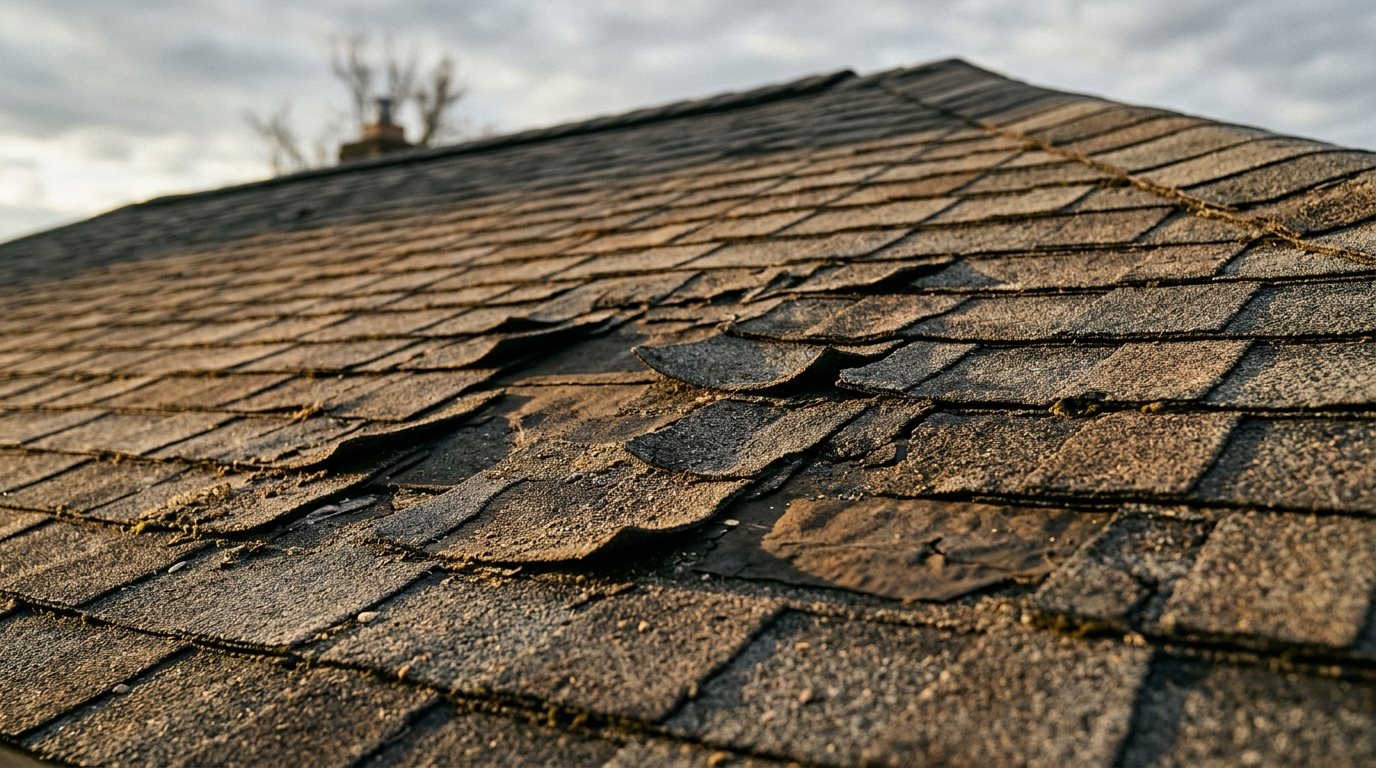
Healthy shingles lie flat. Cupping is when the edges turn upward; clawing (or curling) is when the edges stay down and the middle bulges up. Both mean the shingle has dried out and lost flexibility, usually from age, heat or poor attic ventilation. Curled shingles catch wind and let water get underneath, and they can’t be flattened back.
Cracked, brittle or missing shingles
A missing shingle or two after a storm is a repair. Many missing or cracked shingles across several slopes, or shingles that break when a roofer lifts them, signal a roof that has reached the end of its life.
Bald spots and granules in the gutters
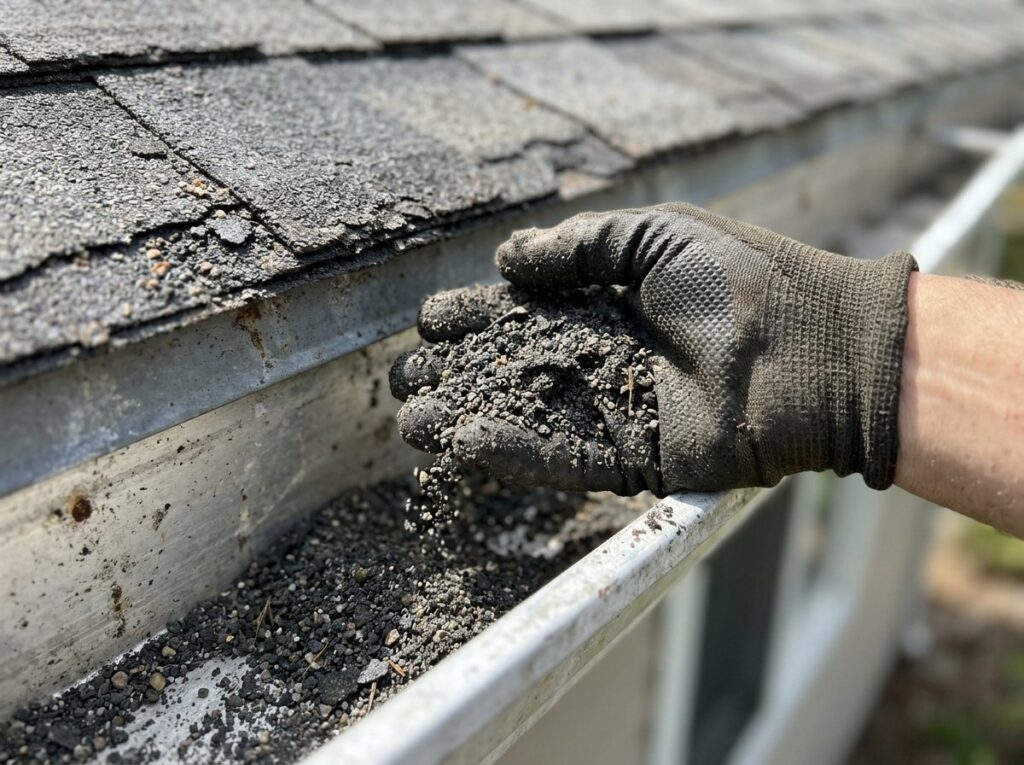
The ceramic granules on asphalt shingles protect the asphalt from UV light. Some granule shedding is normal on a brand-new roof. On an older roof, piles of grit in the gutters or at the base of downspouts, plus dark bald patches on the shingles, mean the asphalt is exposed and aging fast. Bob Vila’s roof inspection guide calls heavy granule loss a sign that the roof may be near the end of its useful life.
Sagging roof lines
Look along the ridge and the roof planes. A dip, wave or sag can mean the decking is rotting or the framing is overloaded or damaged. This is the most serious sign on the list and needs a professional inspection soon.
Damaged flashing and moss
Rusted, loose or missing flashing around chimneys, walls and vents is a common leak source and can often be repaired on its own. Moss holds moisture against shingles and lifts their edges; dark streaks are usually algae, which is mostly cosmetic. Our guide on how to remove moss from a roof covers safe cleaning.
Warning signs inside the attic
The attic tells you what the outside can’t. Go up on a sunny day with a flashlight, stepping only on joists or flooring.
- Daylight through the roof boards. Pinpoints of light around nails are normal on some older plank roofs, but daylight through gaps in the decking means missing shingles or failed underlayment.
- Water stains and dark streaks on the underside of the decking or rafters show where water has been getting in.
- Soft, delaminating or moldy sheathing. Press gently with a screwdriver. If it sinks into the wood, there’s rot.
- Wet or matted insulation under a stained area points to an active leak.
- Frost on nail tips in winter usually points to moisture and ventilation problems rather than a failing roof, but those problems shorten shingle life.
Stains on ceilings inside the house usually mean the problem has been going on for a while. Our guide on how to find a roof leak shows you how to trace it.
Repair or replace? What each sign means
| What you see | What it usually means | Typical next step |
|---|---|---|
| A few missing or torn shingles after a storm | Isolated wind damage | Repair |
| Leak at a vent, chimney or skylight | Failed flashing or vent boot | Repair |
| Curling, cupping or cracking across many shingles | Shingles have aged out | Plan replacement |
| Heavy granule loss and bald spots | Asphalt exposed to UV | Plan replacement |
| Repeated leaks in different spots | Roof-wide failure | Replace |
| Sagging, soft decking or rot | Structural or deck damage | Inspect promptly; likely replace with deck repairs |
| Ice dams every winter | Attic heat loss, not roof age | Fix insulation and air sealing |
As a rule of thumb, This Old House suggests considering replacement when more than about 30 percent of the roof is substantially damaged. A roof that is near the end of its expected life and needs repeated repairs is usually better replaced than patched.
Safety note: Do your inspection from the ground and from inside the attic. Don’t walk on an old roof to check it; brittle shingles break, and soft decking can give way. Leave the up-close inspection to a roofer.
If you only need a small fix, see our guide on how to replace a damaged shingle.
What does a new roof cost?
Roof replacement costs vary widely with roof size, pitch, material, how many layers must be torn off and your region. This Old House puts the national average at about $15,439, with most projects between $6,885 and $23,993. Its typical costs per square foot by material are:
- Asphalt shingles: $4.25 to $8.25
- Corrugated metal: $5.50 to $11.50
- Standing seam metal: $10 to $17.05
- Cedar shingles or shakes: $8 to $14.30
- Concrete tile: $11 to $19.80
- Clay or ceramic tile: $12 to $24.75
- Slate: $12 to $22
Steep roofs (steeper than an 8/12 pitch) can add $1,000 to $3,000 in labor, according to the same source. Replacing rotted decking adds cost too, and you won’t know how much until the old shingles come off, so ask for a per-sheet price for decking in the contract.
Tear-off or overlay?
Most building codes allow two layers of asphalt shingles, so a roofer may offer to install new shingles over the old ones. According to This Old House, an overlay saves labor but adds weight and hides the deck, so hidden water damage can’t be found or fixed. A full tear-off costs more but lets the roofer replace damaged decking, upgrade flashing and add ice and water barrier at the eaves. If you already have two layers, a tear-off is required.
Roof replacement and homeowners insurance
Insurance generally pays for sudden damage from covered events, such as wind, hail or a falling tree, not for a roof that is simply worn out. A few basics:
- Document storm damage quickly. Take photos from the ground, note the date of the storm and call your insurer before major repairs.
- Check how your policy values the roof. Some policies pay replacement cost, while others pay actual cash value, which subtracts depreciation for age. On an older roof, that difference can be large.
- Expect an adjuster visit. Get your own roofer’s inspection too, so you have an independent opinion.
- Watch for storm chasers. Be cautious of door-to-door roofers after a hailstorm who ask you to sign over your insurance claim or pay large deposits.
When to call a pro
Schedule a professional roof inspection if:
- Your roof is at or near the typical lifespan for its material.
- You see sagging, soft spots or daylight through the roof boards.
- You’ve had leaks in more than one place, or the same leak keeps returning.
- A major storm with hail or high winds has passed through.
- You’re buying or selling a home.
Get at least three written quotes from licensed, insured roofers. Compare the scope, not just the price, and ask about both the manufacturer’s warranty and the roofer’s workmanship warranty.
Questions to ask before you sign
- Are you licensed (where your state requires it) and insured for liability and workers’ compensation? Can I see the certificates?
- Will you pull the building permit and schedule the inspection?
- Is this a full tear-off or an overlay, and what underlayment will you use?
- Will you install ice and water barrier at the eaves and in valleys? In snowy regions, this is a key defense against ice dam leaks.
- Will you replace all flashing and vent boots, and check attic ventilation?
- What is the price per sheet for any rotted decking you find?
- How will you protect landscaping and clean up nails, and who registers the shingle warranty?
Frequently asked questions
How do I know if my roof needs to be replaced or just repaired?
Isolated problems, such as a few missing shingles or a leak at one vent, can usually be repaired. Widespread curling, cracking, granule loss, multiple leaks or sagging point to replacement. Age matters too: a roof near the end of its lifespan that needs frequent repairs is usually better replaced.
Is it normal to find granules in the gutters?
A small amount is normal, especially in the first year after installation, when loose excess granules wash off. On an older roof, large amounts of granules and visible bald patches mean the shingles are wearing out.
Can a roof last longer than its expected lifespan?
Yes, with good ventilation, a mild climate and regular maintenance, many roofs outlast the typical range. The opposite is also true: poor ventilation, hot sun and severe storms can shorten it significantly.
What is the best time of year to replace a roof?
Late spring through early fall is usually best, because asphalt shingles need warmth to seal properly and dry weather makes tear-off safer. Roofers are busiest in late summer and fall, so book early.
Will insurance pay for a new roof because it’s old?
No. Homeowners insurance covers sudden damage from covered events, not normal wear and tear. If storm damage is found on an older roof, your payout may be reduced for depreciation depending on your policy.
The bottom line
Start with your roof’s age, then look for curling, cracking, bald spots, granules in the gutters, missing shingles, sagging and daylight or stains in the attic. One or two problems can usually be repaired, but widespread wear on an aging roof means it’s time to plan a replacement. Get a professional inspection and several detailed quotes before you decide.