Vinyl siding is sold as low maintenance, not no maintenance. Over a year or two it picks up a gray film of dirt, black mildew spots near the ground, and green algae streaks on the shady north side of the house. You want it clean again, but you have heard that a pressure washer can crack it or blast water behind the panels.
This guide shows you how to clean vinyl siding safely by hand with mild soap, vinegar or oxygen bleach, how to deal with mildew, algae and stubborn stains, how to use a pressure washer without causing damage if your siding maker allows it, and how to protect your plants while you work.
Quick answer: Rinse the siding with a garden hose, then scrub it in small sections with a soft-bristle brush and a bucket of water mixed with a little dish soap or laundry detergent. For mildew and algae, use a solution of oxygen bleach and water or a 30 percent vinegar mix, let it sit briefly, scrub and rinse. If you use a pressure washer, keep the pressure low, use a wide tip and spray straight on or slightly downward, never upward.
Before you start
Check your siding manufacturer’s care instructions
Vinyl siding makers disagree about pressure washers, and your warranty may depend on following the right method. CertainTeed’s care guide says it does not recommend power washing its vinyl siding at all, while Ply Gem’s cleaning instructions allow it with limits on pressure and nozzle angle. If you know who made your siding, look up their instructions first. If you don’t, start with the gentlest method and only step up if you need to.
Pick the right day
Choose a mild, overcast day with little wind. In hot sun, soapy water dries on the panels before you can rinse it, leaving streaks and spots. In late fall, make sure temperatures stay comfortably above freezing during the day and the night after, so rinse water does not freeze on walkways or behind trim. CertainTeed suggests cleaning once a year to prevent buildup, and fall is a good time to clear mildew before the damp winter months.
Inspect and repair first
Walk around the house and look for cracked or loose panels, gaps around windows and doors, and missing caulk. Water sprayed into a crack or a loose seam can end up in the wall. Fix damage before you wash, and close windows and cover outdoor outlets and light fixtures with plastic and tape.
Tools and materials
- Garden hose with an adjustable spray nozzle
- Soft-bristle brush on a telescoping pole (a car wash brush works well)
- Smaller soft brush or non-abrasive sponge for corners and trim
- Two buckets: one for cleaning solution, one for rinse water
- Mild dish soap or laundry detergent
- White vinegar or oxygen bleach (powdered sodium percarbonate) for mildew and algae
- Pump sprayer for applying solution to large areas
- Plastic sheeting or old sheets to protect plants
- Rubber gloves and safety glasses
- Pressure washer with a wide fan tip (optional, only if your siding maker allows it)
Safe cleaners for vinyl siding
Vinyl is tough, but solvents and abrasives can dull, soften or scratch it. Start with the mildest cleaner that will do the job.
Mild soap and water
For general dirt, pollen and cobwebs, mix about a quarter cup of dish soap into four gallons of water, or use a small scoop of laundry detergent in a bucket of water. This is all most siding needs for annual cleaning.
Vinegar solution
A mix of 30 percent white vinegar and 70 percent water is a common homemade option for light mildew and mineral spots. Bob Vila’s guide uses the same ratio. It is gentle on plants, but it works more slowly than bleach-based cleaners on heavy growth.
Oxygen bleach
Oxygen bleach is a good choice for mildew and algae near landscaping. Bob Vila suggests about 1 cup of oxygen bleach powder dissolved in 1 gallon of water. Apply it, let it work for several minutes without drying, scrub and rinse.
Manufacturer mildew formula
For stubborn mildew, both CertainTeed and Ply Gem publish the same formula: 1/3 cup laundry detergent, 2/3 cup trisodium phosphate (TSP), 1 quart of household bleach (5 percent sodium hypochlorite) and 3 quarts of water. CertainTeed warns that stronger concentrations may damage the siding. If TSP is restricted where you live, use a TSP substitute, and keep this mix well away from plants.
What to avoid
- Organic solvents, nail polish remover, liquid grease remover and furniture polish or cleaners
- Undiluted chlorine bleach
- Steel wool, wire brushes and abrasive scrub pads, which scratch the surface
- Any cleaner not labeled safe for vinyl
Safety note: Never combine chlorine bleach with vinegar, ammonia or other cleaners, because the mix releases toxic gas. Use one cleaner at a time, rinse thoroughly before switching, and wear gloves and eye protection when working with bleach solutions overhead.
How to clean vinyl siding by hand
Hand washing with a soft brush is the safest method for every type of vinyl siding, and it cleans better than you might expect.
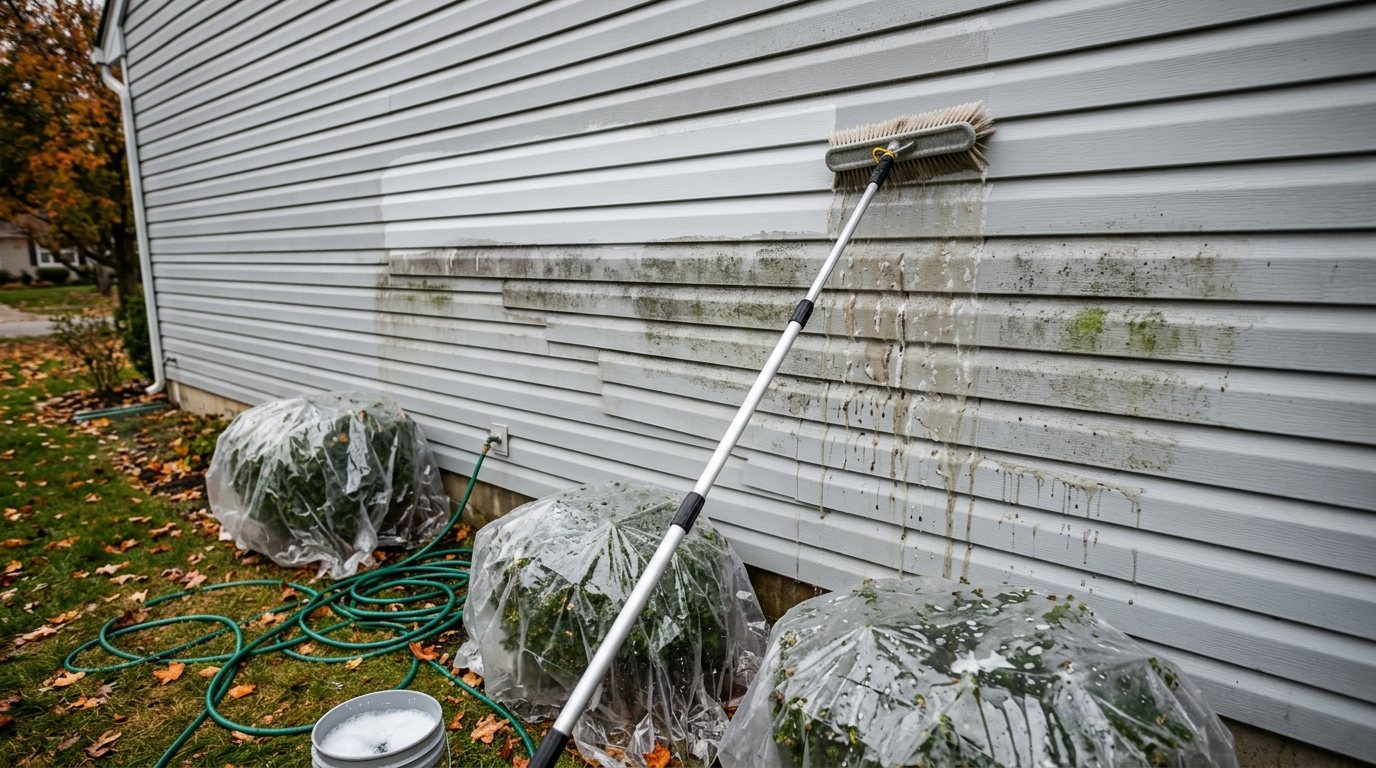
- Protect your plants. Water shrubs and flower beds thoroughly first, then cover them with plastic sheeting or old sheets. Remove plastic covers as soon as you finish so plants don’t overheat.
- Rinse the wall. Spray the section with a garden hose to knock off loose dirt and cobwebs and wet the surface so cleaner does not dry too fast.
- Apply cleaner in small sections. Work an area about 5 to 10 feet wide at a time. Dip the brush in your solution or apply it with a pump sprayer.
- Scrub gently. Use light pressure and work along the length of the panels, paying attention to the bottom lip of each course where dirt collects. Start at the top of each section and work down, and keep the area below wet so drips do not leave streaks.
- Rinse before it dries. Rinse each section thoroughly from the top down before moving on. Dried soap leaves a film that attracts dirt.
- Check your work. Once a section dries, look for spots you missed and retreat them.
For a two-story house, a telescoping brush handle lets you reach most siding from the ground. If you need a ladder for the upper walls, review our ladder safety tips first, and never use a pressure washer from a ladder.
Removing mildew, algae and tough stains
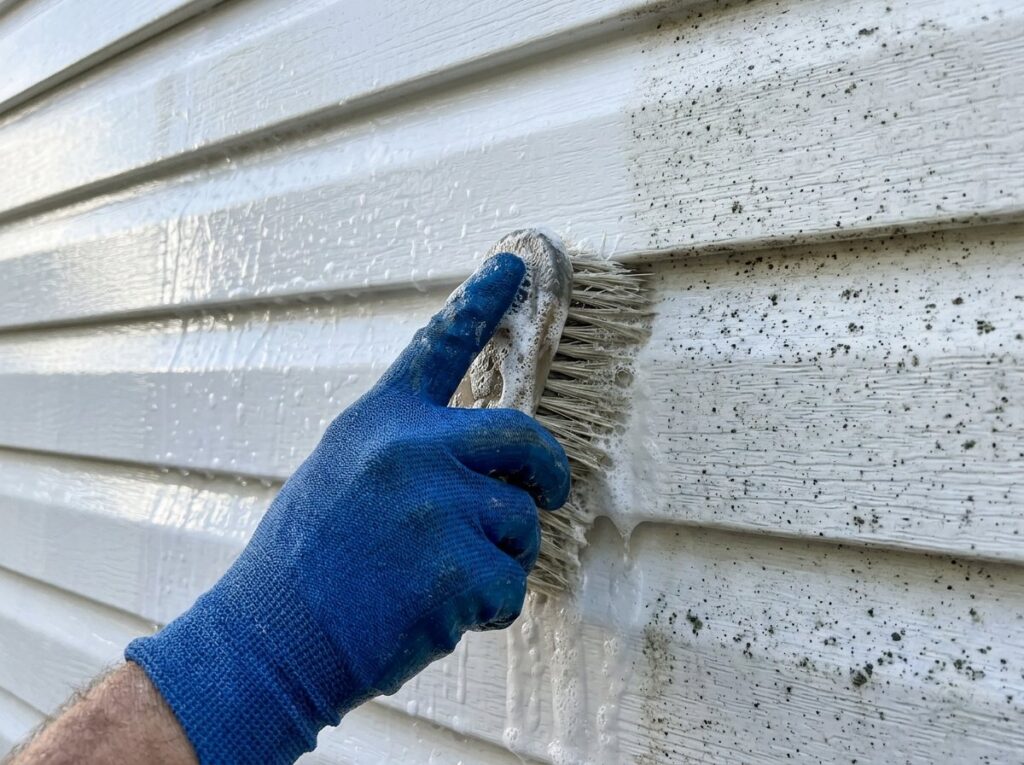
Black or gray speckles are usually mildew, and green film on shady walls is algae. Both grow where siding stays damp and get worse if you leave them. Spray the area with oxygen bleach solution or vinegar mix, wait 10 to 15 minutes while keeping it wet, scrub with a soft brush and rinse well. If growth returns quickly, trim back shrubs and trees so the wall gets more sun and air.
| Problem | What it looks like | What to use |
|---|---|---|
| General dirt and pollen | Gray or yellow film, worst under eaves | Dish soap or detergent and water, soft brush |
| Mildew | Black or gray speckles, often near the ground | Oxygen bleach solution, vinegar mix, or the manufacturer mildew formula |
| Green algae | Green film or streaks on shady walls | Oxygen bleach solution, then improve sun and airflow |
| Caulk or tar | Sticky dark residue | A small amount of mineral spirits on a cloth, rinsed off right away (Ply Gem) |
| Rust streaks | Orange stains under metal fixtures or from irrigation water | A rust remover labeled safe for vinyl, tested in a hidden spot |
| Chalky residue | Powder that rubs off on your hand | Soapy water and soft brush; ask the manufacturer if it persists |
If dark streaks run down from the gutters, the gutters may be overflowing. Our guide on how to clean gutters safely will help stop the source.
Using a pressure washer on vinyl siding
A pressure washer saves time, but it is the main way homeowners damage vinyl siding. High pressure can crack panels, strip the surface, and force water up behind the laps where it soaks the sheathing and feeds mold. Only use one if your siding maker allows it, and follow these rules:
- Keep the pressure low. Ply Gem specifies 1,500 to 2,400 psi with a 40-degree tip. Start at the low end and stand several feet back, moving closer only if needed.
- Use the widest tip. A 40-degree fan tip or the soap nozzle spreads the force. Never use a 0-degree or 15-degree tip on siding.
- Never spray upward. Hold the wand at about eye level and aim straight at the wall or slightly downward. Spraying up from below drives water under the overlapping panels.
- Stay away from openings. Avoid spraying directly at windows, doors, vents, light fixtures, outlets and the utility meter.
- Use a siding cleaner made for pressure washers through the detergent tank, not a homemade mix, unless the cleaner label says otherwise.
Pro tip: A hose-end sprayer bottle with a siding cleaner is a good middle ground. It applies cleaner across a large wall at normal hose pressure, and you can follow up with a soft brush only where needed.
Protecting plants and your lawn
Even mild cleaners can stress plants, and bleach solutions can burn leaves. Soak beds and shrubs with plain water before you start, so roots and leaves absorb less runoff, and cover them with sheeting. CertainTeed suggests using a soap without added perfumes, dyes or moisturizers near plants and testing it on a small area first. When you finish, uncover the plants and rinse them and the surrounding soil with plain water.
When to call a pro
Most homeowners can clean single-story vinyl siding in an afternoon. Bob Vila estimates 2 to 4 hours and about $20 to $30 in supplies for a typical DIY job. Consider hiring a professional exterior cleaning company when:
- The house is two or more stories and you would need to work from a ladder
- Mildew or algae keeps coming back over large areas
- You see cracked, warped or loose panels, or signs of water behind the siding such as peeling interior paint or a musty smell
- Your siding manufacturer prohibits pressure washing and the house is too large to clean by hand
Pricing depends on the size and height of the house and the cleaning method, so get two or three written quotes and ask whether the company uses low-pressure soft washing, which is gentler on vinyl than high-pressure spraying.
Frequently asked questions
What is the best homemade cleaner for vinyl siding?
Plain dish soap in water handles most dirt. For mildew and algae, a mix of 30 percent white vinegar and 70 percent water, or oxygen bleach dissolved in water, works well and is gentler on plants than chlorine bleach.
Can I use bleach on vinyl siding?
Yes, but only diluted. Manufacturers publish a mildew formula with 1 quart of household bleach in about a gallon of solution, and warn that stronger mixes can damage the siding. Never use undiluted bleach, and never mix it with vinegar or ammonia.
Will a pressure washer damage vinyl siding?
It can if the pressure is too high, the tip is too narrow or you spray upward. Some manufacturers advise against pressure washing entirely, so check your siding’s care instructions first.
How often should vinyl siding be cleaned?
Once a year is a good routine, and CertainTeed recommends annual cleaning to prevent buildup. Shady, damp walls may need spot treatment for mildew more often.
How do I get green algae off vinyl siding?
Apply oxygen bleach solution or a vinegar mix, let it sit for 10 to 15 minutes while keeping it wet, scrub with a soft brush and rinse. Trimming nearby plants to let in sun and air helps keep it from coming back.
The bottom line
Clean vinyl siding the gentle way: rinse, scrub with a soft brush and mild soap, treat mildew and algae with oxygen bleach or a vinegar mix, and rinse each section before it dries. Use a pressure washer only if your siding maker allows it, with low pressure, a wide tip and the spray aimed straight on, never upward. While you are washing the outside, it is a good time to tackle the glass too with our guide to cleaning windows streak-free.