Vinyl plank flooring is sold as the easy-care option, so it is frustrating when yours looks dull, streaky or sticky right after you mop. Worse, some popular cleaning habits, like steam mopping or adding a shine product, can wear down the protective top layer or even void your warranty.
This guide walks you through a simple daily and weekly routine, the cleaners that are safe for luxury vinyl plank (LVP), and the products manufacturers tell you to avoid. You will also learn how to remove scuffs and tough stains, clear a cloudy film, and keep the floor looking new for years.
Quick answer: Sweep or dust mop daily, then vacuum (beater bar off) and damp mop weekly with warm water or a pH-neutral cleaner made for vinyl. Wring the mop until it is barely damp and dry any puddles. Skip steam mops, wax, oil soaps, abrasive pads, ammonia and bleach unless your manufacturer specifically approves them, and use isopropyl alcohol on a white cloth for stubborn spots.
Why vinyl plank needs a gentle approach
Every vinyl plank has a clear wear layer on top, usually coated with a factory urethane finish. That layer protects the printed wood or stone look underneath, and it is what you are actually cleaning. Harsh chemicals, grit and abrasive pads slowly dull or scratch it, and once the wear layer is damaged it cannot be sanded and refinished like hardwood.
Water is the second concern. Most planks are waterproof on the surface, but the seams are not a sealed membrane. Standing water can seep between planks and reach the underlayment or subfloor, causing odors, mold or swelling, so every method below uses a damp mop, not a wet one.
Finally, follow your own manufacturer first. Care guides vary by brand, and using a prohibited product can give them a reason to deny a warranty claim.
Tools and materials
- Soft-bristle broom or microfiber dust mop (no fabric softener or oil treatment)
- Vacuum with a hard floor setting or a way to turn off the beater bar
- Flat microfiber mop with several washable pads
- Bucket of warm water or a refillable spray bottle
- pH-neutral floor cleaner labeled safe for vinyl or LVP (or your manufacturer’s own cleaner)
- Clean white cotton or microfiber cloths
- Isopropyl (rubbing) alcohol for stubborn spots
- Low-odor mineral spirits for grease, tar, crayon or adhesive (only if your manufacturer allows it)
- Soft nylon brush for textured or embossed planks
- Felt furniture pads and entry mats without rubber backing
Daily and weekly cleaning routine
Daily: remove grit before it scratches
Sand and grit act like sandpaper under shoes and chair legs, so the most important habit is getting them off the floor. A quick pass with a microfiber dust mop or soft broom in the kitchen, entry and hallways takes a couple of minutes. Wipe spills as soon as they happen with a damp cloth, then dry the spot.
Weekly: vacuum, then damp mop
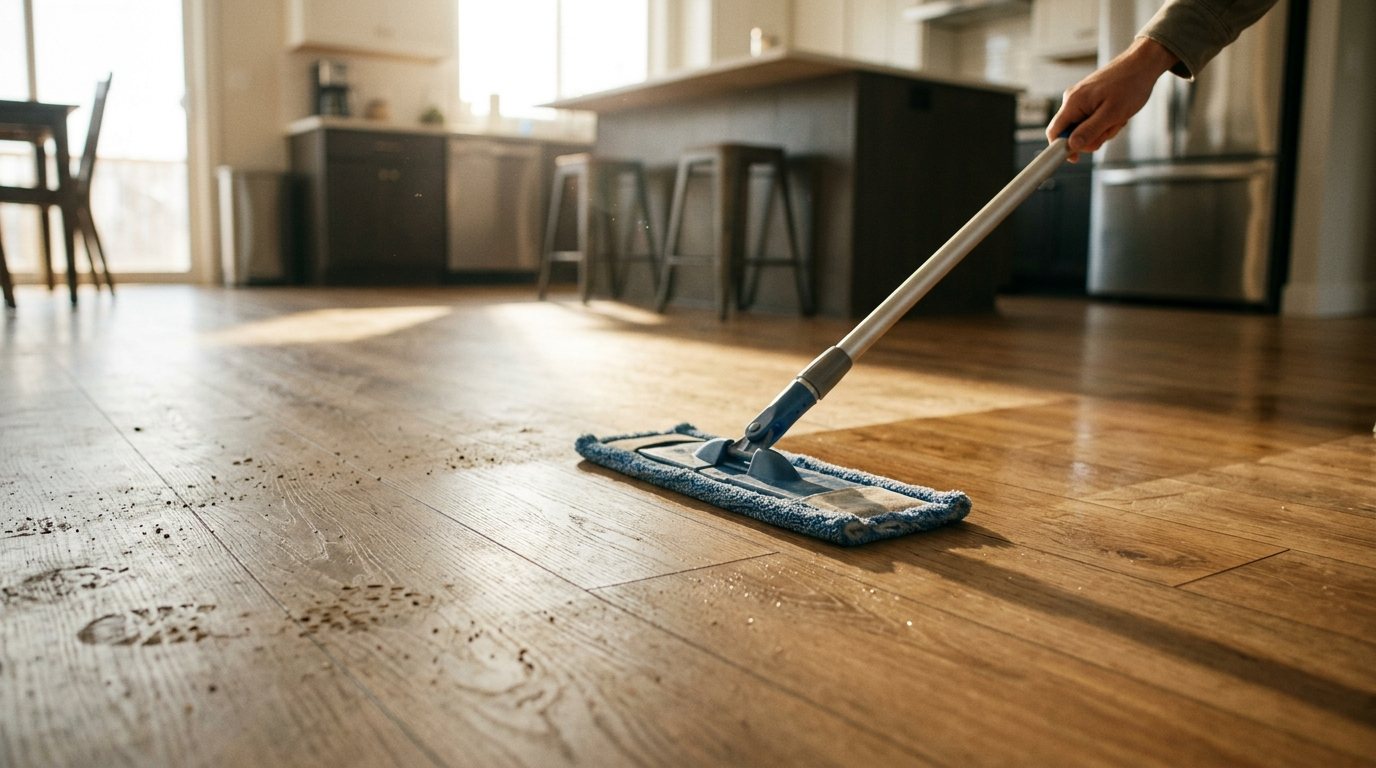
- Vacuum the whole floor with the beater bar turned off or on the bare floor setting. A spinning brush roll can fling grit and leave fine scratches. Use the crevice tool along baseboards and in the grooves of deeply textured planks.
- Mix your cleaner. Use warm water alone for light dirt, or a pH-neutral vinyl cleaner diluted exactly as the label says. More cleaner does not mean a cleaner floor; extra product is a common cause of sticky, streaky film.
- Dip a microfiber pad and wring it out until it is only damp. If water drips when you squeeze it, it is too wet.
- Mop in the direction of the planks, starting at the far side of the room and working toward the door. Swap to a fresh pad when the first one looks gray.
- Dry any puddles or wet seams with a clean towel. In a humid room, open a window or run a fan for a few minutes so the floor dries quickly.
Every few months: deep clean
A few times a year, mop busy kitchens and mudrooms with your vinyl cleaner and work textured areas with a soft nylon brush to lift dirt from the grain. Finish with a plain-water pass using a clean pad so no cleaner is left behind.
Safe cleaners for vinyl plank floors
pH-neutral floor cleaner
Major brands consistently recommend a neutral-pH cleaner, meaning one that is neither acidic nor alkaline. Shaw’s resilient vinyl care guidance, for example, calls for weekly cleaning with a neutral-pH product and a white cloth for spot work. Look for “pH neutral,” “no-rinse” and “safe for luxury vinyl” on the label, and avoid anything that promises to add shine.
Plain warm water
For routine mopping on a floor that is not greasy, warm water and a clean microfiber pad work well and leave no residue. For greasy kitchen floors, use a vinyl cleaner rather than dish soap, which some manufacturers say leaves a dull film.
Isopropyl alcohol for tough spots
When water and your regular cleaner do not lift a spot, both Shaw and COREtec suggest dampening a clean white cloth with isopropyl (rubbing) alcohol and gently rubbing the mark. Rinse the area with a damp cloth afterward and dry it. Always use a white cloth so dye cannot transfer to the floor.
What about vinegar?
Diluted vinegar is a popular home remedy, but several manufacturers, including Shaw and COREtec, tell you to avoid vinegar-based products because of the acid. Unless your care guide approves it, use a neutral cleaner instead.
What to avoid on vinyl plank flooring
Most damage to vinyl plank comes from well-meaning cleaning, not daily wear. The table sums up what manufacturer care guides generally say; your own brand’s instructions take priority.
| Product or method | Use it? | Why |
|---|---|---|
| Microfiber dust mop or soft broom | Yes, daily | Removes grit that scratches the wear layer |
| Vacuum with beater bar off | Yes, weekly | Picks up fine dirt without scuffing |
| pH-neutral vinyl cleaner | Yes | Cleans without stripping or leaving film |
| Isopropyl alcohol on a white cloth | Yes, for spots | Lifts ink, dye and stubborn marks |
| Steam mop | Only if approved | Heat and forced moisture can weaken seams and adhesives |
| Paste wax, polish, “mop and shine” | No | Builds up a dull, sticky layer that is hard to remove |
| Oil soaps, lemon or tung oil cleaners | No | Leave a slippery residue and can void warranties |
| Vinegar, ammonia, bleach | Avoid unless approved | Acidic or harsh chemicals can dull the finish |
| Abrasive powders, steel wool, scrub pads | No | Scratch the wear layer permanently |
| Rubber- or latex-backed mats | No | Can permanently stain vinyl yellow or brown |
Steam mops
Steam pushes hot moisture into the seams and edges, where vinyl is most vulnerable, and heat can loosen adhesives or contribute to edge curling. Armstrong Flooring’s FAQ discourages introducing heat and moisture, and COREtec says to avoid steam unless your manufacturer’s guidelines specifically approve it.
Wax, polish and shine products
Vinyl plank is a no-wax floor. Paste wax, solvent-based polish and “mop and shine” products sit on top of the factory finish, attract dirt and turn hazy or sticky as they build up. Removing that buildup usually takes a special stripper, so it is much easier never to apply it.
Oil soaps, abrasives and too much water
Oil soaps made for wood leave a slippery, streaky film on vinyl, and some LVP care guides warn they can void the warranty. Scouring powders, steel wool and green scrub pads leave fine scratches that hold dirt. And even on a waterproof plank, water from a dripping mop can sit in the seams and reach the subfloor.

How to remove scuffs and stains
Start with the gentlest method and work up. Test anything stronger than water in a closet or under an appliance first, and always use white cloths.
| Mark or stain | Try first | If it stays |
|---|---|---|
| Black shoe scuffs | Rub with a clean tennis ball or dry white microfiber cloth | A drop of vinyl cleaner on the cloth, then isopropyl alcohol |
| Food, juice, wine, coffee | Blot, then wipe with warm water | Vinyl cleaner, then isopropyl alcohol |
| Pet urine | Blot fast, wipe with vinyl cleaner, dry the seam | Enzyme cleaner labeled safe for vinyl, then rinse |
| Ink, marker, hair dye, lipstick | Isopropyl alcohol on a white cloth | Repeat with a fresh cloth; do not scrub hard |
| Grease, tar, crayon, adhesive | Wipe with vinyl cleaner | Low-odor mineral spirits on a white cloth, if your brand allows it |
| Hazy film or streaks | Mop with plain warm water and clean pads | Manufacturer-approved deep cleaner |
Scuff marks
Most black scuffs are rubber sitting on the surface, so a clean tennis ball or dry white microfiber cloth usually lifts them. For a stubborn mark, put a little isopropyl alcohol on the cloth, rub gently, then wipe with water. Avoid melamine sponges and scouring pads, which are mildly abrasive and can leave a dull patch on the finish.
Pet accidents
Urine is a big risk because it runs into the seams. Blot immediately, wipe with your vinyl cleaner, and dry the seam. An odor that keeps coming back usually means liquid reached the underlayment, which is a repair job rather than a cleaning one.
Cloudy film and sticky streaks
A foggy or tacky floor almost always has residue on it from too much cleaner, mixed products, shine additives or a dirty pad. Mop with warm water only, changing the pad often. If the haze survives several passes, use a deep cleaner your manufacturer approves.
Scratches and gouges
A scratch through the wear layer will not clean away, and sandpaper or oil will only make it worse. Touch up small marks with a color-matched vinyl repair kit, or swap out a badly damaged plank. If you are still choosing a floor, our guide to LVP vs laminate compares how each handles scratches and water.
How to keep vinyl plank looking new
- Use mats at every exterior door. Choose woven or vinyl-backed mats, not rubber or latex, and shake them out often so they keep trapping grit.
- Put felt pads under furniture. Wider pads spread the weight of heavy pieces and help prevent dents.
- Swap hard chair casters. Use soft rubber or urethane casters, ideally at least 1 inch wide, or a chair mat under office chairs.
- Never drag appliances. Lay a sheet of plywood or hardboard and walk the fridge or washer across it.
- Limit strong sun. Direct sunlight can fade vinyl over time, so use blinds or curtains in bright rooms and move rugs now and then.
Pro tip: Keep a spare box of planks from your installation in a closet. If a plank is ever badly stained or gouged, a replacement from the same production lot makes the repair almost invisible. If you are planning a new floor, our vinyl plank installation guide explains how much extra to order.
When to call a pro
Routine cleaning is always a DIY job, but some problems you notice while cleaning point to something deeper. Call a flooring installer or repair pro if you see:
- Planks that lift, peak, separate or feel spongy underfoot
- Water that keeps appearing at seams, or a musty smell that cleaning does not remove
- Dark or yellow stains spreading from under the planks rather than sitting on top
- Deep gouges, burns or cracks across several planks
- A large area of dull, worn-through finish in a traffic lane
According to HomeAdvisor’s vinyl floor repair cost guide, professional vinyl repair jobs typically run about $370 to $770, and plank or tile repairs are often priced around $9.50 to $12 per square foot including labor and materials. Moisture problems under the floor cost more because the water source must be fixed first. If water is coming from a cabinet, see our guide to a leak under the kitchen sink.
Frequently asked questions
Can you use a Swiffer or spray mop on vinyl plank flooring?
Yes, a spray mop is fine as long as the solution is pH neutral and labeled safe for vinyl or LVP. Some all-purpose spray mop solutions leave residue that builds into a sticky film. If your floor starts looking streaky, switch to a vinyl-specific cleaner or plain water in a refillable spray mop.
Can you steam mop vinyl plank floors?
Most manufacturers say no, or only if your specific floor’s care guide approves it. Steam drives heat and moisture into the seams, which can weaken adhesives and locking edges. A damp microfiber mop cleans just as well without the risk.
Is vinegar safe on vinyl plank flooring?
It depends on your brand, but several major manufacturers advise against vinegar-based products because of their acidity. A pH-neutral vinyl cleaner is the safer choice. If your care guide does allow vinegar, dilute it heavily and never pour it straight onto the floor.
Why does my vinyl plank floor look cloudy after mopping?
Cloudiness is usually leftover cleaner, especially if you used too much, mixed products, or used something with soap, wax or shine additives. A dirty mop pad spreads that residue around. Mop with plain warm water and clean pads until the haze is gone, then go back to a small amount of neutral cleaner.
How often should you mop vinyl plank flooring?
Once a week is enough for most rooms, with more frequent damp mopping in kitchens, entries and homes with pets. Daily dry dusting matters more than frequent wet mopping, because grit causes most of the wear.
The bottom line
Vinyl plank stays good-looking with very little effort if you keep grit off it and clean gently: dust mop often, vacuum with the beater bar off, and damp mop with water or a pH-neutral cleaner. Skip steam, wax, oil soap and abrasives, check your manufacturer’s care guide before trying anything new, and deal with spills and pet accidents quickly. Do that and your floor should look close to new for many years.