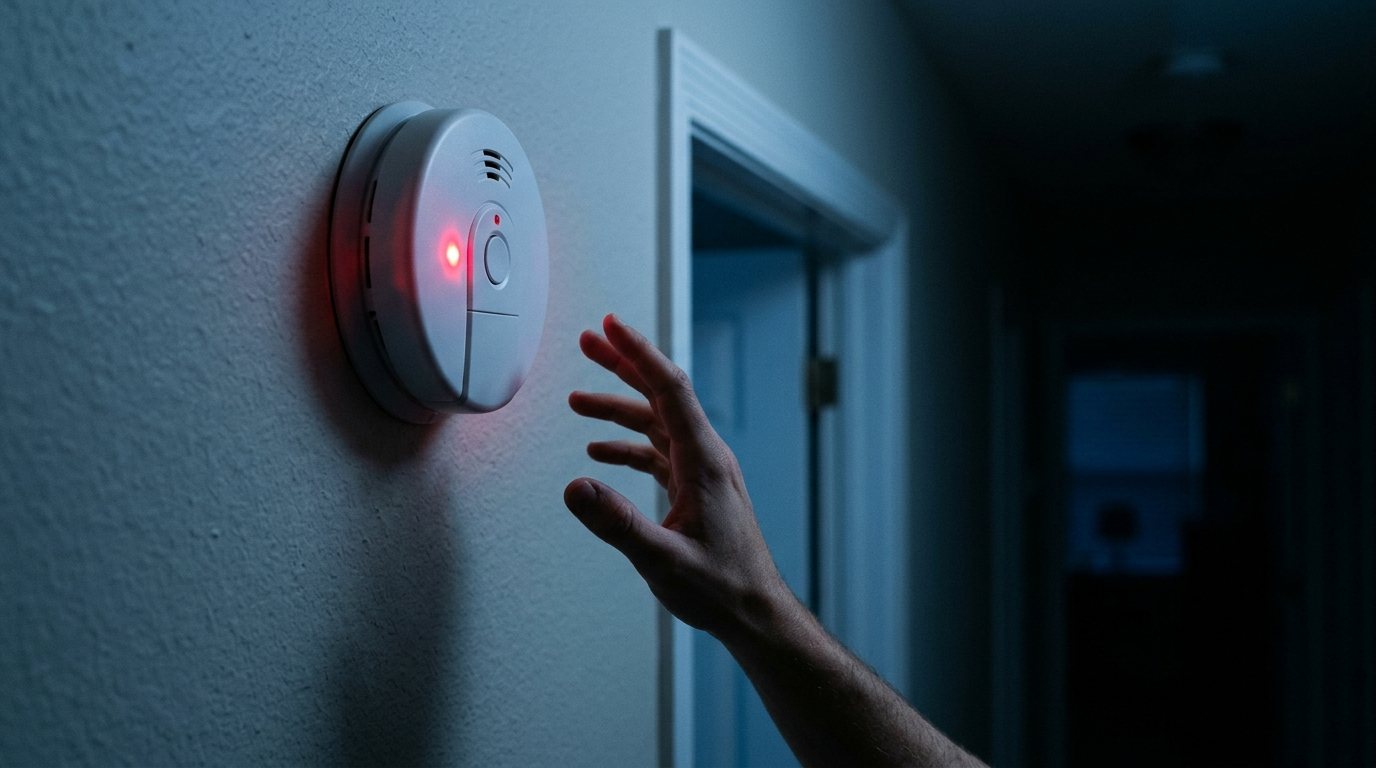
Your carbon monoxide detector is sounding, nobody can smell anything, and you are not sure whether it is a real emergency, a dying battery or a faulty alarm. Because carbon monoxide (CO) has no color, smell or taste, that alarm is the only warning you will get, so how you respond in the next few minutes really matters.
This guide tells you exactly what to do right now, how to tell an emergency alarm from a low-battery or end-of-life chirp, where CO usually comes from in a home, the symptoms to watch for, and how to place and test your alarms so you can trust them.
Quick answer: If your CO alarm is sounding a loud, repeating pattern (usually 4 beeps and a pause), treat it as real. Get everyone, including pets, outside into fresh air right away, then call 911 or your fire department from outside. Do not go back in until responders say it is safe. A single chirp about once a minute usually means a low battery, and a few chirps per minute or an “END” or “ERR” display usually means the alarm needs replacing.
What to do when your CO alarm goes off
Follow these steps in order. Do not stop to investigate the source first, and do not assume it is a false alarm because nobody feels sick.
- Get everyone outside immediately. Move all people and pets out to fresh air. If someone cannot be moved quickly, open a door or window near them on your way out.
- Call 911 or the fire department from outside. Tell the dispatcher your CO alarm is sounding and whether anyone has symptoms such as headache, dizziness, nausea or confusion.
- Count heads. Make sure everyone who was in the home is accounted for, including anyone who was asleep.
- Stay out until responders clear the home. Firefighters can measure CO levels and help find the source. The alarm may stop while CO is still present, so silence does not mean it is safe.
- Get the source checked before you use it again. If a furnace, water heater, boiler or other fuel-burning appliance is suspected, leave it off until a qualified technician has inspected and repaired it.
Safety note: If anyone feels unwell, especially with headache, dizziness, vomiting or confusion, leave immediately and tell the 911 dispatcher, even if the alarm has stopped. Sleeping people and anyone who has been drinking can be seriously harmed before they notice symptoms. If you also smell gas, do not flip switches or use anything that could spark; leave and call the gas utility from outside.
Can you silence a CO alarm?
Most alarms have a test or silence button, but pressing it only pauses the horn. On many models the horn comes back within a few minutes if CO is still present. Silencing the alarm is fine while you are getting out, but it is never a reason to stay inside.
What the beeps mean: emergency vs low battery vs end of life
CO alarms use different sounds for different problems, and the exact patterns vary by brand. Check the label on the back of your alarm or its manual, but these patterns are the most common.
| What you hear or see | What it usually means | What to do |
|---|---|---|
| Loud alarm: 4 beeps, a pause, repeating | Carbon monoxide detected | Get outside and call 911 |
| Single chirp about once a minute | Low battery on a replaceable-battery model | Replace the battery, then test |
| Several chirps per minute (often 5), or “END” on the display | End of life, typically years after installation | Replace the whole alarm |
| A different chirp pattern (often 3 per minute) or “ERR” on the display | Malfunction or sensor error | Replace the alarm |
| Alarm returns within 24 hours after the all-clear | Ongoing CO source not yet found or fixed | Get out again, call 911, then call a qualified technician |
A full alarm should always be treated as real until responders confirm otherwise. The chirps are maintenance warnings, not emergencies, but they mean your home is not fully protected until you fix them. Smoke alarms use similar chirps, so if you are not sure which device is making the noise, our guide to a smoke detector chirping explains how to track it down.
Common sources of carbon monoxide at home
Carbon monoxide forms when fuel such as natural gas, propane, oil, wood, gasoline or charcoal does not burn completely. Any appliance or engine that burns fuel can produce it, and problems are most common at the start of heating season when equipment fires up for the first time in months.
Heating equipment
A furnace with a cracked heat exchanger, a disconnected flue pipe or a vent blocked by a nest, leaves or snow can push CO into living spaces. A furnace that keeps shutting itself off can be a clue to a venting problem, which our guide to furnace short cycling covers in more detail. Boilers, wall furnaces and blocked chimneys on fireplaces and wood stoves are other common sources.
Water heaters, ranges and dryers
Gas water heaters share many of the same venting risks as furnaces. Gas ranges and ovens produce some CO during normal use, which is why you should never use an oven to heat your home. A gas dryer with a crushed or blocked vent can also be a source.
Vehicles, generators and portable heaters
Never run a car or truck in an attached garage, even with the door open. Portable generators are a leading cause of CO deaths: the CDC and CPSC both say never to use one inside a home or garage, even with doors and windows open, and to run it more than 20 feet from the house with the exhaust pointed away. Our portable generator safety guide covers safe setup. Charcoal grills, camp stoves and unvented fuel-burning space heaters do not belong indoors either.
Symptoms of carbon monoxide poisoning
According to the CDC, the most common symptoms of CO poisoning are headache, dizziness, weakness, upset stomach, vomiting, chest pain and confusion. These are often described as flu-like, which is why CO poisoning is easy to miss. The CDC estimates that more than 400 Americans die each year from unintentional CO poisoning not linked to fires, more than 100,000 visit an emergency department and more than 14,000 are hospitalized.
Everyone is at risk, but infants, older adults and people with chronic heart disease, anemia or breathing problems are more vulnerable. Watch for these clues that point to CO rather than a virus:
- Several people, or people and pets, feel sick at the same time.
- Symptoms improve when you leave the house and return when you come back.
- Symptoms started or got worse when the heat, a fireplace or another fuel-burning appliance came on.
If anyone has symptoms, get them into fresh air and seek medical care right away. Tell the medical team you suspect CO exposure, because it is confirmed with a specific test.
Where to install CO alarms
The U.S. Consumer Product Safety Commission recommends CO alarms on every level of your home and outside sleeping areas. It also recommends interconnected alarms, so when one sounds, they all sound. The CDC adds that alarms should be battery operated or have a battery backup so they keep working during a power outage.
- Put one in the hallway outside each separate sleeping area. In a very long hallway, place one at each end.
- Put one on every level, including the basement. A spot near the top of the basement stairs works well.
- Choose alarms listed to UL 2034, the safety standard for residential CO alarms, or combination smoke and CO alarms that carry both listings.
Placement also affects false alarms. One manufacturer’s manual, for example, says not to install its alarm within 20 feet of a furnace or water heater, within 5 feet of a cooking appliance, or within 10 feet of a bathroom, laundry room or humidifier. It also warns against garages, kitchens, dusty areas, direct sunlight, spots near vents or open windows, and places colder than 40°F or hotter than 100°F. Distances vary by model, so follow the instructions for your alarm.
How to test and maintain CO alarms
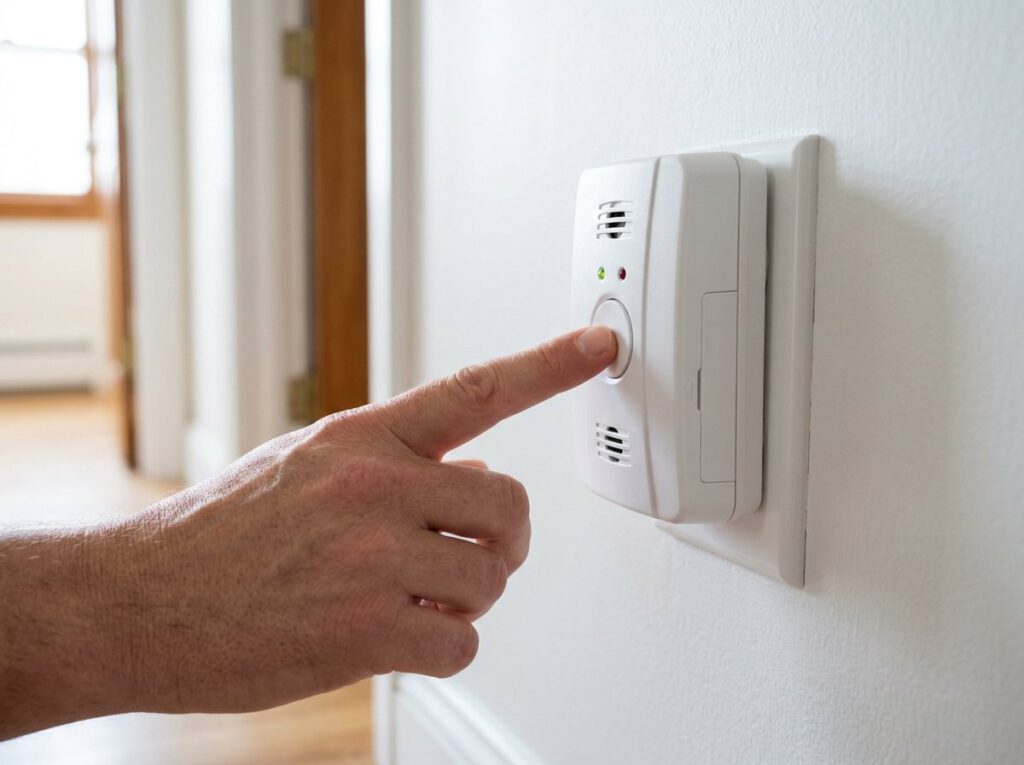
- Press and hold the test button until the alarm sounds, as often as your manual recommends. Some manufacturers suggest weekly testing.
- Check or replace batteries twice a year. The CDC suggests doing it when you change your clocks each spring and fall.
- Vacuum the vents gently with a soft brush attachment to keep dust out of the sensor. Do not spray cleaners or paint on the alarm.
- Write the installation date on the alarm. The CDC says to replace alarms following the manufacturer’s instructions or every 5 years, and many sealed-battery models give an end-of-life signal around 10 years after installation.
When to call a pro
For any full CO alarm, your first call is always 911 or the fire department. After the home is cleared, call a licensed HVAC technician or gas appliance professional if:
- Responders found CO, or the alarm sounded and no clear cause was found.
- The alarm goes off again within 24 hours of the all-clear.
- You see soot around a furnace, water heater or fireplace, yellow or flickering burner flames instead of steady blue ones, or heavy condensation on windows near fuel-burning appliances.
- Your furnace, boiler or water heater has not been serviced in the past year. The CDC recommends a yearly check by a qualified technician.
- Your chimney has not been inspected this year, or you smell exhaust when the fireplace or wood stove is in use.
An annual inspection is the best way to prevent CO problems. According to Angi, typical furnace inspection prices look like this:
| Service | Typical cost |
|---|---|
| Furnace inspection (national average) | About $100, with most paying $80 to $200 |
| Gas furnace inspection (includes CO testing) | $80 to $175 |
| Oil furnace inspection | $100 to $200 |
| Tune-up | $130 to $200 |
Angi notes that inspections tend to cost less in spring and summer than in fall and winter, so booking early can save money. If the technician finds a cracked heat exchanger or a venting problem, repair or replacement costs depend on the issue, so ask for a written estimate.
Frequently asked questions
Who do I call when my carbon monoxide detector goes off?
Call 911 or your local fire department after everyone is outside. If you also smell gas, call your gas utility’s emergency line from outside as well. Once the home is cleared, call an HVAC or gas appliance technician to find and fix the source.
Can a carbon monoxide detector go off for no reason?
False alarms do happen, often from an alarm near a cooking appliance, a humid bathroom or a dusty spot, or from an aging unit. However, you cannot tell a false alarm from a real one without a meter, so always get out and call 911. Let responders decide whether CO is present.
Why is my carbon monoxide detector chirping?
A single chirp about once a minute usually means a low battery. Several chirps a minute, or “END” or “ERR” on the display, usually means the alarm has reached the end of its life or has a fault and must be replaced. Check the label on the back of the unit for your model’s patterns.
How long do carbon monoxide detectors last?
Sensors wear out over time. The CDC says to replace them following the manufacturer’s instructions or every 5 years, and many sealed-battery alarms are designed to signal end of life around 10 years after installation. Write the install date on each alarm so you know when it is due.
Should I open the windows if my CO alarm goes off?
Your priority is getting everyone outside, not ventilating the house. If you can open a door or window on your way out without delay, that is fine, but do not stay inside to do it. Wait outside for responders.
The bottom line
A carbon monoxide detector going off with a loud, repeating alarm is an emergency until proven otherwise: get everyone outside, call 911 and stay out until responders clear the home. Chirps are maintenance warnings that mean a new battery or a new alarm. Put alarms on every level and outside sleeping areas, test them regularly, and have your fuel-burning appliances inspected every year so the alarm never has a reason to sound. If you use portable heat this winter, read our guide to space heater safety too.