Your furnace kicks on, runs for a couple of minutes, shuts off, and then does it all over again a few minutes later. The house never quite feels warm, the blower seems to start and stop constantly, and you may be wondering whether something is about to break.
That pattern is called short cycling, and it is one of the most common heating complaints at the start of winter. This guide explains what normal cycling looks like, the seven most likely causes, the fixes you can safely do yourself, and when to call a technician.
Quick answer: Start by replacing the air filter and making sure every supply vent and return grille is open and unblocked, because restricted airflow is the most common cause. If the furnace still shuts off within a few minutes, check the thermostat location, clean the flame sensor and look for a blocked flue or intake pipe outside. If it keeps short cycling after that, call a pro to check the limit switch, pressure switch and furnace sizing.
What is furnace short cycling?
Short cycling means the furnace starts a heating cycle but shuts down before it finishes, then restarts soon after. It can also mean the furnace is turning on and off far more often than it used to. Either way, the burners never run long enough to heat the house evenly.
Some cycling is normal. According to HVAC.com, a furnace typically runs 3 to 8 cycles per hour, with most cycles lasting at least 10 to 15 minutes, and more cycles on the coldest days. What matters most is a change: if your furnace used to run steady cycles and now quits after 2 or 3 minutes, something is wrong.
It is worth fixing quickly. Start-ups put the most stress on the igniter, inducer motor, blower and control board, so extra starts mean extra wear. Short cycling also wastes fuel, leaves cold spots and can point to a safety problem such as overheating or a blocked vent.
How to tell what kind of short cycling you have
Before you replace any parts, spend 15 minutes watching one full cycle. When the furnace shuts down tells you a lot about why.
- Note the timing. Use your phone’s stopwatch from the moment the burners light to the moment they go out.
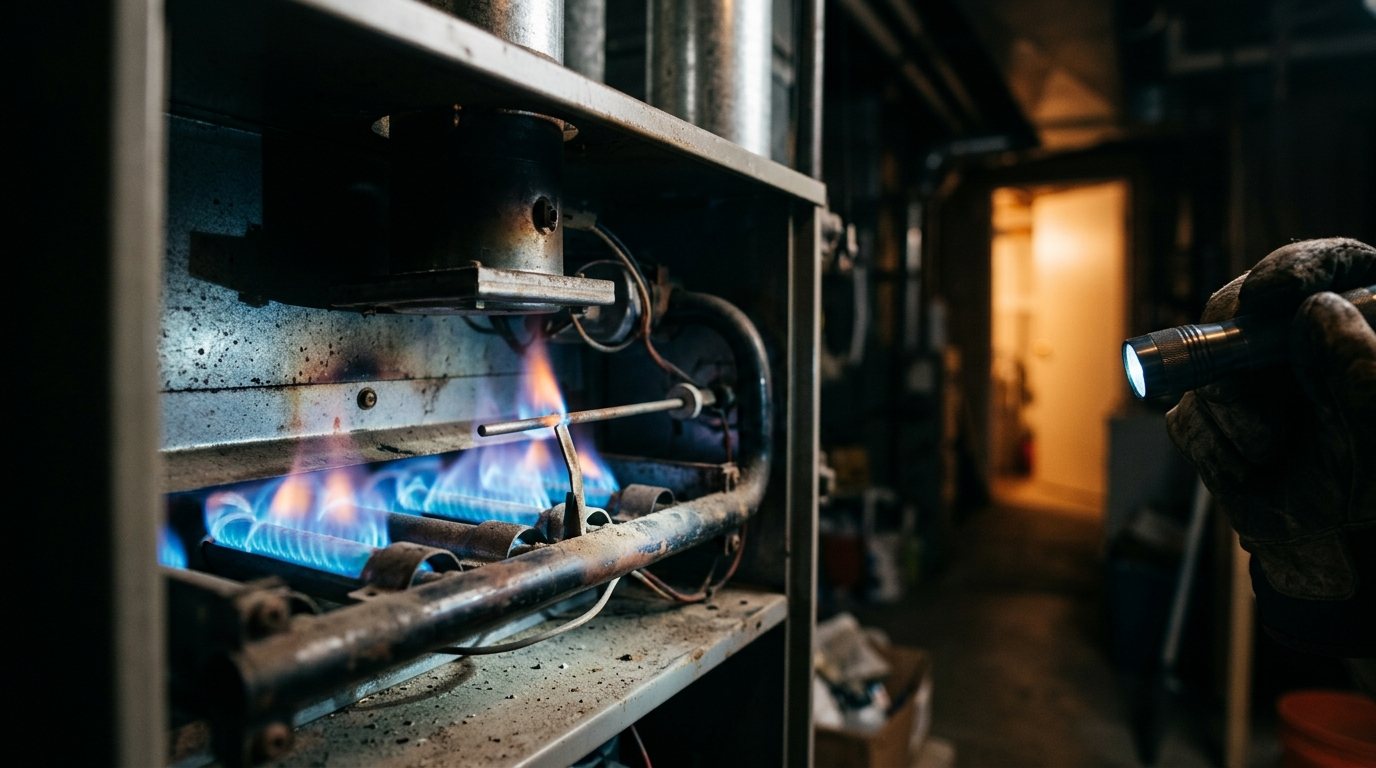
- Watch the burners through the sight glass. If the flames light and go out within a few seconds, suspect the flame sensor.
- Check the blower. If the burners shut off but the blower keeps running, the high limit switch has probably tripped because the furnace overheated.
- Read the status light. Most modern furnaces have an LED on the control board that blinks a code. Photograph the blink pattern and the code chart inside the door before you cut power, because switching off the furnace often clears the code.
| What you see | Likely cause | DIY or pro? |
|---|---|---|
| Flames light, then go out within seconds | Dirty or failing flame sensor | DIY cleaning; pro if it comes back |
| Burners stop after a few minutes, blower keeps running, vents feel very hot | Overheating from a dirty filter or blocked vents | DIY filter and vents; pro if it continues |
| Quick shutdown with a pressure switch error code | Blocked flue, intake pipe or condensate drain | DIY to clear snow or leaves outside; pro for anything else |
| Thermostat is satisfied fast, then calls for heat again soon after | Thermostat near a heat source or wrong cycle rate setting | DIY in most cases |
| Short cycles and big temperature swings ever since installation | Oversized furnace | Pro (load calculation) |
7 common causes of furnace short cycling (and how to fix them)
1. A dirty or overly restrictive air filter
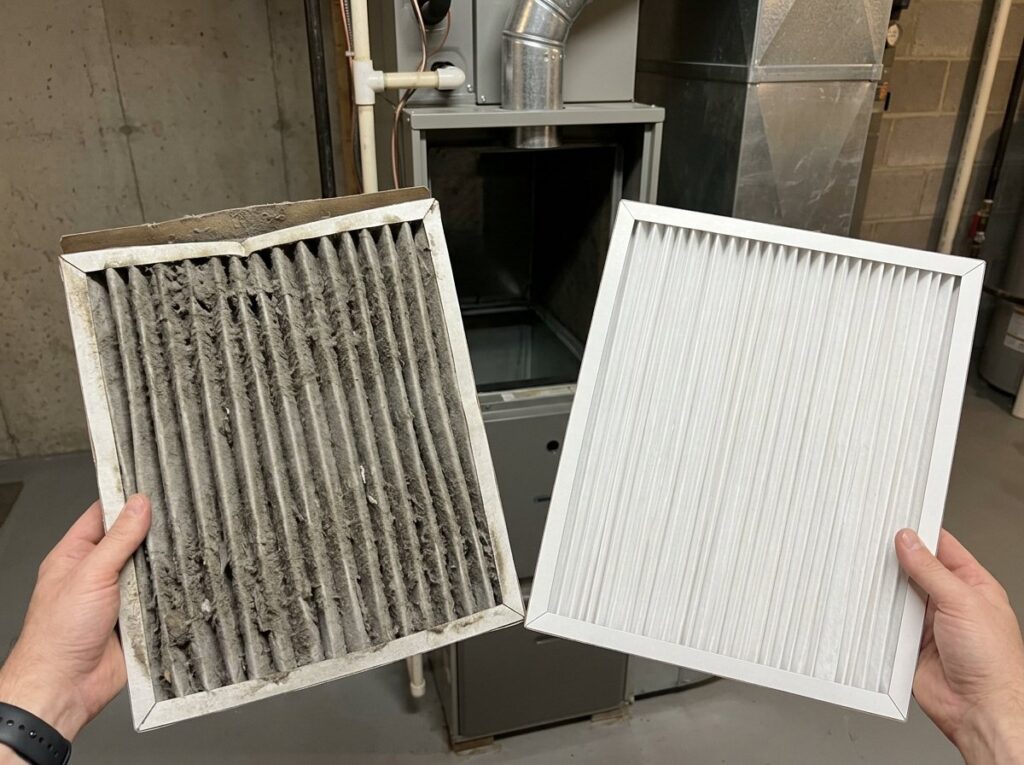
A clogged filter is the most common cause by far. When air cannot flow across the heat exchanger, heat builds up inside the furnace and a safety switch shuts the burners off. Once things cool down, the furnace restarts, overheats again and the cycle repeats.
Pull the filter and hold it up to a light. If you cannot see light through it, replace it. Also check that it is the right size, that the airflow arrow points toward the furnace, and that it is not far more restrictive than your system was designed for. Our guide on how to change a furnace filter walks through sizes, MERV ratings and how often to swap it.
2. Closed or blocked supply vents and return grilles
Closing vents in unused rooms seems like a smart way to save money, but it raises pressure in the ductwork and reduces airflow over the heat exchanger. The result is the same as a dirty filter: overheating and early shutdowns. Furniture, rugs and curtains covering registers or return grilles cause the same problem.
Keep the large majority of supply vents open, even in rooms you rarely use, and move anything sitting on top of or in front of a vent or return.
3. Overheating and the high limit switch
The high limit switch is a safety device that shuts off the burners when the air inside the furnace gets too hot. It is doing its job when it trips, so the real question is why the furnace is running hot.
Besides filters and vents, a dirty blower wheel, a weak blower motor or undersized ductwork can all cause overheating. If you have fixed the airflow and the furnace still trips the limit, the switch may be failing or a deeper airflow problem needs a technician. Repeated limit trips can lock out some furnaces, which is your sign to stop resetting it and call for help.
4. A dirty flame sensor
The flame sensor is a thin metal rod that sits in the burner flame and proves to the control board that the gas has lit. When residue builds up on the rod, it can no longer sense the flame, so the board shuts off the gas within seconds as a precaution. The furnace then tries again, sometimes several times before it locks out.
Cleaning a flame sensor is a common DIY job:
- Turn the thermostat off, then switch off power to the furnace at the service switch or breaker. Turn the gas valve to off.
- Remove the burner access panel and find the sensor: a single metal rod with a white porcelain base, mounted near the burners and usually held by one 1/4-inch screw.
- Remove the screw and gently slide the sensor out without bending it.
- Lightly polish the metal rod with fine steel wool or a fine abrasive pad until it looks clean. Do not use coarse sandpaper, and avoid chipping the porcelain.
- Wipe it with a clean, dry cloth, reinstall it, replace the panel, turn the gas back on and restore power.
If the problem returns within weeks, the sensor may be cracked or poorly grounded, or the burners may need cleaning, and a technician should take a look.
5. Thermostat location or settings
Your thermostat only knows the temperature of the spot where it hangs. If it sits above a supply vent, next to a lamp, in direct sun or in a hallway beside the furnace closet, it warms up long before the rest of the house. It tells the furnace to stop, the rest of the house cools, and the furnace starts again.
Look for nearby heat sources first, since moving a lamp costs nothing. Then check the settings: many digital thermostats have a cycle rate or “cycles per hour” setting that should match your system type, and older mechanical models have a heat anticipator that can be set wrong. Replace weak batteries too, since low power can cause erratic behavior. Moving a thermostat to an interior wall usually means running new wire, which many homeowners leave to a pro. Our guide to the best thermostat settings for winter covers schedules that help the system run steadier cycles.
6. A blocked flue, intake pipe or condensate drain
Modern furnaces use a pressure switch to confirm that exhaust gases are venting properly. If the metal flue or, on high-efficiency furnaces, the plastic intake and exhaust pipes are blocked, the pressure switch opens and the furnace shuts down. Snow drifts, ice, nests, leaves and crushed screens are common culprits.
Go outside and look at where the pipes leave the house, usually through a side wall or the roof. Clear snow, ice and leaves from wall terminations by hand. On high-efficiency furnaces, also check the condensate drain line and trap, because a clog there can back water up and trip the pressure switch. Leave nests, cracked or disconnected pipes and any rooftop vent work to a professional.
Safety note: A blocked flue can push carbon monoxide into your home. Make sure you have working CO alarms on every level and outside sleeping areas. If an alarm sounds, get everyone outside and call 911 or the fire department, then read our guide on what to do when a carbon monoxide detector goes off. If you smell gas, leave the house and call your gas utility from outside.
7. An oversized furnace
If your furnace has short cycled ever since it was installed, it may simply be too big for your house. An oversized furnace heats the air near the thermostat very quickly, shuts off, and leaves distant rooms cold. Signs include cycles of only a few minutes, noticeable temperature swings, uneven rooms and bills that seem high for the size of the home.
The only real fix is a correctly sized replacement, so confirm the diagnosis before spending money. Ask a contractor for an ACCA Manual J load calculation, which uses your home’s size, insulation, windows and climate to work out how much heat you actually need. Some two-stage and modulating furnaces can also be set to run longer at lower output, so ask whether yours has those options.
Tools and materials
- Replacement air filter in the correct size
- Flashlight
- 1/4-inch nut driver or small socket set
- Fine steel wool or a fine abrasive pad
- Clean, lint-free cloth
- Phone camera to record error codes and cycle times
- Fresh thermostat batteries
How to prevent short cycling
- Check the filter monthly during heating season and replace it when it looks gray or clogged.
- Check outdoor vent pipes after every heavy snow or windstorm.
- Book a professional tune-up each fall so a technician can clean the burners and flame sensor, test the safety switches and check airflow.
When to call a pro
Call a licensed HVAC technician if any of these apply:
- You smell gas or rotten eggs. Leave first and call the gas utility from outside.
- A CO alarm sounds, or people in the house have headaches, dizziness or nausea that ease when they go outside.
- The furnace keeps short cycling after you have replaced the filter, opened vents, cleaned the flame sensor and checked the vent pipes.
- The furnace locks out, shows repeated limit or pressure switch codes, or you see scorch marks, melted wires or soot around the burners.
- You suspect an oversized furnace or a cracked heat exchanger.
- The furnace stops lighting at all. Our guide for when your furnace is not turning on covers the checks to make first.
Most short cycling repairs are not expensive. According to Fixr’s furnace repair cost guide, typical prices including the service call are:
| Repair | Typical cost (service call plus part) |
|---|---|
| Limit switch replacement | $66 to $122 |
| Flame sensor replacement | $68 to $127 |
| Thermostat replacement | $91 to $169 |
| Igniter replacement | $96 to $178 |
| Blower motor replacement | $562 to $1,045 |
| General furnace repair (typical range) | $349 to $650 |
Fixr puts technician labor at about $87 to $162 per hour. Prices vary by region, furnace brand and after-hours fees, so ask for a written estimate first. If the diagnosis is an oversized furnace, replacement costs far more, so get at least two opinions and a written load calculation.
Frequently asked questions
Is furnace short cycling dangerous?
Short cycling itself is usually a wear and efficiency problem rather than an emergency. However, some causes are safety issues, especially repeated overheating, a blocked flue that can push carbon monoxide indoors, or a cracked heat exchanger. If you smell gas, your CO alarm sounds or you see soot or scorch marks, shut the furnace off and call a pro.
How many times per hour should a furnace cycle?
A typical furnace runs about 3 to 8 cycles per hour, with most cycles lasting at least 10 to 15 minutes. You will see more cycles on very cold days. Cycles of only 2 or 3 minutes, or a sudden jump in how often the furnace starts, point to a problem.
Can a dirty filter cause a furnace to short cycle?
Yes, and it is the most common cause. A clogged filter starves the furnace of airflow, it overheats, and the high limit switch shuts the burners off. Replacing the filter fixes many short cycling problems right away.
Should I keep resetting my furnace when it shuts off?
One reset after you fix an obvious problem, such as a clogged filter, is reasonable. Repeatedly resetting a furnace that keeps locking out can hide a real safety issue and may damage parts. If it locks out again, leave it off and call a technician.
The bottom line
Furnace short cycling usually comes down to restricted airflow, a dirty flame sensor, a poorly placed thermostat or a blocked vent, and most of those are cheap, quick fixes. Start with the filter and vents, watch one full cycle to narrow down the cause, and call a licensed technician if the problem continues, if you suspect an oversized furnace, or at the first sign of gas or carbon monoxide.