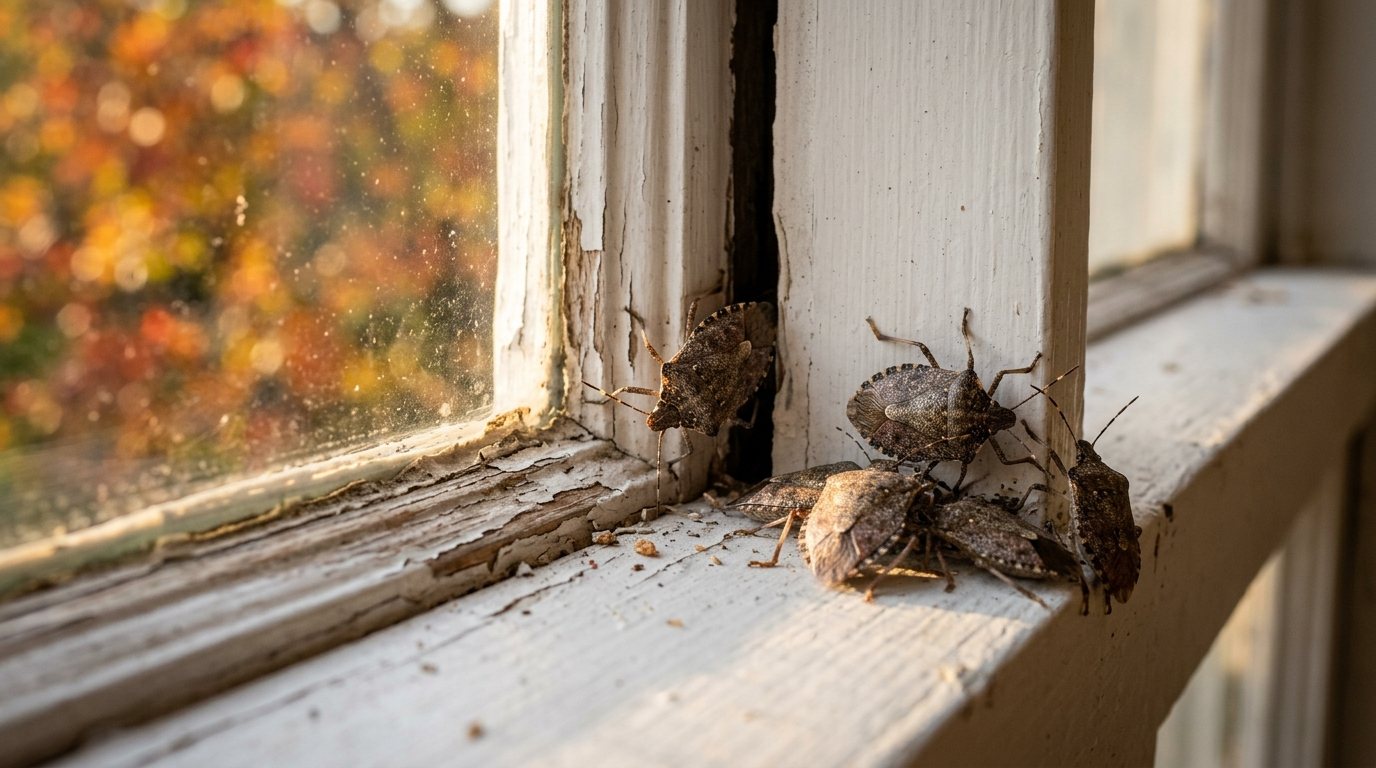
Every fall it starts the same way: a few brown, shield-shaped bugs sunning themselves on the siding, then one buzzing clumsily around a lamp, then a dozen crawling out from behind the window trim. Stink bugs in the house are harmless, but they are annoying, they smell when disturbed, and they seem to keep coming no matter what you do.
This guide explains why stink bugs move indoors in fall, how to seal the gaps they use, the vacuum method that removes them without the smell, which traps are worth trying, and what not to do. It focuses on the brown marmorated stink bug, the species behind most home invasions in the US.
Quick answer: Stink bugs come inside in fall to find a sheltered place to spend the winter. Seal gaps around windows, doors, siding, vents and utility lines with caulk, and repair screens before and during their September to October migration. Remove the ones already inside with a vacuum or by knocking them into soapy water, and do not crush them or spray insecticide indoors. They do not bite, damage your house or breed indoors.
Why stink bugs come into your house in fall
The brown marmorated stink bug is an invasive insect from Asia that is now established in much of the US. Like many insects, adults survive winter by going dormant in a protected spot. In their native range that might be a rock crevice or dead tree, but a house with small gaps in the siding works just as well.
According to Penn State Extension, adults are drawn to the outside of homes on warm fall days in search of overwintering sites, usually starting in September and October. They gather on sunny south and west walls, then crawl into any opening they can find. Most end up inside wall voids and attics, where they stay inactive until warm days wake them up.
Why you see them in winter and spring
Stink bugs that settled in your walls can be fooled by your heating system or a sunny winter afternoon. They wander out from behind baseboards, window trim, light fixtures and exhaust fans into living spaces, often looking sluggish. In spring, many try to leave the house to return outdoors, which can bring another wave of sightings.
How to recognize them
Adult brown marmorated stink bugs are about 2/3 inch (17 mm) long, mottled brown and shaped like a shield. Look for light bands on the antennae and alternating light and dark bands along the edges of the abdomen. Boxelder bugs, Western conifer seed bugs and multicolored Asian lady beetles are other common fall invaders, and the same exclusion steps work for all of them.
The good news: they are mostly a nuisance
Stink bugs feed on plants and fruit with a straw-like mouthpart, so they do not bite or sting people or pets. Penn State notes they do not reproduce inside homes and do not cause structural damage. The bugs you see indoors in winter are the ones that came in last fall, not a growing indoor population.
The main problems are the smell and the sheer numbers. When disturbed or crushed, stink bugs release a defensive odor that some people describe as cilantro-like. Penn State also notes that a small percentage of people can develop skin irritation from crushing them, and people sensitive to the odor can have allergy symptoms.
Step 1: Seal the entry points
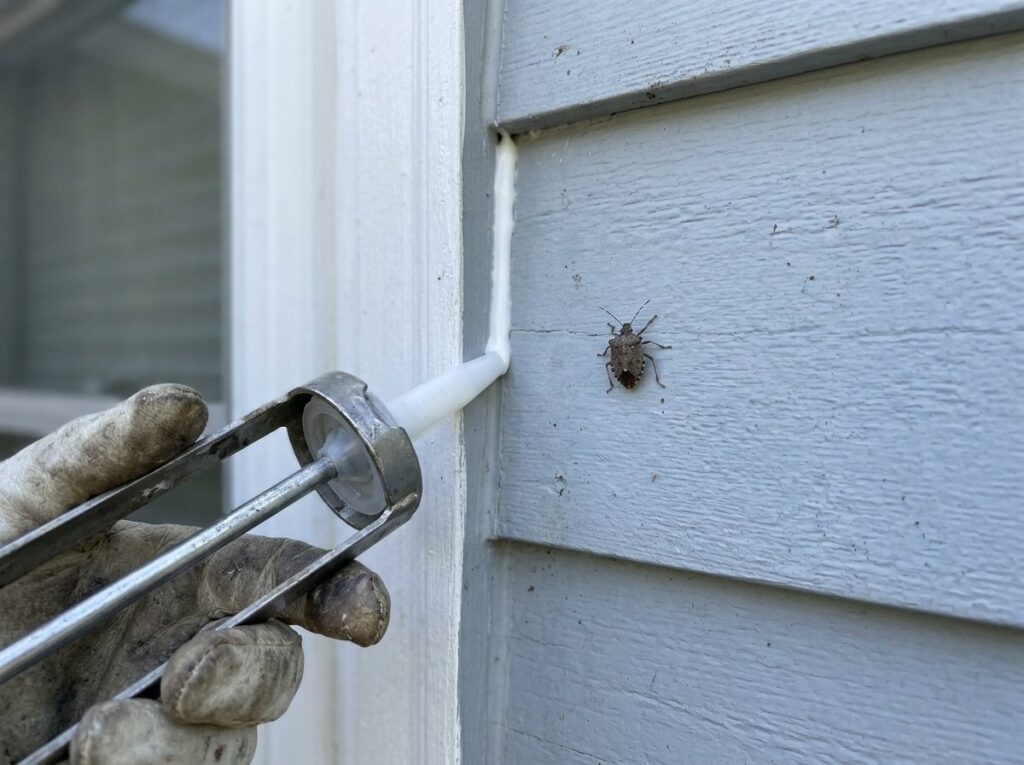
Penn State calls mechanical exclusion the best way to keep stink bugs out. Ideally you seal up in late summer, before migration starts, but sealing in late fall still helps by stopping new arrivals and keeping bugs already in the walls from crawling into your rooms.
| Entry point | What to look for | How to fix it |
|---|---|---|
| Windows and doors | Gaps around trim, light under doors, torn screens | Silicone or silicone-latex caulk, door sweeps, weatherstripping, screen repair |
| Siding and fascia | Gaps where siding meets trim or under wood fascia | Caulk small gaps; have larger gaps repaired |
| Utility penetrations | Openings around pipes, cables, dryer vents and outdoor faucets | Caulk or expanding foam |
| Vents and exhaust fans | Missing or stuck dampers, damaged screens | Fix flaps, add fine mesh where the vent allows it |
| Window AC units | Gaps around the unit and its side panels | Remove for winter or seal the gaps |
| Chimney and attic | Uncapped chimney, open gable or soffit vents | Chimney cap, intact vent screens (hire out roof work) |
- Start on the sunny south and west sides of the house, where stink bugs gather first.
- Look closely at window and door frames from outside, and caulk every crack you can slide a credit card into.
- Install or replace door sweeps on exterior doors, including the door from the garage.
- Repair or replace damaged window screens, and close storm windows.
- Check that bathroom and kitchen exhaust fan dampers close fully. If a fan has other problems, our guide to a bathroom exhaust fan that is not working can help.
- Seal around pipes, cables and wires where they enter the house. The same work helps keep out mice looking for winter shelter.
- Inside, caulk gaps around window trim, baseboards and light fixtures in rooms where bugs appear, to keep the ones in the walls from crawling out.
Safety note: Sealing high gables, soffits and chimneys means working on a ladder or roof. Keep three points of contact, set ladders on firm, level ground, and never work on a wet roof. If you are not comfortable at height, hire a handyman or roofer for the upper sections.
Step 2: Remove stink bugs already inside
The vacuum method
A vacuum is the fastest way to deal with numbers. Penn State notes that vacuuming removes live and dead bugs, but the vacuum can hold onto the smell for a while. To avoid that, use a shop vacuum or an older vacuum you keep for this job, or slip a knee-high nylon stocking into the hose and secure it with a rubber band. The bugs collect in the stocking, which you can tie off and throw out.
The soapy water method
For a few bugs, hold a jar or plastic bottle of water with a squirt of dish soap under the bug and tap it in. Stink bugs drop when disturbed, so they usually fall right into the water. The soap keeps them from climbing out. Seal the container and throw it out, or flush the contents.
Why you should not squash them
Crushing a stink bug releases the strongest dose of its odor and can stain walls, curtains and fabric. A pile of crushed or dead bugs can also attract carpet beetles. Flushing a few is fine, but crushing them on a wall or under a shoe is the fastest way to make a room smell.
Step 3: Use traps the right way
Traps can help with stragglers indoors, but they cannot replace sealing. A simple homemade light trap works well in a dark room at night: set a shallow pan of soapy water under a desk lamp, and bugs drawn to the light drop into the water. Commercial indoor light traps work on the same idea.
Outdoor pheromone traps are a different story. The StopBMSB research project notes that mass trapping has not been shown to control this species. Lures can also draw more stink bugs into your yard, so if you use one, place it well away from the house and treat it as a monitoring tool.
Tools and materials
- Silicone or silicone-latex exterior caulk and a caulk gun
- Low-expansion spray foam for larger gaps
- Door sweeps and weatherstripping
- Screen repair kit or replacement screens
- Shop vacuum or dedicated vacuum, plus knee-high nylon stockings and rubber bands
- Jar or bottle with water and dish soap
- Shallow pan and a desk lamp for a light trap
- Flashlight for inspecting trim and siding
What not to do
- Do not spray insecticide indoors. Penn State advises against it once bugs are in wall voids and attics. Dead bugs in the walls can feed carpet beetles, which later damage wool, stored foods and other natural materials.
- Do not set off foggers. They kill only the bugs in the open and do nothing about the ones still hiding in your walls.
- Do not block vents. When sealing gaps, never block furnace, water heater or dryer vents, or the air supply for fuel-burning appliances.
- Do not hang pheromone traps on the house. They may pull more bugs toward your walls.
When to call a pro
Most homeowners can handle stink bugs with sealing and a vacuum. Call a professional if:
- Hundreds of bugs gather on your siding each fall despite your sealing work.
- Bugs keep coming out of a ceiling, attic or wall void you cannot reach or seal.
- Entry points are high on the house, on the roof or around the chimney.
- Someone in the home has allergy or asthma symptoms that seem linked to the bugs.
A pest control company can do an exclusion inspection and may apply an exterior treatment in early fall. Penn State notes that exterior treatments offer only minor relief that may last a few days to a week, because sunlight breaks the product down, so exclusion should come first. For budgeting, Bob Vila’s exterminator cost guide, citing HomeAdvisor data, puts a typical pest control visit at $111 to $261, with an average of about $176. Exclusion repairs by a handyman are priced separately.
Frequently asked questions
Do stink bugs bite?
No. Stink bugs feed on plant juices and do not bite or sting people or pets. The only physical risk is mild skin irritation for a small number of people who handle or crush them.
Will stink bugs lay eggs in my house?
No. Penn State notes they do not reproduce indoors. They lay eggs on plants outdoors in late spring and summer, so the bugs you see inside in winter came in the previous fall.
Why are stink bugs coming out in winter?
Warmth from your heating system or a sunny wall can wake them from dormancy. They then wander out of wall voids through gaps around trim, outlets, lights and fans. Sealing those interior gaps reduces the number that reach your living space.
What kills stink bugs instantly?
Dropping them into a jar of soapy water is quick and odor free. Indoor insecticide sprays are not recommended, because they cannot reach the bugs in your walls and dead bugs left behind can attract carpet beetles.
Are stink bugs harmful to dogs and cats?
They are not poisonous, but a pet that eats several may drool, gag or vomit because of the bad taste. Vacuum them up promptly and call your veterinarian if your pet seems unwell.
The bottom line
Stink bugs in the house are a seasonal nuisance, not a threat. Seal gaps on the sunny sides of your home, especially around windows, doors, siding and vents, and remove indoor stragglers with a vacuum or a jar of soapy water instead of crushing them. Skip indoor sprays, keep pheromone traps away from the house, and add a quick exclusion check to your fall home maintenance checklist each year.