The air conditioner has been off for weeks, the leaves are coming down and the first frost is on the way. Looking at that metal box in the yard, it is natural to wonder whether it needs a winter coat, like the grill or the patio furniture.
This guide explains what manufacturers actually recommend, the pros and cons of covering an outdoor unit, why a top-only cover beats a full wrap, why a heat pump must never be covered, and a simple fall cleanup checklist that protects your system better than any cover.
Quick answer: Most air conditioners do not need a winter cover, because outdoor units are built to handle rain, snow and cold. If falling leaves, icicles or debris are a concern, use a breathable top-only cover or a weighted piece of plywood and leave the sides open. Never wrap the unit in plastic or a tarp, and never cover a heat pump, because it runs all winter.
First, check whether you have an AC or a heat pump
Air conditioners and heat pumps look almost identical from the outside, but the winter rules are completely different. A cooling-only AC sits idle all winter while a furnace or boiler heats the house. A heat pump is the heating system, so it keeps running in cold weather.
- Watch it on a cold day. If the outdoor fan runs while your heat is on, you have a heat pump.
- Check the thermostat. Settings such as “Em Heat,” “Aux Heat” or “Emergency Heat” usually mean a heat pump system.
- Read the nameplate. The label on the side of the unit or the owner’s manual will say whether it is an air conditioner or a heat pump.
If it is a heat pump, skip the cover entirely and jump to the heat pump section below.
What manufacturers say about covering an AC unit
The short version: covers are rarely needed. Lennox says modern air conditioners are designed to live and operate outdoors and typically do not need winterizing. It warns that wrapping a unit completely, especially in plastic or vinyl, can do more harm than good, and notes that a cover may affect your warranty depending on the manufacturer. HVAC.com also reports that most manufacturers do not recommend covering the outdoor unit.
Where Lennox does suggest protection, it is for specific problems such as falling leaves or debris, using something on top of the unit that does not block airflow. It calls simple fall cleanup the safest protection. Your owner’s manual is the final word for your model, so check it before buying a cover.
Pros and cons of covering an AC unit
There are some real benefits to limited coverage, but full covers bring problems that are worse than the ones they solve.
| Option | Benefits | Drawbacks | Verdict |
|---|---|---|---|
| No cover | Unit dries naturally; rain rinses dust off the coil; nothing for animals to nest in | Leaves, seeds and ice can collect on top and inside the fan grille | Fine for most homes |
| Top-only breathable cover or plywood | Keeps leaves, icicles and debris off the fan and coil top; sides stay open to vent moisture | Must be secured against wind and removed before cooling season | Best choice if debris or icicles are a problem |
| Full cover, tarp or plastic wrap | Keeps the coil cleaner | Traps moisture, which can lead to rust, corrosion, mold and damaged electrical parts; gives mice and other rodents a sheltered nest | Avoid |
Top-only covers vs full covers
Why full covers cause trouble
A full cover or tarp feels protective, but it stops the unit from breathing. Moisture from rain, snowmelt and humid air condenses inside and cannot escape, so metal parts, fasteners and electrical connections stay damp for months. Lennox lists rust and corrosion, humidity damage to electronics, and mold and mildew among the risks.
Rodents are the other big problem. A covered unit is a dry, sheltered spot out of the wind, which makes it an inviting nest. Mice and other small animals can chew wiring and leave nesting material and droppings around the fan motor and controls, and you may not discover the damage until the first hot day of summer.
How a top-only cover works
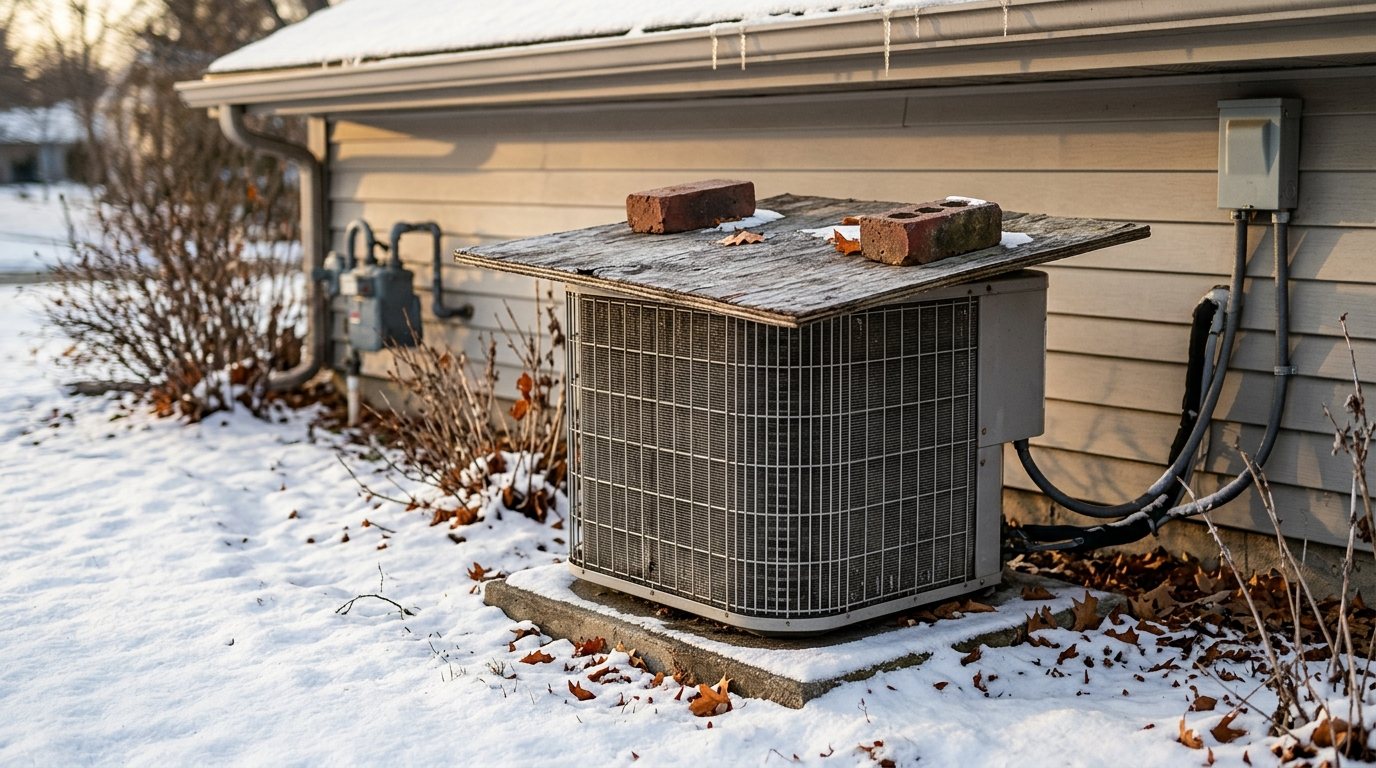
A top-only cover protects the one area most exposed to falling debris: the fan grille on top. Look for a breathable mesh cover that drapes only a few inches down the sides, or make your own from a piece of exterior plywood:
- Turn off power to the unit at the outdoor disconnect.
- Cut a piece of 1/2-inch exterior plywood a couple of inches larger than the top of the unit on each side.
- Set it on top and secure it with bricks, pavers or bungee cords that hook under the top edge, so wind cannot lift it.
- Leave all four sides of the coil fully open.
- Remove it before you turn the cooling back on in spring.
This is especially worth doing if the unit sits under a tree that drops leaves, seed pods or acorns, or below a roof edge where icicles form. If gutters overflow onto the unit, fix the gutters too, since dripping water can freeze into a solid cap on top. Our guide on how to clean gutters safely can help.
Why you should never cover a heat pump
A heat pump pulls heat from outdoor air, even when it is below freezing, and moves it indoors. It needs open airflow across the outdoor coil all winter, so any cover, even a top-only one, can reduce heating, cause the unit to ice up or trigger safety shutdowns. HVAC.com warns that a cover on a running heat pump can block airflow and cause overheating.
Instead of covering it, keep it clear:
- Brush or shovel snow away from the sides and top after every storm, and keep the base clear so defrost meltwater can drain.
- Keep open space on every side, following the clearance in your installation manual.
- Expect light frost and short defrost cycles in cold, damp weather; that is normal.
- Never chip at ice with a tool. If thick ice will not clear, switch to emergency heat and call a technician.
If your heat pump is struggling to keep up on cold days, our guide to a heat pump not heating in cold weather covers the common causes.
Fall AC cleanup checklist
For a cooling-only AC, a good fall cleanup does more for the unit than any cover. Plan on about an hour.
- Shut off the power. Switch the thermostat away from cooling, then turn off the outdoor disconnect (the small box on the wall near the unit). This also stops the unit from starting on a warm winter afternoon.
- Clear debris. Pick leaves, grass clippings, seeds and sticks off the top grille, the base and the area around the unit.
- Trim back plants. Cut shrubs, grass and vines away from all sides so air can flow and you can reach the unit easily.
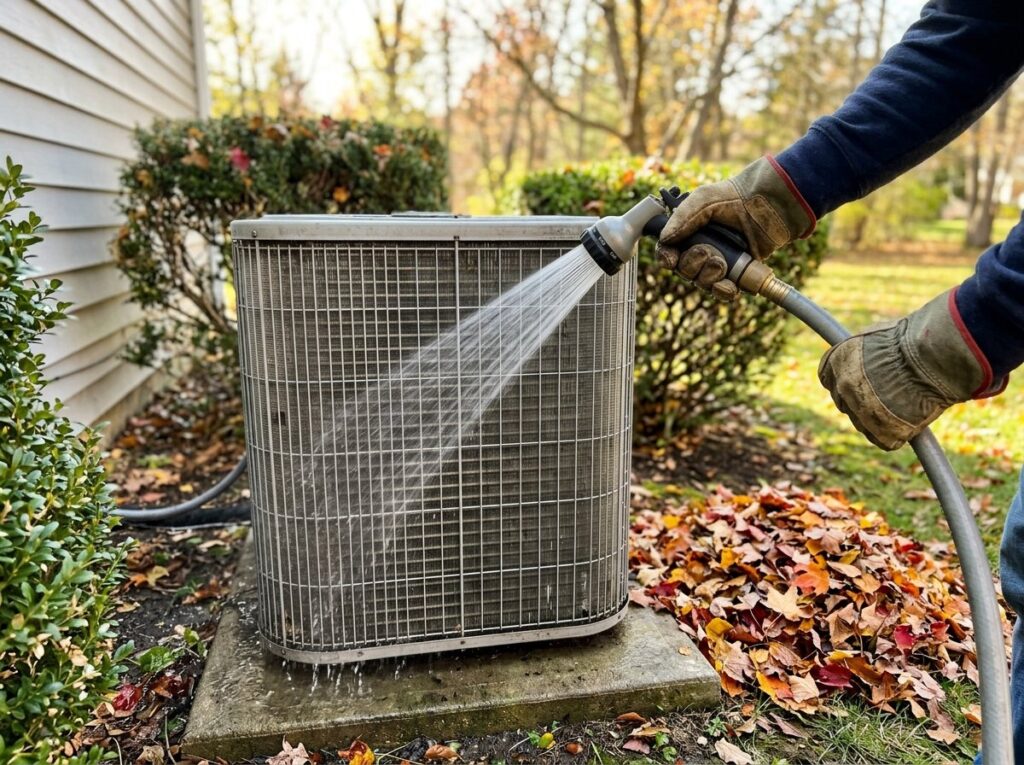
- Rinse the coil gently. Use a garden hose on a gentle spray to wash dirt off the fins. Never use a pressure washer, which can flatten the fins. Let the unit dry completely.
- Straighten bent fins. Use a fin comb to gently straighten small areas of bent fins.
- Check the line insulation. Replace cracked or missing foam insulation on the larger copper refrigerant line.
- Check the pad. Make sure the unit sits level and the pad has not sunk or tilted.
- Add a top-only cover if needed. Use one only where debris or icicles are a real risk.
In spring, remove any cover, clear debris again and restore power well before the first hot day. Some units have a crankcase heater that keeps compressor oil warm, and Filterbuy’s guide suggests restoring power at least 24 hours before the first cooling run, or following your manual. For more seasonal jobs, see our fall home maintenance checklist.
Safety note: Always turn off power at the outdoor disconnect, and at the breaker if you are unsure, before cleaning or covering the unit. Never put a cover on a unit that still has power, never remove the electrical service panel on the unit, and keep hands away from the fan blades.
Tools and materials
- Work gloves
- Garden hose with an adjustable spray nozzle
- Fin comb
- Pruning shears or hedge trimmers
- Foam pipe insulation and UV-resistant tape
- Breathable top-only cover, or 1/2-inch exterior plywood with bricks or bungee cords
When to call a pro
Call a licensed HVAC technician if you notice any of the following:
- Large areas of crushed or bent fins, or a coil damaged by hail or falling ice.
- Chewed wires, nests or droppings inside the unit.
- Oily spots on the refrigerant lines or coil, which can point to a refrigerant leak.
- A heat pump covered in thick ice that does not clear after a defrost cycle.
- A unit that would not cool properly last summer. Our guide on an AC running but not cooling explains the likely causes.
- No professional maintenance in the past year.
Typical maintenance costs from This Old House and HomeAdvisor:
| Service | Typical cost | Source |
|---|---|---|
| Central AC tune-up | $85 to $200 (average about $143) | This Old House |
| HVAC maintenance visit | $175 to $350 (average about $250) | HomeAdvisor |
| Condenser or evaporator coil cleaning | $100 to $400 | This Old House |
| Refrigerant recharge (only if there is a leak or repair) | $200 to $500 | HomeAdvisor |
| Annual service plan for the whole system | $150 to $300 per year | HomeAdvisor |
HomeAdvisor notes that peak-season prices can double, while early spring and winter are often cheaper, so booking AC service in the off-season can save money.
Frequently asked questions
Is it bad to cover your AC unit in winter?
A full cover can be bad for it, because it traps moisture and attracts rodents. A breathable cover over the top only is fine where debris or icicles are a problem. For most homes, no cover plus a good fall cleanup is the best approach.
Can I use a tarp to cover my AC unit?
It is best not to. A tarp or plastic sheet traps condensation against the coil and electrical parts and gives animals a sheltered nest. If you want protection from falling debris, use a weighted piece of plywood or a mesh cover on top and leave the sides open.
Should I turn off my AC unit for the winter?
For a cooling-only AC, turning off the outdoor disconnect in fall is a sensible step, because it prevents the unit from starting on a warm winter day. Restore power ahead of the first cooling day, following your manual. Never turn off power to a heat pump that heats your home.
Do I need to cover my heat pump in winter?
No. A heat pump runs all winter and needs open airflow around the outdoor coil to heat your home. Keep it clear of snow and ice instead of covering it.
Can snow damage an outdoor AC unit?
Snow on its own is not usually a problem for an idle AC, since outdoor units are built for the weather. Heavy ice from a dripping gutter or falling icicles can bend the fan grille or fins, which is when a top-only cover and gutter repairs make sense.
The bottom line
You usually do not need to cover your AC unit in winter, and you should never cover a heat pump. Clean up the unit in fall, shut off power to a cooling-only AC, and use a breathable top-only cover or weighted plywood only if falling leaves or icicles are a real risk. Skip plastic wraps and tarps, which trap moisture and invite rodents, and book any needed service in the off-season.