Most expensive home repairs start as small problems nobody noticed: a clogged filter that strains the furnace, a gutter that overflows into the foundation or a smoke alarm with a dead battery. Keeping track of everything a house needs feels overwhelming, so maintenance tends to happen only when something breaks.
This guide breaks the year into simple, manageable pieces. You get a quick 15-minute routine to repeat every month, a month-by-month table that spreads the bigger seasonal jobs across the calendar, and clear guidance on how often the key tasks really need doing, plus typical costs when you would rather hire a pro.
Quick answer: Every month, check your HVAC filter, test smoke and carbon monoxide alarms, press the test button on GFCI outlets and look under sinks for leaks. Then spread the bigger jobs through the year: AC service in spring, gutter cleaning in spring and fall, a furnace tune-up in early fall, and a yearly dryer vent cleaning and water heater flush.
Your 15-minute monthly maintenance routine
Pick the same day each month, such as the first Saturday, and set a phone reminder. These checks take about 15 minutes in an average home and catch most small problems early.
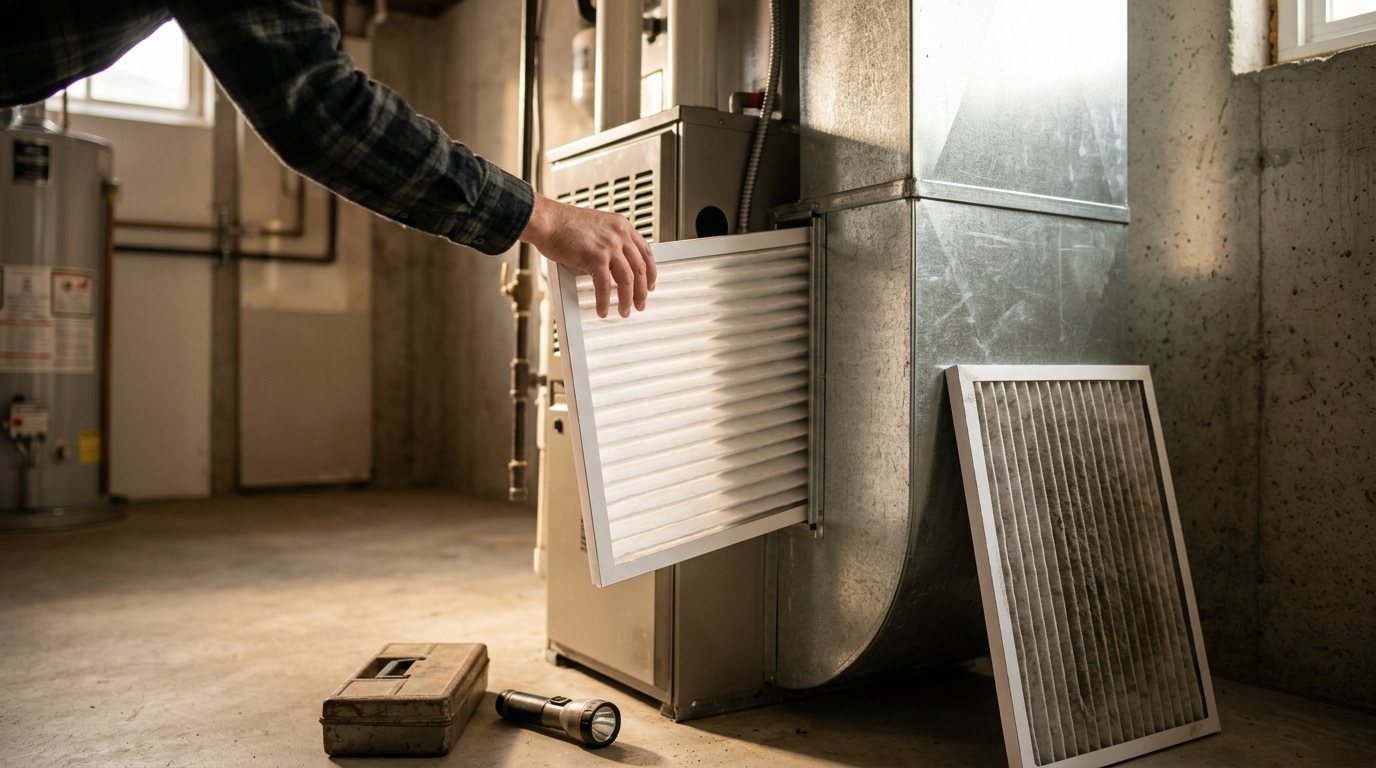
- Check the HVAC filter (2 minutes). ENERGY STAR recommends inspecting, cleaning or changing air filters once a month. Replace it if it looks gray or clogged; our guide on how to change a furnace filter walks you through sizing and direction.
- Test smoke and CO alarms (3 minutes). The U.S. Fire Administration says to test smoke alarms monthly. Press and hold each test button until it sounds, and test carbon monoxide alarms the same way following the manufacturer’s instructions.
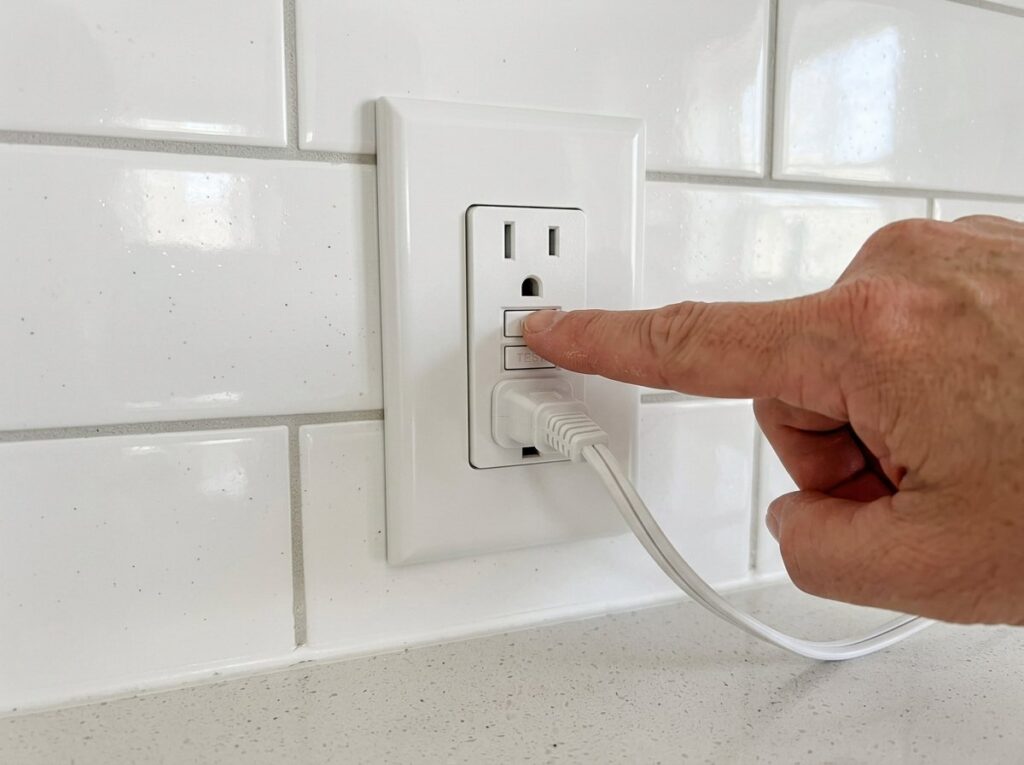
- Test GFCI outlets (3 minutes). The Consumer Product Safety Commission recommends testing GFCIs at least once a month. Plug in a lamp, press Test (the lamp should go off), then press Reset (it should come back on).
- Look under sinks and around toilets (2 minutes). Feel for damp cabinet floors, drips at supply lines and soft spots near the toilet base.
- Clean the range hood filter and garbage disposal (3 minutes). Soak a metal hood filter in hot soapy water, and grind a few ice cubes in the disposal followed by cold water.
- Run water in unused fixtures (1 minute). Run guest bathroom sinks and showers and flush seldom-used toilets so drain traps do not dry out and let sewer smells in.
- Clear lint around the dryer (1 minute). Clean the lint screen and wipe lint from behind and under the dryer, where it can build up.
Safety note: If a GFCI does not cut power when you press Test, or will not reset, the CPSC says it is not working or was installed incorrectly and should be checked by a qualified electrician. Do not keep using that outlet for appliances near water until it is fixed. Our guide to a GFCI outlet that keeps tripping covers the opposite problem.
Month-by-month home maintenance checklist
The table below follows a typical U.S. climate with cold winters and warm summers. In warmer regions, shift the cold-weather jobs later; in Australia, move everything by about six months. Do the monthly routine above in addition to these tasks.
| Month | Inside the home | Outside and systems |
|---|---|---|
| January | Check caulk around tubs, showers and sinks; vacuum refrigerator coils | Test the sump pump by pouring a bucket of water into the pit; check the attic for frost or leaks |
| February | Deep clean the dishwasher and washing machine; check grout | Book your spring AC tune-up before the busy season; check for ice dams after storms |
| March | Replace 9-volt smoke alarm batteries if not done in the last year (daylight saving time is an easy reminder) | Walk around the house and look for winter damage to roof, siding and fences |
| April | Clean windows and screens; check window and door weatherstripping | Clean gutters and downspouts; have the AC serviced; clear debris from around the outdoor unit |
| May | Clean ceiling fans and set them to spin counterclockwise for summer | Check outdoor faucets and hoses for leaks; inspect the deck, fence and exterior paint |
| June | Check bathroom exhaust fans; look for signs of pests | Clean the dryer vent duct from end to end; make sure the outside vent flap opens freely |
| July | Check under sinks and behind the fridge for slow leaks; clean refrigerator coils | Check that soil slopes away from the foundation; trim plants back from siding and the AC unit |
| August | Flush the water heater and check the area around it for leaks | Inspect driveway and walkways for cracks to repair before winter |
| September | Replace the furnace filter; check attic insulation and air leaks | Schedule the furnace tune-up; book a chimney inspection if you use a fireplace |
| October | Set ceiling fans to clockwise; test the heating system before the first cold night | Clean gutters after the leaves fall; disconnect hoses and shut off outdoor faucets |
| November | Replace smoke and CO alarm batteries as needed; insulate exposed pipes | Winterize the lawn mower; get snow tools and ice melt ready |
| December | Check holiday lights and extension cords for damage; change the HVAC filter if it loads up fast | Keep dryer, furnace and meter vents clear of snow; watch for ice dams |
For a deeper seasonal list, see our fall home maintenance checklist, which covers sealing, heating and weatherproofing before winter.
How often the key tasks really need doing
HVAC filters
ENERGY STAR recommends checking filters monthly. How often you actually replace them depends on the filter type, pets, allergies and how hard the system is running. A dirty filter restricts airflow, makes the system work harder and can lead to frozen AC coils or a furnace that shuts itself off, so a monthly glance is worth it even when a replacement is not due.
Smoke and carbon monoxide alarms
The USFA says to test smoke alarms monthly, replace batteries in battery-powered and hardwired alarms at least once a year and replace the entire smoke alarm every 10 years. Sealed 10-year battery alarms should be replaced on the schedule the manufacturer gives. Check the date printed on the back of each alarm; if it is more than 10 years old, replace it now.
GFCI outlets
The CPSC recommends testing GFCIs after installation, at least once a month and after a power failure. They protect you in kitchens, bathrooms, garages, laundry areas and outdoors, where water and electricity meet. A GFCI that will not trip on test is not protecting you, even if the outlet still has power.
Gutters
Angi recommends cleaning gutters one to two times a year for an average home, typically in spring and early fall, and more often near trees: two or more times near oaks and about four times a year near pines. Clogged gutters overflow against the foundation and can contribute to ice dams in winter.
HVAC service
ENERGY STAR recommends a yearly pre-season checkup by a contractor, ideally the cooling system in spring and the heating system in fall. It also suggests booking ahead, because contractors get busy in summer and winter. A tune-up includes checking electrical connections, cleaning coils, testing controls and, for gas furnaces, checking burner combustion and the heat exchanger.
Water heater
Sediment settles in the bottom of a tank water heater, reducing efficiency and causing rumbling noises. Flushing it once a year is a common maintenance step; always follow the manufacturer’s instructions. Our guide on how to flush a water heater covers the steps and safety precautions.
Dryer vent
The USFA says to clean the lint filter before and after each load, check that the vent behind the dryer is not crushed or restricted and make sure the outdoor vent flap opens when the dryer runs. It warns that you are at higher risk of a dryer fire if you do not clean the lint filter and vents. Bob Vila’s cost guide notes that experts recommend cleaning the vent once a year, or twice for large households that run the dryer often.
Tools and materials to keep on hand
- Spare HVAC filters in the correct size
- Smoke and CO alarm batteries, plus a step stool
- A small lamp or plug-in outlet tester for checking GFCIs
- Flashlight, rubber gloves and microfiber cloths
- Silicone caulk and a caulk gun
- Garden hose and bucket for the water heater and sump pump tests
- Dryer vent brush kit and a shop vacuum
- A notebook or phone note to record dates, filter sizes and anything that needs a pro
Typical costs when you hire a pro
Many of these jobs are easy DIY tasks, but some are safer or faster with a professional. The ranges below are typical national figures from the sources named; local prices vary.
| Service | Typical cost | Source |
|---|---|---|
| Furnace tune-up | $100 to $200 | Bob Vila |
| Furnace maintenance plan | $150 to $500 per year | Bob Vila |
| Gutter cleaning | $119 to $234, average $167 | Angi |
| Dryer vent cleaning | $102 to $179, average $139 | Bob Vila |
When to call a pro
Routine checks are meant to spot trouble, not to fix everything yourself. Call a licensed professional if you notice:
- A GFCI that will not trip or reset, warm outlets or breakers that keep tripping (electrician)
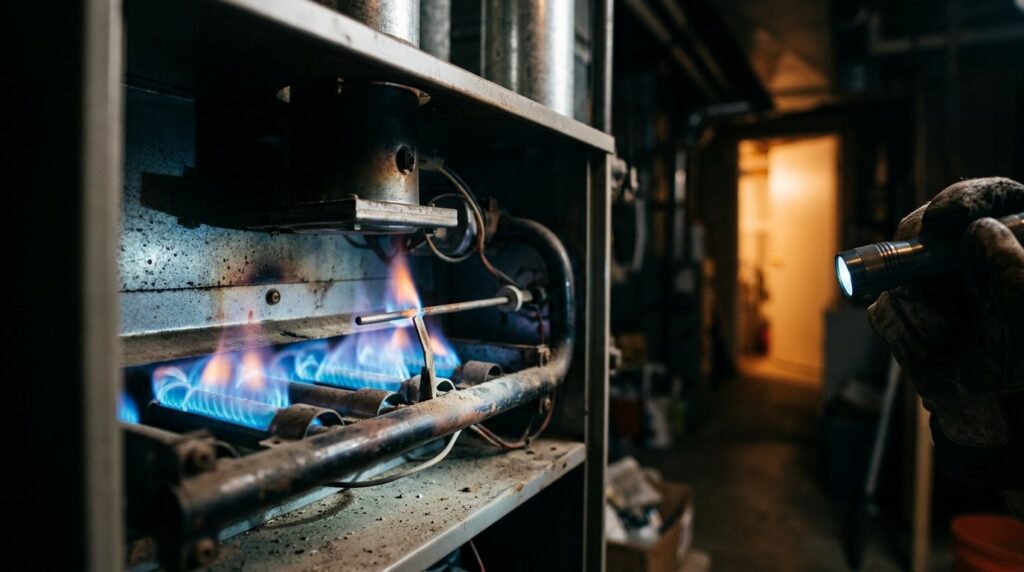
- A carbon monoxide alarm sounding, a gas smell or a furnace flame that looks yellow instead of blue (leave the house and call the gas utility or 911 first)
- Water stains on ceilings, a sump pump that does not start during the test or a leaking water heater (plumber)
- Roof damage you can only reach by climbing, or gutters on a second story or steep roof (roofer or gutter service)
- A dryer that takes much longer to dry clothes or gets very hot, even after cleaning the lint screen (dryer vent service)
Annual HVAC tune-ups are best left to a contractor, since they involve electrical connections, refrigerant and gas components.
Frequently asked questions
What home maintenance should be done monthly?
Check the HVAC filter, test smoke and CO alarms, test GFCI outlets and look under sinks and around toilets for leaks. Cleaning the range hood filter, running water in unused fixtures and clearing lint around the dryer round out a quick monthly routine.
How often should you test GFCI outlets?
The CPSC recommends testing GFCIs at least once a month, after a power failure and after installation. Press Test to cut the power, then Reset to restore it. If either step fails, have an electrician check it.
How often should gutters be cleaned?
Most homes need gutter cleaning once or twice a year, usually in spring and fall. Angi recommends two or more cleanings near oak trees, about four near pines and at least one yearly even with gutter guards.
How much should I budget for home maintenance each year?
A common rule of thumb, cited by Opendoor, is to budget 1% to 4% of your home’s value per year. Older homes and homes with aging roofs, HVAC systems or water heaters usually need the higher end. Following a monthly checklist helps you spread costs out and avoid emergency repairs.
When should smoke detectors be replaced?
The USFA says to replace smoke alarms every 10 years, and to replace sealed long-life battery alarms according to the manufacturer’s instructions. Check the manufacture date on the back of each alarm and replace any that are older than that.
The bottom line
A home maintenance checklist works best when it is small and regular. Spend 15 minutes each month on filters, alarms, GFCIs and leak checks, then tackle one or two seasonal jobs from the month-by-month table. You will catch problems while they are cheap, keep your systems running efficiently and avoid most surprise repair bills.