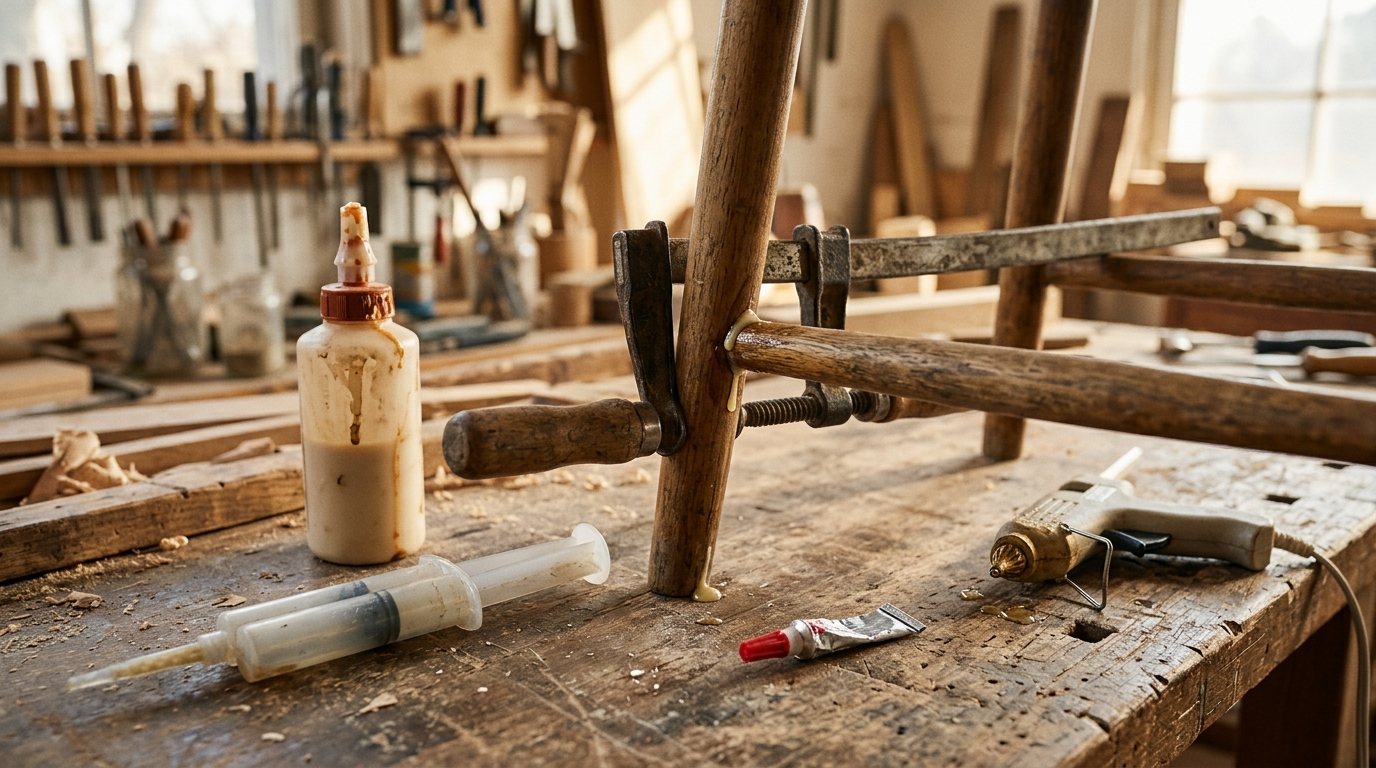
A chair rung works loose, a mug handle snaps off, or a piece of trim keeps pulling away from the wall. You open the junk drawer and find a half-used tube of super glue, some wood glue and a glue gun, and you’re not sure any of them is right for the job.
This guide explains what glue to use for each common household material. You’ll find a quick material-pair chart, a plain-English rundown of wood glue, construction adhesive, epoxy, super glue, PVC cement, contact cement and hot glue, plus the prep steps that make any bond stronger and the safety basics for solvent-based products.
Quick answer: Use wood glue for wood-to-wood joints, construction adhesive for big jobs like subfloors and paneling, two-part epoxy for metal, ceramic and mixed materials, and super glue for small, tight-fitting repairs. Use PVC cement only for PVC pipe and fittings, contact cement for laminate and leather, and hot glue for crafts and light temporary fixes. Clean and roughen the surfaces first, and clamp or hold the parts until the glue sets.
Quick glue chooser by material
| Joining | Best glue | Notes |
|---|---|---|
| Wood to wood (indoors) | Yellow PVA wood glue | Clamp at least 30 minutes; full strength in about 24 hours |
| Wood to wood (outdoors or damp) | Water-resistant PVA or polyurethane glue | Polyurethane foams as it cures; dampen one side first |
| Subfloor, paneling, trim to framing | Construction adhesive | Use with screws or nails, not instead of them |
| Metal to metal or wood to metal | Two-part epoxy | Scuff shiny surfaces first |
| Ceramic or porcelain repairs | Two-part epoxy; super glue for tiny chips | Check the label before using on anything that touches food |
| Glass | Clear epoxy or glass-rated super glue | Surfaces must be spotless and dry |
| Hard plastics (ABS, acrylic, PVC parts) | Plastic-rated super glue or plastic epoxy | Polyethylene and polypropylene need a special plastic bonder |
| PVC pipe to PVC fitting | PVC primer and PVC solvent cement | ABS pipe needs ABS cement; mixing them needs transition cement |
| Laminate to countertop, leather, rubber | Contact cement | Coat both sides and let it tack before joining |
| Stone, brick or concrete to wood or metal | Construction adhesive or epoxy | Choose a product rated for masonry and outdoor use |
| Fabric, felt, cardboard, crafts | Hot glue | Low strength; softens with heat |
| Foam board or polystyrene | Foam-safe adhesive | Solvent-based glues can melt foam |
The main types of glue
Wood glue (PVA)
Yellow wood glue, a polyvinyl acetate (PVA) glue, is the right choice for furniture, cabinets, shelves and picture frames. It soaks into wood fibers and can create a joint stronger than the surrounding wood when the pieces fit tightly. According to one wood glue guide from a long-running renovation show, clamp yellow PVA joints for at least 30 minutes and let them reach full strength over 24 hours. Standard yellow glue is for indoor projects; choose a water-resistant version for outdoor furniture.
Polyurethane glue
Polyurethane glue cures with moisture and expands slightly as it sets, filling small gaps. It bonds wood, stone, metal, ceramic and some plastics, and it’s highly water-resistant. Lightly dampen one surface, use less than you think you need, and clamp firmly, because the foaming squeeze-out is hard to clean once it hardens.
Construction adhesive
Construction adhesive comes in caulk-gun tubes and bonds wood, drywall, concrete, metal and many plastics. It’s used for subfloors, wall paneling, stair treads, landscape blocks and trim that keeps pulling away. It stays slightly flexible and fills gaps, but products vary a lot in moisture and cold resistance, so pick one rated for your material and conditions.
Two-part epoxy
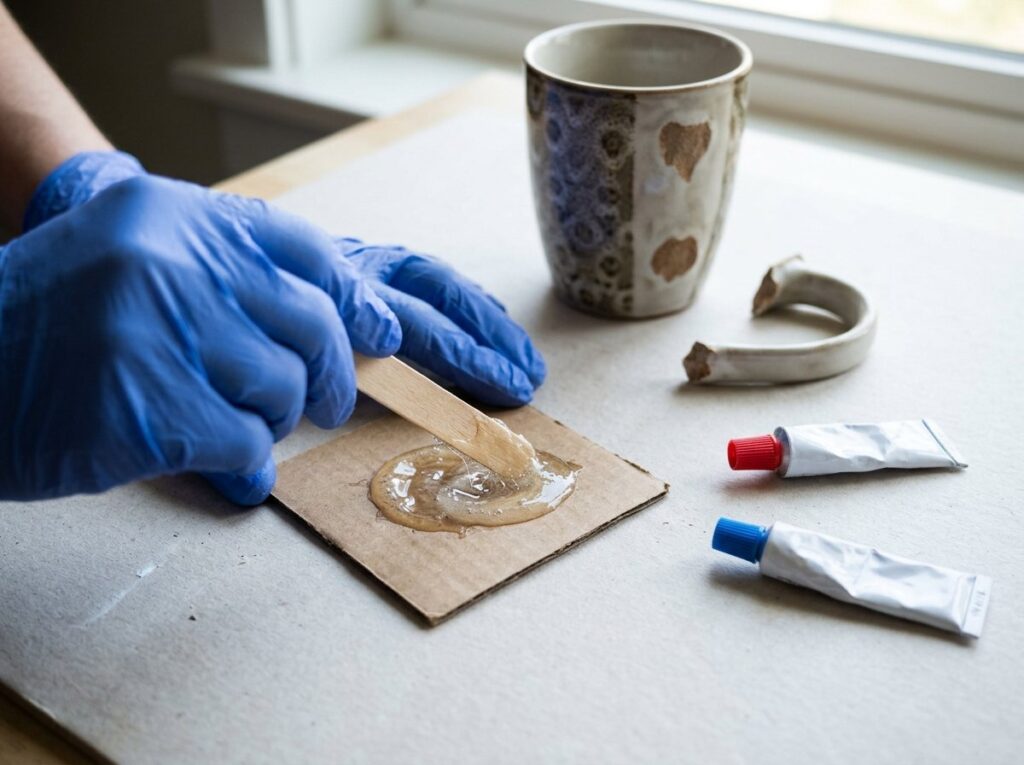
Epoxy is a resin and hardener you mix just before use. It bonds metal, ceramic, glass, wood, concrete and many plastics, fills gaps and resists water and heat. Working times range from about 5 to 30 minutes depending on the formula; quick-set versions are handy for small fixes, while slower ones generally cure stronger. Mix thoroughly in the stated ratio, or it may never fully harden.
Super glue (cyanoacrylate)
Super glue sets in seconds without clamps and is excellent for small, tight-fitting repairs on ceramic, glass, metal, rubber, some plastics and wood. It’s strong in tension but brittle, so it doesn’t handle impact or flexing well. Gel versions stay put on vertical surfaces and fill tiny gaps better than the thin liquid.
PVC cement
PVC cement isn’t really a glue. It’s a solvent that softens the surface of PVC pipe and fittings so they fuse into one piece. Use primer first where your local code or the cement label requires it, push the pipe fully into the fitting with a slight twist and hold it briefly so it doesn’t push back out. Use ABS cement for black ABS pipe and transition cement where the two meet.
Contact cement
Contact cement bonds large, flat surfaces like plastic laminate on countertops, veneer, leather and rubber. Brush it on both surfaces, wait until it’s dry to a light touch (usually several minutes), then press the parts together. The bond is instant and you can’t reposition it, so line things up carefully, often with dowels or sticks between the parts until you’re ready.
Hot glue
Hot glue is fast and easy for crafts, fabric, felt, cardboard and light temporary fixes. It’s not a structural glue and softens again with heat, so skip it for anything that bears weight, gets wet or sits in a hot car or attic.
How to get a strong bond
- Check the label to confirm the glue is rated for both materials and the conditions, like outdoors, water or heat.
- Clean the surfaces of dust, grease and old glue. Wipe nonporous surfaces with rubbing alcohol and let them dry.
- Scuff smooth surfaces like metal, glazed ceramic and hard plastic with fine sandpaper so the glue can grip.
- Dry-fit the parts and plan your clamps, tape or weights before you open the glue.
- Apply a thin, even coat. Too much glue weakens many joints and makes a mess.
- Clamp or hold the parts for the time on the label, then leave the repair undisturbed until it reaches full strength, often 24 hours.
- Work at room temperature when possible. Most glues set slowly or poorly in the cold.
Tools and materials
- The right glue for your materials
- Clamps, painter’s tape or rubber bands to hold parts
- Fine sandpaper and rubbing alcohol for prep
- Caulk gun for construction adhesive
- Disposable mixing tray and sticks for epoxy
- Nitrile gloves, safety glasses and rags
Safety note: Contact cement, PVC cement and many construction adhesives give off solvent vapors that are flammable and unhealthy to breathe. The EPA lists glues and adhesives among household sources of volatile organic compounds and advises using them with plenty of fresh air and following label precautions. Open windows, run an exhaust fan, keep flames and pilot lights away, and wear nitrile gloves with epoxy and super glue.
Common gluing mistakes
- Gluing over old glue, paint or grease, which the new glue can’t grip
- Using super glue on joints that flex or take impact, where it cracks
- Applying a thick layer of glue to make up for a poor fit instead of filling or shimming the gap
- Unclamping too soon or using the item before the glue reaches full strength
- Using hot glue or craft glue for anything that bears weight or gets wet
- Gluing PVC to ABS pipe with the wrong cement
Cleanup and storage
Wipe wood glue squeeze-out with a damp rag right away, or let it turn rubbery and pare it off, because dried glue blocks stain. Clean uncured epoxy and construction adhesive with the solvent named on the label, not water. Store glues tightly capped in a cool, dry spot, keep water-based wood glue from freezing, and toss any glue that has turned stringy, lumpy or separated.
When glue isn’t the answer
Glue works best on clean, tight-fitting joints. For anything that carries a load, like shelves, railings and deck parts, use mechanical fasteners and add glue for stiffness; our guide to screws vs nails covers which fastener to choose. Construction adhesive under a subfloor, combined with screws, is a classic way to stop squeaks, as explained in how to fix squeaky floors.
Gaps around tubs, sinks and trim need caulk, not glue, because caulk stays flexible and seals out water. See how to recaulk a bathtub for that job.
When to call a pro
Most glue repairs are simple, but call a professional when:
- A glued PVC drain or supply joint leaks, or the repair is inside a wall or ceiling
- The repair involves pressurized water lines, gas lines or anything electrical
- A glued joint holds weight that could hurt someone if it failed, like a railing or stair part
- Countertop laminate is lifting over a large area or the substrate is water-damaged
For plumbing, Angi reports plumbers typically charge about $45 to $200 per hour, averaging around $100. If you’re tracking down a drip under the sink first, our guide to a leak under the kitchen sink walks through the likely causes.
Frequently asked questions
What is the strongest glue for household repairs?
For most mixed-material repairs, a slow-setting two-part epoxy is the strongest option. For wood, a well-clamped wood glue joint can be stronger than the wood itself.
Can I use super glue on wood?
Yes, for small cracks, splinters and quick fixes, especially with gel super glue. For furniture joints and larger pieces, wood glue is stronger and more forgiving.
What glue works on plastic?
Use a super glue or epoxy labeled for plastic on hard plastics like ABS and acrylic. Slippery plastics such as polyethylene and polypropylene, found in many containers and lawn furniture, need a special plastic bonder with a primer.
Is wood glue waterproof?
Standard yellow wood glue is for indoor use. Choose a water-resistant or waterproof wood glue, polyurethane or epoxy for outdoor furniture and anything exposed to moisture.
How do I get super glue off my skin?
Soak the area in warm, soapy water and gently roll or peel the skin apart; acetone nail polish remover can help loosen it. Never pull bonded skin apart forcefully, and get medical help if glue gets in or near your eyes.
What glue should I use to fix a ceramic mug?
Two-part epoxy is the most durable choice for a broken handle. Most glues aren’t intended for surfaces that touch food or go in the dishwasher, so check the label or use the repaired mug for display.
The bottom line
Choosing what glue to use comes down to the materials and the conditions. Reach for wood glue on wood, epoxy for mixed or hard materials, super glue for small quick fixes, construction adhesive for big building jobs, and the specialty products, PVC cement, contact cement and hot glue, only for what they’re made for. Prep the surfaces, clamp the joint and give it time to cure.