A squeaky floor is rarely a sign of a serious problem, but it can drive you up the wall. That one creaky spot in the hallway that announces every late-night trip to the kitchen, the board that pops right outside the nursery door, the stairs that squeal under every step. The good news: most squeaks have a simple mechanical cause, and you can fix them yourself with inexpensive supplies.
This guide explains why floors squeak, how to find the exact source, and the best fixes for every situation: from below when you have basement access, from above through carpet or hardwood, and on stairs. You’ll also learn when a squeak is a sign of something that needs a professional.
Quick answer: Most squeaks come from the subfloor rubbing against a joist or loose nails. If you can reach the floor from a basement, tap glued wood shims into gaps between the joist and subfloor or run a bead of construction adhesive. From above, use a squeak repair kit with breakaway screws for carpet, or trim-head screws into the joist for hardwood. For board-to-board squeaks, powdered graphite or talc often helps.
Why floors squeak
Wood moves. It expands when it’s humid and shrinks when it’s dry, and every footstep flexes the floor slightly. Squeaks happen when two pieces of wood, or wood and a nail, rub against each other as they move. Common causes include:
- Gaps between the subfloor and the joists. If the subfloor isn’t tight against a joist, it flexes down and rubs every time you step on it.
- Loose or popped nails. Nails can lose their grip over time and squeak as the wood slides up and down them.
- Floorboards rubbing each other. Hardwood boards can rub at their edges, especially in dry winter air.
- Shrinking lumber. Joists and subfloor dry and shrink after construction, opening small gaps.
- Seasonal humidity swings. Many squeaks appear in winter when heating dries the air, and quiet down in summer.
Step 1: Find the squeak
Fixing a squeak starts with pinpointing it. Have a helper walk slowly across the area while you listen. Mark the noisiest spots with painter’s tape. If you have a basement or crawl space below, go down while your helper walks above. You can often see the subfloor move or hear the squeak right at a specific joist, and you may spot daylight-thin gaps between the joist and the subfloor.
Also note where the joists are. They usually run perpendicular to the floorboards and are spaced 16 inches apart, measured center to center, though spacing can vary. A stud finder, a strong magnet to locate nails, or simply knocking and listening for a solid sound can help you find them from above.
Fixing squeaks from below (basement or crawl space)
If you can reach the underside of the floor, you have the best options because you can fix the cause without touching the finished floor.
Shim the gaps
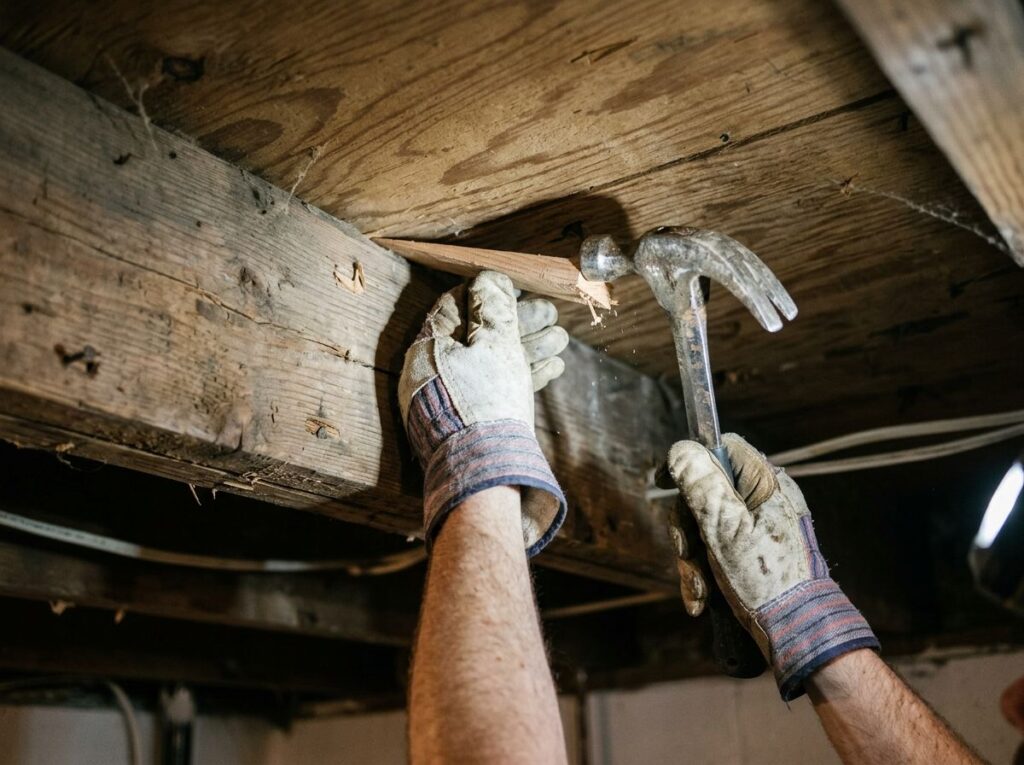
Where you see a gap between the top of a joist and the subfloor, coat a thin wood shim with wood glue and gently tap it into the gap. The goal is to fill the space snugly, not to force the subfloor upward, which could create a hump or a new squeak. Shims work best for small, isolated gaps.
Use construction adhesive for longer gaps
If a gap runs along several feet of a joist, shims become tedious. Instead, run a thick bead of construction adhesive along both sides of the joist where it meets the subfloor. As it cures, it bonds the two together and fills the gap.
Add blocking or a cleat
For a squeak between joists, where the subfloor flexes in the middle, you can add support. Cut a short piece of 2×4 or 2×6 to fit snugly between joists, apply construction adhesive to the top edge, press it firmly against the subfloor, and screw it into the joists on both sides. A wood cleat screwed alongside a joist, glued tight to the subfloor, also works well.
Screw the subfloor down from below
You can pull a loose subfloor tight to the floor above with screws driven up through a block or cleat into the subfloor. Measure carefully: the screw must be long enough to grab the subfloor but short enough that it doesn’t poke through your finished floor. Combined thickness of subfloor and flooring is often around 1 1/2 inches, but always check yours.
Try a squeak-fixing bracket
Hardware stores sell metal brackets designed specifically to pull the subfloor tight to a joist from below. They screw into the side of the joist and the underside of the subfloor, and they’re helpful when the gap is too large for a shim.
Fixing squeaks from above
Under carpet
Carpet makes the repair easy to hide. Specialized squeak repair kits use screws with a scored shank that you drive through the carpet and pad into the joist. A depth-control fixture sets the screw at the right depth, and then you snap off the head below the carpet surface. The carpet fibers close over the spot, leaving no trace. Be sure to locate the joist first so the screw has something solid to grab.
Under hardwood
For hardwood floors, drive a trim-head screw (a screw with a very small head) through the board and into the joist at a slight angle. Drill a pilot hole first to avoid splitting the board, countersink the head just below the surface, and fill the hole with color-matched wood filler or a wax filler stick. Kits designed for hardwood include a fixture that drives and snaps the screw below the surface, leaving a tiny hole that’s easy to fill.
Board-to-board squeaks
If the noise comes from boards rubbing each other rather than the subfloor, try lubricating the joint. Work powdered graphite, talcum powder or a dry lubricant into the seams, then place a towel over the area and walk on it to push the powder in. It’s a quick fix that often quiets minor squeaks, though it may need repeating.
Safety note: Before driving screws into a floor, make sure there are no pipes, wires or radiant heating tubes underneath. If you have in-floor heating, check with your installer or a professional before putting any fasteners through the floor.
How to fix squeaky stairs
Stairs squeak when the treads rub against the risers or the stringers. If the underside of the stairs is accessible, glue and screw small wood blocks into the inside corners where the tread meets the riser, and tap glued shims into any gaps. From above, drive trim-head screws at an angle through the tread into the riser below, countersink them and fill the holes. On carpeted stairs, a squeak repair kit works just as it does on floors.
Squeaks in laminate, vinyl and tile
Floating floors such as laminate and many luxury vinyl planks aren’t nailed down, so they can creak or click when the subfloor underneath is uneven or the floor lacks room to expand. Check that the gap at the walls isn’t blocked by baseboards pinning the floor, and look for soft spots that suggest an uneven subfloor. Fixing these properly may mean lifting planks to level the subfloor. With tile, a hollow sound or cracking grout can mean the tile has lost its bond, which usually calls for a professional repair.
Which fix is right for you?
| Situation | Best fix | Difficulty |
|---|---|---|
| Visible gap at a joist, basement access | Glued wood shims | Easy |
| Long gap along a joist | Construction adhesive bead | Easy |
| Squeak between joists | Blocking or a glued cleat | Moderate |
| Carpeted floor, no access below | Breakaway screw kit | Easy |
| Hardwood floor, no access below | Trim-head screws, filled | Moderate |
| Boards rubbing each other | Graphite or talc in the seams | Very easy |
| Squeaky stair treads | Glue blocks or angled screws | Moderate |
Prevent squeaks with humidity control
Because dry air shrinks wood, keeping your indoor humidity steady helps prevent seasonal squeaks and gaps in hardwood. Many hardwood flooring manufacturers recommend maintaining indoor relative humidity in roughly the 35 to 55% range. A whole-house or room humidifier in winter and a dehumidifier in humid summers can keep floors quieter and protect them from cupping and gaps.
When a squeak is a warning sign
Most squeaks are harmless. Call a contractor or structural professional if you notice:
- Floors that feel bouncy, spongy or sag noticeably.
- Cracked, split or notched joists.
- Signs of water damage, rot or mold below the floor.
- Evidence of termites or other wood-destroying insects.
- New squeaks combined with doors that stick or cracks appearing in walls.
Frequently asked questions
Are squeaky floors a structural problem?
Usually not. Most squeaks come from minor movement between the subfloor, joists and nails. They become a concern only if accompanied by sagging, bouncing, rot or damaged joists.
Why do my floors squeak more in winter?
Heating dries indoor air, which shrinks wood and opens small gaps between boards and between the subfloor and joists. Adding humidity often reduces winter squeaks.
Can I fix squeaky floors without removing carpet?
Yes. Squeak repair kits with breakaway screws go right through carpet and pad, and the snapped-off screw stays hidden below the fibers.
Will nailing the floor stop the squeak?
Nails can loosen again over time, which is often what caused the squeak in the first place. Screws hold much better and are the preferred fix.
Does powder really fix squeaky floors?
It can quiet squeaks caused by boards rubbing together. It won’t fix squeaks caused by subfloor movement or loose nails.
The bottom line
Finding the squeak is half the battle. Once you know whether the noise comes from a subfloor gap, a loose nail or boards rubbing together, the fix is usually quick and cheap: shims or adhesive from below, special screw kits from above, or a little powder in the seams. Keep your humidity steady through the seasons, and your floors will stay quieter for years.