The first hard freeze has a way of revealing everything you meant to fix in the fall: a furnace that cycles on and off, a bedroom that never feels warm, icicles growing off the gutters, or a musty smell in the basement. Winter is when small home problems turn into expensive ones.
This winter home maintenance checklist covers what to do from December through February: heating, smoke and carbon monoxide alarms, frozen pipes, ice dams, humidity, drafts and snow gear. You’ll get a quick-reference table, a month-by-month plan and clear signs it’s time to call a pro. If you skipped your fall tasks, start with our fall home maintenance checklist and catch up on the essentials first.
Quick answer: Every month this winter, check the furnace filter, test smoke and carbon monoxide alarms, and keep vents, gutters, exhaust pipes and the outdoor heat pump clear of snow and ice. Protect pipes in unheated areas, keep indoor humidity between about 30 and 50 percent, and seal drafts as you find them. Call a pro for a furnace that won’t stay lit, ceiling water stains, a burst pipe or any carbon monoxide alarm.
Winter maintenance checklist at a glance
Use this table as your quick reference. Most tasks take less than half an hour.
| Task | How often | Time needed | DIY or pro |
|---|---|---|---|
| Check or change the furnace filter | Monthly | 5 minutes | DIY |
| Test smoke and CO alarms | Monthly | 10 minutes | DIY |
| Clear snow from vents, heat pump and gas meter | After every snowfall | 10 to 20 minutes | DIY |
| Check eaves and gutters for ice buildup | After storms and thaws | 15 minutes | DIY from the ground |
| Check indoor humidity | Weekly | 2 minutes | DIY |
| Inspect pipes in unheated spaces | Before each cold snap | 15 minutes | DIY |
| Find and seal drafts | Once in December, then as needed | 1 to 2 hours | DIY |
| Test the sump pump | February, before the thaw | 10 minutes | DIY |
| Heating system tune-up | Once a year, ideally in fall | 1 to 2 hours | Pro |
Heating system: keep it safe and efficient
Your heating system does most of its yearly work between December and February. The National Fire Protection Association notes that half of all home heating fires are reported in December, January and February. A few minutes of attention each month lowers that risk.
Check the filter every month
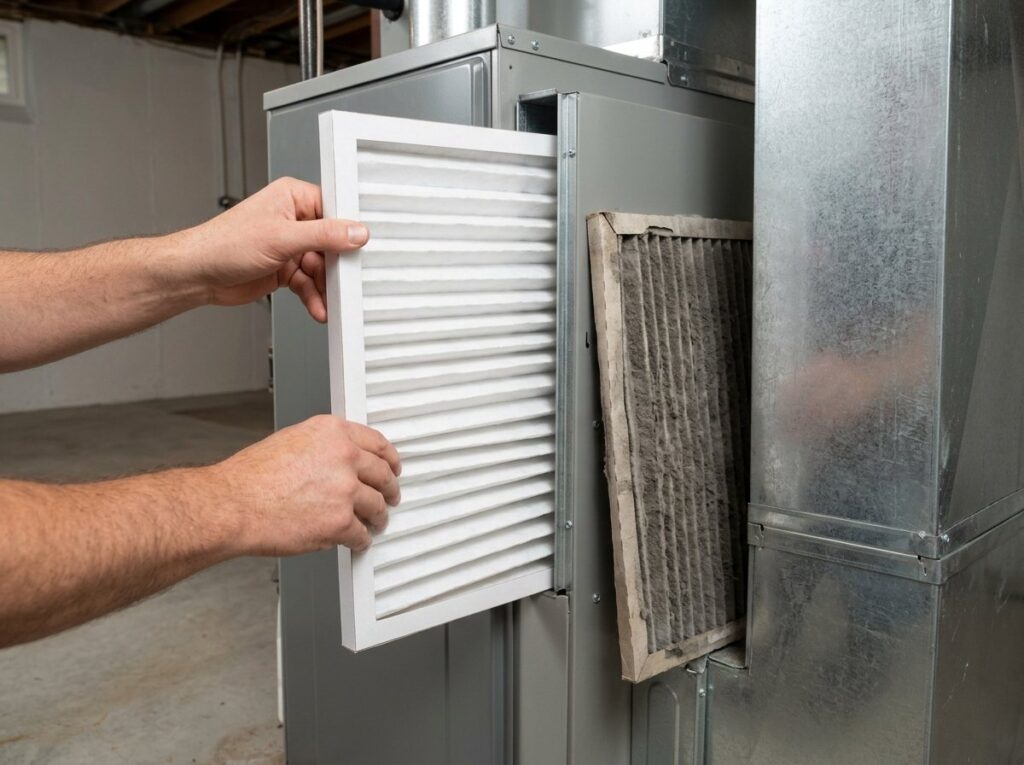
A clogged filter chokes airflow, makes the system run longer and can cause a furnace to overheat and shut itself off. Slide the filter out once a month and hold it up to a light. If you can barely see light through it, replace it. Our guide on how to change a furnace filter covers sizing, MERV ratings and airflow direction.
Keep vents and exhaust pipes clear
Make sure furniture, rugs and holiday decorations aren’t blocking supply registers or return grilles. Outside, high-efficiency furnaces and water heaters often vent through plastic pipes in a side wall. After every snowfall, clear snow and ice from those pipes, because a blocked vent can shut the appliance down or push combustion gases back indoors. Do the same for the dryer vent flap and gas meter.
Clear the heat pump’s outdoor unit
Keep a couple of feet of open space around a heat pump’s outdoor unit and brush snow off gently. Light frost is normal and melts during the defrost cycle, but a unit encased in solid ice needs a technician. Don’t chip at the ice, because the thin fins bend and puncture easily.
Give space heaters and fireplaces room
Keep anything that can burn at least 3 feet (1 meter) away from furnaces, fireplaces, wood stoves and space heaters, the clearance the NFPA recommends. Plug space heaters directly into a wall outlet, never an extension cord or power strip, and turn them off when you leave the room or go to bed. If you burn wood, have the chimney inspected and cleaned once a year, and store cooled ashes outside in a metal can with a lid.
Safety note: If you smell gas, don’t flip light switches, use your phone indoors or try to find the leak yourself. Get everyone out of the house, then call your gas utility or 911 from outside.
Smoke and carbon monoxide alarms
Winter is peak season for carbon monoxide (CO) problems because fuel-burning appliances run the most while windows stay shut. The U.S. Consumer Product Safety Commission recommends CO alarms on every level of the home and outside sleeping areas, tested monthly, with batteries replaced every year.
- Press and hold the test button on each smoke and CO alarm until it sounds. Have someone in the farthest bedroom, door closed, confirm they can hear it.
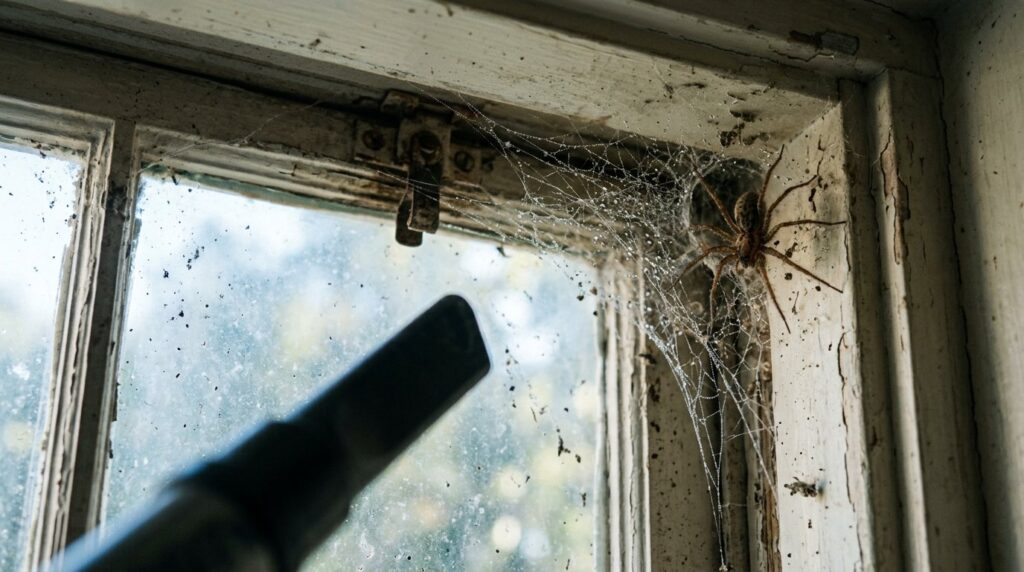
- Vacuum the vents gently with a brush attachment to clear the dust that causes nuisance alarms.
- Check the manufacture date on the back. Replace smoke alarms 10 years after that date, and replace CO alarms by the end-of-life date on the label.
- Replace the battery in any alarm that chirps. If a fresh battery doesn’t stop the chirp, the alarm has likely reached the end of its life.
Prevent frozen pipes
Pipes in exterior walls, crawl spaces, garages, attics and under sinks on outside walls are the most likely to freeze. A burst pipe can release a lot of water quickly, often once the ice thaws, so prevention is far cheaper than cleanup. Our guide on how to prevent frozen pipes covers heat cable, insulation and safe thawing, but these are the winter essentials:
- Disconnect garden hoses, and shut off and drain outdoor faucets that aren’t frost-free.
- Insulate exposed pipes in unheated spaces with foam pipe sleeves.
- During hard freezes, open sink cabinets on exterior walls and let a faucet on a vulnerable line drip slowly.
- Keep the heat at 55°F (13°C) or higher if you travel, and ask someone to check on the house.
- Find and tag your main water shutoff valve now, and show everyone in the house how to turn it.
Roof, gutters and ice dams
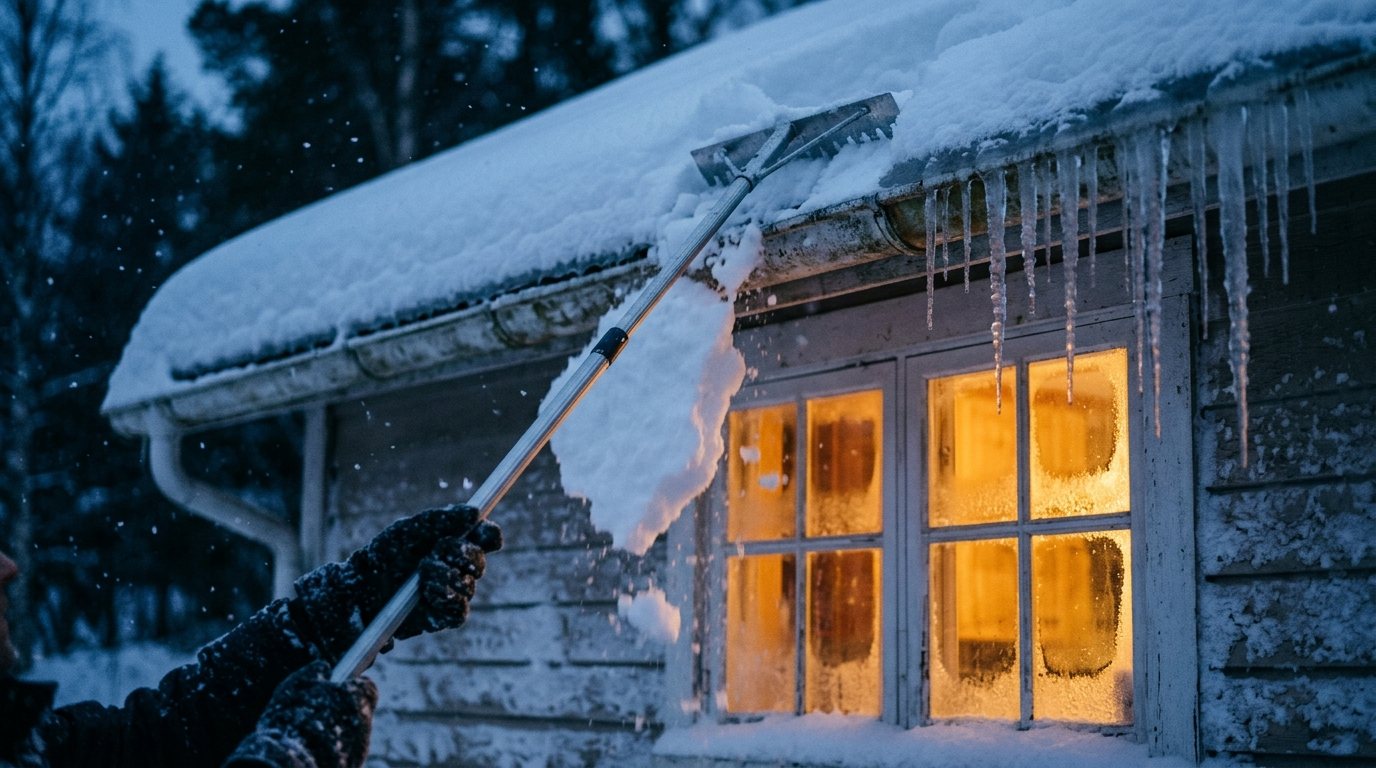
Ice dams form when heat escaping from the living space melts snow on the roof. The meltwater refreezes at the cold eaves and builds a ridge of ice that traps more water behind it, which can back up under shingles and stain ceilings. Large, thick icicles along the gutters are a common warning sign.
- After heavy snow, use a long-handled roof rake from the ground to pull snow off the lower few feet of the roof. Never climb onto a snowy or icy roof.
- Keep downspouts and their outlets clear so meltwater drains away from the foundation.
- Check ceilings and the tops of exterior walls for damp spots after thaws.
- In the attic, look for frost on the underside of the roof deck or on nail tips, a sign of warm, moist air leaking up from the house.
The long-term fix is better attic air sealing, insulation and ventilation, which keeps the roof deck cold. Our guide on how to prevent ice dams explains the permanent fixes and how to handle one that has already formed.
Manage indoor humidity and condensation
Heated winter air is dry, which brings static shocks, dry skin and gaps in wood floors. Too much moisture is a bigger problem, though: condensation on windows, mold in cold corners and frost in the attic. The EPA recommends keeping indoor humidity below 60 percent, ideally between 30 and 50 percent.
- Use an inexpensive digital hygrometer to check a few rooms.
- If windows run with condensation every morning, humidity is too high for the outdoor temperature. Run bath and kitchen exhaust fans longer and turn the humidifier down.
- During very cold spells, aim for the low end of the range, because cold glass collects moisture sooner.
- Clean portable humidifiers as the manual directs, and replace the water panel on a whole-house humidifier once a season.
Find and stop drafts
Drafts make rooms feel colder than the thermostat says, so you turn the heat up and pay for it. On a cold, windy day, walk the house slowly and hold the back of a damp hand near likely leak points: door bottoms and latch sides, window sashes and trim, outlets on exterior walls, attic hatches and gaps where pipes or cables pass through walls.
Most fixes are quick and cheap: a new door sweep, foam or rubber weatherstripping, foam gaskets behind outlet covers and a bead of caulk around trim. Caulk cures poorly in the cold, so do exterior caulking on a mild day and check the tube for its minimum application temperature. Shrink-film window kits are a good stopgap for drafty windows.
Snow gear and outage prep
Start your snow blower before the first storm, not during it. Stale fuel left in the tank since last season is a frequent reason a snow blower won’t start, so use fresh, stabilized gas and check the shear pins and auger. Rock salt is hard on young concrete, plants and pets’ paws, so choose a gentler product for entries and steps.
For power outages, keep flashlights, fresh batteries and charged power banks in one known spot, along with water and nonperishable food for at least three days. If you use a portable generator, run it outdoors only, at least 20 feet from doors, windows and vents, as the CDC advises. Never run it in a garage, even with the door open.
Month-by-month winter plan
December
- Test every smoke and CO alarm and replace any past their date.
- Change the furnace filter and clear registers and returns.
- Hunt for drafts and add weatherstripping and door sweeps.
- Insulate exposed pipes and confirm outdoor faucets are off.
January
- Check the furnace filter again.
- Watch for ice dams after storms and rake roof edges from the ground.
- Track humidity and window condensation during the coldest weeks.
- Check the attic for frost or damp insulation.
February
- Test the sump pump by slowly pouring a bucket of water into the pit.
- Look for water stains on ceilings and around windows after freeze-thaw cycles.
- Check the basement and crawl space for moisture and signs of mice.
- Book spring jobs early, such as gutter repairs and AC servicing.
Tools and materials
- Digital hygrometer
- Replacement furnace filters in the correct size
- Foam pipe insulation sleeves and outdoor faucet covers
- Weatherstripping, door sweeps and foam outlet gaskets
- Roof rake with an extension handle
- Snow shovel and a pet-friendlier ice melt
Common winter maintenance mistakes
- Turning the heat way down in an empty house. A very low vacation setting can let pipes in exterior walls freeze.
- Chipping at ice dams with a hammer. It damages shingles and gutters and puts you on a slippery ladder.
- Heating the house with the oven or a grill. Both can produce dangerous carbon monoxide indoors.
When to call a pro
Call a licensed pro quickly if:
- A CO alarm sounds. Get everyone outside, call 911 or the fire department, and have fuel-burning appliances inspected before using them again.
- The furnace won’t stay lit, cycles constantly, or you smell gas or burning.
- Water stains appear on ceilings or walls after snow or a thaw, which can mean an ice dam leak.
- A pipe has frozen and you can’t locate or safely thaw it, or any pipe has burst.
- The heat pump’s outdoor unit stays encased in ice for hours.
A routine furnace tune-up typically costs about $100 to $200, based on HomeAdvisor figures. HomeAdvisor also reports that professional ice dam removal typically runs $650 to $2,000, with steam removal around $800 to $2,100. Emergency and after-hours visits usually cost more.
Frequently asked questions
What temperature should I keep my house at in winter to prevent frozen pipes?
Keep the thermostat at 55°F (13°C) or higher, even when you’re away. In extreme cold, homes with pipes in exterior walls or crawl spaces may need a warmer setting, open cabinet doors and a slow drip on vulnerable faucets.
Should I cover my AC unit in winter?
A central AC condenser doesn’t need a full wrap, and a tight cover can trap moisture and shelter rodents. A breathable top-only cover keeps falling ice and debris off the fan. Never cover a heat pump, because it runs all winter and needs open airflow.
How often should I change my furnace filter in winter?
Check it every month. Basic 1-inch filters often need replacing every one to three months during heavy heating use, and sooner with pets or a lot of dust. Thicker media filters last longer, so follow the interval on the packaging.
Are icicles on my house a bad sign?
A few small icicles aren’t a crisis, but large, thick ones along the eaves usually mean heat is escaping into the attic and an ice dam may be forming. Knock them down from the ground only if you can do it safely, and look into attic air sealing and insulation for a lasting fix.
Do I need to test my sump pump in winter?
Yes, especially before the spring thaw, when snowmelt can raise groundwater quickly. Pour a bucket of water into the pit, make sure the pump switches on and empties it, and check that the outside discharge line isn’t frozen or buried in snow.
The bottom line
Winter home maintenance comes down to small, regular checks: a clean filter, working alarms, clear vents, protected pipes and a roof edge free of heavy snow. Put the monthly tasks on your calendar, fix drafts as you find them, and call a pro for anything involving gas, carbon monoxide, burst pipes or ceiling leaks. A few minutes each month saves you from the costly emergencies that tend to happen on the coldest night of the year.