You flush, and instead of swirling away, the water starts rising toward the rim. It’s one of the most stressful few seconds in home ownership, and it always seems to happen when guests are over or right before bed.
Most toilet clogs are easy to clear with the right tool and technique. This guide shows you how to stop an overflow, how to use a flange plunger properly, when hot water and dish soap help, how to use a closet auger, what to avoid, and how to tell when the real problem is a clogged main sewer line.
Quick answer: Stop flushing, then use a flange plunger: seal it over the drain opening under water and give 15 to 20 firm push-pull strokes, then repeat if needed. If that fails, let hot (not boiling) water and dish soap soak for 20 minutes, plunge again, then use a closet auger. If several drains are backing up at once, stop using water and call a plumber for the main line.
First, stop the toilet from overflowing
If the water is climbing, act fast. Don’t flush again, since each flush adds more water to a bowl that can’t drain.
- Lift the tank lid and push the flapper (the rubber seal at the bottom of the tank) down to stop more water from entering the bowl.
- Turn the shutoff valve behind the toilet clockwise until it stops. If it’s stuck, lift the float or fill valve arm to stop the tank from refilling.
- Lay old towels around the base of the toilet and keep a bucket nearby.
- If the bowl is full to the rim, bail some water into the bucket with a disposable cup so you can plunge without splashing.
What’s causing your clog?
Knowing what’s in the drain helps you pick the right method. Use this table as a guide.
| What you see | Likely cause | Best first step |
|---|---|---|
| Bowl drains very slowly after flushing | Too much toilet paper or waste in the trap | Flange plunger |
| Water rises and nearly overflows | Solid clog in the toilet’s built-in trap | Stop the water, then plunge |
| Clogs again a few days after plunging | Wipes, cotton or a small object stuck in the trap | Closet auger, or pull the toilet |
| A child flushed a toy or a phone fell in | Solid object lodged in the trap | Don’t plunge; try to retrieve it or pull the toilet |
| Toilet gurgles when a sink or the washer drains | Partial blockage in the main drain or vent | Check other drains; call a plumber |
| Several drains back up at once | Main sewer line clog | Stop using water; call a plumber |
Tools and materials
- Flange plunger (the kind with a soft rubber sleeve that folds out of the cup)
- Closet auger, also called a toilet auger
- Rubber gloves, ideally elbow-length
- Safety glasses
- Bucket and a disposable cup for bailing
- Liquid dish soap
- Old towels and a disinfectant cleaner
Safety note: Toilet water carries bacteria, so wear gloves and eye protection, and disinfect the floor and tools when you’re done. If anyone has already poured a chemical drain cleaner into the bowl, don’t plunge or auger. Splashing caustic water can burn skin and eyes, so call a plumber and tell them what was used.
Method 1: Use a flange plunger the right way
A flat cup plunger is made for sinks and tubs. On a toilet, it can’t seal against the curved bowl outlet, so most of your effort goes nowhere. A flange plunger has an extra rubber sleeve that fits into the drain opening and creates a tight seal.
- Make sure there’s enough water in the bowl to cover the plunger cup. Add water from a bucket if the bowl is low, or bail some out if it’s close to the rim.
- Soften a stiff plunger by running it under hot tap water for a minute, so it seals better.
- Insert the plunger at an angle so the cup fills with water instead of air, then fit the flange snugly into the drain opening.
- Make the first push gentle to push out any remaining air without splashing.
- Now pump firmly up and down 15 to 20 times, keeping the seal. The pull stroke matters as much as the push, because it helps loosen the clog.
- Break the seal and see if the water drains. If it doesn’t, repeat the cycle several times before moving on.
Most clogs from paper and waste clear within a few rounds. You’ll often hear a gurgle and see the water level drop suddenly when it lets go.
Pro tip: Test the drain by pouring a bucket of water into the bowl instead of flushing. If the clog isn’t fully cleared, a bucket won’t overflow the bowl the way a full flush can.
Method 2: Hot water and dish soap
This works best on soft clogs from too much toilet paper or waste, and it’s a good step to try between plunging attempts. It won’t help with wipes, toys or other solid objects.
- Squirt a generous amount of liquid dish soap, around a quarter cup, into the bowl. The soap helps lubricate the clog.
- Heat about a gallon of water until it’s hot from the tap or slightly hotter, but not boiling.
- Pour it into the bowl from about waist height to add some force, stopping if the level gets too high.
- Wait 15 to 30 minutes, then plunge again.
Avoid boiling water. A sudden temperature shock can crack the porcelain bowl, and it can soften the wax ring seal under the toilet, which leads to leaks at the base.
Method 3: Use a closet auger
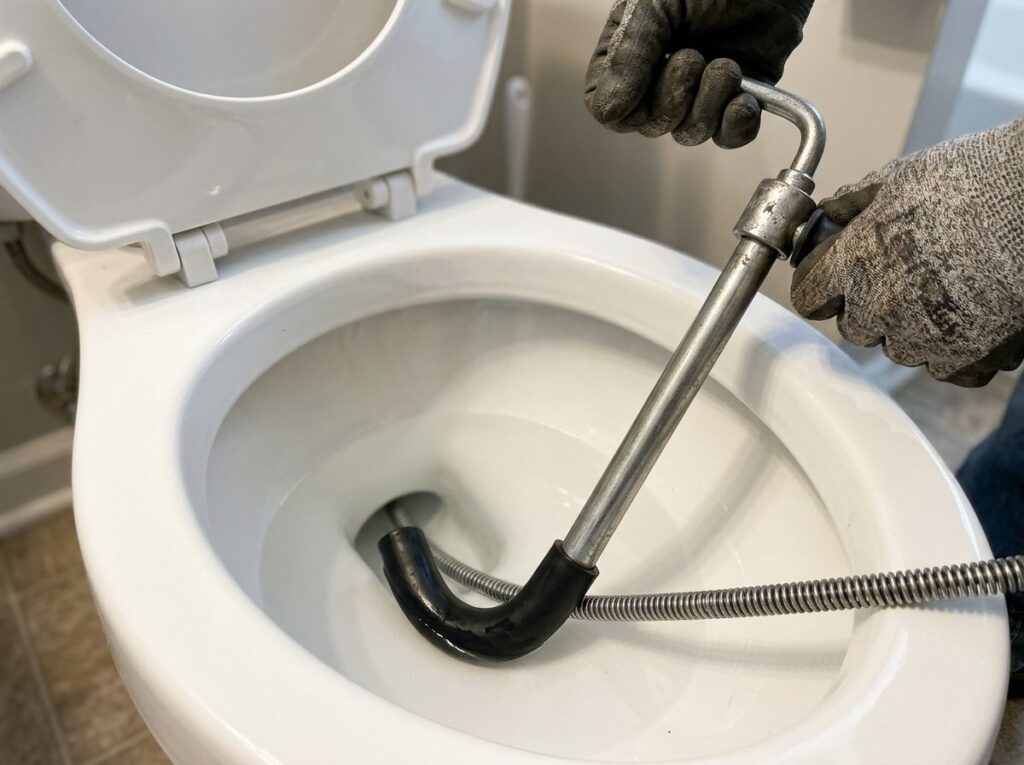
If plunging doesn’t work, the clog is probably packed into the toilet’s built-in trap. A closet auger is a short, stiff cable inside a tube, with a rubber sleeve at the bend to protect the porcelain. It’s the right tool for toilets; a regular drain snake can scratch the bowl.
- Pull the handle up so the cable is fully retracted and only the tip shows at the end of the tube.
- Place the bent end in the bottom of the bowl, pointing into the drain opening, with the rubber sleeve resting against the porcelain.
- Crank the handle clockwise while slowly pushing down. The cable will feed into the trap.
- When you feel resistance, keep cranking to break up the clog or hook it.
- Pull the cable back while still cranking slowly, and remove any debris that comes up with it.
- Test with a bucket of water, then flush. Repeat if it’s still slow.
A closet auger only reaches through the toilet itself. If the auger goes all the way in without finding anything and the toilet still won’t drain, the blockage may be further down the line.
If something solid is stuck
If a toy, phone, comb or other object went down, don’t plunge, because that can push it deeper. Put on gloves and try to reach it, or use a wet/dry shop vacuum to suck out the water and the object if it’s close to the opening.
If it’s lodged out of reach, the toilet may need to come off the floor so you can push the object out from the bottom. That means shutting off and draining the toilet, removing the bolts, lifting it, and installing a new wax ring when you put it back. It’s doable for a confident DIYer, but many people leave it to a plumber.
What not to do
- Don’t use chemical drain cleaners. They rely on heat and caustic ingredients, often don’t reach a toilet clog effectively, and leave a bowl of hazardous water if they fail. They can also be hard on older pipes. For other drains, see our guide to how to unclog a drain without chemicals.
- Don’t mix products. Combining drain cleaners, or adding bleach or ammonia, can release dangerous fumes.
- Don’t keep flushing. Each flush adds water and makes an overflow more likely.
- Don’t use a wire coat hanger. It can scratch the porcelain and rarely clears a clog well.
- Don’t pour in boiling water. It can crack the bowl or damage the wax seal.
Signs the main sewer line is clogged
Sometimes the toilet isn’t the problem, it’s just the first fixture to show it. Toilets have the largest, most direct drain, so a main line clog often shows up there first. Watch for these signs:
- More than one toilet or drain is slow or backed up at the same time.
- Water rises in the tub or shower when you flush the toilet.
- The toilet gurgles or bubbles when you run a sink or the washing machine drains.
- The lowest drains in the house, such as a basement floor drain or shower, back up first.
- There’s a sewage smell near drains, or water around the sewer cleanout cap outside or in the basement.
If you see these signs, stop running water, the dishwasher and the washing machine, since that water has nowhere to go. Plunging won’t fix a main line clog. A plumber will clear it through the cleanout, often with a powered drain machine, and may run a camera to check for tree roots or a damaged pipe.
How to prevent toilet clogs
- Flush only toilet paper and human waste. Wipes (even ones labeled “flushable”), paper towels, cotton swabs, dental floss, feminine products and cat litter cause many clogs.
- If you use a lot of paper, flush partway through.
- Keep a flange plunger next to every toilet so a small clog doesn’t become an overflow.
- Fix weak flushes. Some low-flow toilets from the 1990s needed double flushing, according to the EPA, while current WaterSense models must pass independent waste-removal tests. A toilet that keeps clogging may be worth replacing.
- Check that the tank fills to the right level. A flapper or fill valve problem can cause weak flushes, and our guide to a toilet that keeps running explains how to adjust them.
When to call a pro
Call a licensed plumber if you notice any of these red flags:
- Several drains are backing up, or water rises in the tub when you flush.
- Plunging and a closet auger haven’t worked after several tries.
- A solid object is stuck and you don’t want to pull the toilet yourself.
- Water is leaking from the base of the toilet after the clog.
- Someone used a chemical drain cleaner and the bowl is still full.
- You smell sewage or see water at the sewer cleanout.
According to HomeAdvisor, many plumbers charge a flat rate of about $100 to $400 for simple service calls, and routine clogged drain repairs typically cost $150 to $350. Main sewer line clearing usually costs more, especially if a camera inspection is needed, and emergency or after-hours calls carry higher fees.
After any overflow, dry the floor and the area around the toilet base thoroughly. Lingering moisture can lead to mold, and our guide on how to get rid of bathroom mold covers cleanup.
Frequently asked questions
Will a clogged toilet eventually unclog itself?
Sometimes. A clog made of toilet paper and waste can soften and break down over several hours, so the water slowly drains. Clogs from wipes, paper towels or objects won’t dissolve and need plunging or an auger.
Can I use Drano or another chemical cleaner in a toilet?
It’s best not to. Chemical cleaners often don’t clear toilet clogs, and if they fail you’re left with a bowl of caustic water that’s dangerous to plunge. A flange plunger and a closet auger are safer and usually more effective.
How do I unclog a toilet without a plunger?
Try dish soap and a gallon of hot (not boiling) water, wait 15 to 30 minutes, and see if the clog loosens. A closet auger also works without a plunger. If neither is an option, it’s worth buying a flange plunger, since it handles most clogs in minutes.
Why does my toilet keep clogging?
Repeat clogs usually point to something stuck in the trap, such as a toy or a wad of wipes, or to a weak flush from an older low-flow toilet or a low tank water level. If several drains are slow, a partial main line clog or a blocked vent may be to blame.
Are “flushable” wipes safe for toilets?
Many plumbers and utilities advise against flushing them. They don’t break apart as quickly as toilet paper and can snag in the trap or in the sewer line, so throw them in the trash instead.
The bottom line
Stop the water first, then reach for a flange plunger and use firm, sealed strokes. If that doesn’t do it, try hot water and dish soap, then a closet auger, and skip the chemical cleaners. If more than one drain backs up or the tub fills when you flush, the clog is in the main line, so stop using water and call a plumber.