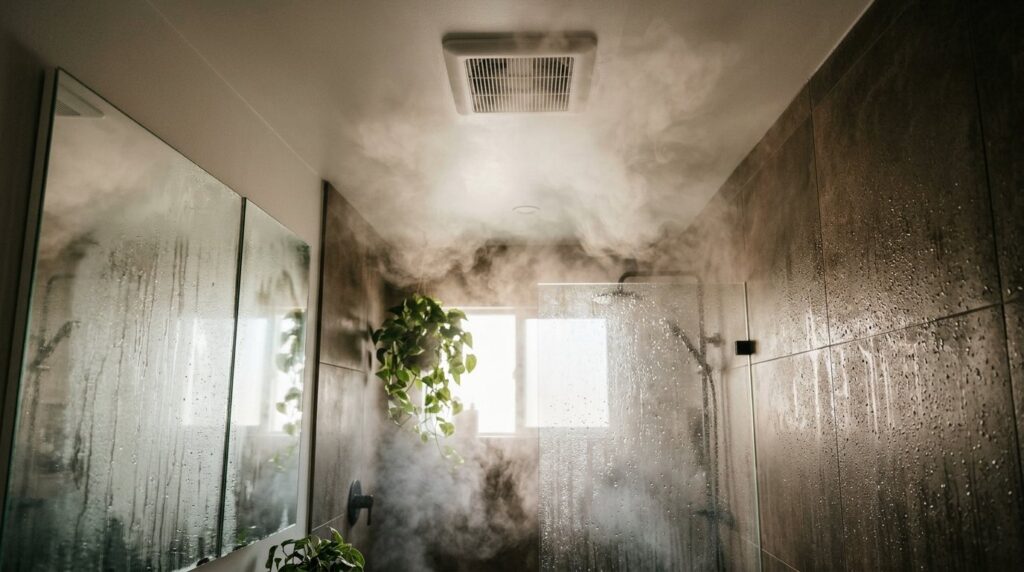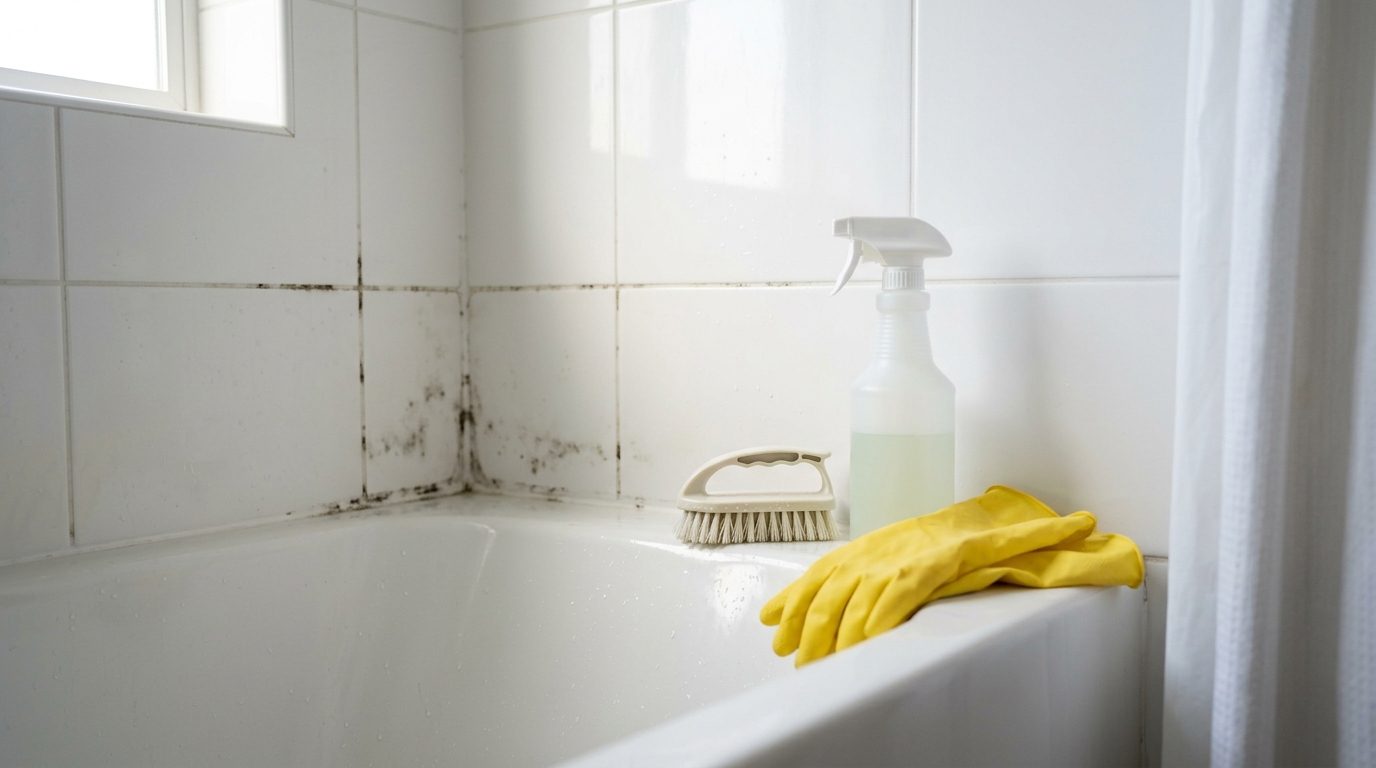
Bathrooms are the perfect home for mold: warm, humid, and wet several times a day. Those black spots in the grout, the gray film along the caulk, the speckles creeping across the ceiling above the shower are some of the most common household cleaning problems. Left alone, mold stains surfaces, smells musty, damages caulk and paint, and can aggravate allergies and asthma.
The good news is that most bathroom mold is surface growth you can remove yourself, and with a few habits, you can keep it from coming back. This guide covers how to identify what you’re dealing with, how to clean mold safely from tile, grout, caulk, ceilings and fabrics, and how to stop the moisture that feeds it.
Quick answer: Ventilate the room, wear gloves and eye protection, and scrub hard surfaces with detergent and water or a dedicated mold and mildew cleaner, using a stiff brush on grout. Replace caulk that has mold growing underneath it. Then dry the area completely and control humidity by running the exhaust fan during and for at least 20 minutes after every shower. For mold covering more than about 10 square feet, the EPA suggests considering professional help.
Mold vs. mildew: what’s on your tile?
People use the words interchangeably, and both are types of fungi that grow in damp places. Mildew usually refers to surface growth that looks powdery or flat and is gray, white or black. It’s common on shower tile, grout and caulk, and it wipes or scrubs off fairly easily. Mold is a broader term and can grow into porous materials like drywall, wood, caulk and grout, where it’s harder to remove and can come back from below the surface.
You may also see pink or orange slime around drains and on the shower floor. That’s usually a type of airborne bacteria rather than mold, but it thrives in the same damp conditions and cleans up the same way.
When to call a professional
Most bathroom mold is a DIY job, but not all of it. The U.S. Environmental Protection Agency suggests that if the moldy area is larger than about 10 square feet (roughly a 3-by-3-foot patch), you should consult its mold cleanup guidance and consider hiring a professional. You should also call a pro if:
- The mold keeps coming back from inside a wall or ceiling.
- Drywall or ceiling material is soft, stained or crumbling.
- There’s a musty smell but no visible source, which can mean hidden mold.
- The mold followed a leak, flood or sewage backup.
- Someone in the home has asthma, serious allergies or a weakened immune system.
Safety before you start
Safety note: Protect yourself while cleaning mold. Wear long rubber or nitrile gloves, eye protection without vents, and ideally an N95 respirator, as the EPA recommends for mold cleanup. Open a window and run the exhaust fan. Never mix bleach with ammonia, vinegar or other cleaners, since dangerous gases can form. Keep children and pets out of the room.
What to clean mold with
| Cleaner | Good for | Notes |
|---|---|---|
| Detergent and water | Tile, tubs, sinks, painted surfaces | The EPA’s basic recommendation for hard surfaces; scrub, then dry |
| Mold and mildew spray cleaner | Tile, grout, shower walls | Follow label directions and dwell times |
| White vinegar | Light mildew on hard surfaces | Spray, wait about an hour, scrub and rinse; never mix with bleach |
| 3% hydrogen peroxide | Grout and hard surfaces | Spray, let it sit, scrub; test colored grout first |
| Diluted bleach | Whitening stained grout and nonporous surfaces | Use only as the label directs, with ventilation; not a fix for porous materials |
| Baking soda paste | Gentle scrubbing on grout and caulk lines | Mild abrasive; pairs well with a stiff brush |
How to remove mold from bathroom surfaces
Tile and tubs
- Spray the surface with your chosen cleaner and let it sit for the time on the label, or about 10 to 15 minutes for detergent solutions.
- Scrub with a non-scratch sponge or brush.
- Rinse with clean water.
- Dry thoroughly with a towel or squeegee and leave the fan running.
Grout
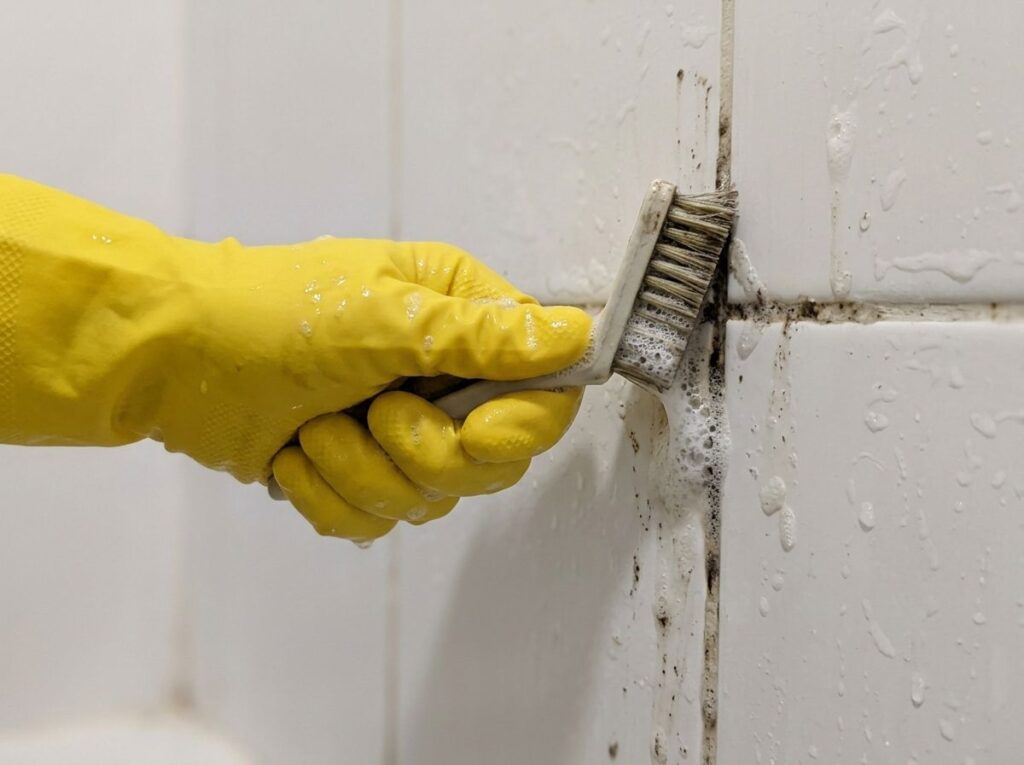
Grout is porous, so mold can settle into it. Apply cleaner or a baking soda paste along the grout lines, let it sit, then scrub with a stiff, narrow grout brush or an old toothbrush. Rinse and dry. For stubborn stains, repeat with hydrogen peroxide or a grout-safe mildew cleaner. Once the grout is clean and fully dry, applying a penetrating grout sealer can make future cleaning easier.
Caulk
If mold is only on the surface of the caulk, a cleaner and brush may remove it. But black spots that stay after scrubbing usually mean mold is growing inside or behind the caulk. Cleaning won’t fix that. Remove the caulk completely, clean and dry the joint thoroughly, and apply fresh mildew-resistant caulk.
Ceilings and painted walls
Mold on bathroom ceilings usually means moisture isn’t leaving the room fast enough. Wipe the area gently with a detergent solution or a cleaner safe for painted surfaces, being careful not to soak the drywall. Dry it well. If stains remain after cleaning, prime with a stain-blocking primer and repaint with a bathroom paint containing mildew-resistant additives. If the ceiling material is soft or the mold keeps returning quickly, have it inspected.
Shower curtains, liners and bath mats
Many plastic liners and fabric curtains can go in the washing machine with detergent and a couple of towels to help scrub them. Check the care label first. Hang them back up to dry fully. Replace liners that remain stained or smell musty, since they’re inexpensive.
Porous materials
Moldy drywall, ceiling tiles, wood and carpet can be hard or impossible to clean completely. In many cases, the affected material should be cut out and replaced after fixing the moisture problem. For larger areas, this is a job for a professional.
Why mold keeps coming back
Cleaning removes the mold you can see, but it will return if the moisture stays. Common reasons include:
- An exhaust fan that’s too small, too noisy to use, not vented outside, or turned off right after showering.
- Water left standing on tile, ledges and shower floors.
- Slow leaks from a faucet, shower valve, toilet or tub drain.
- Damaged caulk or grout that lets water behind the tile.
- High household humidity overall.
How to prevent bathroom mold
- Run the exhaust fan during every shower and for at least 20 minutes afterward. A fan timer switch makes this automatic.
- Make sure the fan vents outdoors, not into the attic, and that it’s sized for the room. A common rule of thumb for bathrooms up to 100 square feet is about 1 CFM of airflow per square foot of floor area.
- Squeegee or towel off shower walls and doors after use.
- Keep humidity in check. The EPA recommends keeping indoor humidity below 60%, ideally between 30 and 50%. A small hygrometer is an inexpensive way to monitor it.
- Fix leaks quickly. The EPA advises drying wet materials within 24 to 48 hours to prevent mold growth.
- Wash bath mats, towels and liners regularly and let them dry completely between uses.
- Clean weekly with a bathroom cleaner before mildew gets established.
- Maintain grout and caulk, sealing grout periodically and recaulking when it cracks or peels.
A simple weekly routine to stay mold-free
Prevention works best as a habit. This short routine takes about 15 minutes a week and keeps most bathrooms from ever developing a serious mold problem.
- After every shower: squeegee the walls and glass, hang towels and the bath mat to dry, and leave the fan running for 20 minutes.
- Once a week: spray tile, grout and the tub with a bathroom or mildew cleaner, let it sit, scrub the grout lines briefly and rinse. Wipe the sink and the base of the toilet.
- Once a week: check under the sink and around the toilet for drips or damp spots, and clean the drain area where pink slime likes to grow.
- Every month: wash the shower liner and bath mats, dust the exhaust fan grille so it moves air efficiently, and check your humidity reading.
- Every year: inspect caulk and grout, recaulk any cracked joints, and reseal grout if water no longer beads on it.
Signs of hidden mold
Sometimes the problem isn’t on the surface. Watch for a musty smell that lingers after cleaning, paint that bubbles or peels, discolored or soft spots on walls and ceilings, loose tiles, and allergy-like symptoms that improve when you leave the house. These can point to mold growing behind tile or inside a wall from a slow leak. Don’t open walls yourself if you suspect a large hidden problem; a professional can inspect and contain it safely.
Frequently asked questions
Is black mold in the shower dangerous?
Many molds are black, and the color alone doesn’t tell you the species. Any mold can trigger allergy or asthma symptoms in sensitive people. Clean small areas promptly and safely, and seek professional help for large areas or if someone in the home has health concerns.
Does bleach kill mold?
Bleach can remove mold stains on hard, nonporous surfaces, but it isn’t effective at fixing mold in porous materials, and the EPA does not generally recommend it for routine mold cleanup. Detergent and water, or a dedicated mold cleaner, plus controlling moisture, is the usual approach.
Is vinegar better than bleach for mold?
Vinegar is a gentler option that works on light mildew on many hard surfaces. It’s not a magic fix for heavy growth. Never combine vinegar with bleach.
How often should I clean my shower to prevent mold?
A quick wipe or squeegee after each shower and a thorough cleaning once a week keeps most bathrooms mildew-free.
Why is there mold on my bathroom ceiling?
Warm, moist air rises and condenses on the ceiling. It’s a sign the room needs better ventilation: run the fan longer, make sure it vents outside, and consider a more powerful fan.
The bottom line
Bathroom mold is common, and small patches are easy to handle with the right protection, cleaner and a stiff brush. The real fix, though, is moisture control: a properly vented fan that you actually run, quick drying after showers, healthy humidity levels and prompt leak repairs. Replace moldy caulk instead of scrubbing it, call a professional for large or recurring growth, and your bathroom will stay fresh and clean.