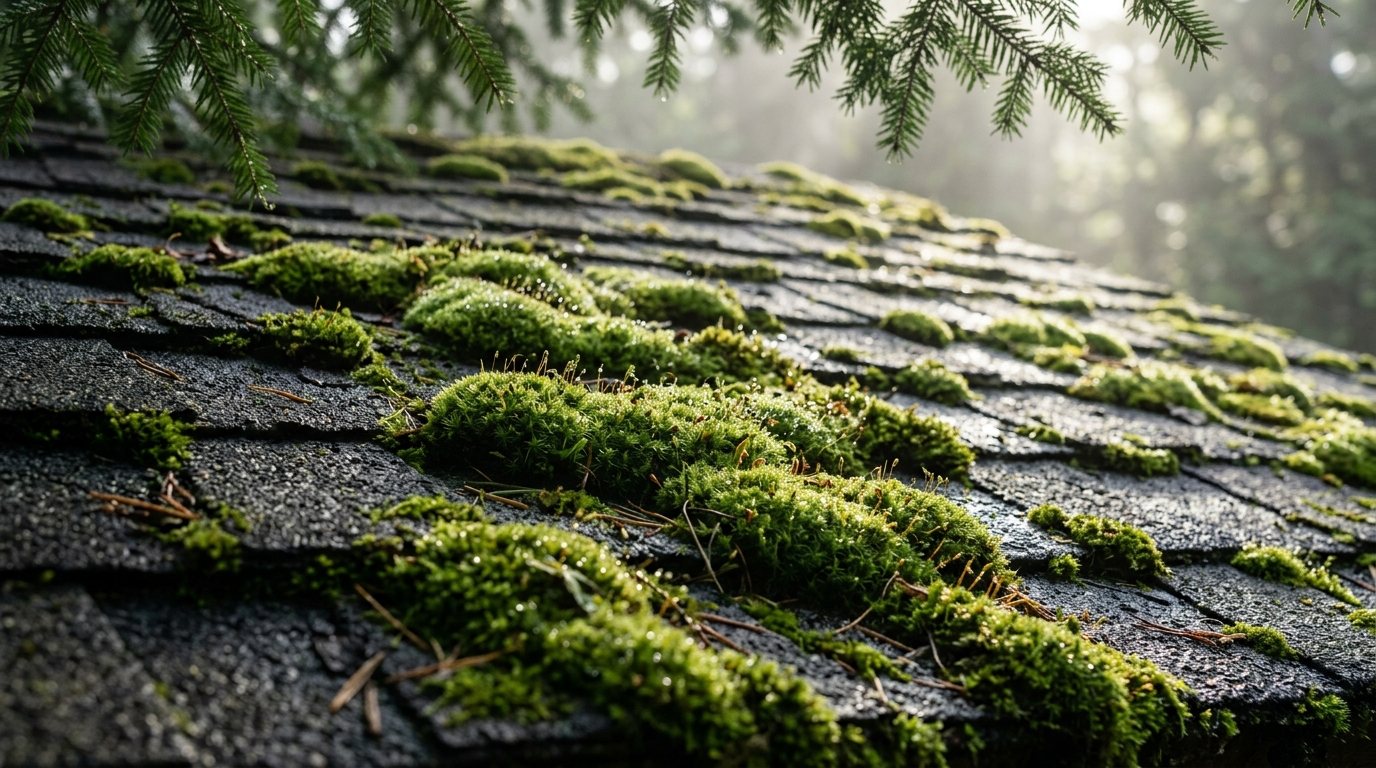
The north side of your roof has turned green, and the cushions of moss between the shingles seem to get thicker every season. Maybe a home inspector flagged it, or you’ve noticed moss bits clogging the gutters. It’s tempting to grab a pressure washer and blast it off, but that’s one of the fastest ways to shorten the life of an asphalt roof.
This guide explains why moss is a problem, how to remove it safely without stripping your shingles, which treatments work, how zinc and copper strips and tree trimming help keep it from coming back, and when it’s time to hand the job to a roofer.
Quick answer: On a dry, overcast day, gently push loose moss off with a soft brush or plastic scraper, always working down the roof, then apply a moss killer made for roofs and let rain wash the dead moss away. Never use a pressure washer or scrub hard, which strips the protective granules. To keep moss away, trim overhanging branches, keep gutters clear and consider zinc or copper strips near the ridge installed by a roofer.
Why moss on a roof is a problem
Moss is more than a cosmetic issue. It acts like a sponge, holding water against the shingles long after rain stops. As it grows, it can work its way under shingle edges and lift them, giving wind-driven rain and melting snow a path to the roof deck. In freezing weather, the trapped moisture expands and can crack shingles.
Moss also traps leaves, needles and dirt, which hold even more moisture and wash into your gutters. Left alone for years, a heavy moss layer can shorten the life of your roof and lead to leaks.
Moss vs algae
Thick green or brown cushions that you can lift with your fingers are moss. Flat black or dark green streaks running down the roof are usually algae. Algae is mostly cosmetic, while moss physically lifts shingles, so moss deserves faster attention.
Safety first
A mossy roof is slippery even when it looks dry, and wet moss is like ice. Most moss removal can be done from a ladder at the eaves with a long-handled brush and a hose-end sprayer.
- Never walk on a wet or mossy roof. If you must go up, wait for a dry day and use a roof anchor and harness.
- Follow ladder basics: firm level footing, the 4-to-1 angle rule and at least 3 feet of ladder above the roof edge.
- Keep ladders and long-handled tools away from power lines.
- Wear eye protection, gloves and old clothes when applying any treatment.
Safety note: Never mix bleach with ammonia, vinegar or other cleaners, which can create toxic gases. Use one product at a time, follow its label exactly and rinse your sprayer between products.
Moss removal methods compared
| Method | How it works | Pros | Cons |
|---|---|---|---|
| Gentle hand removal | Soft brush or plastic scraper pushes moss downhill | No chemicals; immediate results | Must be gentle; roots remain without a treatment |
| Soap-based moss killer | Fatty-acid soap dries out moss | Works fairly fast; gentler on surroundings | May need repeat applications |
| Zinc-based moss killer | Zinc kills moss as rain washes it in | Long-lasting effect | Can harm plants and waterways; slower |
| Bleach solution | Oxidizes and kills moss and algae | Inexpensive, widely available | Harms plants and grass; can corrode metal |
| Pressure washing | High-pressure water blasts moss off | Fast | Strips granules, lifts shingles, drives water under them; avoid |
How to remove moss from a roof, step by step
1. Pick the right day
Choose a dry, overcast day with no rain in the forecast for at least the time listed on your product’s label. Overcast weather keeps sprays from drying too fast. Spring and early fall, when temperatures are mild, are usually best.
2. Protect plants and surfaces
Wet down shrubs, flower beds and grass below the eaves, and cover them with plastic sheeting or tarps. Disconnect downspouts from rain barrels and keep runoff out of ponds and storm drains.
3. Remove loose moss gently
From a ladder at the eaves, use a long-handled soft brush or a plastic scraper to push moss down the roof, starting as high as you can safely reach and working down in small sections. Brush in the same direction the shingles overlap so you don’t lift their edges. If moss is stuck tight, leave it for the treatment to loosen instead of forcing it.
4. Apply a moss treatment
Spray a moss killer labeled for roofs, following the product directions for dilution, coverage and timing. Some are rinsed off after they work, and others are left to wash away with rain. Bob Vila’s moss removal guide notes that DIY mixes such as equal parts bleach and water are left on for 25 to 45 minutes before a gentle rinse, but check your shingle manufacturer’s guidance before using bleach.
5. Rinse gently and let it finish
If the product calls for a rinse, use a garden hose with normal pressure, spraying from the peak downward so water doesn’t get pushed under the shingles. Dead moss often turns brown or orange and releases over days or weeks as rain washes it away. Be patient rather than scraping it off.
6. Clean the gutters
Dead moss and loose debris end up in the gutters and downspouts. Clear them once the moss has washed down; our guide on how to clean gutters safely walks you through it.
7. Inspect the shingles afterward
Once the moss is gone, look over the cleared area from the ladder or with binoculars. Check for shingle tabs that were lifted by the moss, cracks and bare spots where granules are missing. Lifted tabs can often be resealed with a few dabs of roofing cement on a warm day, and badly damaged shingles can be swapped out; see our guide on how to replace a damaged shingle.

Why you shouldn’t pressure wash a roof
The Asphalt Roofing Manufacturers Association warns against using a power washer on asphalt roofing, because high-pressure water is likely to damage it. It also discourages scrubbing, since friction removes the granules that protect shingles from the sun. Pressure washing can also lift shingle tabs, break the seal strips and drive water up under the shingles, causing the very leaks you’re trying to prevent.
That is why the safe method relies on time and chemistry rather than force: kill the moss, loosen it gently and let rain do the rest.
Tools and materials
- Extension ladder with a stabilizer
- Long-handled soft-bristle brush or plastic scraper
- Roof-labeled moss killer and a pump or hose-end sprayer
- Garden hose with a standard nozzle
- Plastic sheeting or tarps to protect plants
- Safety glasses, chemical-resistant gloves and shoes with good grip
- Roof anchor and harness if you must work on the roof
How to keep moss from coming back
Trim trees and increase sunlight
Moss thrives in shade and moisture, which is why it shows up first on north-facing slopes and under trees. Trim branches that overhang the roof so more sun and air reach the shingles and fewer leaves pile up. Hire a tree service or arborist for large limbs or anything near power lines.
Keep the roof and gutters clear
Sweep or blow leaves and needles off the roof from a ladder and keep gutters flowing so water doesn’t back up at the eaves. If your gutters clog constantly, our guide on whether gutter guards are worth it may help.
Zinc or copper strips
Zinc or copper strips installed near the ridge release metal ions when it rains, which wash down the roof and discourage moss. According to Bob Vila, strips typically need replacing about every five years and work best on the roof area just below them, and the Asphalt Roofing Manufacturers Association advises against adding them to existing roofs because fasteners can create leak points. If you want strips, have a roofer install them so fasteners are hidden and sealed.
Choose algae-resistant shingles next time
When it’s time for a new roof, many manufacturers offer shingles with copper-containing granules designed to resist algae, which can help in damp, shaded areas.
Common mistakes to avoid
- Pressure washing or scrubbing hard, which strips granules and shortens shingle life.
- Brushing upward against the shingle overlap, which lifts the edges.
- Walking on a wet, mossy roof without fall protection.
- Letting treatment runoff soak unprotected shrubs, lawns or a nearby pond.
- Expecting instant results and scraping off moss that the treatment would have released on its own.
- Removing moss but ignoring the shade and clogged gutters that caused it.
When to call a pro
Hire a roofer or professional roof cleaning company if:
- The roof is steep, two stories or higher, or you can’t reach the moss from a ladder.
- The moss is thick and widespread, or keeps returning after treatment.
- Shingles are lifted, cracked or missing once the moss is gone.
- You notice leaks, stains in the attic or soft spots on the roof.
- You want zinc or copper strips installed.
According to Bob Vila, professional roof moss cleaning typically costs about $450 to $750, while DIY supplies run roughly $40 to $450. If removing the moss reveals widespread damage, read our guide to the signs you need a new roof before paying for repeated repairs.
Frequently asked questions
Should moss be removed from a roof?
Yes. Moss holds moisture against the shingles and can lift them, which leads to leaks and a shorter roof life. Removing it gently and preventing regrowth protects the roof, especially in damp, shady climates.
Can I pressure wash moss off my roof?
No. Roofing manufacturers warn that high-pressure water damages asphalt shingles by stripping granules and lifting tabs. Use a moss treatment and gentle brushing instead.
Does vinegar or bleach kill roof moss?
Both can kill moss, but they need care. Bleach harms plants and lawns and can corrode metal, and vinegar is weaker. Roof-labeled moss killers are designed for the job, and you should check your shingle manufacturer’s guidance before using bleach.
How long does it take for moss to die after treatment?
Many treatments kill moss within days, but dead moss can take weeks or months to wash away with rain. Moss in dry weather can go dormant and appear to recover, so treatment may need time or a second application.
Is black streaking on my roof moss?
Usually not. Dark streaks are typically algae, which is mostly cosmetic. Thick green cushions that rise above the shingles are moss and should be removed.
The bottom line
To remove moss from a roof safely, work on a dry day from a ladder, treat the moss with a roof-safe product, gently push it off from top to bottom and let rain finish the job. Skip the pressure washer and hard scrubbing. Then keep it from coming back by trimming trees, keeping gutters clear and asking a roofer about zinc or copper strips.