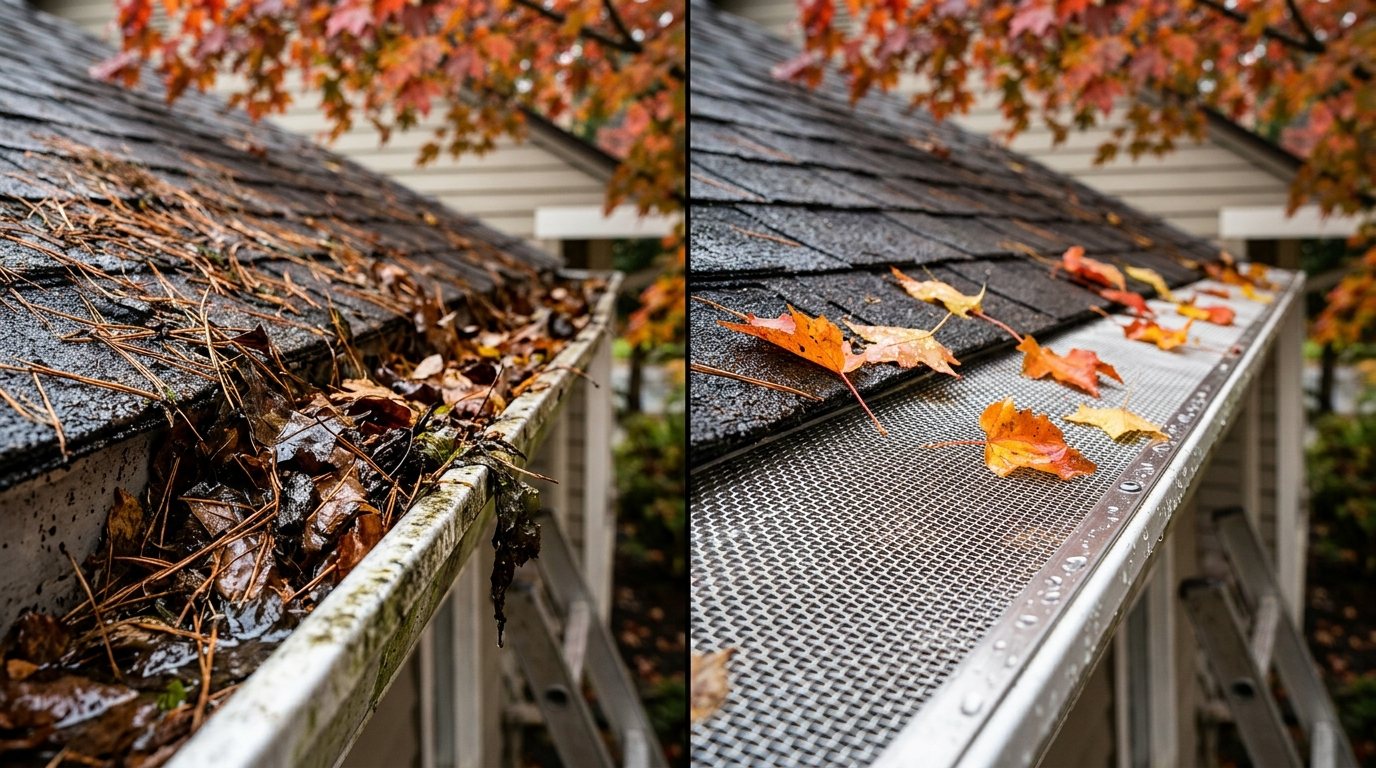
Every fall it’s the same routine: the leaves come down, the gutters fill up, and you’re back on the ladder scooping out wet muck. Then a salesperson knocks on the door promising you’ll never clean your gutters again, for a price that could cover a used car. It’s fair to wonder whether gutter guards are worth it or just an expensive way to move the problem somewhere else.
This guide compares the five main types of gutter guards, what each typically costs, how they perform with leaves, pine needles and snow, DIY versus professional installation, and how to decide whether they make sense for your house.
Quick answer: Gutter guards are worth it if your house is surrounded by trees, especially pines, or if your gutters are two stories up and you can’t safely clean them yourself. Micro-mesh guards block the widest range of debris, including pine needles and shingle grit. None are maintenance-free, so expect to brush or rinse them off occasionally. If you have few trees and a single-story home, cleaning the gutters twice a year is usually cheaper.
What gutter guards do (and don’t do)
Gutter guards cover the top of the gutter so leaves, twigs and other debris stay out while rainwater still gets in. Done well, they cut down on clogs, overflowing gutters, water spilling against the foundation and the weight of soggy debris pulling gutters loose.
What they don’t do is eliminate maintenance. Debris still collects on top of some designs, fine grit and seeds can work their way in, and downspouts can still clog. Think of guards as a way to clean less often and more safely, not never.
Types of gutter guards compared
Costs below are typical per-linear-foot figures reported in This Old House’s gutter guard cost guide. Your price depends on gutter length, roof height, material quality and region.
| Type | How it works | Pros | Cons | Typical cost per foot |
|---|---|---|---|---|
| Screen | Perforated metal or plastic panel over the gutter | Low cost, easy to install, blocks leaves | Pine needles and grit get through; plastic versions don’t last | About $38 |
| Micro-mesh | Very fine metal mesh over a support frame | Blocks almost everything, including needles and shingle grit | Among the most expensive; debris can sit on top | About $41 |
| Reverse curve (surface tension) | Solid curved cover; water follows the curve in, leaves slide off | Sheds large debris well; long-lasting metal versions | Expensive, usually pro-installed; seeds and needles can slip in | About $41 |
| Brush | Bristle cylinder sits inside the gutter | Cheap, installs in minutes, no tools | Traps needles and fine debris; must be pulled out to clean | About $19 |
| Foam | Porous foam wedge fills the gutter | Cheapest, very easy to install | Clogs with fine debris, can grow plants, breaks down in a few years | About $22 |
Screen guards
Screens are the classic budget option. Metal screens hold up better than plastic, which can sag, crack and warp in sun and cold. They do a good job with large leaves, but pine needles, maple seeds and shingle grit pass through the holes or lodge in them. They suit homes with mostly broadleaf trees in mild climates.
Micro-mesh guards
Micro-mesh uses a stainless steel or aluminum mesh with openings small enough to stop pine needles, seeds and the granules that wash off shingles. According to This Old House, powder-coated metal micro-mesh can last up to 20 years, while plastic versions may last only a few. The trade-off is cost and the fact that a film of small debris can build up on top, which you’ll need to brush or hose off once in a while.
Reverse curve guards
These solid hoods rely on surface tension: rain clings to the rounded nose and curls into the gutter, while leaves slide off the edge. They work well in heavy-leaf areas and can last many years, but they’re among the priciest options and are usually sold through installers. In very heavy downpours, water can overshoot the curve, and small seeds and needles can still get in through the slot.
Brush guards
Brush guards look like giant pipe cleaners that sit in the gutter. They catch big leaves and twigs, install without tools and are inexpensive. The downside is that needles and seeds tangle in the bristles, so you have to pull the brushes out and clean them, which is about as much work as cleaning the gutter.
Foam guards
Foam inserts fill the gutter so debris sits on top while water soaks through. They’re cheap and easy, but fine debris clogs the pores, seeds can sprout in them and sunlight and moisture break the foam down within a few years. They’re best as a short-term fix.
What do gutter guards cost?
This Old House’s survey of homeowners found an average cost of about $7,941 for 200 linear feet, roughly $40 per foot, with a median of $5,000. Most people paid between about $4,138 and $6,000. Professionally installed name-brand systems sit at the high end, and two-story or steep roofs cost more.
DIY guards sold at home centers cost far less, especially brush, foam and basic screen products, but you’ll be on a ladder to install them, and cheaper materials generally don’t last as long. Before you buy, measure your gutters and note whether you have 5-inch or 6-inch K-style or half-round gutters, since guards are sized to fit.
Do they pay for themselves?
Compare the price with what you spend on cleaning. Angi puts professional gutter cleaning at about $160 a year. At that rate, a $5,000 system would take decades to pay back in cleaning costs alone. The math looks better if you need several cleanings a year because of heavy tree cover, if your gutters keep overflowing and damaging fascia, siding or foundation, or if the real cost you want to avoid is the risk of climbing a tall ladder.
Is your house a good candidate?
Gutter guards make the most sense when several of these are true:
- Large trees overhang the roof, especially pines, oaks or maples that drop needles, seeds or helicopters.
- Your gutters clog more than twice a year or overflow in heavy rain.
- The house is two stories or the roof is steep, so cleaning means a tall ladder.
- You pay someone to clean the gutters several times a year.
- Overflowing water has stained siding, rotted fascia or pooled near the foundation.
They make less sense if your yard has few trees, the house is a single story with easy ladder access and you don’t mind a spring and fall cleaning. In that case, spending the money on downspout extensions or regrading soil away from the foundation may do more good.
DIY vs professional installation
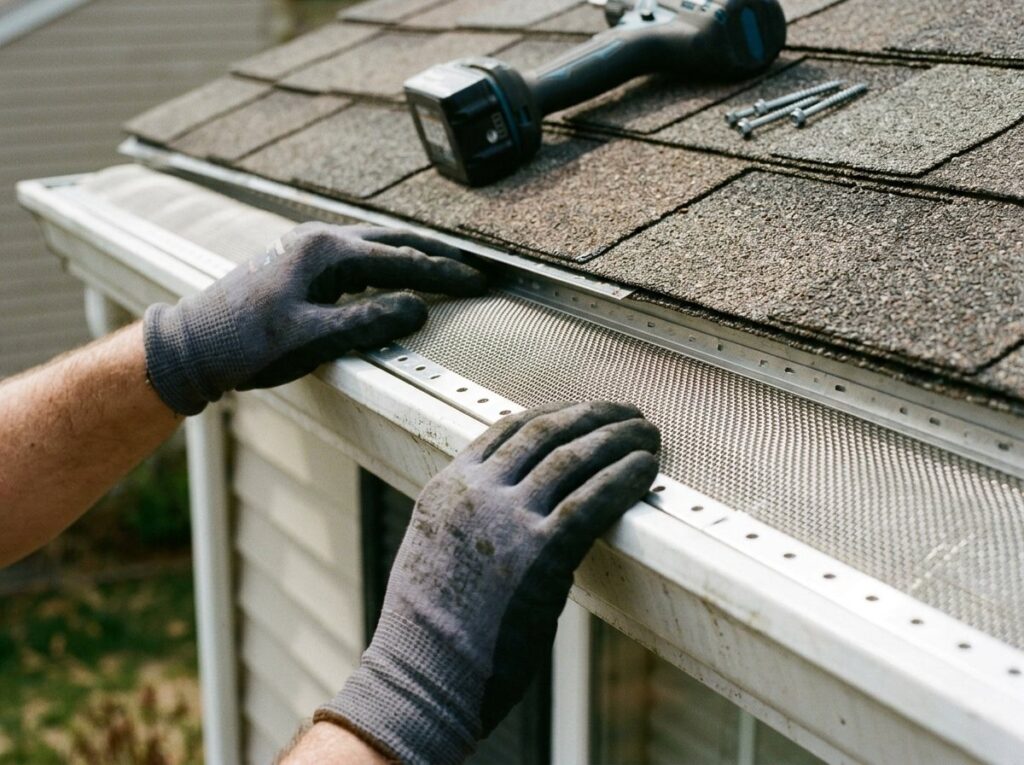
Most screen, brush and foam guards are DIY-friendly on a single-story home. You’ll clean the gutters first, then snap, slide or clip the guards into place, which typically takes an afternoon. Some micro-mesh products are also sold for DIY installation and screw to the front lip of the gutter.
Professional installation makes sense for two-story homes, steep roofs, reverse-curve systems and premium micro-mesh, which often need precise fitting. A good installer will also clean and realign the gutters, fix loose hangers and confirm the gutters slope toward the downspouts before covering them. Ask how the guards attach (to the gutter, the fascia or under the shingles) and whether that affects your roof warranty.
Tools and materials for DIY installation
- Extension ladder with a stabilizer (standoff) so it doesn’t rest on the gutter
- Work gloves, safety glasses and a gutter scoop
- Garden hose for flushing gutters and downspouts
- Tape measure, tin snips or a utility knife for cutting guards to length
- Cordless drill and the screws supplied with the guards
Safety note: Ladder falls are a real risk when installing or cleaning gutters. Set your ladder on firm, level ground, keep three points of contact, never lean out past the rails and stay well away from power lines. Our guide on how to clean gutters safely covers ladder setup step by step.
Gutter guards in snow and ice
In snowy regions, guards can freeze over, and slush or a layer of leaves on top can send water over the edge, where it refreezes into icicles. This Old House’s gutter guard guide notes that sturdier aluminum or stainless steel guards handle snow loads better than plastic, and that keeping guards clean before winter helps.
Guards don’t cause ice dams, though. Those come from heat escaping through the attic, which our guide on how to prevent ice dams explains. If you get ice dams now, fix the attic before blaming the gutters.
Common mistakes
- Installing guards over dirty gutters. Clean and flush the gutters and downspouts first.
- Choosing screens or brushes under pine trees, where needles slip right through.
- Assuming guards are maintenance-free and never checking them.
- Ignoring gutter slope and loose hangers, which cause overflowing whether or not you have guards.
- Signing a high-pressure sales contract on the spot. Get at least three quotes and read the warranty terms.
When to call a pro
Hire a gutter professional if:
- Your gutters are two stories up or on a steep roof.
- The gutters are sagging, leaking at seams or pulling away from the fascia.
- Water overflows even when the gutters are clean, which can mean poor slope or undersized gutters and downspouts.
- You see rotted fascia or water damage at the foundation.
Angi lists typical gutter repairs at $180 to $560. If your gutters are old, damaged or undersized, it may make more sense to replace them and add guards at the same time.
Frequently asked questions
Do gutter guards really work?
Good ones do a solid job of keeping out leaves and twigs and reducing clogs. None are perfect: fine debris, seeds and grit can still build up, and some designs collect debris on top. Expect to clean far less often, but not never.
What is the best type of gutter guard for pine needles?
Micro-mesh. Its tiny openings stop needles that slip through screens and tangle in brush guards. Reverse-curve guards also struggle with needles getting into the slot.
Do gutter guards cause ice dams?
No. Ice dams form when heat from the house melts snow on the roof and it refreezes at the edge. Guards can freeze over and add to icicles, but the fix for ice dams is better attic insulation and air sealing.
How often do you need to clean gutter guards?
It depends on your trees and the type of guard. Many homeowners brush or hose off the tops once or twice a year and check downspouts after leaf drop. Brush and foam guards need more frequent cleaning.
Can I install gutter guards myself?
Yes, on a single-story home with sound gutters. Screen, brush, foam and some micro-mesh products are designed for DIY. For two-story homes or premium systems, professional installation is safer, and some systems are sold only through installers.
The bottom line
Gutter guards are worth it when heavy tree cover or a tall house makes cleaning frequent, difficult or dangerous. Choose micro-mesh for pine needles and mixed debris, and skip foam and brush guards for anything long-term. If you have few trees and can safely reach your gutters, cleaning them yourself in spring and fall is still the cheapest option. Add them to your fall home maintenance checklist either way.