The driveway is a sheet of ice, you need to get the car out, and the bag of rock salt in the garage doesn’t seem to be doing anything. Or maybe it works, but you’ve noticed the concrete flaking, the grass along the edge dying back every spring and your dog limping after walks. Melting driveway ice is easy to get wrong in both directions: too little and it stays dangerous, too much and you pay for it later.
This guide explains how to clear ice quickly and safely, which de-icer to choose for your temperatures, how much to use, and how to protect concrete, pets and plants along the way.
Quick answer: Shovel or scrape off as much snow and slush as you can first, then spread a thin, even layer of de-icer. Rock salt works down to about 15°F pavement temperature; below that, use calcium chloride or magnesium chloride, or sand for traction. About one 12-ounce coffee mug of salt is enough for a 20-foot driveway, so use far less than you think, and break up the loosened ice with a chopper after 15 to 30 minutes.
Why ice melt sometimes doesn’t work
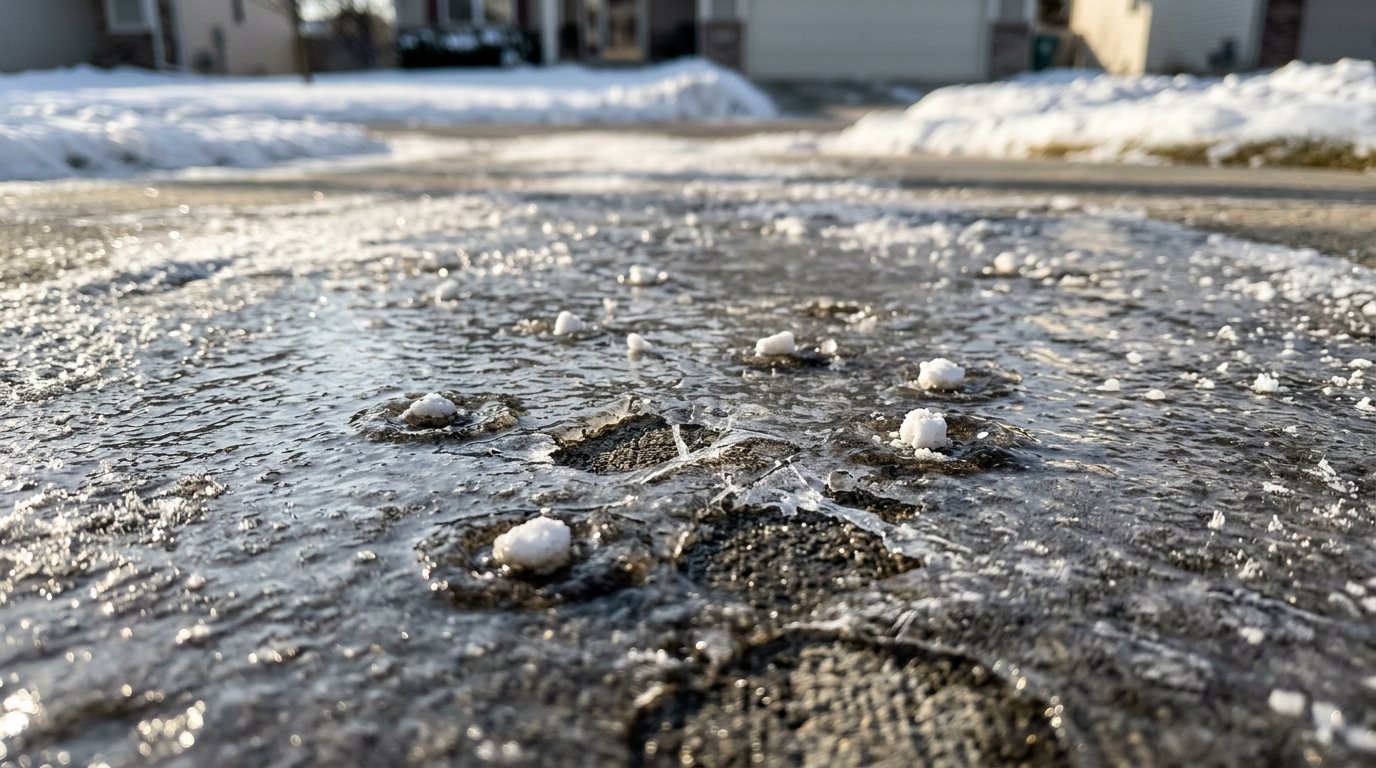
De-icers don’t melt ice by heating it. They dissolve into a brine that has a lower freezing point than water, and that brine eats down through the ice and breaks its bond with the pavement. That process slows sharply as the pavement gets colder, and it is the pavement temperature that matters, not the air temperature.
The University of Minnesota’s Smart Winter Salt guide for homeowners shows how dramatic this is for rock salt. At a pavement temperature of 30°F, salt starts working in about 5 minutes. At 20°F it takes around 20 minutes, at 15°F about an hour, and at 10°F it is essentially ineffective and just blows around. If you’re throwing salt on ice during a cold snap and nothing happens, it’s simply too cold for that chemical.
De-icers compared
Most ice melts sold for homes are one of the chemicals below or a blend of several. Check the label for the main ingredient. Temperatures are the lowest practical pavement temperatures listed by the Minnesota Pollution Control Agency’s overview of deicing chemicals and the University of Minnesota guide.
| De-icer | Works down to (pavement) | Concrete | Plants | Cost | Best for |
|---|---|---|---|---|---|
| Rock salt (sodium chloride) | About 15°F | Worsens scaling; corrodes rebar and metal | High risk | Lowest | Mild winter days, asphalt |
| Calcium chloride | About -20°F | Worsens scaling; corrodes metal | High risk | Higher | Hard freezes and thick ice |
| Magnesium chloride | About -10°F | Can also attack the cement paste | High risk | Higher | Cold spells; often blended |
| Potassium chloride | About 25°F | Lower risk | Can injure plants if overused | Higher | Near-freezing days, blends |
| CMA (calcium magnesium acetate) | About 20°F | Low corrosion; magnesium can affect paste | Low risk | Higher | Near gardens and brick or stone |
| Potassium acetate | About -15°F | Low rebar risk; can corrode galvanized metal | Lower risk | Higher | Cold weather near sensitive areas |
| Sand or grit | Never melts | No chemical effect | None | Low | Traction when it’s too cold to melt |
Rock salt (sodium chloride)
Rock salt is cheap and widely available, and it works well on days near freezing. Its downsides are big: it corrodes cars, railings and rebar, worsens freeze-thaw scaling on concrete and builds up in soil, where it damages grass and shrubs. Use it sparingly and only when the pavement is above about 15°F.
Calcium chloride
Calcium chloride pellets or flakes are the go-to choice for very cold weather. They pull moisture from the air, release heat as they dissolve and keep working well below zero. They are pricier and still harsh on plants and metal, and they can leave a slippery, damp film if you overdo it.
Magnesium chloride
Magnesium chloride works to about -10°F and is often sold as a gentler option, but government research shows magnesium can chemically weaken the cement paste in concrete and has a high potential to corrode rebar. It’s a fine cold-weather choice for asphalt; use it sparingly on concrete.
Acetates (CMA and potassium acetate)
These chloride-free products are much less harmful to plants and steel, which makes them popular near gardens, brick and stone. CMA only works down to about 20°F and acts more to stop ice from bonding than to melt thick ice, so it’s best applied before a storm. Acetates also take more product by weight than salt to do the same job.
Sand, grit and kitty litter
Sand doesn’t melt anything, but it gives instant traction at any temperature. It’s the right choice during deep cold snaps and on new concrete. Sweep it up when the ice melts so it doesn’t wash into storm drains or get tracked inside.
How to melt ice on your driveway, step by step
- Clear first. Shovel or snow-blow every bit of loose snow and slush. De-icer spread on top of snow is mostly wasted. If your machine won’t fire up, see our guide on why a snow blower won’t start.
- Check the temperature. Look at the forecast low, and remember pavement in shade is usually colder than the air. Pick a product rated for that temperature, or use sand.
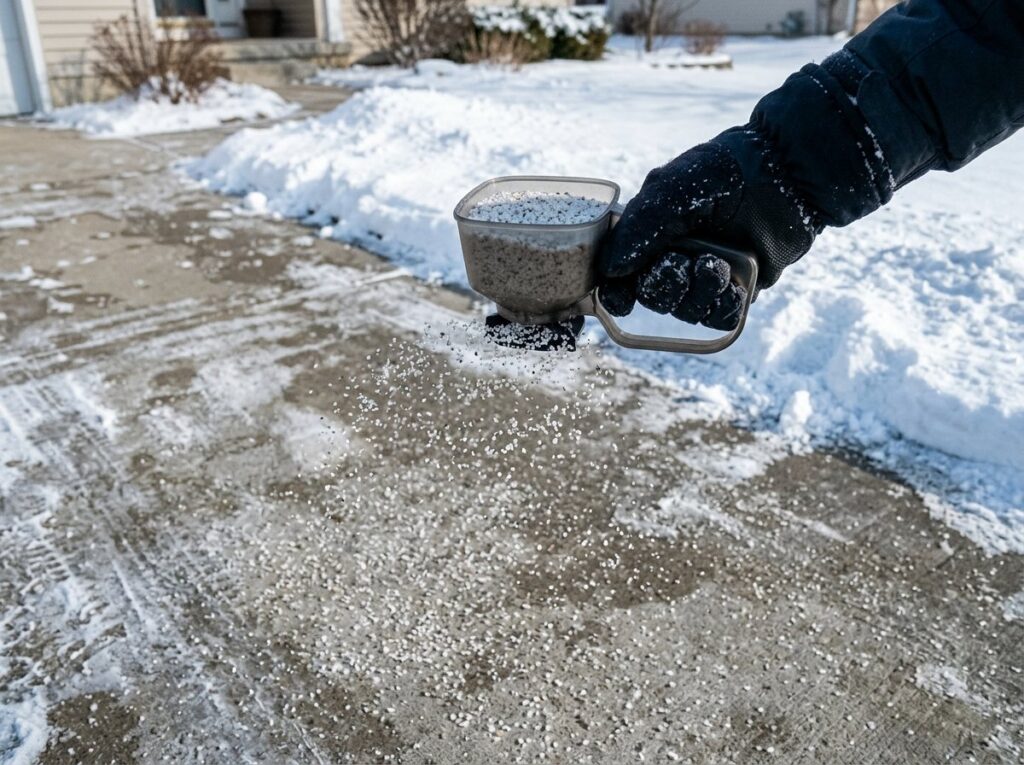
- Spread thinly and evenly. Use a handheld or push spreader for even coverage. Granules should be scattered with space between them, not piled up. Focus on paths you actually walk and drive: the tire tracks, the walkway and the steps.
- Wait. Give it 15 to 30 minutes, longer in the cold or on thick ice.
- Break and remove. Use an ice chopper or a flat steel scraper to pop loosened ice off the surface, then shovel it to the side. Chip at a low angle so you don’t gouge the concrete.
- Sweep up leftovers. Once the pavement is dry, sweep up any remaining granules and reuse them. Leftover salt does no good and washes into the lawn and storm drains.
How much de-icer to use
Most people use far too much. The Minnesota Pollution Control Agency’s rule of thumb is about one 12-ounce coffee mug of salt for a 20-foot driveway or roughly ten sidewalk squares. Blends with calcium or magnesium chloride usually need even less; follow the label rate.
Pro tip: Treat before ice forms. Spreading a light application just before freezing rain or right after shoveling a wet snow keeps ice from bonding to the pavement in the first place, which takes much less product than melting a thick layer later.
Protecting your concrete
Most driveway damage blamed on salt is really freeze-thaw damage made worse by salt. Brine soaks into the surface, freezes and expands, and over many cycles the top layer flakes off in patches called scaling. Concrete that was poorly finished, not air-entrained or allowed to dry too fast is most at risk.
- New concrete: Concrete poured within the last year hasn’t fully cured and is especially vulnerable. Skip chemical de-icers for the first winter, use sand for traction and ask your installer when sealing is recommended.
- Seal it: A penetrating concrete sealer, reapplied as the product directs, helps keep brine out of the surface. Apply it in dry fall weather.
- Avoid fertilizer melts: Products based on ammonium nitrate or ammonium sulfate are harmful to concrete and should never be used on driveways.
- Don’t use boiling water: Hot water melts a little ice, then refreezes into a slicker sheet, and sudden heat can stress cold concrete and crack glass doors and car windows.
- Asphalt and pavers: Asphalt tolerates salt better than concrete, but stay away from cracks and edges. For pavers and natural stone, check the manufacturer’s de-icer advice.
Keeping pets and plants safe
The American Veterinary Medical Association warns that de-icers can make pets sick if they lick them off their paws and fur. Wipe your dog’s feet, legs and belly with a damp cloth after every walk, check pads for cracks and keep pets off freshly treated areas. Products labeled pet-friendly are gentler, but they still shouldn’t be eaten, so wiping paws remains the best habit.
For plants, the damage comes from salty slush piled on beds and lawn edges and from salt spray thrown by cars. Shovel treated snow away from shrubs and garden beds, use the smallest amount that works and give salt-exposed soil a deep watering in spring to flush salt below the root zone. Along the driveway, choose salt-tolerant plants for the strip that gets the most splash.
Safety note: Store ice melt in a sealed container out of reach of kids and pets, wear gloves when spreading calcium chloride, which can irritate skin, and never mix different chemical products together.
Tools and materials
- Snow shovel or snow blower
- Ice chopper or flat steel scraper
- Handheld or push spreader
- De-icer rated for your coldest typical temperatures
- Sand or grit for deep cold and new concrete
- Stiff broom for sweeping up leftovers
- Gloves and a sealed storage bin
When to call a pro
Most homeowners can handle driveway ice themselves. Consider professional help when:
- You have a long, steep driveway where ice makes it unsafe to walk or drive, and you can’t keep up with storms.
- Someone in the household has mobility issues or a fall risk, and you need reliable treatment before morning.
- Your concrete is already scaling, cracking or spalling badly. A concrete contractor can tell you whether resurfacing or sealing will help.
- Water from a downspout or roof keeps refreezing across the driveway. A gutter or drainage fix solves that at the source, and roof ice can signal a bigger problem covered in our guide on how to prevent ice dams.
Snow and ice service prices vary widely by region, driveway size and contract type, so get quotes for a seasonal contract and a per-visit rate before the first storm.
Frequently asked questions
What is the fastest way to melt ice on a driveway?
Shovel off loose snow, then spread calcium chloride, which works fastest across the widest range of temperatures. Give it 15 to 30 minutes, then break up the loosened ice with an ice chopper and shovel it away.
Will rock salt damage my concrete driveway?
It can make scaling worse, especially on young, unsealed or poorly finished concrete, and it corrodes rebar and metal. On sound, sealed concrete that’s a few years old, light use is usually fine. Use as little as possible and sweep up leftovers.
Can I use hot water or vinegar to melt driveway ice?
Not reliably. Hot water quickly refreezes into a slicker surface. Vinegar has a freezing point only a few degrees below water, so it adds liquid that refreezes rather than melting much ice.
What ice melt is safest for pets?
No de-icer is completely safe if a pet eats it. Chloride-free or pet-friendly blends are gentler on paws, but the most important step is to wipe your pet’s paws and belly after walks and keep them away from freshly treated areas.
Is sand better than salt?
Sand doesn’t melt ice, but it provides traction at any temperature and won’t harm concrete, plants or pets. It’s the better choice below about 15°F, on new concrete and near gardens. Many homeowners use a small amount of de-icer on steps and sand everywhere else.
The bottom line
To melt ice on a driveway safely, clear the snow first, match the de-icer to the temperature and use much less than you think, about a coffee mug for a 20-foot driveway. Choose calcium chloride for deep cold and sand for new concrete and bitter cold snaps, wipe your pet’s paws, and sweep up leftovers. For more cold-weather prep, see our winter home maintenance checklist.