Your hardwood floors looked great when they went in, but now they seem dull, a little sticky, or streaky no matter how often you mop. Maybe you have heard that vinegar is fine, then read that it ruins wood, and you are not sure whether your steam mop is helping or hurting.
This guide clears that up. You will learn how to tell which finish your floor has, the daily and weekly routine that keeps it clean, which cleaners are safe, the habits that quietly damage wood, and how to bring back the shine on floors that have gone dull.
Quick answer: Dry dust or sweep daily, vacuum weekly with the beater bar turned off, and damp mop (never wet mop) every week or two with a pH-neutral cleaner made for your floor’s finish. Wring the mop until it is barely damp and dry any wet spots right away. Skip steam mops, vinegar, oil soaps and wax on polyurethane floors, and remember that oiled or waxed floors need solvent-based care instead of water.
Step one: identify your floor’s finish
How you clean hardwood depends more on the finish than on the wood species. The finish is what actually gets cleaned, and the wrong product for that finish causes most cleaning damage.
Surface finishes (polyurethane and urethane)
Most floors installed or refinished in the last few decades have a surface finish such as oil-based or water-based polyurethane. Prefinished boards usually have a factory urethane finish, often reinforced with aluminum oxide. These finishes form a clear film on top of the wood, so a small amount of water and a mild cleaner are safe.
Penetrating oil and wax finishes
Older homes and some European-style floors use penetrating finishes such as tung oil, linseed oil or hardwax oil, often topped with paste wax. These soak into the wood rather than sitting on top, so water can reach the fibers and cause swelling or white marks. These floors need solvent-based cleaners, maintenance oils or the specific soap their manufacturer recommends.
Three quick tests to tell them apart
- Check your paperwork. Installer invoices, the flooring box or the manufacturer’s website will name the finish and the approved cleaner.
- Rub with a finger. In a hidden spot, rub firmly across the floor. A smudge or a soft, waxy feel points to wax or oil. No change suggests a surface finish.
- Scrape a closet corner. Gently scrape with the edge of a coin. A surface finish flakes off as tiny clear shavings, while a penetrating finish just smudges.
| Finish type | How it looks and feels | Safe routine cleaning | Avoid |
|---|---|---|---|
| Polyurethane or urethane (site-finished) | Clear, slightly plastic-like film; water beads on top | Microfiber dust mop, damp mop with a pH-neutral wood floor cleaner | Steam, wax, oil soap, vinyl or tile cleaners |
| Factory prefinished (aluminum oxide urethane) | Very hard, even sheen; small bevels between boards | The cleaner named by the flooring manufacturer, used sparingly | Steam, polishes and restorers, abrasive pads |
| Penetrating oil or hardwax oil | Matte, natural look; feels like bare wood | Dry dusting, the manufacturer’s oil soap or maintenance oil | Wet mopping, general household cleaners |
| Paste wax over oil or stain | Soft glow; finger leaves a smudge | Dry dusting, solvent-based wax cleaner, periodic rewaxing and buffing | Water-based cleaners, standing water |
Tools and materials
- Flat microfiber dust mop with washable pads
- Vacuum with a hard-floor setting or brush-roll off switch, plus a soft floor-brush attachment
- Spray mop, or a bucket and a mop you can wring nearly dry
- pH-neutral hardwood cleaner recommended by your flooring or finish manufacturer
- Microfiber cloths and a plastic putty knife for spills and stuck-on food
- For wax floors only: mineral spirits or a solvent-based wax cleaner, paste wax and a buffing pad
Your daily and weekly cleaning routine
Grit is the main enemy of a wood floor. Sand and small stones act like sandpaper under shoes and chair legs, so most of the work is keeping dry debris off the surface.
Daily: dry dust
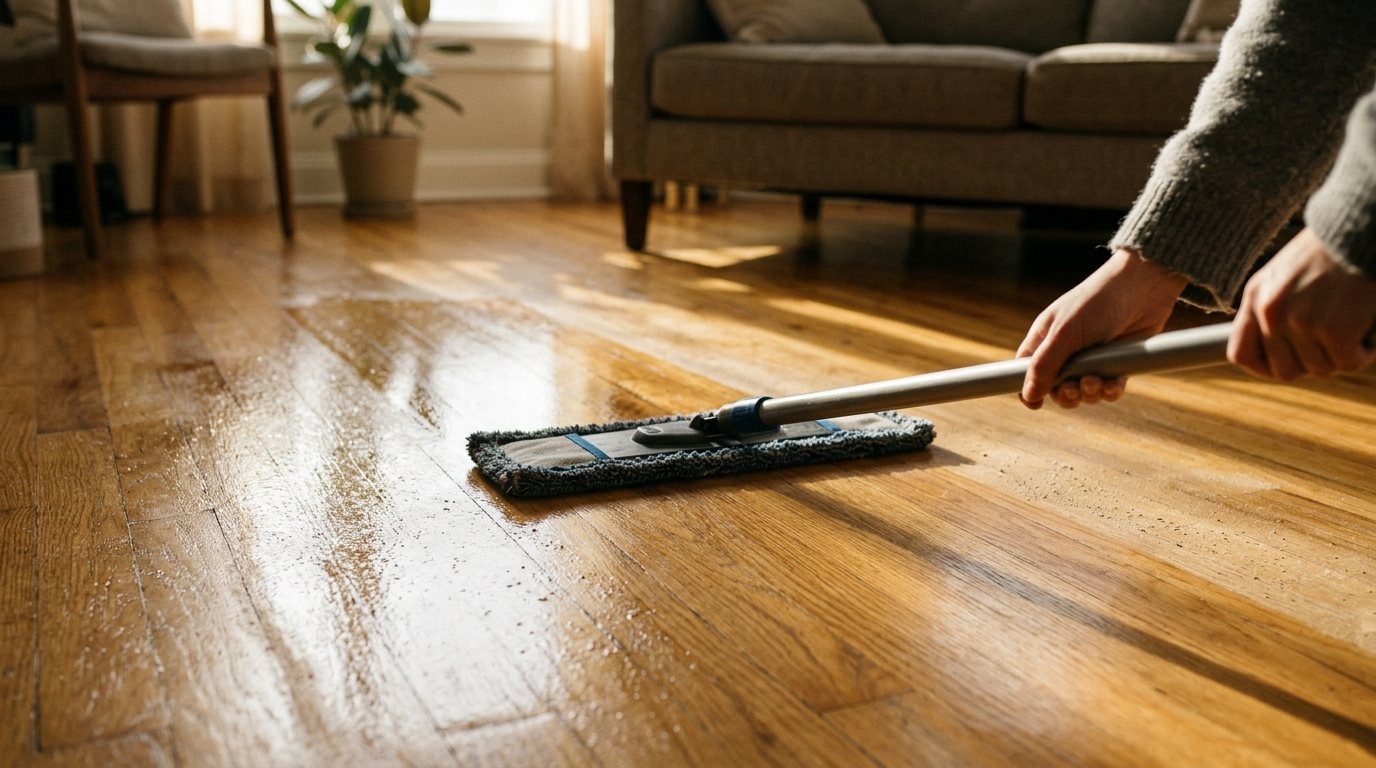
Run a microfiber dust mop over high-traffic areas such as the kitchen, entry and hallways, using long strokes along the length of the boards. In quieter rooms, two or three times a week is usually enough.
Weekly: vacuum properly
Vacuum with the hard-floor setting on and the spinning beater bar off, because the bristles can scuff the finish and toss grit around. Use the floor-brush attachment along baseboards and the gaps between boards, and make sure the vacuum’s wheels are clean so a stuck stone cannot leave a long scratch.
Every week or two: damp mop
Damp mopping removes the film that dry methods leave behind. It is for surface-finished floors only, so skip it on wax floors.
- Dust mop or vacuum first so you are not dragging grit around with a wet pad.
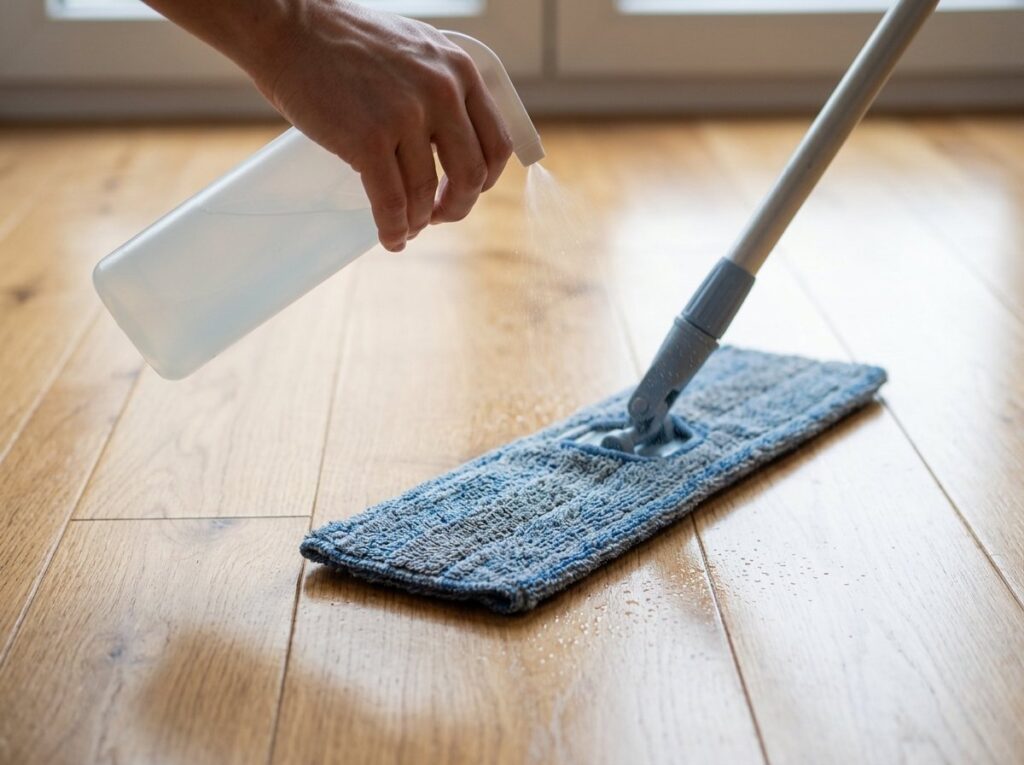
- Mist cleaner onto a small area or onto the pad, never in puddles. If you use a bucket, wring the mop until it is barely damp.
- Work in sections about 3 feet square, moving with the grain.
- Swap or rinse the pad as soon as it looks gray, since a dirty pad spreads soil and leaves streaks.
- The floor should dry within a minute or two. If it stays wet longer, you are using too much liquid, so dry the area with a cloth or run a ceiling fan.
Safe cleaners for hardwood floors
A cleaner approved for your finish
The safest choice is the cleaner your flooring or finish manufacturer names in its care guide. These are usually pH-neutral, residue-free formulas that will not interfere with a future recoat. Using an unapproved product can void some flooring warranties, so check before you buy.
A mild homemade solution
For a polyurethane floor with no specific guidance, a few drops of plain dish soap or castile soap in a gallon of warm water works for light cleaning. Use very little soap, because extra soap leaves a dull film, and test it in a closet first.
Cleaners for oil and wax floors
Oiled floors usually have their own soap or refresher from the oil manufacturer, used with a well-wrung mop. Waxed floors are cleaned with a solvent-based wax cleaner or mineral spirits on a cloth, then rewaxed and buffed where traffic wears through.
Safety note: Rags soaked in linseed oil, hardwax oil or some solvent products can heat up and catch fire on their own as they dry. Lay used rags flat outdoors to dry, or seal them in a metal can filled with water, then dispose of them following your local rules. Open windows and keep flames away when you use mineral spirits.
What to avoid on hardwood floors
Steam mops
Steam pushes heat and moisture into the seams and end joints between boards, which over time can cloud the finish, lift it at board edges and swell the wood. The National Wood Flooring Association’s technical team has said, “We don’t recommend steam at all for wood floors,” as reported by Wood Floor Business. That applies even to steam mops labeled safe for wood.
Vinegar, ammonia and harsh cleaners
Vinegar is acidic, and many flooring makers and retailers advise against it because repeated use can dull the finish. Some guides suggest a heavily diluted mix, but your manufacturer’s cleaner is the safer bet. Skip ammonia, bleach, abrasive powders and vinyl or tile cleaners on any wood floor.
Too much water
Wood absorbs water through seams and worn spots in the finish. Puddles, soaked mops and pet water bowls can cause cupping, dark stains and gaps. If you see boards lifting at the edges after a spill or leak, read our guide to a water-damaged hardwood floor before the damage spreads.
Oil soaps, waxes and “restorers” on polyurethane
Products that promise to shine a urethane floor often leave a coating that builds up, attracts dirt and looks hazy. That residue can also stop a new coat of finish from bonding, turning a simple recoat into a full sanding job. The National Wood Flooring Association also warns that polishes and restorers can make floors slippery.
Rough tools and habits
Avoid scrub brushes, steel wool on surface finishes, beater bars and dragging furniture. Use doormats at every exterior door, felt pads under chair legs and rugs in front of the sink, and keep pet nails trimmed.
How to remove common spots and stains
- Sticky spills and dried food: Lift the bulk with a plastic putty knife, then wipe with a cloth dampened with floor cleaner and dry the spot.
- Gum and candle wax: Hold a bag of ice on it until it turns brittle, then pop it off with a plastic scraper.
- Black heel scuffs: Rub gently with a dry microfiber cloth or a clean tennis ball. Most scuffs sit on the finish, not in the wood.
- Dark or black stains: These usually mean water or pet urine reached the wood. Cleaning will not lift them, so plan on sanding or board replacement.
Scratches are a separate problem from dirt. For fine marks and deeper gouges, see our guide on how to fix scratches in hardwood floors.
How to restore dull hardwood floors
Figure out why the floor is dull
A floor that looks dull everywhere, even under furniture, usually has residue from the wrong cleaner or too much soap. A floor that is dull only in walkways or near doors usually has worn finish. Wipe a dull spot with a clean, barely damp white cloth: if it comes up gray or tacky, residue is the likely cause.
Remove residue with a deep clean
Use your manufacturer’s cleaner or a residue remover made for wood floors, working in small sections with clean pads. Follow with a pass using a pad dampened only with water, then dry. Floors polished for years may need two or three rounds.
Screen and recoat worn finish
If the wood itself is not damaged, lightly abrading the existing finish and adding one fresh coat can make a tired floor look new. This only works on floors that have not been treated with silicone polishes or wax. This Old House lists professional recoating at about $1 to $2 per square foot and buffing at about $1 to $2.50 per square foot.
Refinish when the wood is exposed
Gray or bare wood, deep scratches and dark water stains mean the finish is gone and the floor needs sanding. Our guide to refinishing hardwood floors covers both DIY and pro options.
Strip and rewax waxed floors
Waxed floors go dull when old wax builds up and traps dirt. Remove it with a solvent-based wax remover or mineral spirits in small sections, let the floor dry, then apply a thin coat of solvent-based paste wax and buff it to a glow.
When to call a pro
Routine cleaning is a DIY job, but these signs mean the finish or wood needs professional attention:
- The finish is worn through to gray or bare wood in traffic lanes.
- The floor stays hazy, sticky or blotchy after a careful deep clean, which suggests polish or wax buildup.
- You have black stains, cupped boards or a musty smell after a leak.
- You are not sure whether a floor can be recoated and do not want to risk a product that blocks future refinishing.
As a guide, This Old House puts professional recoating at about $1 to $2 per square foot and full refinishing at about $3 to $8 per square foot, with an average job around $1,800. Ask any contractor whether they test for wax or polish residue before recoating.
Frequently asked questions
Can you clean hardwood floors with vinegar?
It is best avoided. Vinegar is acidic, and many flooring manufacturers warn that regular use can dull the finish and may affect your warranty. A pH-neutral wood floor cleaner or a few drops of mild dish soap in warm water is safer for polyurethane floors.
Can I use a steam mop on hardwood floors?
No. Steam forces heat and moisture into the joints between boards, which can cloud or lift the finish and swell the wood. This applies to engineered hardwood too.
How often should you mop hardwood floors?
Damp mop busy areas every week or two and quieter rooms about once a month. Dry dusting and weekly vacuuming do most of the work.
Why do my hardwood floors look streaky after mopping?
The usual causes are a dirty pad, too much cleaner, or residue from a polish or oil soap. Switch to clean pads, use less product, and do one pass with a pad dampened only with water. If cloudiness remains, the finish may be worn.
Is oil soap good for hardwood floors?
Oil soap can leave a film on polyurethane that dulls the shine and can stop a future recoat from bonding. Some oiled floors are designed for a specific soap from the oil manufacturer, so follow your floor’s care guide.
The bottom line
Clean hardwood floors by matching the method to the finish. Keep grit off with daily dusting and weekly vacuuming, damp mop polyurethane floors with a pH-neutral cleaner and a nearly dry mop, and care for oil and wax floors with solvent-based products. Avoid steam, puddles and shine products, and when a floor stays dull after a proper clean, a recoat or refinish is the real fix.