You press the handle and nothing happens. Or the water swirls weakly, rises in the bowl and leaves everything behind. A toilet that won’t flush properly is frustrating, but most of the causes are simple parts inside the tank that you can check in a few minutes without any special tools.
This guide helps you figure out whether the problem is in the tank (handle, chain, flapper, water level or fill valve) or in the bowl and drain (clogged rim jets, a blocked siphon jet, a partial clog or a vent problem). You’ll find a quick fixes table, step-by-step repairs and clear signs that it’s time to call a plumber.
Quick answer: Lift the tank lid and press the handle. If the flapper doesn’t lift, reconnect or adjust the chain or tighten the handle. If the tank is low on water, open the supply valve fully and raise the fill valve so the water sits about 1/2 inch below the top of the overflow tube. If the tank works but the bowl flushes weakly, plunge out a partial clog and clean mineral buildup from the rim jets and siphon jet.
First, find out where the problem is
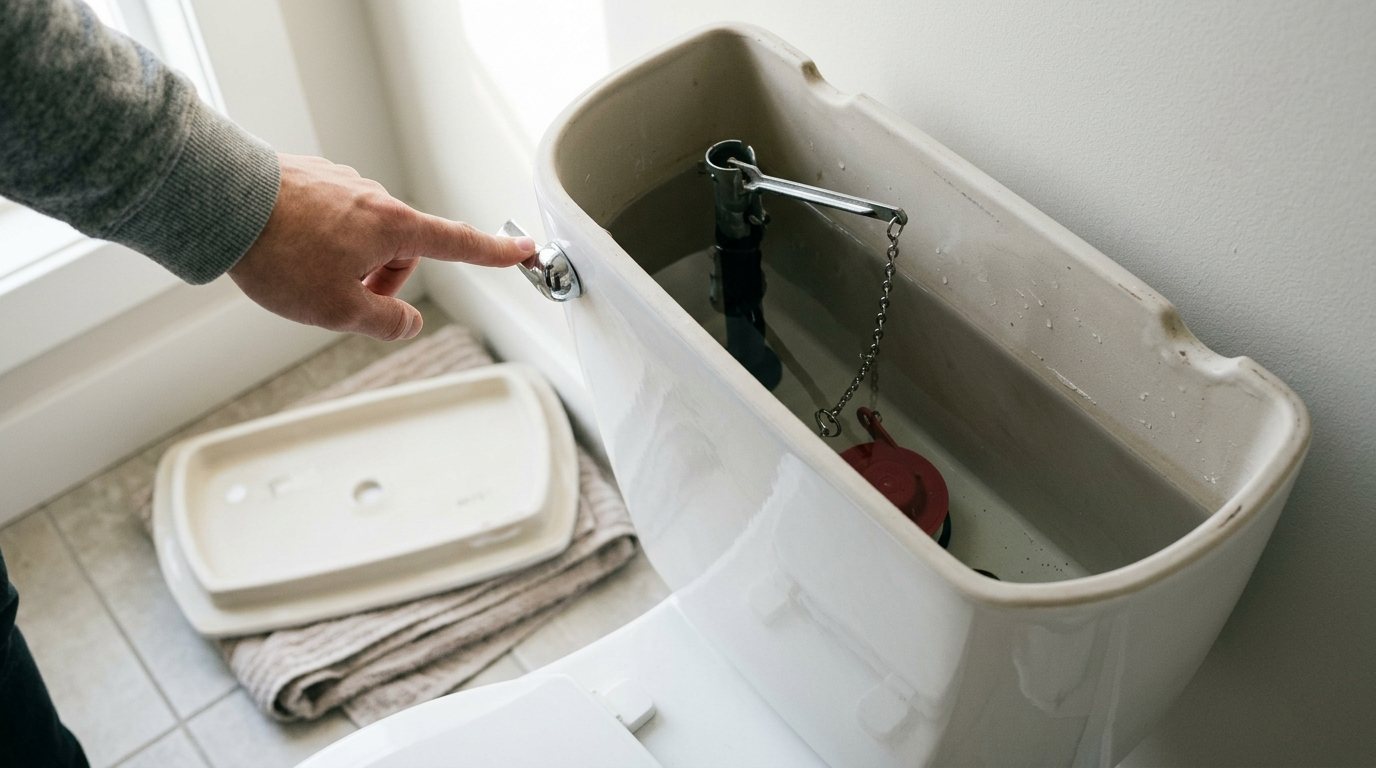
Take the lid off the tank and set it on a towel, since it’s heavy and breaks easily. Press the handle while you watch the parts inside. That one look usually tells you which half of the toilet is at fault.
- Nothing moves inside the tank: the handle or chain is the problem.
- The flapper lifts but drops right away: the chain is too loose or the flapper is waterlogged.
- The tank is half empty before you flush: the supply valve, fill valve or water level is the problem.
- The tank empties normally but the bowl doesn’t clear: look at the bowl, the jets and the drain.
You can also try the bucket test. Pour about a gallon of water quickly into the bowl from waist height. If the bowl flushes strongly, the drain is fine and the issue is in the tank. If the water rises slowly or barely drains, you have a clog or a drain or vent problem.
Quick fixes table
| Symptom | Likely cause | Quick fix |
|---|---|---|
| Handle feels loose, nothing happens | Loose handle nut or broken arm | Tighten the nut inside the tank or replace the handle |
| Handle moves but flapper doesn’t lift | Chain disconnected or too long | Reattach the chain with about 1/2 inch of slack |
| Short, weak flush; flapper drops quickly | Chain too loose or flapper closing early | Shorten the chain or replace the flapper |
| Tank water well below the overflow tube | Fill valve set too low or failing | Raise the fill level or replace the fill valve |
| Tank won’t refill at all | Supply valve closed or fill valve clogged | Open the valve fully; flush or replace the fill valve |
| Water swirls slowly, weak flush, white crust under rim | Clogged rim jets or siphon jet | Soak with vinegar and clear the holes with a wire |
| Bowl fills up and drains slowly | Partial clog in the trap | Use a flange plunger or toilet auger |
| Gurgling, slow drains in several fixtures | Blocked vent or main drain | Call a plumber |
Tank problems: handle, chain and flapper
1. Loose or broken handle
The handle is held to the tank by a nut on the inside. Note that this nut usually tightens counterclockwise, the opposite of most nuts, because it’s reverse-threaded. If the handle feels floppy, snug that nut by hand or with an adjustable wrench. If the plastic or metal arm inside the tank has snapped, replace the whole handle assembly, which takes about five minutes.
2. Disconnected or badly adjusted chain
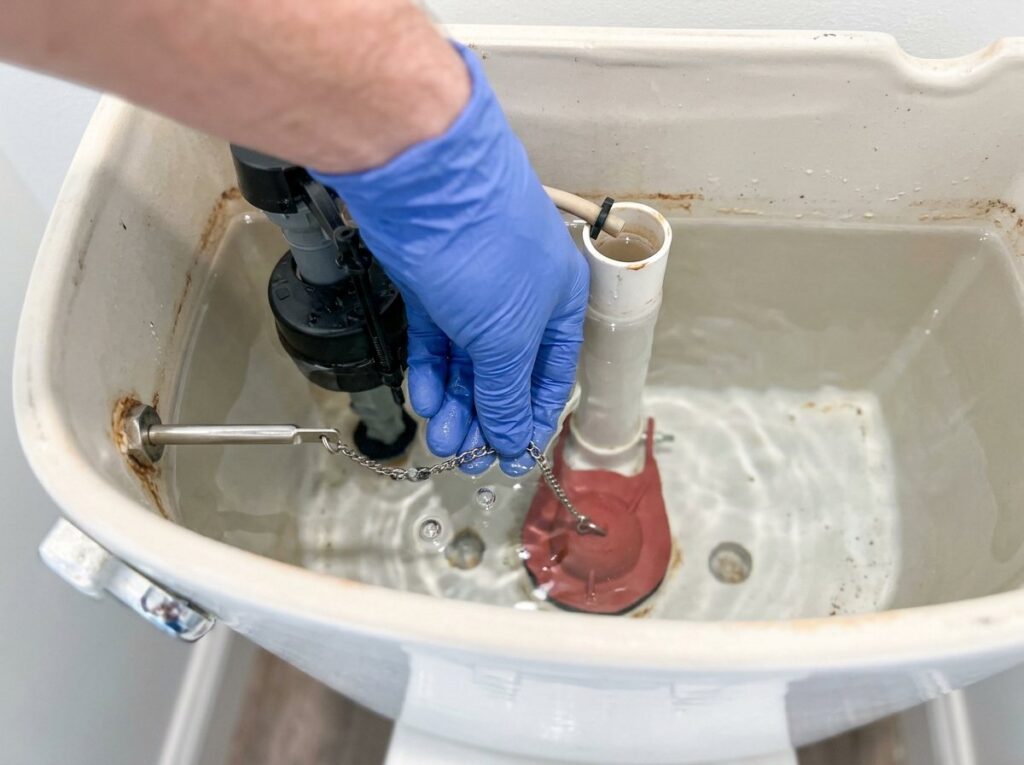
The lift chain links the handle arm to the flapper. If it has slipped off its hook or the clip has broken, the flapper never lifts and the toilet won’t flush at all. Reattach it to a hole on the arm that leaves about 1/2 inch of slack when the flapper is closed. Too tight, and the flapper can’t seal and the toilet runs. Too loose, and the flapper lifts only partway or drops too soon.
3. Worn or waterlogged flapper
The flapper is the rubber seal at the bottom of the tank. Over time it warps, hardens or absorbs water, and it can start closing before the tank has emptied, which gives you a short, weak flush. A flapper that doesn’t seal also lets water leak into the bowl, so the tank is never full when you need it. If yours feels stiff or slimy or looks warped, replace it with one that matches your flush valve size, usually 2 or 3 inches. Our guide on fixing a toilet that keeps running covers flapper replacement step by step.
Low tank water and fill valve problems
4. Supply valve partly closed
Check the small valve on the wall behind the toilet. If someone turned it down during a repair, the tank refills slowly or not to full height. Turn it counterclockwise until it’s fully open. If it’s seized or drips at the stem, replace it the next time you shut off the water to the house.
5. Water level set too low
A toilet relies on a full tank of water rushing into the bowl at once. If the level is too low, there isn’t enough water to start the siphon that pulls waste down the drain. HomeTips recommends the water sit about 1/2 inch below the top of the overflow tube, and many tanks have a fill line molded inside.
To raise the level on a modern float-cup fill valve, turn the adjustment screw or slide the clip to move the float up. On an older ball-float valve, gently bend the float arm upward or turn its adjustment screw. Flush and let the tank refill to check the new height. Never set it so high that water spills into the overflow tube, which causes a constantly running toilet.
6. Clogged or failing fill valve
If the tank fills very slowly or stops filling, debris may be blocking the fill valve. Turn off the supply, remove the cap on top of the valve (most twist off), and hold a cup over the opening while you turn the supply on briefly to flush out grit. If that doesn’t help, or the valve hisses or won’t shut off, replace the whole fill valve. Replacement valves are universal for most toilets and come with height adjustment.
Bowl and drain problems
7. Clogged rim jets and siphon jet
Under the rim of the bowl is a row of small holes called rim jets, and many toilets also have a larger siphon jet hole near the bottom of the bowl. Hard water leaves mineral deposits that slowly block them. When that happens, the water trickles in instead of rushing, the swirl is weak and the flush loses power. Use a small mirror to look up under the rim; white or orange crust around the holes is the giveaway. Some modern toilets have no rim holes, and the water enters through a single opening instead.
To clean them:
- Turn off the supply valve and flush to empty the tank and most of the bowl.
- Dry the area under the rim with a rag or paper towel.
- Pour about a cup of white vinegar down the overflow tube in the tank so it runs out through the rim jets. Let it sit for at least an hour.
- Gently poke each rim hole with a piece of stiff wire or a small Allen key to break up the scale.
- Clear the siphon jet at the bottom of the bowl with a wire or small brush.
- Turn the water back on and flush several times to rinse out loosened deposits.
Safety note: Never mix vinegar or any other cleaner with bleach-based toilet products, since some combinations release toxic gas. Rinse the bowl well between products, wear gloves and keep the bathroom ventilated.
8. Partial clog in the trap
A clog doesn’t have to stop the toilet completely. A wad of paper, a wipe or a small toy lodged in the trap lets some water past, so the bowl fills high and drains slowly with a weak flush. Use a flange plunger, the kind with an extra rubber sleeve that seals into the drain opening, and work it with firm, steady strokes. If plunging doesn’t help, a toilet auger reaches farther into the trap without scratching the bowl. See our step-by-step guide on how to unclog a toilet.
9. Blocked vent stack or main drain
Your plumbing has a vent pipe running up through the roof that lets air into the drain lines. If leaves, a bird’s nest or ice block it, the toilet can flush weakly and gurgle, and you may notice sewer smells or slow drains elsewhere. If several fixtures drain slowly or back up at the same time, the problem is more likely in the main drain or sewer line. Both are jobs for a plumber, especially since clearing a vent means working on the roof.
Tools and materials
- Rubber gloves and old towels
- Flange plunger and a toilet auger
- Adjustable wrench
- White vinegar, small mirror and a piece of stiff wire
- Replacement flapper, fill valve or handle, if needed
- Bucket for the bucket test
Why newer toilets can feel weaker
If you’ve replaced an older toilet, the new one uses much less water per flush. The EPA notes that the federal standard is 1.6 gallons per flush, and WaterSense labeled toilets use 1.28 gallons or less while meeting the same performance tests. Well-designed low-flow toilets clear the bowl fine, but they’re less forgiving of a low tank level, a short flapper opening or scaled-up jets, so small adjustments matter more. You can read about the testing on the EPA WaterSense toilets page.
When to call a pro
Call a plumber if:
- Plunging and an auger don’t clear the clog, or it keeps coming back.
- Several drains are slow or back up, or you smell sewer gas.
- Water leaks from the base of the toilet or the tank bolts.
- The bowl or tank is cracked.
- You suspect a blocked roof vent and aren’t comfortable on a ladder.
According to HomeAdvisor’s toilet repair cost guide, the typical toilet repair runs $150 to $391, with an average around $271.
| Repair | Typical pro cost (HomeAdvisor) |
|---|---|
| Clog | $85 to $600 |
| Slow-filling tank | $60 to $200 |
| Running toilet | $100 to $400 |
| Handle replacement | $50 to $80 |
| Valves | $50 to $150 |
If your toilet is old, cracked or a constant headache, replacement may be the better value. HomeAdvisor lists new toilets at $90 to $1,500 plus around $175 for installation, and our guide on how to replace a toilet walks through the DIY route.
Frequently asked questions
Why won’t my toilet flush but the handle moves?
If the handle moves freely but nothing happens, the chain has most likely come off the handle arm or the flapper, or the arm inside the tank is broken. Lift the lid and look. Reattaching the chain with about 1/2 inch of slack fixes it in most cases.
How do I make my toilet flush stronger?
Make sure the tank fills to about 1/2 inch below the top of the overflow tube, adjust the chain so the flapper opens fully, and clean mineral buildup from the rim jets and siphon jet. If the flush is still weak, plunge to remove a partial clog. Persistent weak flushing in several fixtures points to a vent or drain problem.
Why does my toilet only flush halfway?
A half flush usually means the flapper is closing too soon, either because the chain is too long or the flapper is old and waterlogged. A low tank water level does the same thing. Shorten the chain, replace a worn flapper and raise the fill level.
Can I flush a toilet manually when it won’t flush?
Yes. Pour a gallon or two of water quickly into the bowl from a bucket, and the siphon will usually pull the contents down. This works even when the water is off, as long as the drain isn’t clogged. If the water rises instead, stop and plunge first.
Why is my toilet gurgling and not flushing well?
Gurgling usually means air is being pulled through the drain because the vent is blocked or a clog is forming downstream. If other drains also gurgle or run slowly, the main line may be involved. A plumber can check the vent and run a camera or auger through the drain.
The bottom line
When a toilet won’t flush, start in the tank: check the handle, chain, flapper and water level, since those fixes take minutes and cost little. If the tank works but the bowl doesn’t clear, clean the rim jets and siphon jet, then plunge out any partial clog. If several drains are slow or the toilet gurgles, call a plumber to check the vent and main drain.