You lean over the kitchen sink and catch a whiff of something sour, rotten or musty coming up from the drain. You run the disposal, the smell fades for an hour, and then it is back.
A smelly disposal is almost always a cleaning problem, not a broken one. This guide explains where the odor actually comes from, how to deep clean the grinding chamber and the rubber splash guard safely, which home methods work (ice and salt, baking soda and vinegar, citrus), what never belongs in a disposal, and when a smell points to a plumbing problem instead.
Quick answer: Turn off the power, then scrub the underside of the rubber splash guard and the rim where the disposal meets the sink, since that is where most odors hide. Next, pour in 1/2 cup of baking soda followed by 1/2 cup of white vinegar, wait 10 to 15 minutes, rinse, and grind a handful of ice cubes with a tablespoon of coarse salt. Finish with a few small pieces of citrus peel, and run cold water every time you use the disposal.
Why your garbage disposal smells
The smell itself tells you a lot about the cause. Use this table to narrow it down before you start cleaning.
| What it smells like | Most likely cause | What to do |
|---|---|---|
| Rotting food, sour or garbage-like | Food residue in the chamber or under the splash guard | Deep clean the splash guard and chamber |
| Rancid or greasy | Grease coating the chamber and drain pipe | Baking soda and vinegar, hot water flush, stop pouring grease |
| Musty or moldy | Mold at the sink flange or a slow leak under the sink | Scrub the flange, check the cabinet for drips |
| Swampy, smell comes with slow draining | Partial clog in the trap or drain line | Clear the drain, avoid starchy and fibrous food |
| Rotten eggs or sewage | Sewer gas from a dry trap or venting problem | Run water to refill the trap; call a plumber if it continues |
| Hot, electrical or burning | Overheated or jammed motor | Turn it off; see troubleshooting below |
Food residue in the grinding chamber
Even when you run plenty of water, a thin film of food sticks to the walls of the grinding chamber and the turntable. Bits also get trapped under the grinding ring, where water does not reach well. Over a few days in a warm, damp space, that residue starts to rot.
The underside of the splash guard
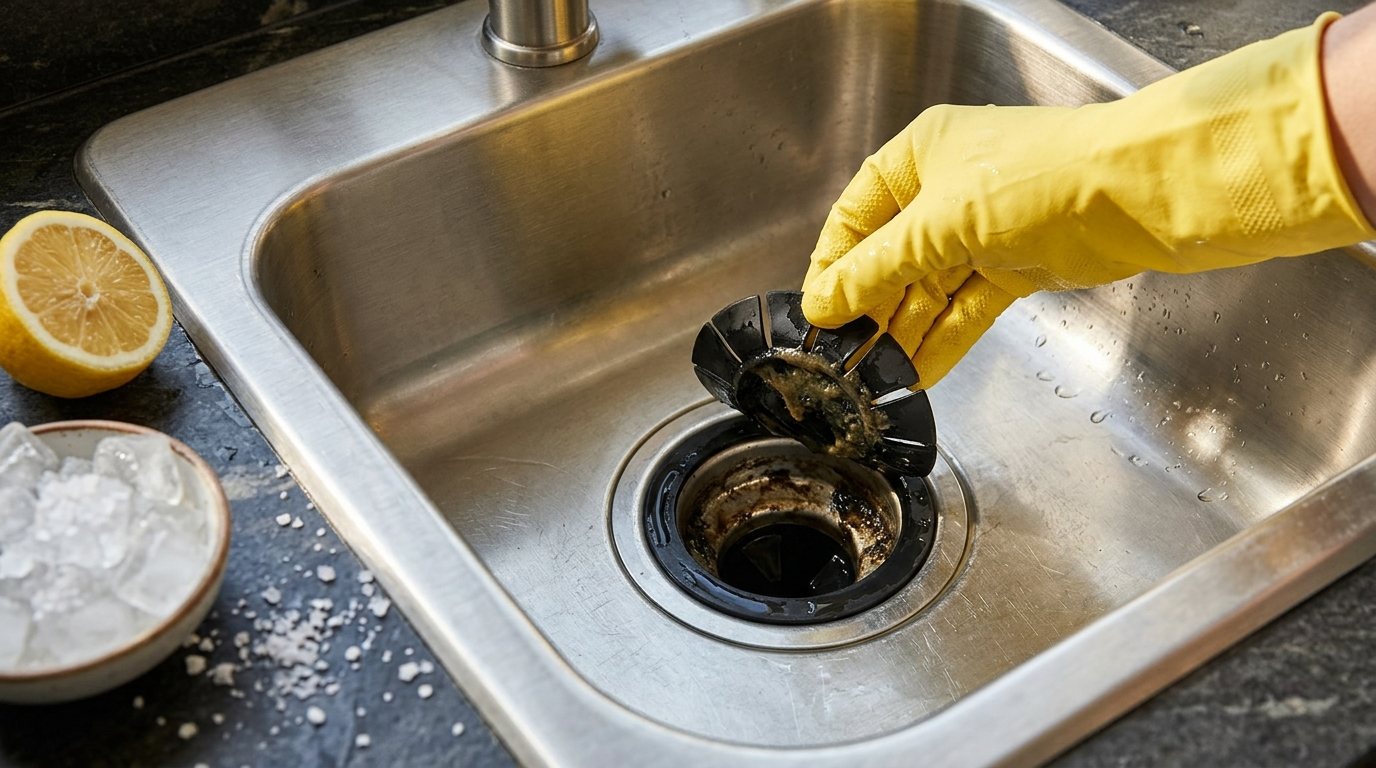
The black rubber flaps in the drain opening, called the splash guard or baffle, are the most overlooked source. Food sprays up under the flaps every time you grind and stays there. You cannot see it from above, but flipping the flaps up usually reveals a slimy, dark layer that smells far worse than the chamber.
Grease buildup
Grease is liquid when warm and solidifies as it cools, coating the chamber and drain pipe and trapping food particles. InSinkErator, a major disposal manufacturer, advises that you should never put fats, oils or grease in a disposal or down any drain.
A partial clog in the drain
If the sink drains slowly or water sits in the basin, food is collecting in the trap or drain line below the disposal. Standing water and decaying food send odors back up. Our guide to unclogging a drain without chemicals covers safe ways to clear it.
The dishwasher connection
Most dishwashers drain into the disposal. If the drain hose sags without a high loop or air gap, dirty water can sit in the hose and smell. The same setup can also send disposal water back into the dishwasher. Our dishwasher not draining guide explains how to check the hose routing.
Sewer gas
A rotten egg or sewage smell is different from food odor. It usually means sewer gas is getting past the trap, either because the trap dried out, a vent is blocked, or a fitting is loose. If running water does not clear it, call a plumber.
Safety first
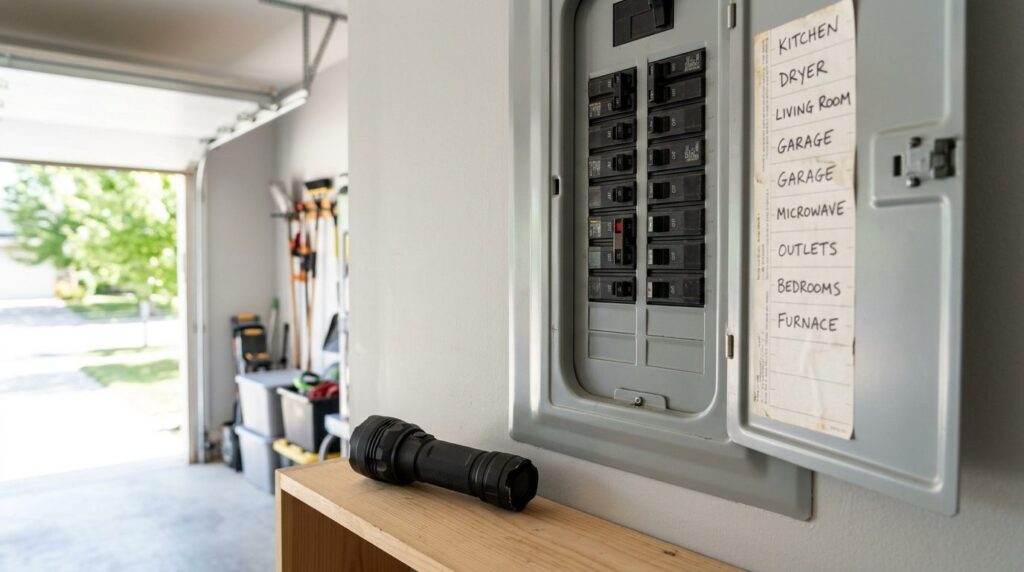
Safety note: Never put your hand into a disposal, even with the switch off. Before cleaning inside, turn off the wall switch and unplug the unit under the sink or switch off its breaker. Use tongs or pliers to remove objects. Never mix cleaners: bleach combined with vinegar or ammonia releases toxic gases, and chemical drain cleaners can damage disposal parts and splash back on you if you later need to work on the unit.
Tools and materials
- Flashlight
- Long-handled kitchen tongs or needle-nose pliers
- Stiff dish brush or an old toothbrush, plus a bottle brush for the chamber
- Dish soap and warm water
- Baking soda and white vinegar
- Ice cubes and coarse salt (rock or kosher salt)
- Lemon, lime or orange peels cut into small pieces
- Rubber gloves and a sink stopper
How to deep clean a smelly disposal
Do this full clean once, then use the quick methods in the next section to keep it fresh.
- Cut the power. Turn off the wall switch, then unplug the disposal under the sink or switch off its breaker.
- Look inside. Shine a flashlight into the drain. Use tongs to remove any utensils, bottle caps, bones or fruit pits.
- Clean the splash guard. Lift each flap and scrub the underside with a brush, warm water and dish soap. Many splash guards pop out by pushing them up from below or pulling them up from the sink; check your manual. A removable one can go in the top rack of the dishwasher or soak in hot, soapy water.
- Scrub the flange seam. Clean the joint where the metal sink flange meets the basin. Food and mold collect in that ring.
- Scrub the chamber. With the power still off, reach in with a long brush, never your hand, and scrub the chamber walls and turntable with soapy water.
- Restore power and flush. Plug the unit back in or reset the breaker, then run cold water and the disposal for about 30 seconds.
If the splash guard is torn, stiff or still smells after scrubbing, replace it. Replacement guards are inexpensive and usually match by mount size and brand.

Safe cleaning methods that work
Baking soda and vinegar
This combination loosens grime and helps deodorize. With the disposal off, pour 1/2 cup of baking soda into the drain, then add 1/2 cup of white vinegar. Let it fizz for 10 to 15 minutes, then rinse with hot tap water and run the disposal with cold water to flush out loosened residue.
Ice and salt
Drop a handful of ice cubes (about six to eight) and a tablespoon of coarse salt into the disposal. Run cold water and turn the disposal on until the grinding stops. The ice and salt scour residue off the chamber walls and turntable. Contrary to a common myth, this does not sharpen anything, because disposals use blunt lugs, not blades.
Citrus peels
Cut lemon, lime or orange peels into small pieces and grind them with cold water. Citrus leaves a fresh scent and the oils help cut light grease, but treat it as a finishing step, not a cure. Avoid feeding in whole fruit or large rinds, which are tough for smaller motors to grind.
Dish soap fill and flush
Plug the sink, fill the basin halfway with warm water and a squirt of dish soap, then pull the plug and run the disposal as the water drains. The volume of water flushes the chamber and drain line more thoroughly than a running tap.
| Method | Best for | How often |
|---|---|---|
| Splash guard scrub | Persistent rotten food smell | Every 1 to 2 weeks |
| Baking soda and vinegar | Grime and light grease | Weekly or as needed |
| Ice and salt | Residue on chamber walls | Every 1 to 2 weeks |
| Citrus peels | Freshening after cleaning | Anytime |
| Soapy sink fill and flush | Flushing the drain line | Weekly |
What never goes in a garbage disposal
Most odors start with something that should not have gone down the drain. Keep these out:
- Fats, oils and grease: pour cooled grease into a can or jar and throw it away.
- Fibrous foods: celery, corn husks, artichokes, onion skins and similar stringy scraps wrap around parts and form clogs.
- Starchy foods in bulk: potato peels, pasta, rice and bread swell into a paste that sticks in the trap.
- Large bones and fruit pits: they can jam the grinder.
- Large amounts of coffee grounds or eggshells: InSinkErator says these do not harm the disposal itself, but large quantities can settle and clog pipes, so feed them in gradually.
- Non-food items: glass, metal, plastic, paper towels, twist ties and cigarette butts.
- Chemical drain cleaners: they can damage the disposal and are dangerous if you need to work on it later.
Habits that keep the smell away
- Run a strong flow of cold water before, during and for several seconds after grinding.
- Feed scraps in gradually instead of stuffing the chamber.
- Use the disposal regularly. A unit that sits unused for days collects stagnant residue.
- Run the disposal before starting the dishwasher so the shared drain is clear.
- Scrub the splash guard every week or two as part of your normal sink cleaning.
Common mistakes to avoid
- Only cleaning what you can see. The smell usually lives under the splash guard and at the flange seam.
- Using hot water while grinding. Hot water keeps grease liquid until it cools further down the pipe. Use cold water while grinding and save hot water for flushing afterward.
- Pouring bleach or drain cleaner as a quick fix. It masks the smell briefly and creates hazards, while the residue stays.
- Ignoring a slow drain. A partial clog will keep producing odors no matter how often you clean.
When to call a pro
Call a plumber if you notice any of these red flags:
- A rotten egg or sewage smell that returns after you run water.
- Water leaking from the disposal body, the sink flange or the drain connections. A dripping disposal can cause a musty leak under the kitchen sink.
- Recurring clogs or water backing up into the other side of a double sink.
- The disposal hums, will not spin or trips its reset button repeatedly. Start with our guide to a garbage disposal that is not working.
According to HomeAdvisor’s plumber cost guide, most plumbers charge about $70 to $120 per hour, service call fees typically range from $100 to $350 and usually include the first hour, and flat rates for simple jobs such as clearing a clog typically run $100 to $400.
| Plumber charge | Typical range |
|---|---|
| Hourly rate | $70 to $120 |
| Service call fee (often includes first hour) | $100 to $350 |
| Flat rate for a simple service call | $100 to $400 |
Frequently asked questions
Why does my garbage disposal smell even after cleaning?
The odor is probably coming from the underside of the splash guard, the flange seam or a partial clog in the drain line. Scrub the splash guard thoroughly or replace it, and check whether the sink drains slowly. A sewage smell points to a trap or vent problem.
Can I put bleach down my garbage disposal?
It is better not to rely on bleach. It does not remove the food residue causing the smell, and it is dangerous if it mixes with vinegar, ammonia or drain cleaners. Dish soap, baking soda, vinegar and a brush do a better job.
Does ice really clean a garbage disposal?
Yes, ice with coarse salt scours residue off the chamber walls and turntable. It does not sharpen anything, because disposals grind with blunt lugs rather than blades.
How often should I clean my garbage disposal?
Do a quick ice or baking soda clean weekly or every other week, and scrub the splash guard at the same time. Heavy users and homes that cook with a lot of grease may need to clean more often.
Are lemon peels good for a garbage disposal?
Small pieces of citrus peel are fine and leave a fresh scent. Cut them up first and grind them with cold water. They freshen a clean disposal but will not fix a dirty splash guard or clogged drain.
The bottom line
A smelly disposal is usually telling you that food is trapped somewhere you cannot see. Turn off the power, scrub the underside of the splash guard and the flange, then use baking soda and vinegar, ice and salt, and citrus to keep it fresh. Keep grease and fibrous food out, run cold water every time, and call a plumber if the smell is sewage-like or comes with leaks or clogs.