The heat comes on for the first time this fall and your furnace greets you with a bang, a squeal or a rattle it never made last winter. Some furnace noises are perfectly normal, but others are early warnings of a worn part or, occasionally, a safety problem.
This guide helps you identify what you are hearing, explains what banging, squealing, rattling, humming, clicking and whistling usually mean, shows which fixes you can safely do yourself, and tells you when to shut the furnace off and call a professional.
Quick answer: Whistling usually means restricted airflow from a dirty filter or closed vents, and rattling is often a loose panel or screw, so both are usually easy DIY fixes. A loud bang or boom when the burners light is typically delayed ignition, and squealing or grinding points to the blower belt, bearings or motor, so turn the furnace off and call a pro for those. If you smell gas, leave the house and call your gas utility or 911 from outside.
Normal furnace sounds vs warning signs
A gas furnace is never completely silent. Knowing what a normal heating cycle sounds like makes it much easier to spot a new noise.
- Normal: a single click when the thermostat calls for heat, a short hum as the inducer fan starts, a soft whoosh when the burners light, a steady hum from the blower, and light ticking from metal ducts as they warm up and cool down. High-efficiency furnaces may also gurgle quietly as condensate drains.
- Warning signs: a loud bang or boom, screeching or grinding, a persistent rattle from inside the cabinet, loud buzzing, rapid clicking with no flame, whistling at vents, or hissing near the gas line.
Pay attention to when the noise happens, too. A sound at startup points to ignition or the inducer motor, while a noise that runs the whole cycle usually comes from the blower or ductwork.
Furnace noise chart: causes and who should fix it
| Noise | Likely cause | DIY or pro? | How urgent? |
|---|---|---|---|
| Loud bang or boom as burners light | Delayed ignition from dirty burners, weak igniter or gas pressure problems | Pro | Turn off and call soon |
| Ticking or popping in ducts | Metal ducts expanding and contracting | Usually normal; DIY airflow checks | Low |
| Squealing or screeching | Worn or loose blower belt, dry motor bearings, failing inducer motor | DIY belt check; pro for motors | Moderate |
| Grinding or scraping | Failed bearings or blower wheel hitting the housing | Pro | Turn off now |
| Rattling | Loose panels, screws or ducts; occasionally a cracked heat exchanger | DIY for loose parts; pro if inside the furnace | Low to high |
| Loud humming or buzzing | Failing capacitor, transformer, motor or loose wiring | Pro | Moderate; high with a burning smell |
| Repeated clicking, no flame | Igniter, flame sensor, gas valve or control board problem | DIY sensor cleaning; pro for parts | Moderate |
| Whistling | Dirty filter, closed vents or leaky ducts | DIY | Low |
| Hissing with a gas smell | Possible gas leak | Leave and call for help | Emergency |
What each furnace noise means
Banging or booming: delayed ignition
A single loud bang or boom just as the burners light is the noise to take most seriously. It usually means delayed ignition: gas flows into the burner area but does not light right away, builds up, and then ignites all at once. Common causes are dirty or misaligned burners, a weak igniter, incorrect gas pressure or, in propane homes, a nearly empty tank.
Repeated small explosions put stress on the heat exchanger and other parts, so do not ignore it. Turn the furnace off at the thermostat and the service switch and call a technician to clean the burners, check the igniter and test gas pressure. If you use propane, check your tank gauge too.
Lighter ticking or popping that comes from the ductwork rather than the furnace cabinet is different. It is usually sheet metal expanding as warm air hits it and contracting as it cools. A clogged filter or closed vents can make it worse by raising duct pressure, so check those first. If the banging comes from radiator or baseboard pipes on a hot water system, see our guide to banging pipes instead.
Squealing or screeching: belt, bearings or motor
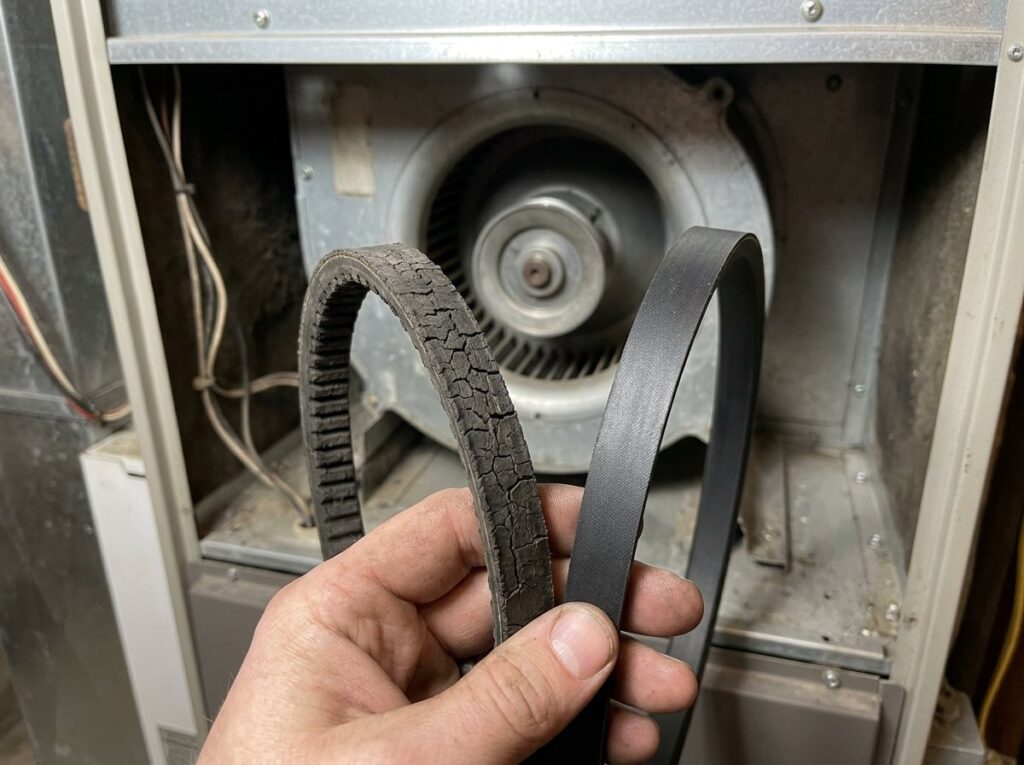
A high-pitched squeal during the blower cycle usually comes from the blower assembly. On older belt-driven blowers, a worn, cracked or loose belt slips on the pulley and squeals. On direct-drive blowers, the motor bearings may be dry or worn. A squeal or whine that starts a minute before the burners light and then stops often points to the inducer motor.
With the power off, you can check a belt for cracks, glazing and slack and replace it if you are comfortable doing so. Some older motors have small oil ports that take a few drops of light non-detergent motor oil once a year, but many modern motors have sealed bearings that cannot be oiled. If the noise turns into grinding or scraping, shut the furnace off immediately, because a failing bearing or a blower wheel rubbing its housing can quickly destroy the motor.
Rattling: loose parts or something more serious
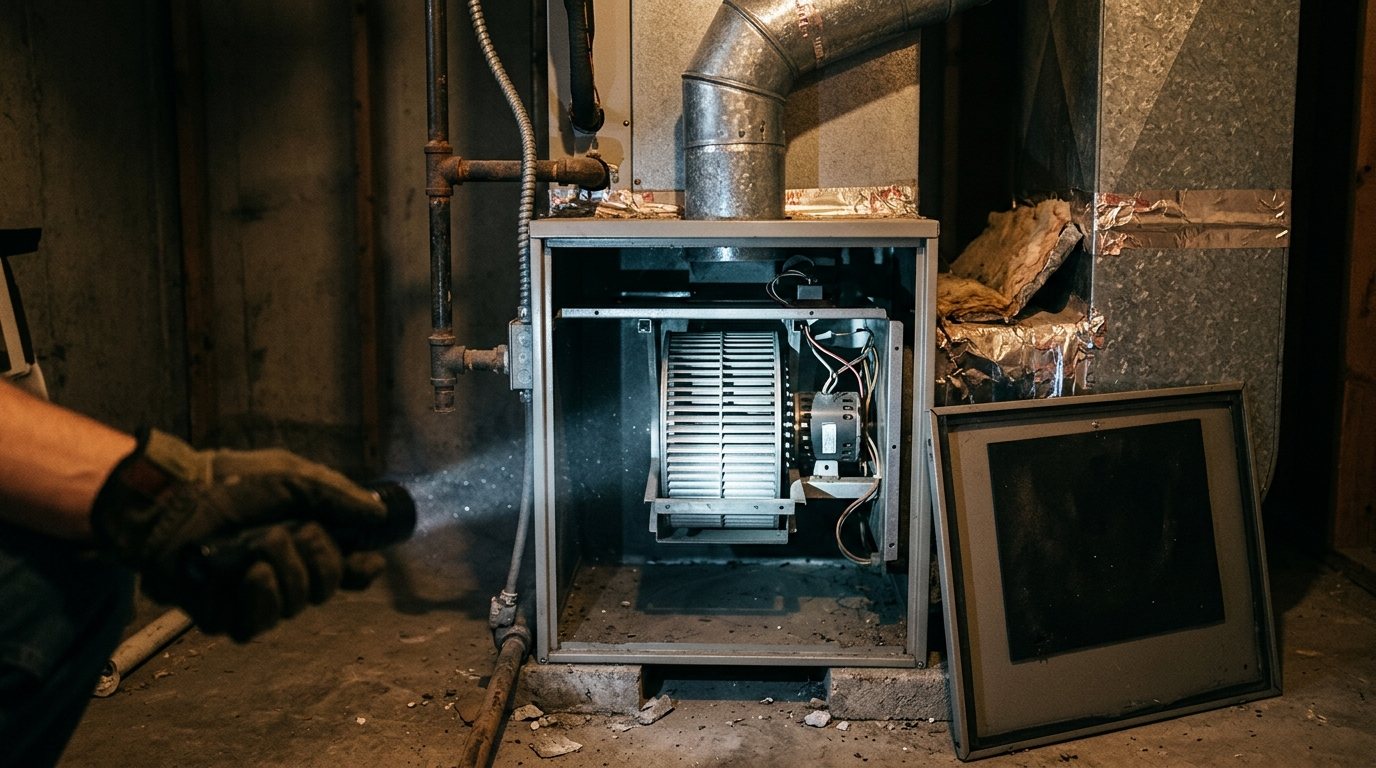
Most rattles come from a loose access panel, missing screws, a loose duct connection or something resting against the cabinet. Turn off the power, make sure the blower door is seated properly and tighten any loose screws you can see. Rattling ducts can be secured with sheet metal screws and sealed with foil tape or mastic.
A rattle from deep inside the furnace, especially at the start of a cycle, can mean a loose or damaged part in the inducer or blower, or a cracked heat exchanger. A cracked heat exchanger can let carbon monoxide into your home, so if you cannot find a loose panel or duct, have a technician inspect the furnace and make sure your CO alarms are working.
Humming or buzzing: electrical parts and motors
A quiet, steady hum from the blower is normal. A loud hum, a buzz that sounds electrical, or a motor that hums but does not start usually means a failing run capacitor, a bad transformer, loose wiring or a motor near the end of its life. Because these parts carry line voltage and capacitors can store a charge even with the power off, leave them to a technician. If you smell burning or hear crackling or arcing, turn the furnace off at the service switch and do not restart it until it has been inspected.
Clicking: ignition and controls
One click at the start of a cycle is the relay or gas valve doing its job. Repeated clicking with no flame usually means the furnace is trying and failing to light, which can be caused by a cracked or weak hot surface igniter, a dirty flame sensor, a gas valve that will not open or a control board fault. If the burners light and then go out within seconds, a dirty flame sensor is the usual suspect, and our guide to furnace short cycling shows how to clean it.
Whistling: an airflow problem
Furnaces should not whistle. A whistle at the furnace or vents is almost always air being forced through a gap or restriction, most often a dirty filter. Replace the filter first, following our guide on how to change a furnace filter, then make sure supply vents and return grilles are open and unblocked. If the whistle comes from a duct joint, seal it with foil tape or mastic rather than cloth duct tape, which dries out and fails.
Gas safety: when a noise is an emergency
Some noises come with signs that mean you should stop troubleshooting and get out.
- You smell gas or rotten eggs, or hear hissing near the gas line. Do not touch light switches, the thermostat or anything that could spark. Leave the house, then call your gas utility or 911 from outside.
- Your CO alarm sounds. Get everyone outside and call 911. Our guide on what to do when a carbon monoxide detector goes off walks through the steps.
- You smell burning plastic or hear crackling or arcing. Turn the furnace off at the service switch or breaker and call a technician.
- Loud booming at every startup. Turn the furnace off and use another safe heat source until a technician checks the burners and gas pressure.
Safety note: Before you open any furnace panel, set the thermostat to off and switch off power at the furnace service switch or breaker. Never remove covers from the burner area while the furnace is running, never attempt gas valve or gas line repairs yourself, and keep working CO alarms on every level of your home.
DIY fixes to try first
- Turn off the power at the thermostat and the furnace service switch.
- Replace the air filter if it looks gray or clogged, and check that it is the correct size.
- Open all vents and returns and move furniture or rugs that block them.
- Reseat and tighten the panels, replacing any missing screws.
- Inspect the blower belt on belt-driven units for cracks or slack.
- Seal accessible duct joints that whistle or rattle with foil tape or mastic.
- Restore power and listen through a full heating cycle, noting when any remaining noise starts and stops.
Tools and materials
- Replacement air filter
- Flashlight
- Screwdriver and 1/4-inch or 5/16-inch nut driver
- Foil HVAC tape or duct mastic
- Replacement belt (belt-driven blowers only)
- Light non-detergent motor oil (only for motors with oil ports)
When to call a pro
Call a licensed HVAC technician if you hear banging or booming as the burners light, grinding or scraping, loud buzzing, repeated clicking without ignition, a rattle from inside the furnace, or any noise that keeps coming back after your DIY checks. Annual maintenance catches many of these problems early.
Repair costs depend on the part. Typical figures from HomeAdvisor, HVAC.com and Fixr:
| Repair | Typical cost | Source |
|---|---|---|
| Service call fee | $50 to $100 | HVAC.com |
| Flame sensor replacement (with service call) | $68 to $127 | Fixr |
| Igniter replacement (with service call) | $96 to $178 | Fixr |
| Inducer motor replacement | $150 to $450 | HVAC.com |
| Blower motor replacement | $300 to $900 (average about $560) | HomeAdvisor |
| Heat exchanger replacement | $500 to $1,200 | HVAC.com |
For smaller blower parts, HomeAdvisor lists belts at about $5 to $100 and capacitors at about $10 to $50 for the part, with HVAC labor typically $75 to $125 per hour. Costs vary by region, furnace brand and emergency or weekend fees. If the heat exchanger is cracked on an older furnace, ask for a replacement quote as well as a repair quote before deciding.
Frequently asked questions
Is it normal for a furnace to make noise when it turns on?
Some noise is normal: a click, a short hum from the inducer fan, a soft whoosh as the burners light and the steady sound of the blower. Light ticking from ducts is also common. A loud bang, squeal or grinding sound is not normal and should be checked.
Why does my furnace make a loud bang when it starts?
A loud bang as the burners light is usually delayed ignition, where gas builds up before it lights. Dirty burners, a weak igniter and gas pressure problems are the common causes. Turn the furnace off and have a technician clean and adjust it, because repeated bangs can damage the heat exchanger.
Is a noisy furnace dangerous?
Many noises, like whistling or a loose panel rattle, are nuisances rather than hazards. Booming at ignition, grinding, electrical buzzing with a burning smell, and any noise paired with a gas smell or CO alarm are safety issues. In those cases, turn the furnace off and call a pro, or leave the house if you smell gas.
Why is my furnace squealing?
Squealing usually comes from a worn or loose blower belt, dry or worn motor bearings or a failing inducer motor. Check the belt with the power off if your blower has one. If the noise continues or turns into grinding, call a technician before the motor fails.
Can a dirty filter make a furnace noisy?
Yes. A clogged filter restricts airflow, which can cause whistling at the furnace or vents, louder duct popping and extra strain on the blower motor. Replacing the filter is the cheapest first step for almost any new furnace noise.
The bottom line
A furnace making noise is telling you something. Whistling and rattling are usually simple airflow or loose-part fixes you can handle yourself, while booming at ignition, squealing, grinding and loud buzzing call for a technician. Start with the filter, vents and panels, listen to when the noise happens, and never ignore a sound that comes with a gas smell, a burning odor or a carbon monoxide alarm.