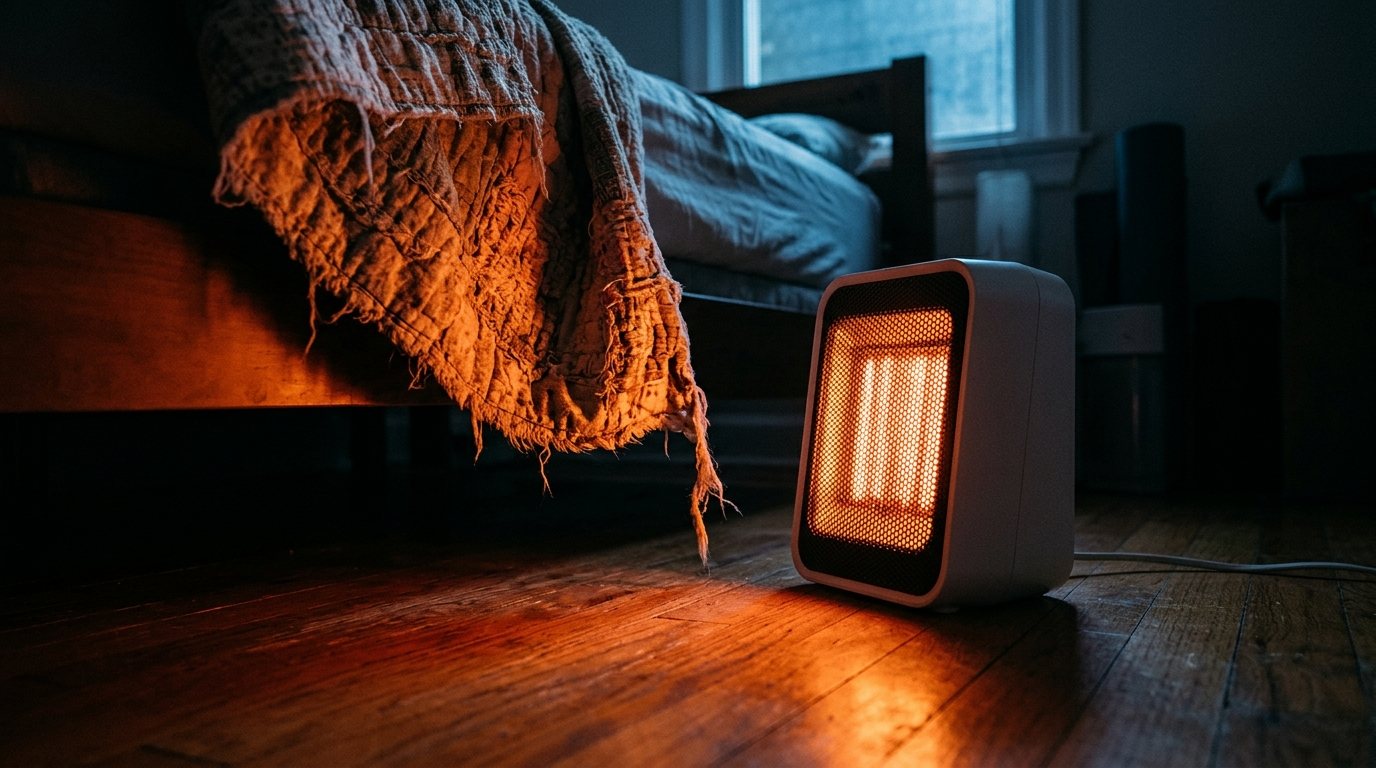
A space heater is a quick way to warm a chilly home office, a drafty bedroom or a basement workshop. It is also one of the riskiest appliances in your home if it sits too close to a bed or curtains, runs through an extension cord or gets left on overnight.
This guide covers the fire facts behind the warnings, 10 practical rules for safe placement and use, the safety features and certification marks to look for when you buy, how the main heater types compare, and simple math to work out what a heater really costs to run.
Quick answer: Keep a space heater at least 3 feet from anything that can burn, set it on a level, hard floor, and plug it directly into a wall outlet, never an extension cord or power strip. Choose a model with tip-over and overheat shutoff and a mark from a recognized testing lab such as UL, ETL or CSA. Turn it off whenever you leave the room or go to sleep.
Why space heater safety matters
Heating is a major cause of house fires every winter. According to the U.S. Fire Administration, an estimated 32,200 home heating fires were reported to U.S. fire departments in 2021, causing about 190 deaths, 625 injuries and $442 million in property loss. Heating was the second leading cause of home fires that year.
Portable heaters stand out in those numbers. USFA data for 2017 to 2019 show that portable heater fires made up only 3% of home heating fires but accounted for 41% of fatal home heating fires. NFPA research has long pointed to the same main problem: heaters placed too close to things that can burn, such as upholstered furniture, clothing, mattresses and bedding.
10 space heater safety rules
1. Keep 3 feet of clearance on every side
Both the USFA and the Consumer Product Safety Commission recommend keeping heaters at least 3 feet (about 1 m) from bedding, drapes, furniture and other flammable materials. That includes things that move, like a blanket sliding off the bed, laundry piles, paper and toys. Measure the space once so you know what 3 feet actually looks like in that room.
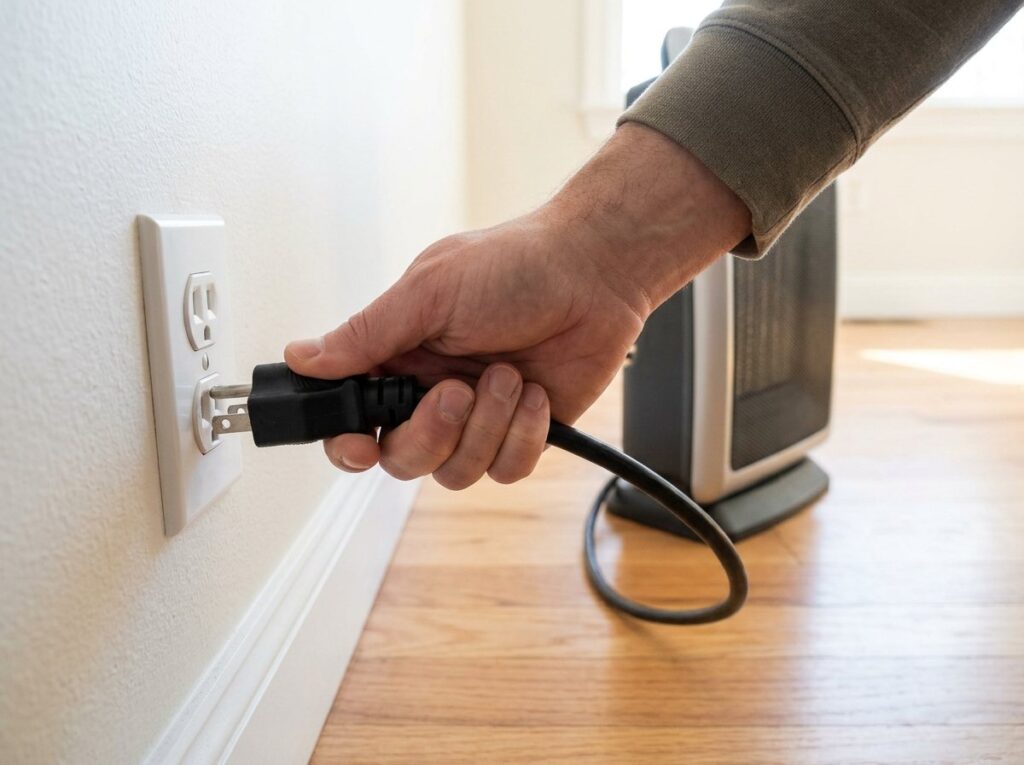
2. Plug it directly into a wall outlet
Plug the heater straight into a wall outlet, not an extension cord or power strip. A heater on high draws far more current than most appliances, and thin cords and power strips are not built for that load for hours at a time, so they can overheat and start a fire.
Ideally, nothing else heavy should run on the same outlet or circuit. After the heater has run for a while, carefully feel the plug and outlet cover. If either feels hot, or the plug looks discolored or fits loosely, stop using that outlet and read our guide on a warm outlet or light switch.
3. Set it on a level, hard, nonflammable floor
The CPSC recommends placing heaters on a level, hard, nonflammable surface. Keep heaters on the floor, not on tables, chairs or shelves where they can be knocked over, and out of walkways and doorways where people trip over cords. Avoid deep shag rugs that can block air intakes or let the heater tilt.
4. Choose tip-over and overheat protection
A tip-over switch shuts the heater off if it falls over or is not standing level. An overheat sensor, sometimes called a thermal cutoff, turns it off when internal parts get too hot, for example when a towel is thrown over it. Older heaters often lack these features, so if yours predates them, it is worth replacing.
5. Look for a certification mark
The CPSC advises buying a heater certified by a nationally recognized testing laboratory. In the US, look for marks such as UL, ETL or CSA on the unit and packaging. In Canada, look for CSA, cUL or cETL. A certification mark means the design was tested to a recognized safety standard, which is especially important for cheap heaters sold online.
6. Never leave it running unattended or while you sleep
The USFA says to turn space heaters off when you leave a room or go to sleep. A built-in timer or thermostat is not a substitute for being there. If you need warmth overnight, add blankets or use a heated mattress pad designed for that purpose, and keep the bedroom heater off.
7. Keep children and pets away
Kids and pets can knock heaters over, push toys against them or touch hot grilles. Choose a cool-touch model in homes with young children, keep the heater in a spot they cannot easily reach, and never use a heater to dry clothes or warm a pet bed.
8. Keep it dry
Do not use an ordinary space heater in a bathroom, laundry room or other damp area unless the manufacturer says it is designed for that, and never touch a heater with wet hands. Water and electric heating elements are a shock hazard.
9. Inspect it before every season
Check the cord and plug for cracks, frayed insulation, scorch marks or loose prongs. Vacuum dust from the grille and intake with the heater unplugged, since dust buildup can burn and smell. Replace any heater with a damaged cord or plug rather than repairing it.
10. Be extra careful with fuel-burning heaters
Propane, kerosene and other fuel-burning heaters add a second hazard: carbon monoxide. Use only models rated for indoor use, follow the ventilation instructions, never use gasoline in a kerosene heater, and refuel only when the heater is off and cool, outdoors. Any home with a fuel-burning heater needs working CO alarms, and our guide on what to do if a carbon monoxide detector goes off explains how to respond.
Safety note: Make sure you have working smoke alarms on every level and inside and outside sleeping areas before you start using space heaters for the season. Never use a gas oven or a charcoal grill to heat your home, even for a short time.
Types of space heaters compared
Every type can be used safely if you follow the rules above, but they suit different rooms and carry slightly different risks.
| Type | How it heats | Best for | Safety notes |
|---|---|---|---|
| Ceramic fan heater | Fan blows air over a hot ceramic element | Quickly warming a small room or office | Keep the intake and outlet grilles clear; never cover |
| Oil-filled radiator | Heats sealed oil that warms the room slowly and quietly | Bedrooms and longer, steady use | No exposed element, but the fins get hot; heavy and stable |
| Infrared or quartz heater | Radiant heat warms people and objects in front of it | Spot heating in drafty spaces | Glowing element; clearance in front is critical |
| Propane or kerosene heater | Burns fuel; no electricity needed | Outdoor areas, ventilated workshops, outages | Produces carbon monoxide; indoor-rated models only, with CO alarms |
How much does a space heater cost to run?
Electric space heaters turn nearly all the electricity they use into heat, but electricity is often an expensive way to heat. The math is simple, and you only need your heater’s wattage and your electricity rate from your utility bill.
- Find the wattage on the label. Many portable electric heaters top out at 1,500 watts on high, often with a 750-watt low setting.
- Divide by 1,000 to get kilowatts. A 1,500-watt heater uses 1.5 kilowatt-hours (kWh) for every hour it runs on high.
- Multiply by your rate per kWh. That gives you the cost per hour.
- Multiply by hours per day and days per month for the monthly cost.
Here is an example at a rate of 15 cents per kWh. Swap in your own rate, since prices vary widely by state and utility.
| Setting | Energy per hour | Cost per hour | 8 hours a day for 30 days |
|---|---|---|---|
| High (1,500 W) | 1.5 kWh | About 23 cents | About $54 |
| Low (750 W) | 0.75 kWh | About 11 cents | About $27 |
| High, 4 hours a day | 1.5 kWh | About 23 cents | About $27 |
A space heater only saves money if you turn down the thermostat for the rest of the house while you heat one room. Running a heater on top of normal central heating simply adds to your bill. For ways to cut costs across the whole house, see our guide on how to lower your heating bill.
A 1,500-watt heater also draws about 12.5 amps on a standard 120-volt circuit, which is a big share of a typical 15-amp circuit. If your breaker trips when the heater runs with other appliances, move the heater to a less loaded circuit and see our guide to a circuit breaker that keeps tripping.
Quick safety checklist
- Heater carries a UL, ETL or CSA mark and has tip-over and overheat shutoff
- At least 3 feet of clear space on every side
- Plugged directly into a wall outlet, with no extension cord or power strip
- Cord not under rugs or furniture, and not in a walkway
- Plug and outlet stay cool to the touch after an hour of use
- Turned off when you leave the room or go to bed
- Working smoke alarms, plus CO alarms if you use any fuel-burning heater
When to call a pro
Call a licensed electrician if the outlet, plug or cord gets hot, you see scorch marks or smell burning plastic, lights dim noticeably when the heater turns on, or breakers trip repeatedly. These signs point to worn outlets, loose connections or an overloaded circuit, and an electrician can repair the outlet or add a dedicated circuit for the room. According to HomeAdvisor, electricians typically charge $50 to $130 per hour plus a service call fee of $100 to $200 for the first hour, and most electrical projects fall between $163 and $536.
If you are using space heaters because your furnace or heat pump cannot keep the house warm, that is a heating problem worth fixing properly. A licensed HVAC technician can diagnose it, and a repair is usually cheaper and safer over a winter than running several heaters every day.
Frequently asked questions
Is it safe to leave a space heater on overnight?
No. The USFA recommends turning space heaters off when you go to sleep, and even models with tip-over and overheat protection can ignite bedding that slides too close. Warm the room before bed, then switch the heater off and rely on blankets.
Can you plug a space heater into a power strip or extension cord?
No. Space heaters draw a lot of current for long periods, and power strips and extension cords can overheat under that load. Plug the heater directly into a wall outlet, ideally one with nothing else heavy on the same circuit.
Can an electric space heater cause carbon monoxide poisoning?
No. Electric heaters do not burn fuel, so they do not produce carbon monoxide. Propane, kerosene and other fuel-burning heaters do, which is why they need proper ventilation, indoor rating and working CO alarms nearby.
What is the safest type of space heater?
For most homes, an electric heater with tip-over and overheat shutoff, a cool-touch exterior and a recognized certification mark is the safest choice. Oil-filled radiators are popular for bedrooms because they have no exposed heating element. Whatever you choose, clearance and supervision matter more than the type.
Do space heaters use a lot of electricity?
A typical 1,500-watt heater on high uses 1.5 kWh every hour, which adds up quickly if you run it all day. Using the low setting, a timer for warm-up only, or heating just the room you are in while lowering the main thermostat keeps costs under control.
The bottom line
Space heaters are safe when you respect three basics: 3 feet of clearance, a direct wall outlet and never leaving one running unattended or overnight. Buy a certified model with tip-over and overheat protection, check the plug and cord each season, keep working smoke and CO alarms in place, and do the cost math so you know whether that heater is actually saving you money.