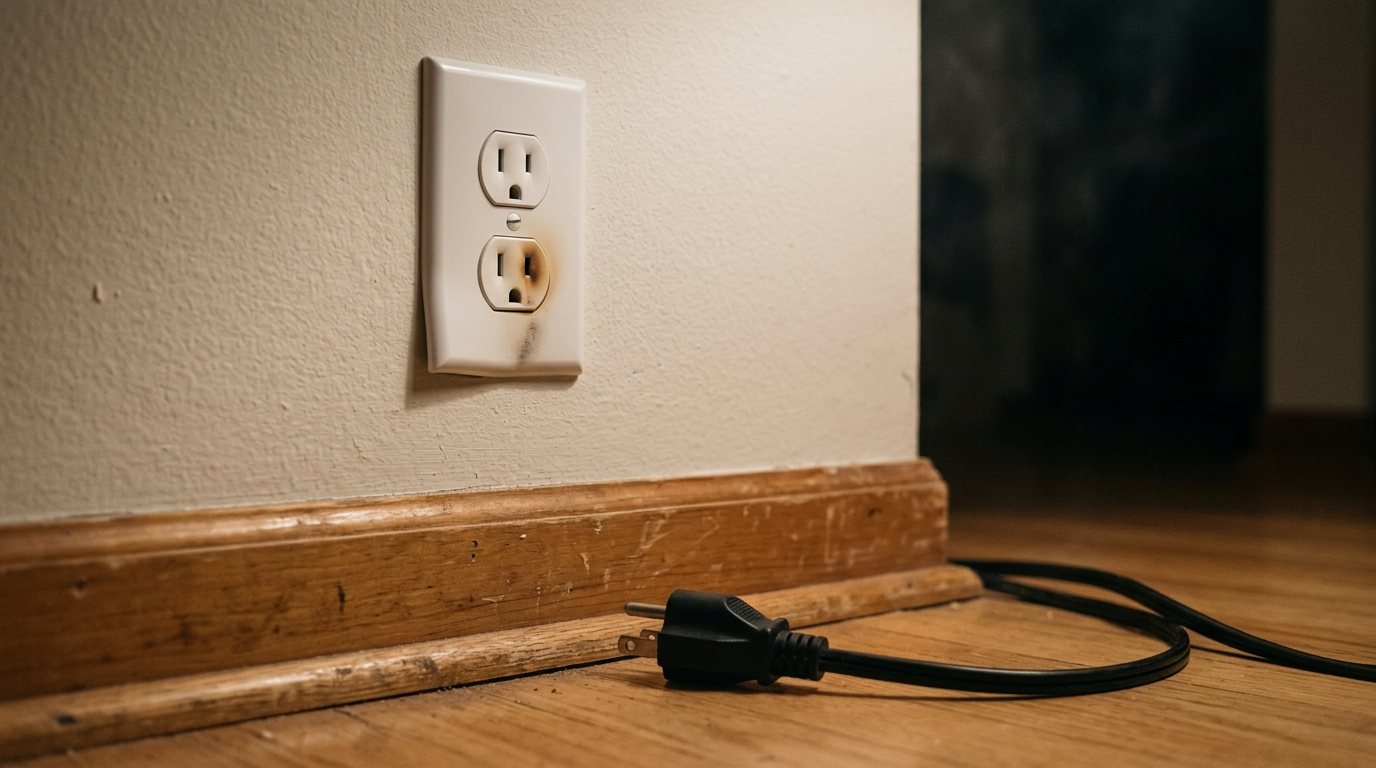
You rest your hand on a light switch and it feels warm, or you unplug the space heater and notice the outlet cover is hotter than the wall around it. Maybe there is a faint burning or fishy smell you cannot place. It is hard to know whether that warmth is normal or the first sign of a problem inside the wall.
This guide explains when warmth is expected, such as with dimmer switches, and the danger signs that are never normal: real heat, discoloration, burning smells and buzzing. You will learn the most common causes, exactly what to do right now, and when to call a licensed electrician.
Quick answer: A dimmer switch that feels slightly warm is normal. A standard outlet or switch that feels warm or hot is not, especially if it is discolored, buzzing, sparking or smells like burning plastic. Unplug what is connected if it is safe to touch, turn off the breaker for that circuit, and stop using it until a licensed electrician inspects it. If you see smoke or flames, leave the house and call 911.
Is a warm outlet or light switch normal?
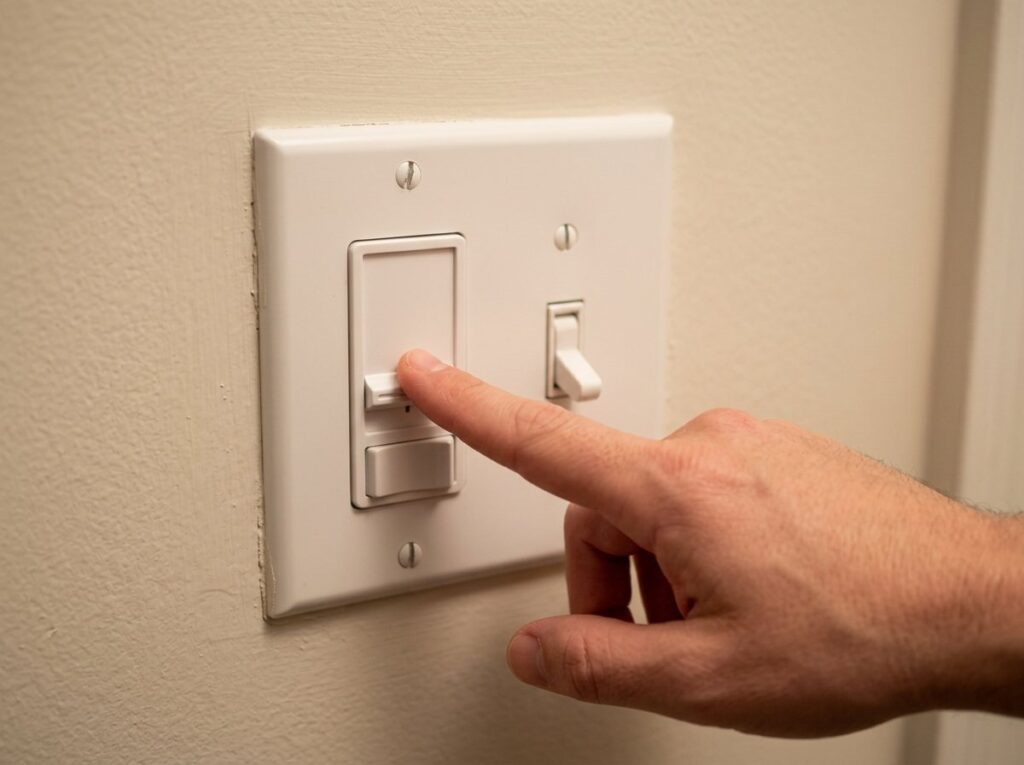
Dimmer switches: slightly warm is expected
Dimmers control brightness with electronics that give off a small amount of heat, so a dimmer’s face or cover plate can feel slightly warm when the lights are on, especially at partial brightness. Most dimmers have metal fins behind the face to shed that heat. Warm to the touch is fine. Hot enough that you do not want to keep your hand on it is not, and usually means the dimmer is overloaded, failing or incompatible with the bulbs.
Outlets and standard switches: warm is a warning
UL’s guide to electrical warning signs notes that while switch plates may feel slightly warm, an outlet should never become hot, even when the appliance plugged into it produces heat. A standard switch or outlet has no electronics that should warm up. If it is noticeably warmer than the wall, current is meeting resistance somewhere, and resistance creates heat.
Warm vs dangerous at a glance
| What you notice | Normal? | What it usually means | What to do |
|---|---|---|---|
| Dimmer slightly warm when lights are on | Yes | Normal heat from dimmer electronics | Nothing, but check wattage and bulb compatibility |
| Dimmer too hot to keep your hand on | No | Overloaded, failing or incompatible dimmer | Turn off the breaker; replace or reduce the load |
| Outlet warm only with a heater or other big load | No | Worn contacts, loose wire or overloaded circuit | Unplug the load; have the outlet checked or replaced |
| Outlet or switch warm with nothing on | No | Loose connection or wiring fault | Turn off the breaker; call an electrician |
| Brown or black marks, melted plastic | No | Overheating has already happened | Turn off the breaker now; call an electrician |
| Burning or fishy smell | No | Plastic or insulation overheating | Turn off the breaker now; call an electrician |
| Buzzing, crackling or sizzling | No | Arcing at a loose connection | Turn off the breaker now; call an electrician |
Danger signs you should never ignore
- Heat you can clearly feel on a standard outlet, switch or cover plate.
- Discoloration: brown, gray or black marks around the slots, toggle or plate edges.
- Melted or deformed plastic on the outlet, switch, plate or plug.
- A burning, hot-plastic or fishy smell near an outlet, switch or the electrical panel.
- Buzzing, crackling or sizzling sounds. UL notes that working electrical connections should be essentially silent.
- Sparks when you plug something in or flip the switch, beyond a tiny, momentary flash.
- Related symptoms such as flickering lights, plugs that fall out easily, or a breaker that trips.
Any one of these means heat is building at a connection, and that is how many electrical fires start: not in the appliance, but inside the box in the wall.
What to do right now
- If you see smoke, flames or heavy sparking, get everyone out and call 911 from outside. Never throw water on an electrical fire.
- Unplug devices only if it is safe. If the plug and outlet are not melted or too hot to touch, unplug what is connected. If they are, do not touch them.
- Turn off the breaker for that outlet or switch at the panel. If you are not sure which breaker it is and the smell or heat is strong, turn off the main breaker.
- Do not use it again until it has been inspected. Put tape over the outlet or switch so nobody else uses it.
- Note what was happening: what was plugged in, how long it ran, whether the lights were dimmed and whether anything else on the circuit was running. This helps the electrician find the cause.
- Call a licensed electrician. Heat, discoloration, smells and buzzing are not DIY diagnosis problems, because the cause is often behind the device.
Safety note: Never remove a cover plate or touch wiring while the breaker is on. If you later replace an outlet or switch yourself, turn off the breaker, verify the power is off with a non-contact voltage tester that you have checked on a live outlet, and inspect the wires. Scorched or brittle insulation, melted connections or aluminum wiring mean you should close it up, leave the breaker off and call a licensed electrician.
Common causes of a warm outlet or switch
1. Loose wire connections
This is the most common cause. A screw that has backed off, a wire slipping out of a push-in (backstab) hole, or a loose wire nut in the box creates a small, high-resistance contact point that heats up under load. Over time, heat makes the connection looser still, which is why a warm outlet tends to get worse, not better.
2. Worn outlet contacts
Inside an outlet, spring contacts grip the plug’s prongs. After years of use, they lose tension, so plugs fit loosely and touch only part of the contact. That small contact area heats up, especially with high-draw devices. If plugs slide out easily, replace the outlet. Our guide on how to replace an outlet covers choosing and wiring a new one.
3. Heavy loads and overloaded circuits
Space heaters, hair dryers, window AC units and other appliances that heat or cool draw a lot of current for long periods. Even a healthy outlet can feel warm under that load if the plug or contacts are not perfect. Several high-draw devices on the same circuit, or on a power strip, can push the circuit past what it should carry. If the breaker also trips, see our guide on why a circuit breaker keeps tripping.
4. Overloaded or incompatible dimmers
Every dimmer has a maximum wattage, and installing several dimmers side by side in one box can lower that rating. Too many bulbs, the wrong bulb type, or an older dimmer controlling LEDs can make a dimmer run hot, buzz or cause flicker. Check the dimmer’s rating against the bulbs it controls, and if you replace it, follow our guide on how to replace a light switch.
5. A failing switch
Switch contacts wear out and can start to arc inside, causing heat, crackling sounds and lights that flicker when you touch the toggle. A worn switch should be replaced promptly.
6. Aluminum wiring
Some homes from the mid-1960s to the mid-1970s have aluminum branch wiring. The CPSC’s aluminum wiring guide lists warm outlet or switch cover plates, flickering lights and the smell of burning plastic as warning signs of overheating aluminum connections, and strongly recommends repairs by a qualified electrician rather than homeowners. If your home is from that era and you find warm devices, have the wiring checked.
7. A damaged plug or appliance
Sometimes the plug is the problem: bent or corroded prongs, a cracked plug body or a damaged cord. If the plug itself is hot, discolored or deformed, stop using the appliance and replace the cord or the appliance.
How to prevent outlets and switches from overheating
- Plug space heaters and other high-draw appliances directly into a wall outlet, not a power strip or extension cord, and do not share that outlet with other big loads.
- Replace outlets that no longer grip plugs firmly.
- Use dimmers rated for your bulbs and stay within their wattage rating.
- Do not use extension cords as permanent wiring; add outlets where you need them.
- Touch-check outlets that power heaters and other big loads during the first cold snaps of the season.
- Have older homes, especially those with aluminum or cloth-covered wiring, inspected by a licensed electrician.
When to call a pro
Call a licensed electrician promptly if any outlet or standard switch is warm or hot, discolored, buzzing, sparking or smells of burning, or if a dimmer is hot rather than slightly warm. Also call if the problem returns after you have removed heavy loads, if more than one outlet on a circuit is affected, or if you have aluminum wiring. If a smell or heat is coming from the electrical panel itself, call right away.
Repair costs depend on what the electrician finds. Fixr’s outlet repair cost guide lists typical prices of about $50 to $125 to fix a loose outlet, $150 to $400 to repair a burned outlet, and $50 to $150 for a switch repair, with more if damaged wiring inside the wall must be replaced. That is a small cost compared with the damage an electrical fire can cause.
Frequently asked questions
Is it normal for a dimmer switch to be warm?
Yes, a dimmer can feel slightly warm during use because its electronics produce some heat. It should never be too hot to keep your hand on. If it is, check that the bulbs are within its wattage rating and compatible, and replace the dimmer if needed.
Why is my outlet warm when nothing is plugged in?
Current may be passing through that outlet to others further down the circuit, and a loose or damaged connection in the box is heating up. UL advises consulting an electrician in this situation. Turn off the breaker until it is inspected.
Can a warm outlet cause a fire?
Yes. Heat at a loose or worn connection can damage insulation, melt plastic and eventually ignite nearby materials. Treat a warm outlet as an early warning and have it inspected before it gets worse.
Why does my outlet get hot when the space heater is plugged in?
Space heaters draw a lot of current for long periods, so any weakness in the plug, outlet contacts or wiring shows up as heat. Plug the heater directly into a different wall outlet, and have the hot outlet replaced or inspected.
What does a fishy smell from an outlet mean?
Some plastics used in outlets, switches and wire insulation give off a fishy or urine-like odor when they overheat. Turn off the breaker and call an electrician; do not wait for visible damage.
The bottom line
A dimmer that feels slightly warm is normal. A standard outlet or switch that feels warm, or any device that is hot, discolored, buzzing or smells of burning, is not. Unplug what you safely can, turn off the breaker and leave it off, and have a licensed electrician find and fix the cause before you use that outlet or switch again.