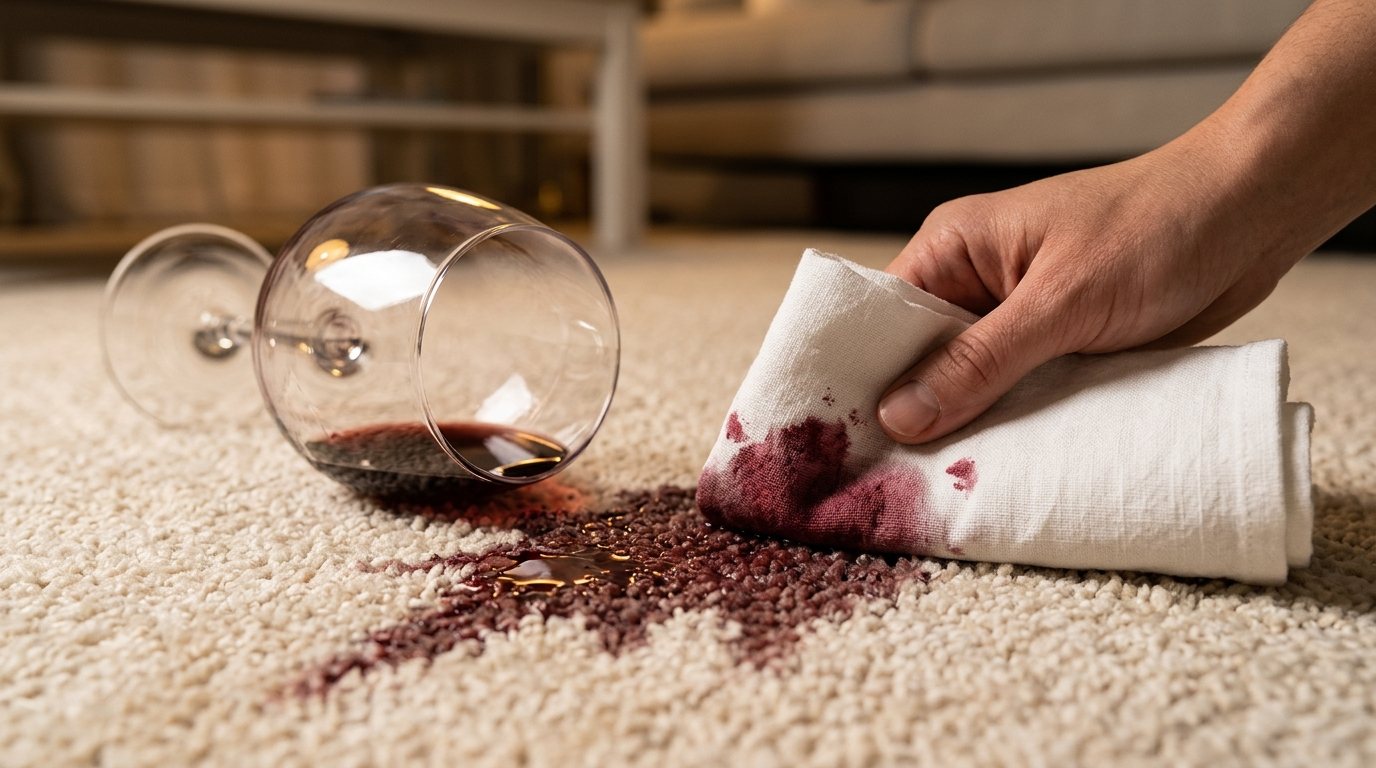
A glass of red wine tips over during a holiday dinner, the dog has an accident in the hallway, or someone tracks muddy boots across the living room. Your first instinct is to grab a towel and scrub hard. That instinct is exactly what turns a fresh spill into a permanent stain.
This guide explains how to remove carpet stains the right way, starting with the rules that apply to every spill, then a stain-by-stain table for coffee, red wine, pet urine, blood, grease and mud. You’ll also learn when to use an enzyme cleaner, how to test a cleaner safely, why some stains come back after they dry, and when it’s worth calling a professional.
Quick answer: Act fast, scrape or blot up as much as you can, and never rub. Test your cleaner on a hidden spot, then apply a small amount of mild detergent solution, work from the outside of the stain inward, and blot with a clean white cloth. Rinse with plain water, blot dry and weigh down a stack of paper towels overnight. Use an enzyme cleaner for pet urine and other organic stains, and cold water for blood.
The golden rules of carpet stain removal
Every stain is different, but these five rules apply to almost all of them. Following them matters more than which cleaner you choose.
1. Act quickly
The longer a spill sits, the deeper it soaks into the fibers and the backing, and the more time dyes and proteins have to bond. The Carpet and Rug Institute notes that spots left untreated can shorten the life of your carpet.
2. Blot, don’t rub
Rubbing spreads the stain, pushes it deeper and frays the carpet fibers, leaving a fuzzy patch. Press a clean white cloth or paper towel firmly onto the spot, lift and repeat with a fresh section until no more transfers. Use white cloths so dye doesn’t transfer to your carpet.
3. Test first
Before using any cleaner, apply a few drops to a hidden area, such as inside a closet or under a sofa. Blot with a white cloth after a few minutes. If color comes off on the cloth or the fibers change texture, don’t use that product.
4. Use as little liquid as possible
Soaking the carpet drives the stain into the pad, where it can wick back up later and cause odors or mildew. Apply cleaner sparingly with a spray bottle or cloth, not by pouring.
5. Rinse and dry thoroughly
Leftover soap is sticky and attracts dirt, so a cleaned spot can look worse a week later. Always finish with a plain water rinse and blot until the area feels only slightly damp.
Tools and materials
- Clean white cotton or microfiber cloths and plain white paper towels
- Dull knife or spoon for scraping solids
- Spray bottles
- Clear, mild dish soap (no bleach, moisturizers or colored dyes)
- White vinegar
- Enzyme-based carpet cleaner for pet and organic stains
- 3% hydrogen peroxide (light-colored synthetic carpet only, after testing)
- Baking soda or a dry absorbent powder
- Wet/dry vacuum (helpful but optional)
The basic method for most fresh stains
- Scrape off any solids with a dull knife or spoon, lifting toward the center of the spill.
- Blot up as much liquid as possible with white cloths or paper towels.
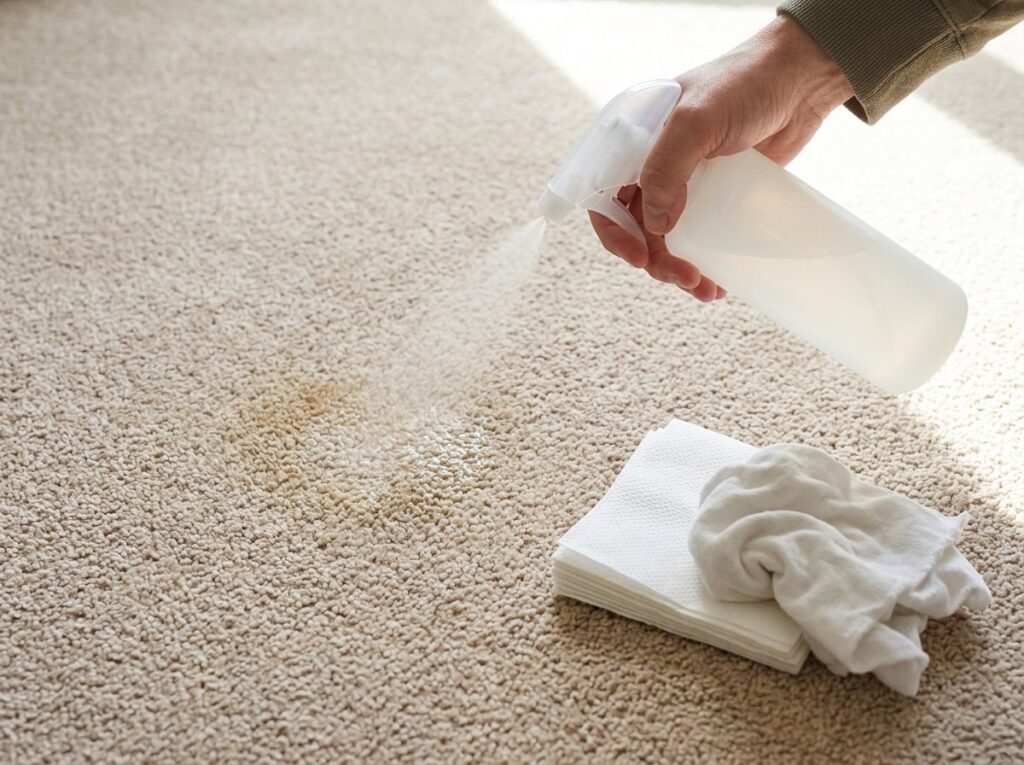
- Mix a few drops of clear dish soap in a cup of lukewarm water. Test it in a hidden spot.
- Lightly mist the stain and work from the outer edge toward the center so it doesn’t spread.
- Let it sit a few minutes, then blot. Repeat until no more color transfers to the cloth.
- Mist with plain water to rinse out the soap, then blot again.
- Lay a thick stack of paper towels over the spot, weigh it down with a heavy book on a plastic bag, and leave it overnight to draw out remaining moisture.
- Once dry, gently brush or vacuum the fibers to restore the texture.
Stain-by-stain guide
Use this table as a quick reference, then read the notes below for the stains people struggle with most.
| Stain | First step | Best cleaner | Avoid |
|---|---|---|---|
| Coffee or tea | Blot immediately | Dish soap solution, then a 1:2 vinegar and water rinse | Hot water, rubbing |
| Red wine | Blot; dilute with a little cool water | Dish soap solution; tested hydrogen peroxide on light synthetic carpet | Salt piles left to dry, rubbing |
| Pet urine | Blot up as much as possible | Enzyme cleaner, applied generously enough to reach the pad | Ammonia cleaners, steam or heat |
| Blood | Blot with cold water | Cold water, then dish soap solution; hydrogen peroxide if tested | Warm or hot water |
| Grease or oil | Scrape, then cover with baking soda | Baking soda, then dish soap solution | Water alone, rubbing |
| Mud | Let it dry completely | Vacuum, then dish soap solution for any mark | Wiping while wet |
Coffee and tea
Blot as much as you can, then use the dish soap solution. If a brown ring remains, mist with a mix of 1 part white vinegar to 2 parts water, wait a few minutes and blot. Finish with a plain water rinse. If the coffee had milk in it, follow up with an enzyme cleaner to prevent a sour smell.
Red wine
Blot right away, then pour a small amount of cool water on the spot to dilute it and blot again. Work the dish soap solution from the outside in. On light-colored synthetic carpet, a tested dab of 3% hydrogen peroxide can lift what remains, but it can lighten dyes, so never use it on wool or dark carpet without testing.
Pet urine
Blot up as much urine as you can by standing on a thick pad of paper towels. Then apply an enzyme cleaner according to the label, using enough to reach as deep as the urine went. Cover loosely and let it work for the full time on the label, often several hours, then let it air dry. Don’t use ammonia-based cleaners, since the smell can attract pets back to the same spot.
Blood
Always use cold water. Heat cooks the proteins in blood and sets the stain permanently. Blot with cold water, then the dish soap solution. For stubborn spots on light synthetic carpet, a tested dab of hydrogen peroxide will foam and lift the remaining color.
Grease and oil
Scrape off what you can, then cover the spot with baking soda or another absorbent powder and leave it for at least 15 to 30 minutes to draw out the oil. Vacuum, then treat any remaining mark with the dish soap solution, which is designed to cut grease.
Mud
Resist the urge to clean wet mud, which only smears it deeper. Let it dry completely, break it up gently and vacuum thoroughly from several directions. Treat any leftover mark with the dish soap solution. In winter, good entry mats and a boots-off rule are the best defense, part of the routine in our winter home maintenance checklist.
When to use an enzyme cleaner
Enzyme cleaners contain proteins that break down organic matter, such as urine, vomit, feces, milk, sweat and food, into smaller pieces that can be rinsed or blotted away. That’s why they remove odors that soap and water only mask. They need time to work, so follow the label’s dwell time and don’t rinse them out early.
Don’t combine an enzyme cleaner with vinegar, hydrogen peroxide or other cleaners in the same session, since they can reduce its effectiveness. If you used another product first, rinse with plain water and blot before applying the enzyme cleaner. Check the label on wool and silk rugs, because not every enzyme product is suitable for natural protein fibers.
Safety note: Never mix cleaning products, especially bleach with ammonia or vinegar, which can release toxic gases. Keep chlorine bleach off carpet entirely, since it removes color permanently. Open a window when you use any cleaner, and keep pets and kids off the area until it’s dry.
How to deal with old or set-in stains
Dried stains are harder but not always hopeless. Rehydrate the spot with a light mist of lukewarm water, wait a few minutes, then follow the basic method. For old pet stains, the urine has likely reached the pad and subfloor, so you’ll need an enzyme cleaner applied deeply and possibly more than once.
If a stain reappears after it dries, that’s called wicking: residue deep in the pad travels back up the fibers as they dry. Treat it again, then put more weight on your paper towel stack and leave it longer so it draws the moisture up into the towels rather than the carpet.
Common carpet stain mistakes
- Scrubbing hard. It frays fibers and spreads the stain.
- Using hot water on protein stains. Blood, milk, egg and urine can set permanently with heat.
- Using too much cleaner. Soap residue attracts dirt and leaves a darker spot over time.
- Skipping the test. Some cleaners bleach or change the texture of certain fibers.
- Using colored towels. Dye from the towel can transfer to the carpet.
- Steam cleaning pet urine before treating it. Heat can lock in the odor. Use an enzyme cleaner first.
When to call a pro
Call a professional carpet cleaner if a stain covers a large area, keeps wicking back, smells strongly of urine after several enzyme treatments, or is on wool, silk or an antique rug. Large floods or pet damage that reached the pad and subfloor may need the pad replaced and the subfloor sealed.
The Carpet and Rug Institute recommends professional deep cleaning every 12 to 18 months and suggests choosing a cleaner whose equipment and products carry its Seal of Approval, which can help you keep your carpet warranty. Ask whether the technicians are IICRC-certified, whether they vacuum before deep cleaning, and whether pricing is based on the area cleaned rather than the number of rooms. Prices vary widely by region and carpet size, so get a written estimate before work begins.
If you’re weighing replacement instead, hard flooring in high-spill areas can be easier to maintain; our guide on how to clean vinyl plank flooring shows what day-to-day care looks like.
Frequently asked questions
Does vinegar remove carpet stains?
Diluted white vinegar helps with coffee, tea and some food stains and can neutralize light odors. It isn’t a cure-all, and it shouldn’t be combined with enzyme cleaners or bleach. Test it first on wool and delicate fibers.
Can baking soda remove carpet stains?
Baking soda works best as an absorbent for greasy spills and as a deodorizer once a spot is dry. Sprinkle it on, let it sit, then vacuum thoroughly. It won’t remove dye stains like wine or coffee on its own.
Will hydrogen peroxide bleach my carpet?
It can. Hydrogen peroxide is a mild bleaching agent, so it may lighten colored or wool carpet. Use only 3% peroxide, test it in a hidden spot, and save it for light-colored synthetic carpet.
Why did the stain come back after it dried?
Either cleaner residue is attracting dirt, or the stain soaked into the pad and wicked back up as the carpet dried. Rinse with plain water, blot thoroughly and dry the spot under weighted paper towels overnight.
Should I use a carpet steam cleaner on stains?
Spot-treat stains first, then use a carpet cleaner or extractor to rinse the area. Avoid heat on protein stains such as blood and on fresh pet urine until you’ve treated them with cold water or an enzyme cleaner.
The bottom line
Most carpet stains come out if you act fast, blot instead of rubbing, test your cleaner and use as little liquid as possible. Match the method to the stain: cold water for blood, absorbent powder for grease, dry vacuuming for mud and enzyme cleaners for pet accidents. Rinse well, dry under weight, and call a pro for large, old or recurring stains. If you also have tile in high-traffic areas, our guide on how to clean grout covers the other surface that shows dirt first.