
You open the washer and get hit with a sour, musty smell, or your “clean” towels come out smelling worse than when they went in. Maybe there’s black gunk in the folds of the door seal or gray residue in the detergent drawer. A washing machine cleans your clothes, but nothing cleans the washing machine unless you do it.
This guide explains why washers start to smell and how to clean both front-load and top-load machines, including the door gasket, the dispenser, the drain pump filter and the tub. You’ll also learn how often to do each job, the habits that keep odors from coming back, and the signs that point to a repair rather than a cleaning problem.
Quick answer: Wipe the door gasket and dispenser with warm, soapy water, clean the drain pump filter if your washer has one, then run the tub clean cycle (or the hottest, largest cycle) with a washer cleaner or the amount of bleach your manual recommends. Leave the door open afterward so the drum dries. Repeat about once a month and keep the door ajar between loads to prevent odors.
Why your washing machine smells
Almost every washer smell comes from the same recipe: leftover moisture, detergent and fabric softener residue, body soil and lint. Together they form a slimy film called biofilm, where mold and odor-causing bacteria thrive. Once you know where that film hides, the fix is straightforward.
Too much detergent or fabric softener
High-efficiency (HE) washers use very little water, so extra detergent doesn’t rinse away. It coats the drum, the hidden outer tub and the hoses. Liquid fabric softener adds a waxy layer on top. Using the dose on the label, not a full cap, is one of the simplest ways to prevent smells.
A wet door gasket and a closed door
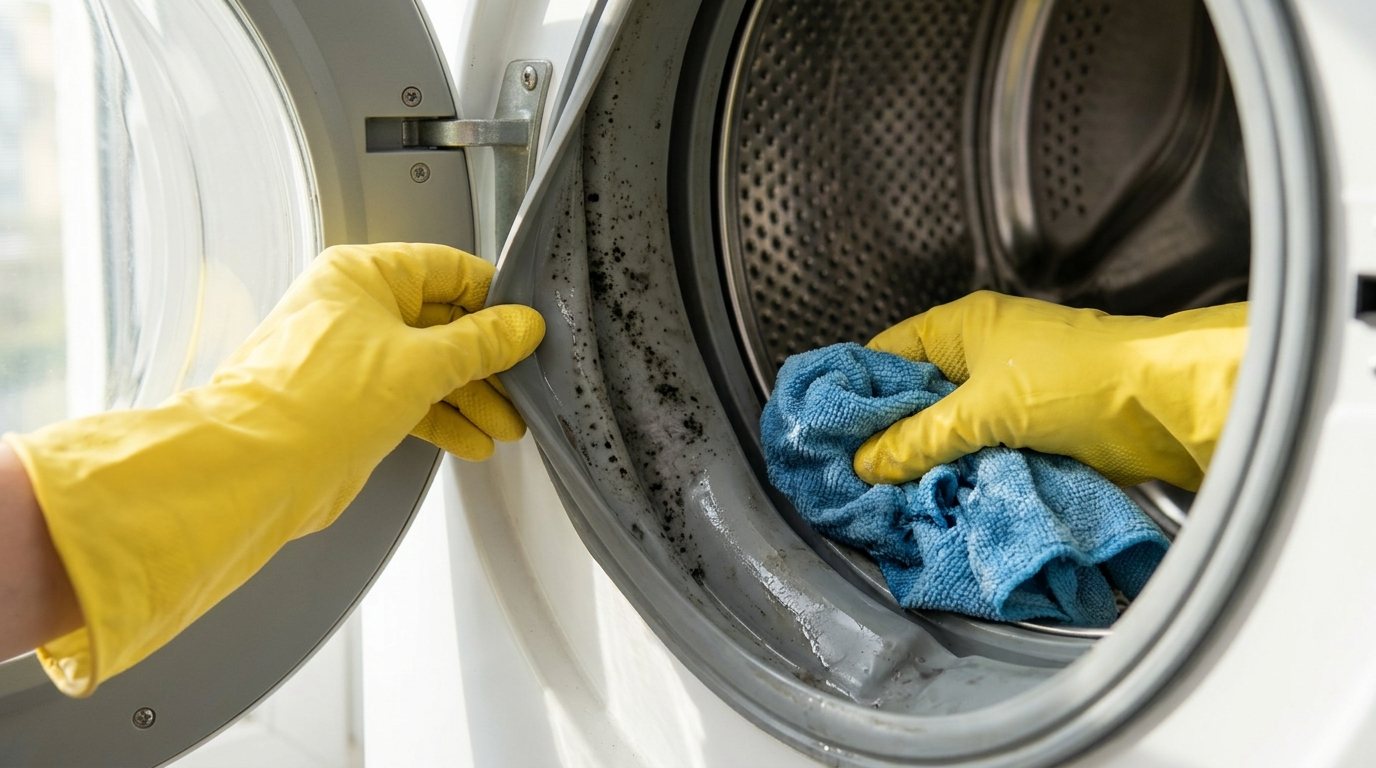
On front-loaders, the rubber gasket (also called the door boot) traps water, hair and lint in its folds. If you close the door right after a load, that moisture has nowhere to go, and black mold spots appear within weeks.
A clogged drain pump filter
Many front-loaders and some top-loaders have a small filter that catches coins, hair ties and lint before they reach the drain pump. When it clogs, dirty water sits in the bottom of the machine and starts to smell, and the washer may drain slowly or show an error code.
Only washing in cold water
Cold washes save energy and are fine for most clothes, but they don’t dissolve greasy residue as well. If you never run a hot cycle, buildup accumulates faster, which is why a regular hot tub clean matters.
A drain or standpipe problem
A rotten egg or sewer smell that’s strongest near the wall, not inside the drum, usually comes from the drain the washer empties into. A dried-out or slow standpipe trap can let sewer gas into the room, and that’s a plumbing fix, not a washer one.
Front-load vs top-load: what’s different
The basic idea is the same for both, but the trouble spots are different. Use this table to focus on the parts your machine actually has.
| Part or issue | Front-load washer | Top-load washer |
|---|---|---|
| Main odor source | Door gasket and water left in the drum | Residue under the rim and around the agitator |
| Door seal | Large rubber gasket that needs regular wiping | No gasket; wipe the lid and the top of the tub |
| Drain pump filter | Usually behind a small panel at the lower front | Less common; check your manual |
| Dispenser | Pull-out drawer, often with a removable insert | Cups on the agitator or around the tub rim |
| Tub clean method | Tub clean cycle with a cleaner or bleach | Tub clean cycle, or a hot fill with a soak if your model allows it |
| Key habit | Leave the door and drawer open after loads | Leave the lid open after loads |
Tools and materials
- Rubber gloves and safety glasses
- Microfiber cloths and an old toothbrush
- Mild dish soap and warm water
- Washing machine cleaner tablets or powder, or unscented household chlorine bleach
- White vinegar and baking soda (optional, for dispensers and light buildup)
- Shallow pan or baking dish and old towels (for the drain pump filter)
- Flashlight to see into the gasket folds
How to clean a front-load washer
Set aside about an hour, most of it while the cleaning cycle runs. Start with the parts you can reach, then let a hot cycle clean the hidden tub.
Step 1: Clean the door gasket
Pull back the folds of the rubber gasket and look inside with a flashlight. Remove hair, lint, coins and any small socks. Wipe the folds with warm, soapy water, using a toothbrush on stubborn spots, then dry them completely.
The EPA’s mold cleanup guidance recommends scrubbing mold off hard surfaces with detergent and water and drying them thoroughly. For dark staining that soap won’t lift, wipe with a diluted bleach solution, rinse with a damp cloth and dry. Some stains in older gaskets are permanent even after the mold is gone, the same problem you see with bathroom mold on caulk.
Step 2: Clean the dispenser drawer
Pull the drawer out until it stops, then press the release tab (often marked on the softener insert) to remove it. Soak it in hot, soapy water for 15 to 30 minutes, scrub it with a toothbrush and rinse. Before you put it back, wipe the drawer cavity, especially the ceiling, where mold often grows out of sight.
Step 3: Clean the drain pump filter
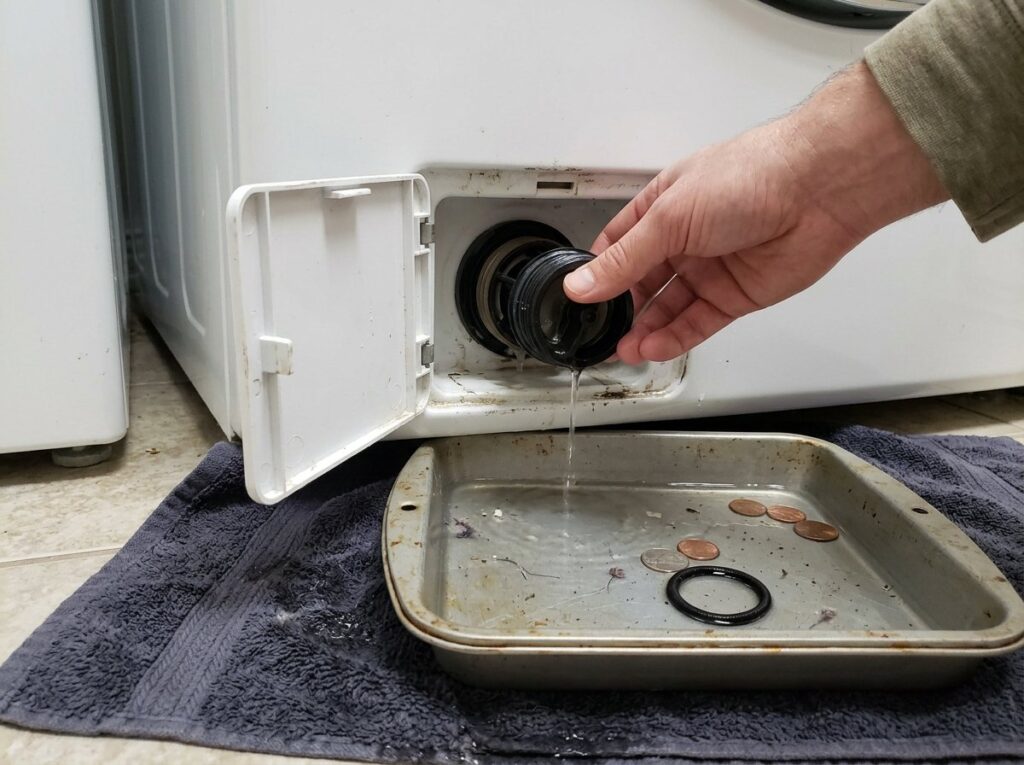
Open the small panel at the bottom front of the washer. Lay down towels and set a shallow pan under the filter, because several cups of water can drain out. If there’s a small drain hose beside the filter, empty the water through it first.
Turn the filter counterclockwise slowly, pull it out, clear the debris and rinse it. Screw it back in firmly so it won’t leak.
Step 4: Run the tub clean cycle
With the drum empty, add a washer cleaner tablet to the drum or the amount of liquid chlorine bleach your manual specifies to the bleach dispenser. Select Tub Clean, Clean Washer or Self Clean. If your machine doesn’t have one, choose the hottest, largest, longest cycle with an extra rinse. Don’t add detergent.
Step 5: Wipe the glass and dry everything
When the cycle ends, wipe the inside of the door glass and the gasket one more time, then leave the door and drawer open for several hours so the inside dries completely.
How to clean a top-load washer
Top-loaders don’t have a door gasket, but residue collects under the rim, in the fabric softener cup and around the agitator, where you rarely look.
Step 1: Wipe the rim, lid and dispensers
Wipe the underside of the lid, the top edge of the tub and the area under the rim with warm, soapy water. Remove any removable dispenser cups and soak them in hot, soapy water, or a mix of 1 part vinegar to 3 parts warm water, then scrub with a toothbrush.
Step 2: Clean around the agitator or impeller
If your agitator has a removable fabric softener cup or top section, take it off and clean inside, since gunk often builds up there. On impeller models, use a cloth or toothbrush around the edges of the low-profile plate.
Step 3: Run a hot cleaning cycle
Run the Tub Clean or Clean Washer cycle with a washer cleaner or the bleach amount from your manual. On older models without that cycle, run the hottest, largest cycle with 1 to 2 cups of white vinegar or a washer cleaner, never both bleach and vinegar. If your model lets you pause mid-fill, stopping for about an hour lets the solution soak before the cycle finishes.
Step 4: Check the inlet screens (if fill is slow)
If your washer fills slowly, the small screens where the hoses connect may be clogged with sediment. Turn off both water valves, unplug the washer, unscrew the hoses with a towel underneath, and gently pull out and rinse the screens. Reconnect the hoses snugly and check for drips.
Safety note: Never mix bleach with vinegar, ammonia or other cleaners, and never run bleach and vinegar in the same cycle. The CDC warns never to mix bleach with ammonia or any other cleaner, since the combination can create harmful fumes. Wear gloves, open a window and run a plain rinse cycle between products.
How often to clean your washing machine
- After every load: leave the door or lid open and pull out wet clothes promptly.
- Weekly (front-loaders): wipe the gasket and the inside of the door glass dry.
- Monthly: run a tub clean cycle and clean the dispenser.
- Every few months: clean the drain pump filter, or monthly if you have pets or wash lots of linty items.
- As needed: check inlet screens if the washer fills slowly.
Many newer washers show a tub clean reminder after a set number of cycles. If yours does, follow it. If you’re working through the laundry room anyway, this is also a good time to clean your dryer vent, since lint buildup there is a fire risk.
How to keep your washer from smelling
- Use HE detergent in HE machines and measure it. More soap doesn’t mean cleaner clothes.
- Go easy on liquid fabric softener, or skip it on towels and workout clothes.
- Move clothes to the dryer as soon as the cycle ends. Don’t leave wet laundry sitting overnight.
- Leave the door, lid and dispenser drawer open between loads so air can circulate.
- Run a hot wash now and then, such as for towels and sheets, to melt residue.
- Check pockets for tissues, coins and pens, which end up in the gasket and filter.
- Keep the laundry room ventilated. In damp basements, a dehumidifier helps the whole space, including the washer.
When to call a pro
Cleaning fixes most odor and residue problems. Call an appliance repair technician if:
- Water leaks from under the machine or around the door after you’ve cleaned the gasket.
- The door gasket is torn, cracked or permanently deformed.
- The washer won’t drain even after you’ve cleared the drain pump filter.
- It shows error codes that the manual’s troubleshooting steps don’t clear.
- It makes grinding, banging or squealing noises during the spin.
- A strong smell persists after two or three thorough cleaning cycles.
If the smell comes from the wall drain rather than the washer, try the steps in our guide to unclogging a drain without chemicals, or call a plumber. For repairs, a common rule of thumb cited by Bob Vila is that fixing the washer is usually worth it if the quote is less than half the cost of a new one, while machines 10 years or older are reasonable candidates for replacement.
Frequently asked questions
Can I use vinegar and baking soda to clean my washing machine?
Yes, for light buildup and odors, though they’re best used one at a time rather than mixed, since they neutralize each other. Some manufacturers advise against frequent vinegar use because it can be hard on rubber seals and hoses, so check your manual. Never use vinegar in the same cycle as bleach.
How do I get black mold off the rubber seal?
Scrub the folds with warm, soapy water and an old toothbrush, then dry them thoroughly. For stubborn spots, wipe with a diluted bleach solution, rinse and dry. If dark stains remain after cleaning, the rubber is likely stained rather than still moldy; keep it dry to prevent regrowth.
Should I leave my washer door open?
Yes. Leaving the door and dispenser drawer open between loads lets moisture escape and is one of the best ways to prevent odors. If you have small children or pets, close the laundry room door instead, or prop the washer door only slightly.
Do washing machine cleaner tablets work?
Cleaner tablets and powders are designed to dissolve residue in the hidden outer tub and are a convenient monthly option. They work best with your machine’s tub clean cycle. Bleach does a similar job when your manual allows it, but don’t use both at once.
Why does my washing machine smell like rotten eggs?
A rotten egg smell often comes from bacteria in the drain or standpipe rather than the drum. Clean the washer and its filter first. If the smell is strongest near the wall drain, have the drain and trap checked.
The bottom line
A smelly washer is usually a moisture and residue problem, not a broken machine. Clean the gasket, dispenser and drain pump filter, run a monthly tub clean cycle, and leave the door open between loads. Use the right amount of HE detergent and never mix bleach with other cleaners. If odors or leaks continue after a thorough cleaning, it’s time to call a technician or a plumber.