The first cold snap has arrived, the furnace is running more often, and you are bracing for the next utility bill. Heating is usually the biggest energy expense in a home, so even small changes add up over a long winter.
This guide gives you 17 practical ways to lower your heating bill, sorted from free habit changes to weekend projects and bigger upgrades. Where a savings figure is given, it comes from ENERGY STAR, the joint program of the EPA and the U.S. Department of Energy, and every tip is safe for a typical home.
Quick answer: Turn the thermostat down while you sleep or are away, replace a dirty furnace filter, and seal drafts around windows, doors and the attic. Then seal accessible ductwork, add attic insulation if it is thin, and book a fall tune-up. Use space heaters only to warm the room you are in, and never leave them running unattended.
Where your heating money goes
According to ENERGY STAR, nearly half of the energy used in a typical home goes to heating and cooling. Most of the heat you pay for escapes through air leaks, thin insulation and leaky ducts, or is wasted by heating rooms nobody is using. The tips below target those losses in order of cost and effort.
| Tip | Typical cost | What ENERGY STAR says |
|---|---|---|
| Smart or programmable thermostat schedule | Free to moderate | A certified smart thermostat can save about $100 a year in homes with high bills or long empty periods |
| Change or clean the filter | Low | Airflow problems can cut system efficiency by up to 15 percent |
| Seal air leaks and insulate | Low to moderate | Up to 10 percent savings on annual energy bills |
| Seal and insulate ducts | Low to moderate | Can improve heating and cooling efficiency by as much as 20 percent |
| Plastic film over drafty windows | Under $100 | An easy one-day project |
Free changes you can make today
1. Turn the thermostat down at night and when you are out
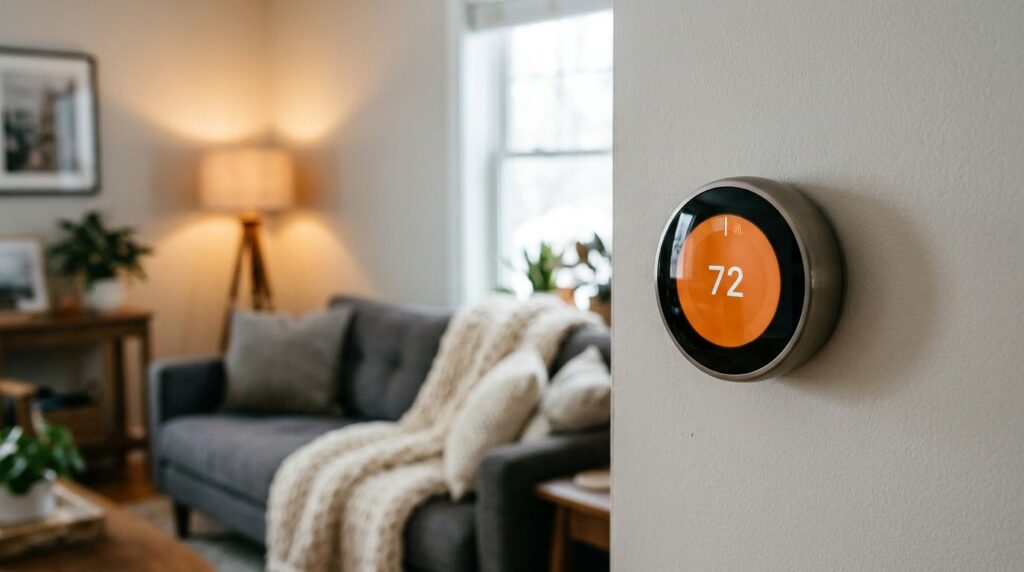
Your home loses heat faster when the indoor temperature is far above the outdoor temperature, so every hour at a lower setting saves fuel. Lower the setpoint a few degrees when you go to bed and when the house is empty for several hours, then let it warm back up before you wake or return. It is a myth that reheating uses more energy than you saved. Our guide to the best thermostat settings for winter suggests specific temperatures.
2. Put the schedule on autopilot
A schedule only saves money if you stick to it, and a programmable or smart thermostat removes the need to remember. ENERGY STAR says a certified smart thermostat can save about $100 a year, mainly in homes with high heating bills or that sit empty much of the day. If you have a heat pump, use smaller setbacks or a thermostat designed for heat pumps, because a large recovery can switch on expensive backup electric heat.
3. Use the sun
Open curtains and blinds on south- and west-facing windows on sunny days to let free heat in. Close them at dusk, especially heavy or insulated curtains, to slow heat loss through the glass at night.
4. Close the fireplace damper
An open damper is like an open window in the roof. Close it whenever the fireplace is not in use and the fire is completely out. If you rarely use the fireplace, a chimney balloon or a fitted glass door adds another barrier.
5. Keep vents and returns clear
Furniture, rugs and long curtains over registers trap heat behind them and starve the furnace of return air. On a forced-air system, avoid closing lots of registers in unused rooms, because it restricts airflow and can make the system less efficient rather than more.
6. Run ceiling fans in reverse on low
Warm air collects near the ceiling. Many ceiling fans have a small direction switch on the motor housing, and running the blades clockwise on the lowest speed gently pushes that warm air back down without creating a chilly breeze.
7. Keep indoor humidity in a comfortable range
Very dry winter air can make a room feel cooler and less comfortable than the thermostat suggests, which tempts you to turn the heat up. Aim for the 30 to 50 percent range the EPA recommends, and watch for condensation on windows, a sign the air is too humid. Our guide to ideal indoor humidity in winter explains how to measure and adjust it.
Low-cost weekend projects
8. Replace the furnace filter
A clogged filter makes the blower work harder and can cause the furnace to overheat and cycle off. ENERGY STAR recommends checking the filter every month and changing it at least every three months, and notes that airflow problems can reduce efficiency by up to 15 percent. Follow our steps on how to change a furnace filter.
9. Caulk and weatherstrip windows and doors
On a windy day, hold a damp hand or a lit incense stick near window frames, door edges, outlets on exterior walls and attic hatches to find drafts. Caulk gaps in fixed joints, add weatherstripping to the moving parts of doors and windows, and install a door sweep where you see daylight. ENERGY STAR says sealing and insulating can save up to 10 percent on your annual energy bills.
10. Add window insulation film
For single-pane or drafty windows, a shrink film kit is one of the cheapest fixes available. ENERGY STAR rates it as an easy project costing under $100 that takes about a day. Clean the frame, apply the tape, stretch the film and shrink it tight with a hair dryer, then peel it off in spring.
11. Seal attic air leaks
Warm air rises and escapes through gaps into the attic, pulling cold air in downstairs. ENERGY STAR calls the attic one of the largest energy-saving opportunities in a home. Common leak points include the attic hatch, wiring and plumbing holes, recessed lights, dropped soffits and the chaseway around the furnace flue.
Use caulk for gaps up to 1/4 inch and expanding spray foam for gaps from 1/4 inch to 3 inches. Around flues and chimneys, use only high-temperature caulk and metal flashing, and keep insulation the required distance away.
Safety note: Tightening a house can affect how gas or oil appliances vent. ENERGY STAR advises having a professional test combustion appliances before and after major air sealing. Do not disturb vermiculite insulation, which may contain asbestos, until it has been tested.
12. Seal and insulate accessible ducts
ENERGY STAR estimates that in a typical house, about 20 to 30 percent of the air moving through the ducts is lost through leaks, holes and loose connections. Seal joints you can reach in the basement, attic, crawlspace or garage with duct mastic or metal tape, never cloth duct tape, then wrap ducts in unheated spaces with insulation.
13. Top up attic insulation
Once the air leaks are sealed, check the depth of your attic insulation. If you can see the tops of the ceiling joists, there is not enough. Adding loose-fill or batts is a manageable DIY job in an accessible attic, or a fairly quick job for an insulation contractor.
14. Bleed your radiators
If you have hot water radiators that are cool at the top and warm at the bottom, trapped air is blocking the flow and the boiler runs longer to compensate. Bleeding them takes a radiator key and a few minutes each; see our guide on how to bleed radiators.
Maintenance and bigger upgrades
15. Book a fall tune-up
ENERGY STAR recommends having your heating system checked every fall, before contractors get busy. A technician checks gas pressure, burner combustion and the heat exchanger, cleans components and catches small problems before they become breakdowns. Bob Vila’s cost guide puts a typical furnace tune-up at $100 to $200.
16. Replace old equipment wisely
If your furnace, boiler or heat pump is more than 10 years old, ENERGY STAR suggests having it evaluated. When it is time to replace it, installation quality matters as much as the efficiency rating, since ENERGY STAR notes that improper installation can reduce system efficiency by up to 30 percent.
17. Upgrade windows last
New windows improve comfort, but they are expensive and pay back slowly compared with sealing, insulation and duct work. Start with weatherstripping, film and insulated curtains, and replace windows when they are failing anyway.
Space heaters: use them carefully
A space heater can save money when it lets you keep the rest of the house cooler while heating just the room you are using. Running several heaters on top of the furnace usually raises your bill instead.
Safety matters more than savings here. The U.S. Fire Administration reports that portable heaters were involved in only 3 percent of home heating fires from 2017 to 2019 but 41 percent of the deadly ones. Follow these rules:
- Keep anything that can burn at least 3 feet away from the heater.
- Turn it off when you leave the room or go to bed.
- Plug it directly into a wall outlet, not an extension cord or power strip.
- Choose a model with tip-over and overheat shutoff, and never use an oven or grill to heat your home.
Tools and materials
- Replacement furnace filters
- Exterior-grade caulk and a caulk gun
- Weatherstripping and door sweeps
- Window insulation film kit and a hair dryer
- Expanding spray foam and high-temperature caulk
- Duct mastic or metal foil tape
- Radiator key (for hot water radiators)
- Hygrometer to check humidity
When to call a pro
Most tips here are DIY, but bring in a professional when:
- You plan major attic air sealing and have gas or oil appliances, which should be combustion tested.
- Your ducts are hidden in walls or ceilings, or rooms stay cold after sealing what you can reach.
- The attic has vermiculite insulation, knob-and-tube wiring or signs of moisture.
- The furnace short cycles, blows cold air or has not been serviced in years.
Bob Vila’s cost guide gives these typical ranges for heating service:
| Service | Typical cost range |
|---|---|
| Furnace tune-up | $100 to $200 |
| Annual maintenance plan | $150 to $500 per year |
| General furnace repair | $100 to $600 |
Many utilities also offer free or discounted home energy assessments, so check with yours before paying for one.
Frequently asked questions
Is it cheaper to leave the heat on all day or turn it down?
Turning it down is cheaper. A house loses heat more slowly when it is cooler inside, so the energy saved during the setback is greater than the energy needed to warm back up. Heat pumps are the exception to watch, because large recoveries can trigger backup electric heat.
Does closing vents in unused rooms save money?
Usually not with forced-air heat. Closing many registers raises pressure in the ducts, increases leakage and can cut airflow across the furnace. Closing one or two is fine, but sealing ducts and lowering the thermostat saves more.
Are space heaters cheaper than central heat?
Only when you use one to heat a single occupied room while the rest of the house is kept cooler. Electric resistance heat is expensive per unit of warmth, so heating several rooms with space heaters often costs more than the furnace.
Does plastic on windows really help?
Yes, especially on single-pane or drafty windows. The film creates a still air layer and stops drafts around the sash. It is cheap, easy to remove in spring and a good stopgap before replacing windows.
What is the single best way to lower my heating bill?
For most homes, it is a combination of a thermostat setback and sealing air leaks, especially in the attic. Both cost little, and they reduce the amount of heat your system has to make in the first place.
The bottom line
Lowering your heating bill starts with free habits: a lower setpoint at night and when you are out, a clean filter and clear vents. Next, seal the drafts, attic leaks and ducts you can reach, then add insulation and book a fall tune-up. Use space heaters only for the room you are in, and treat the 3-foot rule as non-negotiable.