The tile still looks fine, but the grout lines have turned gray, brown or speckled with black, and mopping doesn’t touch them. Grout is porous, so it soaks up dirt, soap scum, cooking grease and moisture in a way smooth tile never does. Over time, even a clean floor or shower can look dingy because of those thin lines.
This guide shows you how to clean grout using the gentlest method that works, then step up only if you need to: warm water, baking soda, oxygen bleach, hydrogen peroxide, steam and, for mold, diluted chlorine bleach. You’ll also learn which cleaners damage grout and natural stone, how to seal grout so it stays clean, and when cleaning isn’t enough.
Quick answer: Scrub the grout lines with warm water and a stiff nylon brush, then use a baking soda paste on stubborn spots. For deeper stains, apply an oxygen bleach solution, let it sit 10 to 15 minutes, scrub and rinse. Avoid vinegar and other acids on unsealed grout and on marble, limestone or travertine. Once the grout is clean and fully dry, apply a penetrating grout sealer.
Before you start: know your grout and tile
The safest cleaner depends on two things: whether your grout is sealed and what your tile is made of. A few minutes of checking can save you from etched stone or crumbling grout.
Is your grout sealed?
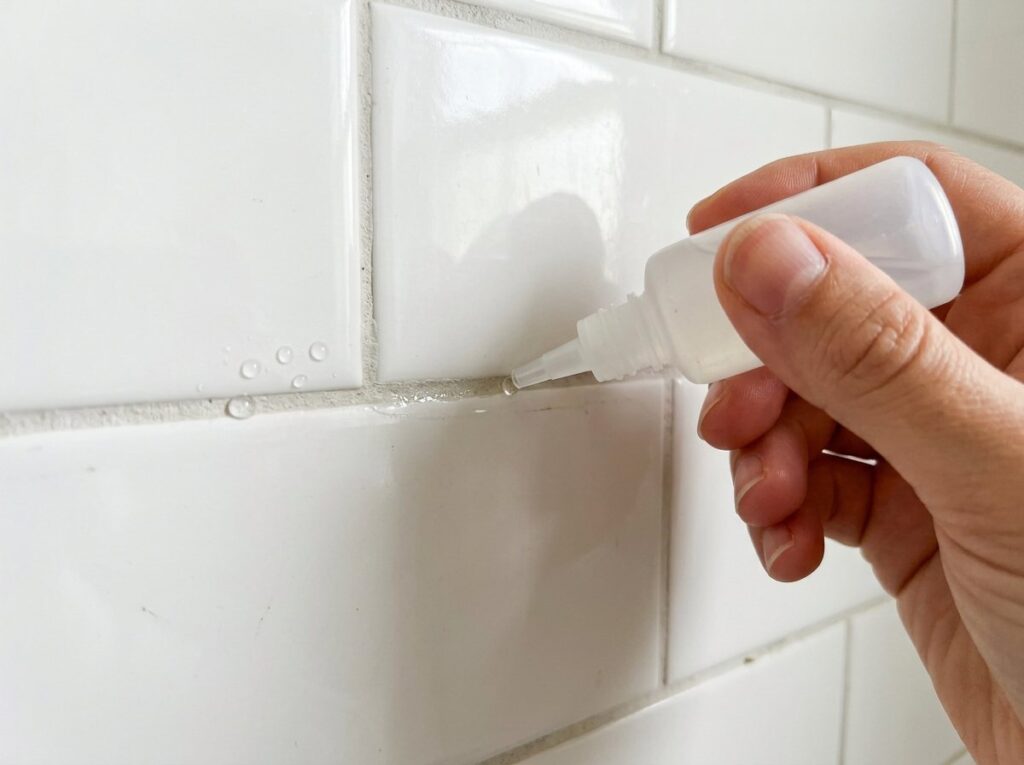
Drip a few drops of water on a grout line. If the water beads up, the grout is still sealed. If it darkens and soaks in within a minute or so, the grout is unsealed or the sealer has worn off. Unsealed cement grout absorbs cleaners, so stick to gentle methods and rinse well.
Cement grout vs epoxy grout
Most homes have cement-based grout, sanded or unsanded, which is porous and stains easily. Epoxy grout is much more stain resistant and doesn’t need sealing, but it can still collect surface grime. If your grout looks slightly glossy and feels hard and plastic-like, it may be epoxy.
Ceramic, porcelain or natural stone?
Ceramic and porcelain tile tolerate most grout cleaners. Natural stone is different. Marble, limestone, travertine and onyx are made largely of calcium carbonate, which acids etch on contact, leaving dull spots that cleaning can’t fix. With stone tile, use only cleaners labeled safe for natural stone and keep vinegar, lemon juice and acidic bathroom cleaners away from both the tile and the grout.
Grout cleaning methods compared
Start at the top of this table and work down only if the gentler method doesn’t do the job.
| Method | Best for | Unsealed grout? | Natural stone? |
|---|---|---|---|
| Warm water and nylon brush | Routine dirt | Yes | Yes |
| Baking soda paste | Light stains and grime | Yes | Use with care; rinse well |
| Oxygen bleach solution | Deep dirt, gray floors, mildew stains | Yes, rinse thoroughly | Check stone cleaner guidance first |
| 3% hydrogen peroxide | Light mildew and discoloration | Yes | Test first |
| Steam cleaner | Greasy kitchen floors, chemical-free deep cleaning | Yes, if grout is sound | Check with the stone installer |
| Diluted chlorine bleach | Mold on shower grout | Sparingly; can lighten colored grout | Not recommended |
| Vinegar spray | Soap scum on sealed grout | No | Never |
Tools and materials
- Stiff nylon grout brush (or an old toothbrush for small areas)
- Spray bottle and a bucket of warm water
- Baking soda
- Oxygen bleach powder (sodium percarbonate)
- 3% hydrogen peroxide
- Rubber gloves and safety glasses
- Microfiber cloths, sponge and a mop or squeegee for rinsing
- Penetrating grout sealer and an applicator bottle or small brush
- Optional: steam cleaner with a narrow grout nozzle
How to clean grout, from gentle to strong
Work in small sections of about 3 by 3 feet so cleaners don’t dry before you rinse. Ventilate the room, especially in a small bathroom, by opening a window or running the exhaust fan.
Method 1: Warm water and a stiff brush
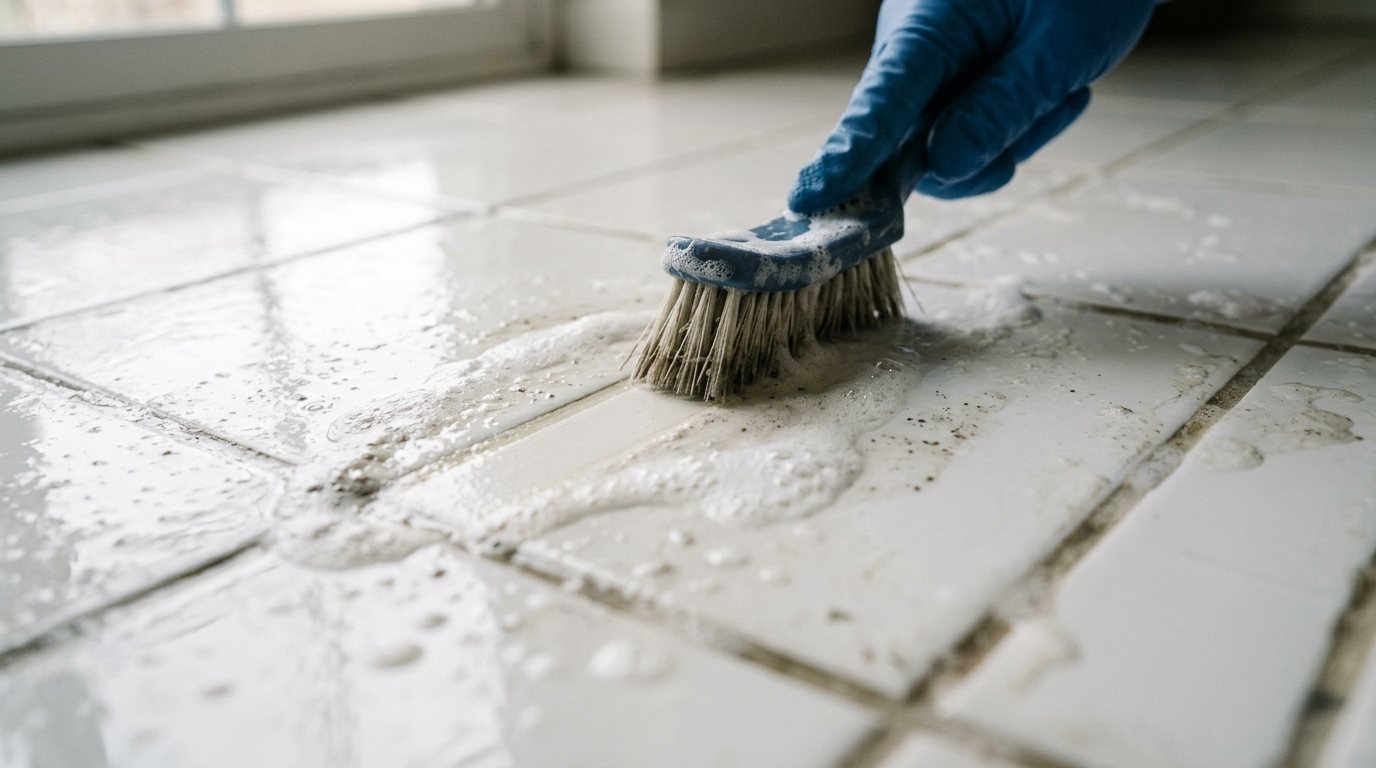
Spray hot tap water on the grout and scrub along the lines with a stiff nylon brush, using short back-and-forth strokes. Wipe up the dirty water with a damp cloth or mop before it settles back into the grout. For routine dirt, this alone is often enough.
Method 2: Baking soda paste
Mix baking soda with a little water to make a thick paste. Spread it along the grout lines, let it sit for 5 to 10 minutes, then scrub and rinse with clean water. Baking soda is mildly abrasive and alkaline, so it’s safe on unsealed grout. On sealed ceramic or porcelain, you can spray a little vinegar over the paste to make it fizz, but skip that step on stone.
Method 3: Oxygen bleach
Oxygen bleach is the most effective all-around grout cleaner for deep dirt. Dissolve the powder in hot water according to the package directions, apply it to the grout with a sponge or spray bottle, and let it sit 10 to 15 minutes. Keep it wet, then scrub, rinse thoroughly with clean water and dry. Unlike chlorine bleach, it doesn’t produce harsh fumes and is less likely to fade colored grout.
Method 4: Hydrogen peroxide
For light mildew or discoloration in a shower, spray plain 3% hydrogen peroxide on the grout, wait about 10 minutes, scrub and rinse. It’s a gentle option for grout that’s sealed or unsealed, but test it on a hidden area first if your grout is colored.
Method 5: Steam
A steam cleaner with a narrow nozzle blasts dirt out of grout pores without chemicals and works especially well on greasy kitchen floors. Move the nozzle slowly along the line and wipe up loosened grime right away. Avoid steam on cracked or crumbling grout, since it can drive water underneath the tile.
Method 6: Diluted chlorine bleach for mold
Save chlorine bleach for mold that the other methods don’t remove. For mold on hard surfaces, the CDC’s bleach guidance calls for 1 cup of household bleach per gallon of water. Apply it, let it sit a few minutes, scrub, rinse thoroughly and ventilate well. Frequent bleach use can weaken and lighten grout, so don’t make it your routine cleaner.
Safety note: Never mix chlorine bleach with vinegar, ammonia or other cleaners, and rinse the area well with water before switching products. Mixing bleach with acids or ammonia can release toxic gases. Wear gloves and eye protection, and keep the room ventilated.
What to avoid when cleaning grout
- Acids on unsealed grout. Vinegar and acidic cleaners slowly dissolve cement grout, leaving it rough and more absorbent.
- Any acid on natural stone. Vinegar, lemon, and many tub, tile and toilet cleaners etch marble, limestone and travertine.
- Steel wool and wire brushes. They scratch tile glazes and wear away grout. Use nylon bristles.
- Soaking unsealed grout. Water and cleaners left standing can seep in and encourage mildew. Rinse and dry promptly.
- Dirty mop water. Mopping with gray water pushes grime right back into the grout lines. Change the water often.
- Bleach on colored grout without testing. It can leave pale, blotchy patches.
How to seal grout after cleaning
Sealing doesn’t make grout waterproof, but it slows down how quickly dirt and moisture soak in, so cleaning is easier next time.
- Clean the grout thoroughly and let it dry completely. Most sealer labels call for fully dry grout, which can take a day or more in a humid bathroom.
- Choose a penetrating (impregnating) sealer made for grout, and one labeled for natural stone if you have stone tile.
- Apply the sealer to the grout lines with an applicator bottle, small brush or foam tip, working in small sections.
- Wipe any sealer off the tile surface within the time on the label, usually a few minutes, to avoid a hazy film.
- Apply a second coat if the label recommends it, then let it cure before getting it wet.
- Test with the water drop method once or twice a year, and reseal when water starts soaking in.
How to keep grout clean longer
- Squeegee or wipe shower walls after use, and run the bathroom fan during and after showers until the mirror clears.
- Keep indoor humidity in check. The EPA recommends keeping it below 60 percent, ideally 30 to 50 percent, to discourage mold.
- Use a pH-neutral floor cleaner for routine mopping, and dry the floor with a clean microfiber pad.
- Put mats at exterior doors to catch grit before it reaches tile floors.
- Wipe up kitchen spills, especially grease, wine and coffee, before they soak in.
Mineral deposits from hard water can also cling to grout and tile in showers. Our guide on how to remove hard water stains covers safe ways to handle that buildup.
When to call a pro (or regrout)
Cleaning can’t fix grout that’s failing. Consider regrouting or calling a tile professional if:
- Grout is cracked, crumbling or missing, especially in a shower.
- Tiles sound hollow, feel loose or shift when you press on them.
- Black mold returns within days of cleaning, which can mean moisture is getting behind the tile.
- Walls behind the shower tile feel soft, or there are water stains on the ceiling below.
- Stains remain after every method, and you’d rather replace or recolor the grout.
Small areas of failed grout are a manageable DIY project, and our guide on how to regrout a shower walks you through it. If the caulk at the tub or corners is also stained, it’s usually easier to replace it; see how to recaulk a bathtub. Prices for professional tile cleaning and regrouting vary widely by region and square footage, so get two or three written quotes.
Frequently asked questions
Does vinegar damage grout?
Occasional diluted vinegar is generally fine on well-sealed grout between ceramic or porcelain tile. Used often, or on unsealed grout, its acid slowly breaks down cement grout. Never use it on or near natural stone.
What is the best homemade grout cleaner?
A paste of baking soda and water handles most light stains safely. For deeper dirt, oxygen bleach powder dissolved in hot water is more effective and still gentle on grout. Avoid homemade mixes that combine bleach with anything else.
Can I use bleach on grout?
Yes, diluted chlorine bleach can remove mold from grout, but use it sparingly and rinse well. It can lighten colored grout and weaken grout with repeated use. Never mix it with vinegar or ammonia.
How do I get grout white again?
Start with oxygen bleach and a stiff brush, which brightens most gray grout. If it’s still stained after deep cleaning, a grout colorant or stain pen can restore an even color. Badly stained or damaged grout may need replacing.
How often should grout be sealed?
It depends on the sealer and how much water and traffic the area gets, so follow the product label. Showers and busy kitchen floors usually need resealing more often than backsplashes. The water drop test tells you when it’s time.
The bottom line
Most dirty grout comes clean with warm water, a stiff brush, baking soda and oxygen bleach. Save chlorine bleach for mold, keep acids away from unsealed grout and natural stone, and never mix cleaners. Once the grout is clean and dry, seal it, and keep bathrooms well ventilated so you won’t face the same job again soon. For persistent mold, see our guide on how to get rid of bathroom mold.