You wake up with a row of itchy red bumps, or you spot a tiny brown bug on your pillowcase, and your mind jumps straight to bed bugs. It is an awful feeling, and the internet is full of panicked advice that can make things worse or cost you money you did not need to spend.
This guide shows you how to recognize bed bugs and the evidence they leave behind, where to inspect, why bites alone do not prove anything, and what to do in the first few days if you find them. You will also learn which DIY moves the EPA warns against and what professional treatment typically costs.
Quick answer: The surest signs of bed bugs are live bugs, tiny dark ink-like spots, rusty stains, shed skins and pale eggs in mattress seams, box springs, bed frames and headboards. Bites alone are not proof, so capture a specimen and get it identified. If you confirm bed bugs, dry bedding and clothes on high heat, encase the mattress and box spring, install interceptors, avoid bug bombs, and call a licensed pro for anything beyond a very small, early problem.
What bed bugs look like
Adult bed bugs are flat, oval, wingless insects about 3/16 inch long, roughly the size of an apple seed. According to the University of Florida IFAS Extension, they are brownish before feeding and turn reddish and swollen after a blood meal. They feed mostly at night and spend the day packed into seams and cracks near where people sleep or sit.
| Life stage | Size | What to look for |
|---|---|---|
| Egg | About 1 mm, like a pinhead | Pearly white, slightly curved, often stuck in seams and crevices |
| Nymph | From pinhead size up to nearly adult size | Pale, almost see-through tan; bright red after feeding |
| Adult | About 3/16 inch, apple-seed size | Flat, oval, brown to reddish brown; plump and longer after feeding |
| Shed skin | Same size as the stage that shed it | Empty, light brown, papery shells in clusters |
Common look-alikes
Many bugs found in beds are not bed bugs. Carpet beetle larvae are fuzzy and striped, booklice are tiny, pale and fast, and young cockroaches are longer with long antennae and a quick run (if that is what you have, see our guide on how to get rid of cockroaches). Bat bugs look almost identical to bed bugs and usually point to bats roosting in the attic or walls, so a confirmed identification matters.
The signs of bed bugs to look for
Bed bugs leave a trail of evidence that is often easier to find than the bugs themselves. Look for several of these signs together, in the same area, rather than relying on one clue.
Dark spots and smears
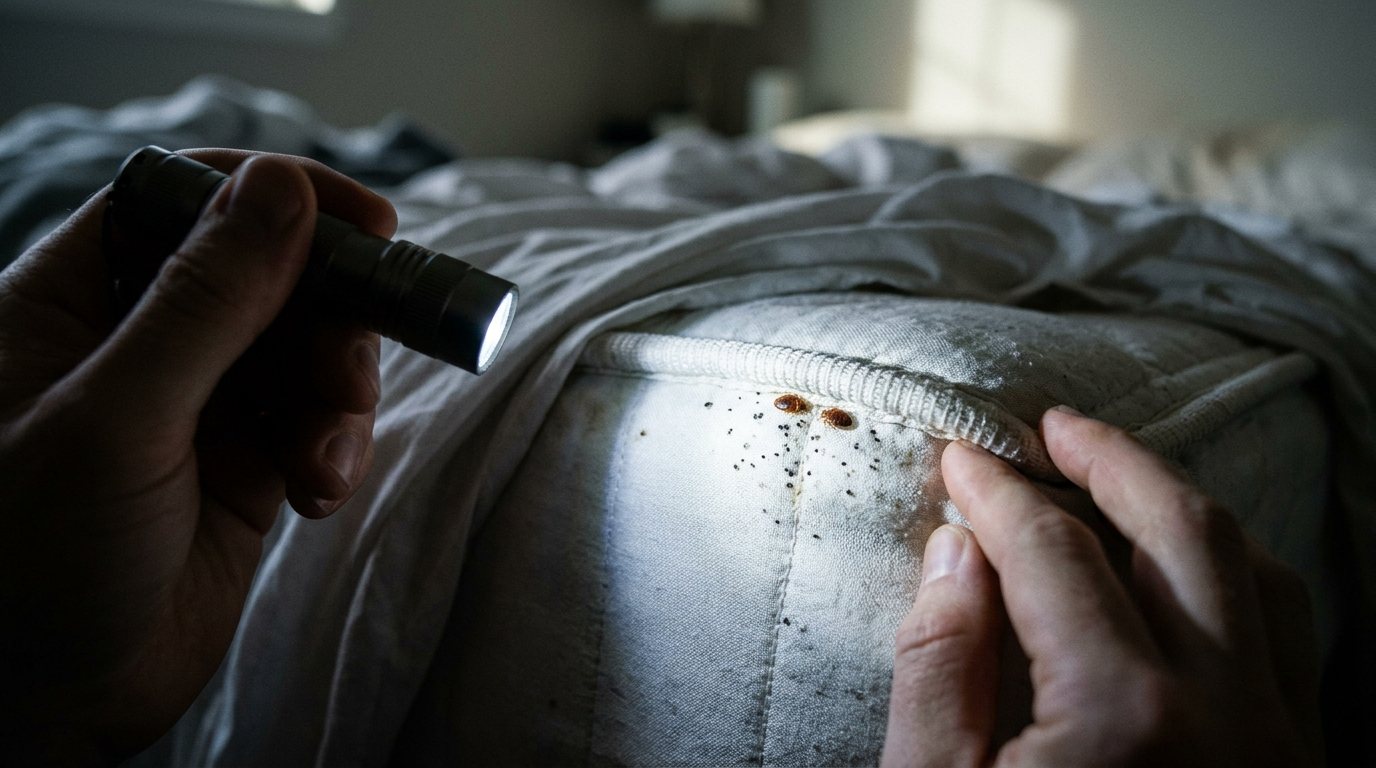
Bed bug droppings are digested blood. They show up as tiny black or dark brown dots, about the size of a period, that bleed into fabric like a marker would. Clusters along mattress piping, box spring corners and the underside of the bed frame are a strong sign.
Rusty or reddish stains
Small reddish-brown stains on sheets and pillowcases can come from bugs that were crushed while you slept. One stain is not conclusive, since a scratched bite or nosebleed looks similar, but stains plus dark spots in the seams are a red flag.
Shed skins and eggs
Nymphs shed their skins five times as they grow, leaving light brown, empty shells behind. Eggs and empty eggshells are pale and about 1 mm long, so use a flashlight and magnifying glass along seams, tags and stitching.
Live bugs
Seeing a live bed bug is the clearest confirmation. They move at about the speed of an ant and are most active in the hours before dawn.
A musty odor
Heavy infestations can give off a sweet, musty smell sometimes compared to coriander. It is not a reliable early sign, because by the time you can smell it the population is usually large.
Why bites alone are not proof
Bites are the sign people notice first, but they are the least reliable. Some people never react at all, and others take several days to develop welts, so the bites may not even have happened in your home. Bed bug bites can also look like mosquito or flea bites, hives, eczema or other rashes.
The classic pattern of three or more bites in a line or zigzag on exposed skin is suggestive, but a doctor cannot confirm bed bugs from a bite. Physical evidence is what counts. If you catch a suspect bug, tape it to an index card or drop it in a small container of rubbing alcohol, then send a photo or the sample to your local extension office or a pest professional for identification.
Where to inspect, step by step
Bed bugs can squeeze into any crack thick enough to hold a credit card, so slow, close inspection beats a quick look. Start where you sleep, then widen the search.
- Strip the bed and check the sheets and mattress pad for spots and stains.
- Run a flashlight along every seam, tag, handle and piping on the mattress, top and bottom.
- Lift the mattress and inspect the box spring, especially the corners, the fabric underneath and where wood frames meet.
- Check the bed frame joints, slats and screw holes, plus the back of the headboard.
- Inspect nightstands, including drawer joints, and the seams and cushions of nearby chairs and couches.
- Look along baseboards, behind outlet covers and picture frames, in curtain folds and under loose wallpaper near the bed.
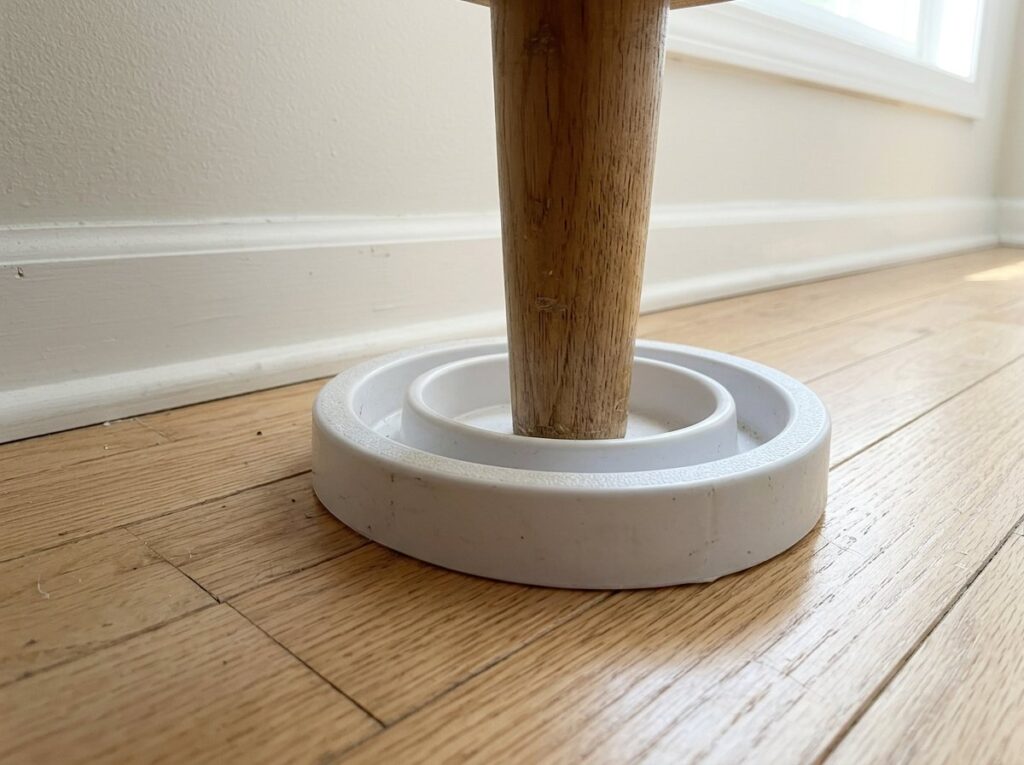
Slide an old credit card or thin putty knife into seams and crevices to push bugs or eggs into view. Put interceptor cups under each bed leg as well. These catch bugs climbing to or from the bed and help you confirm whether you have a problem.
Tools and materials
- Bright LED flashlight and a magnifying glass
- Old credit card or thin putty knife
- Clear packing tape and index cards, or a small vial of rubbing alcohol
- Bed bug interceptor cups for each bed and couch leg
- Zippered mattress and box spring encasements labeled for bed bugs
- Large clear plastic bags or bins with tight lids
- Vacuum with a crevice tool and disposable bags
- Silicone caulk for sealing cracks near the bed
First steps if you find bed bugs
Finding a bed bug is stressful, but the first few days are about containment, not a scorched-earth response. The EPA’s do-it-yourself bed bug control guide stresses confirming the bug, planning carefully and tracking every find.
- Confirm the identification. Get a specimen checked before buying products or paying for treatment.
- Tell your landlord if you rent. Nearby units may need inspection, and local housing codes often make landlords responsible for treatment.
- Keep sleeping in your bed. Moving to the couch or a guest room can spread bugs to new rooms as they follow you.
- Heat-treat your laundry. Bag bedding and clothes in plastic in the bedroom, carry them to the laundry and run them in the dryer on high heat. UF IFAS recommends the highest setting, about 140 degrees F, for 20 to 30 minutes. If loads take far longer than usual to dry, clean the dryer vent before running batch after batch.
- Encase the mattress and box spring. Sealed encasements trap any bugs inside and remove hiding places in the seams. Leave them on for at least a year.
- Install interceptors and isolate the bed. Pull the bed a few inches from the wall and keep blankets off the floor so the legs are the only way up.
- Vacuum, then seal the bag. Vacuum seams, carpet edges and furniture, then seal the bag or canister contents in plastic and put it in an outdoor trash can right away.
- Reduce clutter. Bag items near the bed, but do not move them to other rooms or a friend’s house, where bugs can start a new infestation.
Safety note: Never use outdoor pesticides indoors, and never spray rubbing alcohol, kerosene or gasoline on bed bugs or furniture. These are fire hazards and can harm your family. If you use any insecticide, choose an EPA-registered product that lists bed bugs on the label and follow the label exactly.
DIY mistakes to avoid
Most failed bed bug treatments are not caused by weak products. They come from well-meant steps that scatter the bugs or give a false sense of progress.
| Mistake | Why it backfires | Do this instead |
|---|---|---|
| Setting off bug bombs | EPA says foggers should never be your only control; the mist rarely reaches bugs in cracks | Targeted treatment of seams and crevices by a pro |
| Cranking up the thermostat or using a space heater | Homes do not get hot enough to kill bed bugs, and it creates a fire risk | Dryer heat for fabrics, professional heat treatment for rooms |
| Throwing out the mattress right away | Bugs fall off during removal and remain in the frame and room | Encase it; if you discard furniture, slash it and label it |
| Using pool or food-grade diatomaceous earth | EPA warns against these grades; they are not registered for bed bugs | Only EPA-registered desiccant dusts, applied as labeled |
| Treating once and stopping | Eggs hatch after the first treatment | Inspect at least weekly and repeat treatment as needed |
Freezing works for small items such as shoes or books, but EPA notes the item must stay at 0 degrees F for at least three days, and many home freezers are not that cold. Check yours with a thermometer first.
Professional treatment and costs
Most confirmed infestations need professional help. Pros typically use heat treatment, which raises room temperatures high enough to kill all life stages in one visit, or targeted insecticide applications over two or three visits, often combined with steam, dusts and encasements. Your company should give you a prep list, such as bagging clothes and clearing clutter, before they arrive.
Bed bug treatment is expensive. HomeAdvisor’s bed bug treatment cost guide puts the national average around $2,500, with most homeowners paying $1,000 to $4,000. Chemical treatment typically runs $270 to $775 per room, heat treatment about $1 to $3 per square foot, and whole-home treatment $1,500 to $6,200. An initial inspection is typically $65 to $200, and a canine inspection $300 to $600.
When to call a pro
A single bug that hitchhiked home from a trip may be handled by careful laundering, vacuuming and monitoring. Call a licensed pest management professional with bed bug experience when you see any of these red flags:
- You find bugs in more than one life stage, such as adults plus eggs or nymphs.
- Signs show up on furniture beyond the bed, or in more than one room.
- You live in an apartment, condo or other building with shared walls.
- Interceptors keep catching bugs after two or three weeks of DIY steps.
- Someone in the home is having strong skin reactions, losing sleep or feeling severe anxiety.
Ask for an inspection, a written plan, the number of follow-up visits included and what the guarantee covers. Be cautious about anyone who offers a single spray visit with no follow-up.
Frequently asked questions
Can you see bed bugs with the naked eye?
Yes. Adults are about the size of an apple seed and easy to see in good light. Eggs and young nymphs are much harder to spot, so use a flashlight and magnifying glass along seams and crevices.
I have bites but can’t find any bugs. Do I have bed bugs?
Not necessarily. Bites can come from fleas, mosquitoes, mites or skin conditions, and some people react to bed bugs while others never do. Set out interceptors under the bed legs, inspect carefully for droppings and shed skins, and see a doctor about the rash itself.
Should I sleep on the couch to avoid getting bitten?
No. Bed bugs follow the person they feed on, so switching rooms can spread them to the couch or another bedroom. Keep sleeping in your encased bed with interceptors under the legs while you treat.
Do I need to throw out my mattress?
Usually not. A quality encasement traps any bugs inside the mattress and box spring until they die, and professional treatment covers the rest of the bed. If you do replace it, encase the new mattress and make sure the room is treated first.
Do bed bugs mean my home is dirty?
No. Bed bugs feed on blood, not crumbs, and they turn up in spotless homes and expensive hotels. They usually arrive in luggage, used furniture or clothing, or from a neighboring unit.
The bottom line
Look for physical evidence, not just bites: dark spots, rusty stains, shed skins, eggs and live bugs in the seams and joints around your bed. If you find them, stay calm, confirm the identification, use dryer heat, encasements and interceptors, and skip bug bombs and risky home remedies. For anything beyond a lone hitchhiker, a licensed professional is the fastest way to get your sleep back.