You switch on the kitchen light late at night and something brown shoots under the refrigerator. Or you open a drawer and find tiny black specks that look like ground pepper. Either way, you have cockroaches, and you want them gone without filling your home with pesticide.
This guide shows you how to identify which roach you have, use gel baits and insect growth regulators the way university extension entomologists recommend, cut off food and water, and avoid the spray mistakes that make infestations worse. You will also learn how long a real fix takes and when to hire a pro.
Quick answer: Identify the roach first. For small, tan German cockroaches in the kitchen or bathroom, place many small dabs of gel bait where they hide, add an insect growth regulator, remove crumbs, leaks and clutter, and do not spray near the bait. For large American or oriental roaches coming in from outdoors or drains, focus on sealing gaps, fixing moisture and refilling dry drain traps. Expect fewer roaches in about a week and full control over several weeks.
First, figure out which cockroach you have
The species changes your whole plan. German cockroaches live and breed entirely indoors, so you treat inside the home. American and oriental cockroaches mostly live outdoors, in sewers, crawlspaces and damp mulch, and wander inside, so keeping them out is half the battle.
According to the University of California IPM Pest Notes on cockroaches, a German cockroach is about half an inch long with two dark stripes on the shield behind its head, while an American cockroach is about 2 inches long and reddish brown. One German female and her offspring can produce tens of thousands of roaches in a year, which is why a few sightings can become a serious problem quickly.
| Species | What it looks like | Where you see it | Main strategy |
|---|---|---|---|
| German | About 1/2 inch, light brown, two dark stripes behind the head | Kitchens and bathrooms: under sinks, behind fridges, in cabinet hinges | Gel baits, insect growth regulator, strict sanitation |
| American | About 2 inches, reddish brown, pale band behind the head | Basements, floor drains, garages, crawlspaces | Sealing entry points, fixing moisture, baits and dust in voids |
| Oriental (“water bug”) | Dark brown to nearly black, shiny, slow moving | Damp basements, drains, around foundations | Moisture control, sealing, clearing damp debris outside |
Signs of an infestation
Roaches hide during the day, so the clues usually come before the sightings. Look for droppings that resemble coffee grounds or pepper, small brown egg cases, shed skins and a musty, oily smell in cabinets. If you regularly see roaches in daylight, the population is usually large.
Confirm with sticky traps
Sticky monitoring traps show you exactly where roaches travel. Place them flat where the floor meets the wall: under the sink, beside the fridge and stove, behind the toilet and inside lower cabinets. Check them daily for a few days. The traps that catch the most roaches tell you where to concentrate bait, and they let you measure progress later.
Step 1: Cut off food, water and hiding places
Baits work far better when roaches have nothing else to eat. The goal is to make your bait the most attractive meal in the house.
- Wash dishes before bed and never leave food out overnight, including pet food.
- Wipe counters and the stovetop, and vacuum crumbs from under the toaster and around the fridge.
- Move cereal, flour, snacks and pet food into airtight containers.
- Use a trash can with a tight lid and empty it every night until the problem is under control.
- Fix dripping faucets and any leak under the kitchen sink, and dry the sink before bed. Roaches survive much longer without food than without water.
- Get rid of cardboard boxes, paper bags and stacks of newspaper, which are favorite hiding and egg-laying spots.
Use a vacuum with a HEPA filter when you clean up droppings and dead roaches. Cockroach droppings and body parts are a known asthma and allergy trigger, and the EPA’s asthma trigger guidance recommends sealing cracks, storing food in airtight containers and choosing lower-risk pest control for exactly this reason.
Step 2: Use gel baits the right way
Gel bait is the main tool for German cockroaches. It is slow acting on purpose: roaches eat it, return to their hiding spots and die there, often after other roaches have contacted the bait residue. That is how bait reaches roaches you never see, while a spray only kills the ones it hits.
Where to place the bait
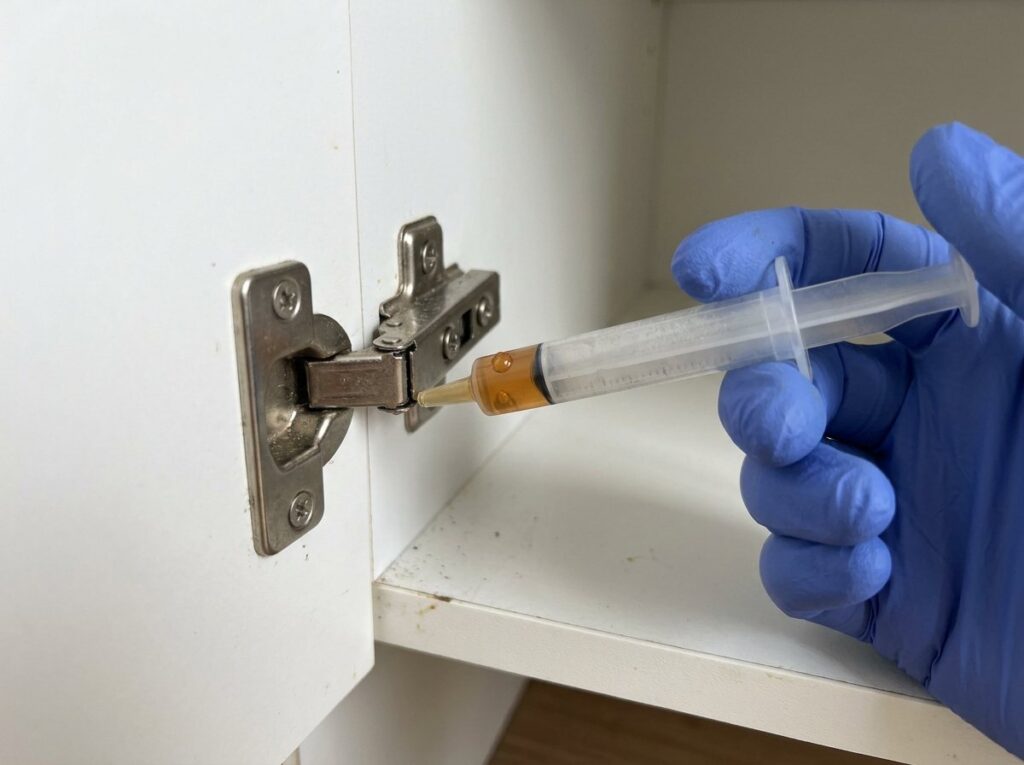
Baits do not lure roaches from across the room, so put them where roaches already hide. Good spots include cabinet hinges and corners, under-sink cabinets, around pipe openings, beside the refrigerator and stove, along the back edge of countertops, and near clusters of droppings. Droppings contain chemical cues that draw other roaches, so bait placed nearby gets found faster.
How much to use
Follow the label, which usually calls for small dabs about the size of a pea or smaller. Many small placements spread around a kitchen beat a few large blobs. Check them every few days at first and reapply when the bait is eaten or dried out.
Keep the bait clean
Do not spray insecticide, cleaner or disinfectant on or near bait placements. Repellent residue contaminates the bait and roaches will avoid it. Wipe counters as usual, but leave the cracks where you placed bait alone.
Bait stations for homes with kids and pets
Enclosed plastic bait stations keep the insecticide inside a tamper-resistant case and can stay effective for months. Use them in open floor areas and anywhere small children or pets can reach, and save gel for tight cracks stations cannot fit into.
Pro tip: If roaches ignore one bait after a few weeks of steady use, switch to a bait with a different active ingredient instead of adding more of the same. Some German cockroach populations develop an aversion to particular bait formulas, and rotating products helps.
Step 3: Add an insect growth regulator
An insect growth regulator (IGR) does not kill adult roaches quickly. Instead, it disrupts development so young roaches cannot grow into adults that reproduce. Common IGR ingredients on labels include pyriproxyfen and hydroprene, sold as small point-source discs or as sprays labeled for crack and crevice use.
IGRs pair well with bait because the bait knocks down the current population while the IGR stops the next generation. Extension IPM programs, including Texas A&M’s school IPM plan for German cockroaches, describe the combination as highly effective. Place IGR discs where you see roach activity and replace them on the schedule printed on the package.
Step 4: Treat wall voids and dead spaces with dust
Boric acid and other insecticidal dusts are useful in places you rarely clean: behind kick plates under cabinets, inside wall voids around pipe openings and under the dishwasher. Roaches walk through the dust, it clings to their bodies, and they swallow it while grooming. Boric acid is not repellent, so roaches do not avoid a thin layer.
The key word is thin. Use a bulb duster to puff a film you can barely see, because roaches walk around thick piles, and dust that gets wet stops working and needs replacing. Keep dust away from food areas, pets and children, and only use products labeled for indoor roach control.
Safety note: Every pesticide label is a legal document. Read it fully before use, wear gloves, keep children and pets away from treated areas, and never use an outdoor product indoors. If someone is exposed, call Poison Control at 1-800-222-1222.
Why sprays and bug bombs can backfire
Sprays and bug bombs often make a German cockroach problem harder to fix. UC IPM notes that foggers and aerosols rarely reach the deep cracks where roaches hide, and that sprays can scatter roaches into other rooms or neighboring apartments.
- They spread the problem. Roaches flee repellent sprays and set up new hiding spots elsewhere.
- They ruin your bait. Spray residue near gel placements makes roaches avoid it.
- Resistance is common. Many German cockroach populations resist common spray insecticides.
- They add exposure. Foggers coat counters, dishes and toys with pesticide and can be a fire hazard near pilot lights.
For heavy American or oriental roach activity around a foundation, a product labeled for outdoor perimeter use can help, but only alongside sealing and moisture fixes.
Keeping American and oriental roaches out
Large roaches in the basement, garage or bathroom are usually coming from outside or from the sewer. Cooler fall nights can push them toward warm basements and crawlspaces, so this is a good time to tighten up the house.
- Pour water into floor drains, unused sinks and seldom-used showers every week or two. Dry drain traps give sewer roaches an open path inside.
- Seal gaps around pipes, cables and vents with caulk or expanding foam. The same work helps you keep mice out too.
- Install door sweeps and replace worn weatherstripping on exterior and garage doors.
- Run a dehumidifier in damp basements and fix leaks or sweating pipes.
- Pull mulch, leaf litter and firewood a foot or more away from the foundation.
Tools and materials
- Bright flashlight and a small hand mirror
- Sticky monitoring traps
- Cockroach gel bait and enclosed bait stations
- Insect growth regulator discs or a labeled IGR product
- Boric acid dust and a bulb duster
- Vacuum with a HEPA filter
- Caulk, a caulk gun and expanding foam
- Door sweeps, weatherstripping and airtight food containers
- Disposable gloves
How long it takes, and why roaches come back
UC IPM notes that baits and dusts can take a week or longer to show a clear drop in numbers, and a moderate German cockroach infestation often takes several weeks of baiting to clear. Egg cases are protected from bait, so new nymphs keep hatching for a while even when your plan is working.
| What you notice | Likely cause | What to do |
|---|---|---|
| Roaches walk past the bait | Bait contaminated by spray, or other food is easier to get | Clean up crumbs and grease, move bait to fresh spots, switch formulas |
| Fewer adults but many tiny nymphs | Egg cases hatching after treatment | Keep baiting, add an IGR, check traps weekly |
| Numbers drop, then jump again | Bait ran out or a hiding spot was missed | Reapply bait, inspect inside appliances and electronics |
| Big roaches near drains each week | Dry drain traps or sewer line gaps | Refill traps with water, seal pipe openings, call a plumber |
Keep a few sticky traps out for at least a month after you stop seeing roaches. Zero catches week after week is the best sign the infestation is over.
When to call a pro
DIY clears many light infestations, but call a licensed pest control professional in these situations.
- You see roaches during the day or in several rooms.
- Four to six weeks of steady baiting and sanitation have not cut the numbers.
- You live in an apartment or duplex where roaches move between units.
- Someone in the home has asthma or allergies and you want exposure kept low.
- Large roaches keep entering from a drain or sewer line.
According to HomeAdvisor’s cockroach exterminator cost guide, cockroach removal costs about $200 on average, with most homeowners paying $100 to $600. Minor infestations typically run $100 to $400 per visit and major ones $300 to $700, while severe cases needing fumigation can cost several thousand dollars. Ongoing monthly or quarterly service is usually $50 to $100 per visit.
Ask any company how they plan to treat. A good answer includes an inspection, baits and IGRs in cracks and crevices, and follow-up visits, not just a quick spray along the baseboards. If you rent, report the problem to your landlord in writing, since pest control is often the owner’s responsibility under local rules.
Frequently asked questions
Does seeing one cockroach mean I have an infestation?
Not always. A large American roach that wandered in on a cool night may be a one-off. A German cockroach in the kitchen is more concerning because they rarely travel alone, so set out sticky traps for a week to find out.
Do cockroaches mean my house is dirty?
No. Roaches hitch rides in grocery bags, boxes and used appliances, and they move between apartments through shared walls and plumbing. A clean home does not prevent their arrival, but it makes them much easier to eliminate.
How long does gel bait take to work?
Expect fewer roaches within about a week, though it can take longer. Clearing a full infestation usually takes several weeks, because nymphs keep hatching from egg cases that were already laid.
Do bug bombs get rid of roaches?
Generally no. Foggers do not reach the deep cracks where roaches hide, they can push roaches into new areas, and they leave pesticide on surfaces throughout the room. Baits and targeted crack and crevice treatments work better with less exposure.
Can cockroaches come up through drains?
American and oriental roaches can enter from sewer lines when a drain trap dries out or a pipe is damaged. Run water in unused drains regularly and cover floor drains. For slow, smelly drains, see our guide to unclogging a drain without chemicals.
The bottom line
Getting rid of cockroaches is about strategy, not stronger spray. Identify the species, take away food, water and clutter, place small dabs of gel bait where roaches hide, add an IGR and leave those placements undisturbed. Seal the gaps that let outdoor roaches in, keep monitoring with sticky traps, and call a licensed pro if numbers have not dropped after several weeks.