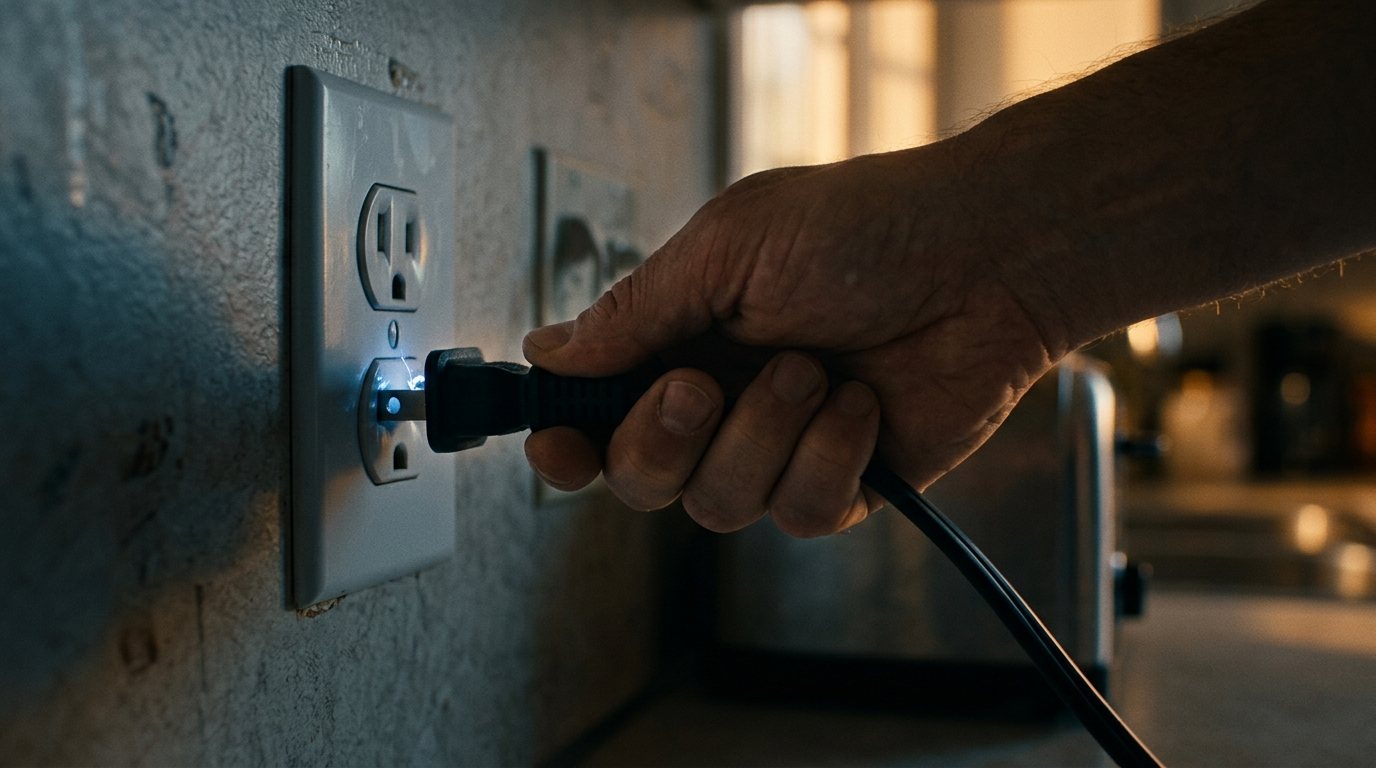
You plugged in the vacuum, the toaster or a phone charger and saw a flash at the outlet, maybe with a pop. Now you are wondering whether that was a normal little spark or the start of an electrical fire, and whether it is safe to use the outlet again.
This guide explains how to tell a harmless brief spark from a dangerous one, what usually causes outlets to spark, and exactly what to do right now. It also walks you through replacing a worn outlet safely and lists the signs that mean you should call a licensed electrician instead.
Quick answer: A tiny, quick blue spark when you plug in a device that is switched on is usually normal. A large or bright white or yellow flash, a spark that keeps fizzling, a burning smell, scorch marks, buzzing, or a hot or melted plug are danger signs. If you see any of them, turn off the breaker for that outlet, stop using it and have it inspected or replaced before you use it again.
Is it normal for an outlet to spark when you plug something in?
Sometimes, yes. When you push a plug into an outlet, electricity can jump across the tiny gap between the prongs and the metal contacts an instant before they touch. If the device is already switched on, current starts flowing at that moment, and you may see a small blue spark that is gone in a split second.
According to Angi’s guide to sparking outlets, the warning signs are a spark that persists or fizzles, a white or yellow color instead of blue, a large spark, or a burning smell. UL Solutions puts it more bluntly, calling sparking at an outlet “never a good sign” in its list of signs of a wiring problem, and recommending an electrician as soon as possible.
| What you noticed | What it likely means | What to do now |
|---|---|---|
| Tiny blue spark, gone instantly, plugging in a device that was on | Normal brief arc as contact is made | Switch devices off before plugging in. Watch for repeats. |
| Spark every time, at the same outlet, with different devices | Worn contacts or a loose connection in the outlet | Stop using the outlet and replace it or have it checked. |
| Spark only with one appliance, at any outlet | Problem in that appliance’s plug, cord or motor | Unplug it and have the appliance repaired or replaced. |
| Large, bright white or yellow flash, or a loud pop | Short circuit or arcing fault | Turn off the breaker and call an electrician. |
| Burning smell, smoke, scorch marks or melted plastic | Overheating and fire risk | Turn off the breaker, keep the outlet off and call an electrician today. |
| Buzzing, crackling or a hot cover plate | Loose wiring arcing inside the box | Turn off the breaker and have it inspected. |
| Spark at an outlet near water or that got wet | Moisture creating a path for current | Turn off the breaker and let it dry. Have it checked before reuse. |
What to do right now
- Get out if there is fire or heavy smoke. Leave the house and call 911. Never throw water on an electrical fire. Use only an extinguisher rated for electrical fires (Class C), and only on a very small fire with a clear exit.
- Turn off the breaker. If the plug is hot, melted or still smoking, do not touch it. Go to the panel and switch off the breaker for that outlet first. Our guide to a circuit breaker that keeps tripping explains how to find and reset breakers safely.
- Unplug the device. With the power off, grip the plug body (not the cord) and pull it straight out.
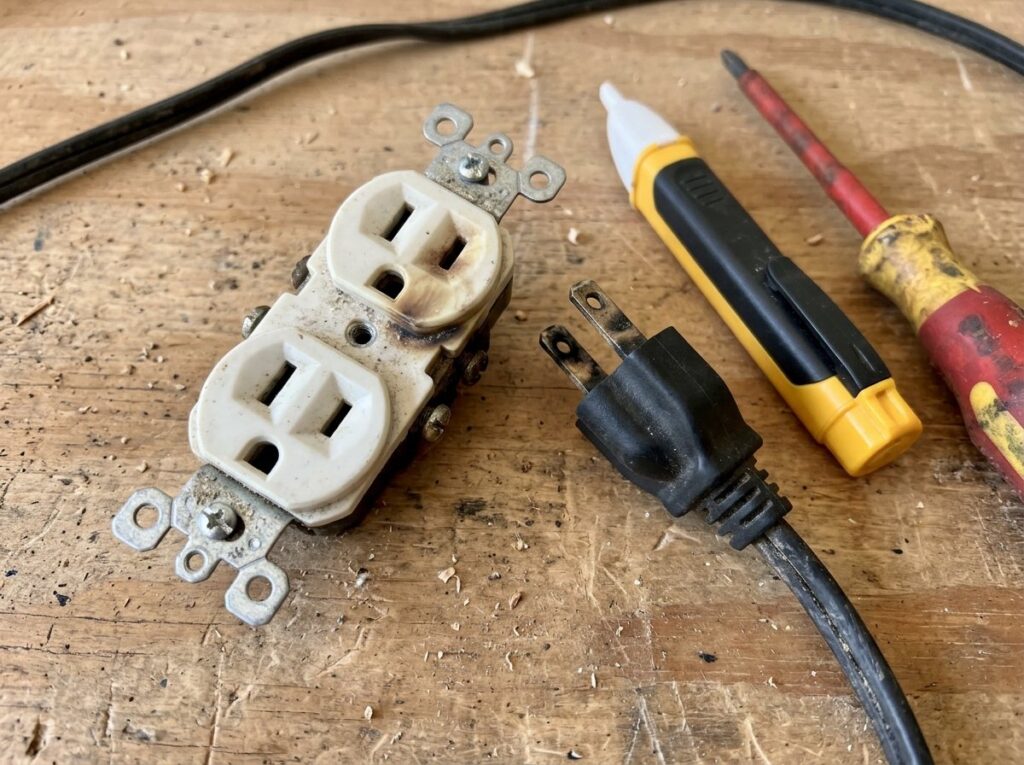
- Inspect the plug and outlet. Look for blackened or pitted prongs, melted plastic, cracks in the outlet face or soot around the slots. Sniff for a burnt smell.
- Leave the outlet off. If you found any damage, keep the breaker off and do not use that outlet until it has been replaced or inspected.
- Note what happened. Write down what was plugged in, whether the device was on, and whether lights flickered or the breaker tripped. This helps an electrician find the cause faster.
Safety note: Never reset a breaker more than once after a spark. If it trips again, there is a fault in the wiring or the device, and repeated resets can start a fire. Leave it off and call a licensed electrician.
Common causes of a sparking outlet
A device switched on when plugged in
Plugging in something that is already on, especially a motor or heater, makes the biggest normal spark because current rushes in the instant contact is made. Turning the device off before you plug it in usually stops it.
Loose connections inside the box
Wires that have worked loose on the terminal screws, or that were pushed into the spring-clip holes on the back of the outlet, can arc every time the load changes. Signs include a plug that cuts in and out, a warm outlet and faint buzzing. If you have noticed warmth, our guide to a warm outlet or light switch explains when to worry.
A worn-out receptacle
After years of use, the metal contacts inside an outlet lose their grip. If plugs feel loose or fall out on their own, the poor contact can arc as you plug in or bump the cord. A cracked face or discolored slots mean the outlet is due for replacement.
High-draw appliances and overloaded circuits
Space heaters, hair dryers, microwaves and vacuums pull a lot of current, so they spark more when plugged in while on. Running several of them on one circuit can overheat wiring and connections. Our space heater safety guide explains why heaters should plug directly into a wall outlet and not an extension cord or power strip.
Water or moisture
Water from a splash, a leak or condensation can let current take a path it should not. UL recommends GFCI outlets in kitchens and bathrooms because they cut power quickly if current leaks, and other damp spots such as laundry areas, garages and outdoor outlets benefit from the same protection. If an outlet got wet, switch off its breaker and have it checked.
Damaged plugs and cords
Bent or loose prongs, a cracked plug body or a frayed cord can spark at any outlet. If the spark follows one appliance from outlet to outlet, the appliance is the problem, not your wiring.
Short circuits
A short happens when a hot wire touches a neutral or ground, often because of damaged insulation or a loose wire. It usually produces a loud pop, a big flash and an immediate breaker trip, and it always calls for an electrician.
How to prevent sparks when plugging in
- Switch appliances off before plugging them in or unplugging them.
- Push plugs in straight and fully, and pull them out by the plug body, never the cord.
- Replace outlets that no longer grip plugs firmly.
- Keep high-draw appliances on separate circuits where you can, and avoid daisy-chaining power strips.
- Keep outlets dry, and use weatherproof covers outdoors.
- Retire any cord or plug that is cracked, frayed or scorched.
How to replace a sparking outlet
If the outlet itself is worn and the wiring in the box looks clean, replacing it is a reasonable DIY job. If you see scorched or brittle insulation, melted wire, or aluminum wiring (dull silver), stop and call an electrician. Ask your local building department whether a permit is needed and whether the replacement must be a GFCI, AFCI or tamper-resistant type in your area.
Tools and materials
- Non-contact voltage tester and a plug-in outlet tester
- Insulated screwdrivers
- Wire stripper and needle-nose pliers
- New outlet with the same amp rating (check the breaker and the old outlet)
- Masking tape and a marker
Steps
- Turn off the breaker and confirm the outlet is dead with your tester. Check both halves of the outlet, and check the tester on a known live outlet before and after.
- Remove the cover plate and outlet screws and gently pull the outlet out. Test every wire in the box again, since some boxes carry more than one circuit.
- Photograph and label the wires. Note which wires go to the brass screws (hot), silver screws (neutral) and green screw (ground).
- Inspect the wires. Trim any darkened or nicked ends back to clean copper and strip fresh insulation. If the damage runs far into the box, stop and call an electrician.
- Connect the new outlet using the screw terminals: hot to brass, neutral to silver and ground to green. Wrap wires clockwise and tighten firmly.
- Reinstall and test. Fold the wires in, mount the outlet and plate, restore power, then check it with a plug-in tester.
For more detail, including GFCI outlets, see our full guide on how to replace an outlet.
When to call an electrician
Call a licensed electrician promptly if any of these apply:
- The spark was large, bright white or yellow, or came with a bang.
- You smell burning, see smoke, scorch marks or melted plastic.
- The breaker trips when you plug in or reset it.
- Several outlets spark, or lights flicker when the outlet is used.
- The outlet or plate is hot, buzzes or crackles.
- You find aluminum wiring, cloth insulation or damaged wires in the box.
- You are not comfortable working with wiring.
According to Angi, repairing a sparking outlet typically costs $100 to $350 per outlet, general outlet repairs run $60 to $250, and electricians charge about $50 to $130 per hour. Many also charge a service call of $100 to $200 for the first hour.
Frequently asked questions
Is it normal for an outlet to spark when plugging in?
A tiny blue spark that vanishes instantly is usually normal, especially if the device was switched on. Large, bright, repeated or smelly sparks are not normal and need attention.
Is it safe to use an outlet after it sparked?
If it was a single tiny spark and the outlet and plug show no damage, it is usually fine, but watch for repeats. If there was a flash, smell, scorch mark or heat, turn off the breaker and do not use it until it has been replaced or inspected.
Can a sparking outlet cause a fire?
Yes. Repeated arcing creates heat that can damage insulation and ignite nearby materials. That is why scorch marks, burning smells and buzzing should never be ignored.
Why does my outlet spark only with one appliance?
If the spark follows one appliance from outlet to outlet, the problem is likely its plug, cord or internal parts, or simply that it draws a lot of power when it starts. Turn it off before plugging in, and have it checked if the sparks are large.
Should I turn off the breaker if an outlet sparks?
Yes, if the spark was anything more than a tiny flash. Turning off the breaker stops current to the outlet so it cannot keep arcing while you inspect it or wait for an electrician.
The bottom line
A tiny blue spark when plugging in a device that is on is usually harmless, but a big flash, burning smell, scorch marks, buzzing or heat mean the outlet needs attention now. Turn off the breaker, stop using the outlet and replace it if it is simply worn. For anything beyond that, call a licensed electrician.