You turn on the kitchen faucet on a bitter morning and get a weak trickle, or nothing at all. The pipe under the sink feels like a block of ice, and you are wondering how fast you need to act and whether you can fix it yourself without making things worse.
This guide walks you through the signs of a frozen pipe, how to find the exact frozen section, and how to thaw it with safe, gentle heat. It also covers what never to use, what to do in the first ten minutes if a pipe bursts, and when it is time to call a licensed plumber.
Quick answer: Open the faucet the frozen pipe feeds, then warm the pipe with a hair dryer, electric heating pad or towels soaked in hot water, starting at the faucet end and working toward the ice. Keep going until full water pressure returns, then check the pipe for leaks. Never use a torch or any open flame, and if you see a bulge, a crack or water spraying, shut off the main water valve first.
Signs you have a frozen pipe
Pipes freeze when the water inside them sits at or below 32°F (0°C) long enough to turn to ice. Most frozen pipes give you clear warning signs before they cause damage.
- Little or no water from one faucet: the classic sign. If only a trickle comes out on a cold day, suspect ice in that line.
- One faucet works but another does not: this points to a single frozen branch line rather than a problem with your water supply.
- Frost on an exposed pipe: visible frost or a pipe that feels painfully cold compared with the pipes around it.
- A bulge or split in the pipe: ice expands as it forms, which can stretch or crack a pipe. Treat this as a burst waiting to happen.
- Gurgling or odd sounds: air and water trying to move past a partial blockage.
- Damp drywall or a cold spot on an exterior wall: a pipe inside the wall may be frozen or already leaking.
The pipes most likely to freeze run through unheated spaces: crawl spaces, garages, attics, basements and kitchen or bathroom cabinets on outside walls. Plumbers pay extra attention when temperatures stay below about 20°F for a long stretch, especially overnight.
How to find the frozen section
Test every faucet
Open the hot and cold sides of each faucet in the house, including tubs and the laundry. If only one fixture is affected, the frozen section is somewhere on the line feeding it. If nothing in the house has water, the freeze is probably on the main line near where it enters the home, often in a crawl space, basement or near the water meter.
Trace the pipe by touch and sight
Follow the affected pipe from the faucet back toward where it enters the cold area. Look for frost, a bulge or a section that feels much colder than the rest. An inexpensive infrared thermometer makes this faster: run it along the pipe and look for the coldest reading.
Check for damage before you add heat
Look closely at the frozen section and nearby fittings. If the pipe is split, bulging or already dripping, the ice may be the only thing holding the water back. Shut off the main water valve before you thaw it, so the leak does not turn into a flood as the ice melts. Our guide on how to shut off water to your house shows where to find the valve.
Tools and materials
- Hair dryer (a corded model on low or medium heat)
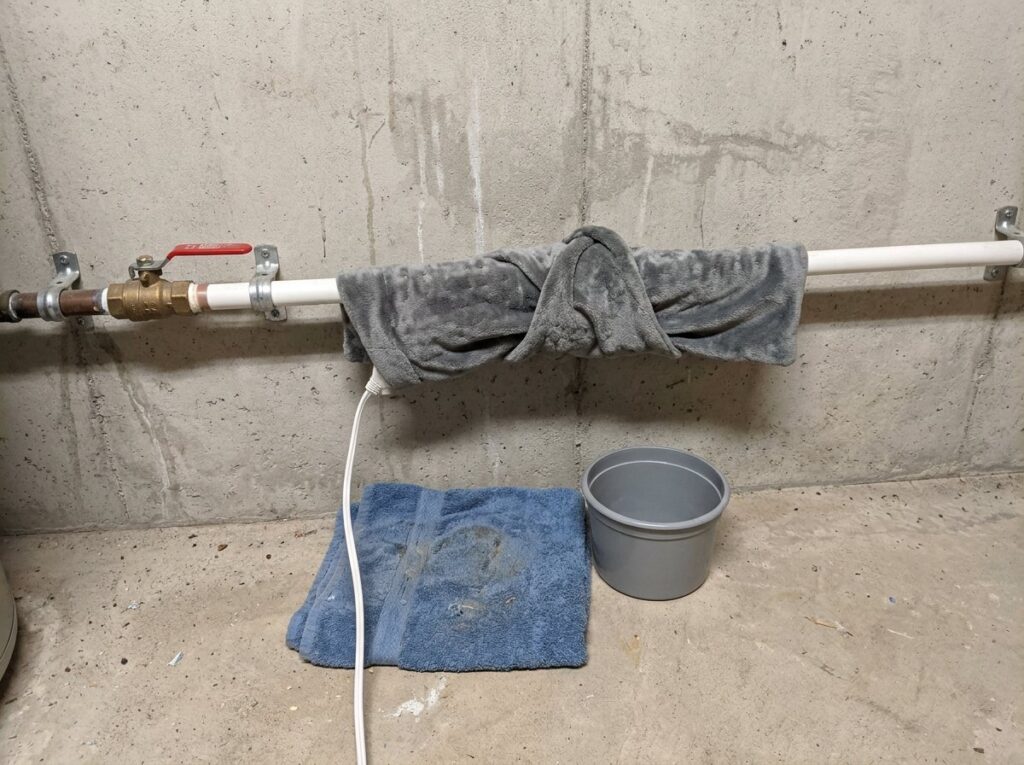
- Electric heating pad, ideally one with automatic shutoff
- Old towels and a bucket of hot tap water
- Portable electric space heater with tip-over protection
- Infrared thermometer (optional, for finding the frozen spot)
- Flashlight, rags and a bucket for drips
- Pipe insulation or UL-listed heat cable for afterward
How to thaw a frozen pipe step by step
- Open the faucet. Turn on the faucet that the frozen pipe supplies, both hot and cold handles if it is a mixing faucet. This gives melting ice and steam somewhere to go and relieves pressure. As the ice softens, running water helps melt the rest.
- Know where the main shutoff is. Before you start, locate the main water valve and make sure you can turn it quickly. If you already saw a crack or bulge, close it now.
- Clear the area. Move stored items away from the pipe, and put down towels and a bucket. Keep extension cords and electrical tools away from any standing water.
- Start heating at the faucet end. Apply gentle heat to the section nearest the open faucet, then work slowly back toward the frozen spot. Melting from the open end lets water drain out instead of being trapped between two plugs of ice.
- Keep applying heat until full pressure returns. A trickle is a good sign, but do not stop until the water flows at normal strength.
- Check the rest of the house. If one pipe froze, others in similar spots may be frozen too. Test every faucet again.
- Inspect for leaks. Once the water is running, look and feel along the pipe and its fittings for drips over the next hour. A pipe can crack while frozen and only start leaking once it thaws.
Hair dryer
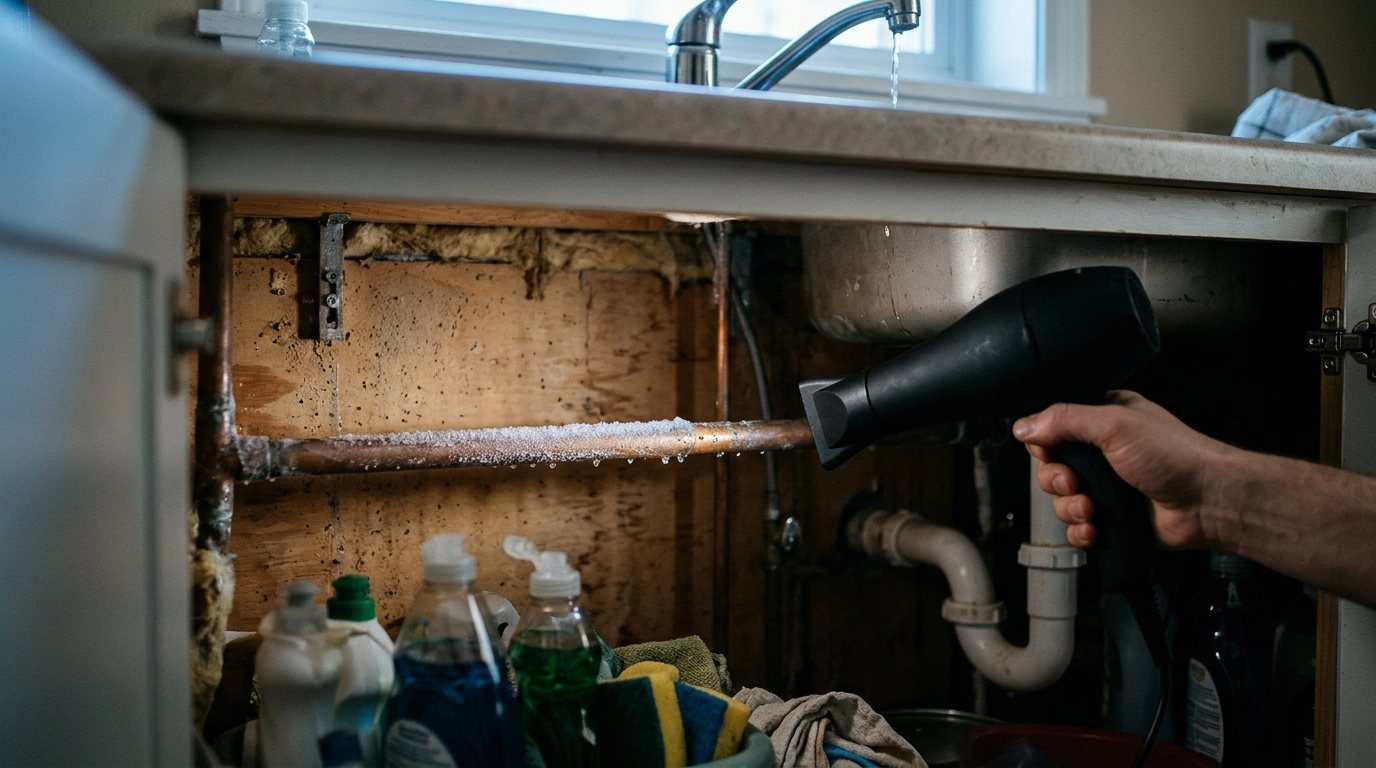
A hair dryer is the most useful tool for exposed pipes under sinks or in a basement. Set it to low or medium and keep it moving along the pipe a few inches away, rather than blasting one spot. Do not use it near water on the floor, and never let it get wet.
Electric heating pad
Wrap a heating pad around the frozen section on a medium setting and secure it loosely. This is a hands-free option for a pipe in a tight cabinet. Check on it often, and do not leave it running unattended for long periods.
Towels soaked in hot water
Soak old towels in hot tap water, wring them out and wrap them around the pipe. Replace them as they cool, roughly every 15 to 20 minutes. This method is slow but gentle, which makes it a good choice for plastic pipe and for anyone without a power outlet nearby.
Space heater, kept clear
For a frozen pipe in a small room, crawl space access or under a cabinet, a portable electric space heater can warm the surrounding air. Keep it at least 3 feet from anything that can burn, including stored boxes, insulation and curtains, and plug it directly into a wall outlet rather than an extension cord. Stay nearby while it runs. Our space heater safety guide covers placement in more detail.
Pipes inside a wall or ceiling
If you cannot reach the pipe, raise the thermostat a few degrees and open cabinet doors so warm room air reaches the plumbing. An infrared heat lamp aimed at the wall from about 2 feet away can also help. If the pipe stays frozen, a plumber may need to open the drywall to reach it, which also lets you check for a hidden leak.
Safety note: Never use a propane torch, blowtorch, kerosene or propane heater, charcoal stove or any other open flame to thaw a pipe. Flames can ignite framing and insulation inside walls, overheat the pipe until it bursts and, with fuel-burning heaters, release carbon monoxide indoors. The American Red Cross gives the same warning in its frozen pipes guidance.
Thawing methods compared
| Method | Best for | Speed | Key caution |
|---|---|---|---|
| Hair dryer | Exposed pipes under sinks or in basements | Fast | Keep it moving and away from water |
| Electric heating pad | Short sections in tight cabinets | Moderate | Do not leave it unattended |
| Hot towels | Plastic pipe, spots without an outlet | Slow | Replace as they cool, protect the floor |
| Electric space heater | Pipes in a small room or cabinet | Moderate | 3 feet of clearance, plug into the wall |
| Raise thermostat, open cabinets | Pipes inside exterior walls | Slow | May not reach a deep freeze |
| Heat gun | Experienced users on metal pipe only | Fast | Can scorch plastic and melt solder joints |
| Torch or open flame | Never | Not applicable | Fire, burst pipe and carbon monoxide risk |
What to do if a pipe bursts
A burst pipe can release several gallons of water a minute, so speed matters more than anything else. Work through these steps in order.
- Shut off the main water valve. This stops the flow to the whole house. If the break is on a hot water line, also turn the water heater’s gas control to pilot or switch off its breaker.
- Stay clear of wet electrical equipment. If water is near outlets, appliances or the electrical panel, do not walk into it. Turn off power at the panel only if you can reach it from a dry spot; otherwise call your utility or an electrician.
- Open faucets to drain the lines. Opening the lowest faucets in the house lets the remaining water drain out of the pipes and lowers the pressure on the break.
- Remove standing water. Mop, use a wet-dry vacuum and move belongings, rugs and furniture to dry areas. Fast drying reduces the chance of mold.
- Document the damage. Take photos and video of the broken pipe and every affected area before you clean up fully, in case you file an insurance claim.
- Call a plumber. A small crack can be patched temporarily with a repair clamp or epoxy putty, but a burst pipe needs a proper repair. Our guide on how to fix a leaking pipe explains short-term patches.
After the pipe thaws: stop it freezing again
A pipe that froze once will freeze again in the next cold snap unless something changes. Until you can make a permanent fix, use these short-term steps:
- Let the affected faucet drip slowly on the coldest nights. Moving water is much harder to freeze.
- Keep cabinet doors under sinks on exterior walls open so room heat reaches the pipes.
- Keep the thermostat at the same temperature day and night, and no lower than 55°F if you go away.
- Close garage doors and seal drafts near the pipe, such as gaps around a dryer vent or sill plate.
For long-term protection, insulate exposed pipes with foam sleeves, add UL-listed heat cable where insulation is not enough, and disconnect hoses from outdoor spigots. Our full guide on how to prevent frozen pipes covers each of these in detail.
When to call a plumber
Thawing an accessible pipe is a reasonable DIY job. Call a licensed plumber if any of these apply:
- You cannot find the frozen section, or it is inside a wall, ceiling or under a slab.
- No water reaches any faucet, which suggests the main line or the meter area is frozen.
- The pipe is bulging, split or leaking.
- You have tried for a couple of hours and the pipe is still frozen.
- The same pipe freezes every winter and needs rerouting, insulation or heat cable.
According to HomeAdvisor’s burst pipe cost guide, plumbers often charge a flat fee of around $100 to thaw frozen pipes. Repairing a burst pipe averages about $500, with a typical range of $200 to $3,000 depending on where the pipe is and how much needs replacing. Plumbers’ hourly rates commonly run $45 to $200, and an emergency call-out can add $100 to $300. Water damage cleanup, drywall repair and mold remediation are extra, so acting quickly can save a lot.
Frequently asked questions
Will frozen pipes thaw on their own?
Yes, once temperatures rise, but waiting is risky. If the pipe cracked while frozen, it will start leaking the moment it thaws, possibly while you are at work or asleep. Thawing it yourself with the faucet open, while you are there to watch for leaks, is the safer choice.
How long does it take to thaw a frozen pipe?
An exposed pipe warmed with a hair dryer or heating pad often thaws in 30 to 45 minutes. Pipes in very cold spaces, inside walls or with a long frozen section can take several hours. If there is no progress after a couple of hours, call a plumber.
Should I turn off the water if my pipes are frozen?
If the pipe looks intact, leave the main on and open the faucet, because flowing water helps clear the ice. If you see a bulge, a crack or any dripping, shut off the main before you start. Either way, know exactly where the shutoff is before you add heat.
Do pipes burst when they freeze or when they thaw?
The damage usually happens while the pipe is frozen, as expanding ice builds pressure in the pipe between the blockage and a closed faucet. You often do not see the leak until the ice melts and water flows again. That is why you should watch the pipe closely as it thaws.
Can I pour boiling water on a frozen pipe?
No. A sudden temperature change can crack a cold pipe or fitting, and boiling water can soften or damage plastic pipe. Use towels soaked in hot tap water instead, which give steady, gentle heat.
The bottom line
To thaw a frozen pipe, open the faucet, find the frozen section and warm it slowly from the faucet end with a hair dryer, heating pad, hot towels or a well-placed electric heater. Never use an open flame, keep the main shutoff within reach and check for leaks once water flows again. If the pipe is hidden, damaged or still frozen after a couple of hours, call a plumber before a small problem becomes a flooded floor.