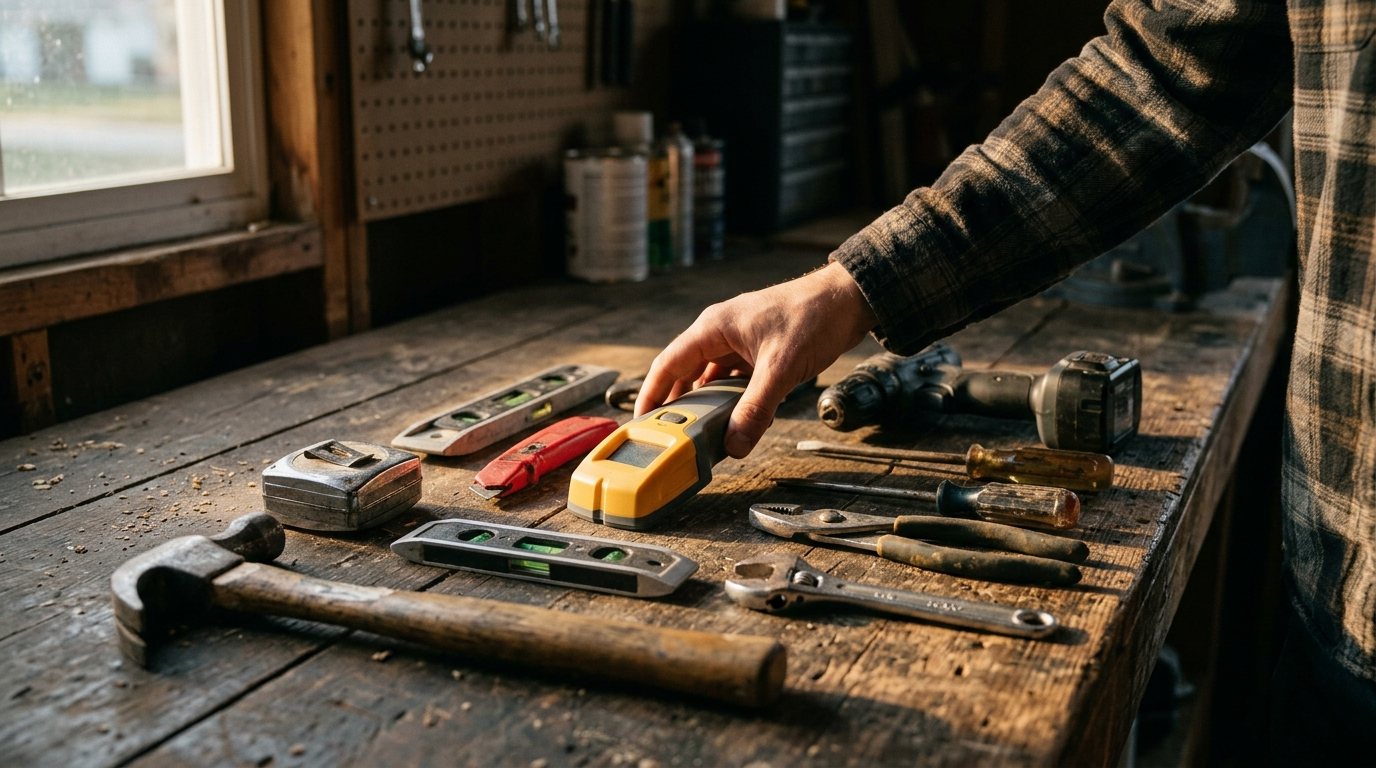
You just got the keys to your first home, or you’re tired of borrowing a screwdriver every time a cabinet hinge works loose. Then you walk into a hardware store and face aisles of tools, most of which you’ll never need. So what do you actually need to keep a house running?
This guide covers the 20 tools that handle most everyday repairs, from hanging shelves to tightening a loose faucet nut. You’ll learn why each one earns its place, see a priority table with rough prices, and find out whether a boxed starter kit or individual tools make more sense for you.
Quick answer: Start with a claw hammer, a screwdriver set, a 25-foot tape measure, a level, a utility knife, a few pairs of pliers, an adjustable wrench, hex keys, a flashlight, safety glasses and a flange plunger. Within the first few months, add a cordless drill/driver with drill and driver bits, a stud finder, a non-contact voltage tester and a stepladder. Spend more on the tools you’ll use every week and save on the rest.
How to think about a homeowner tool kit
Most household repairs come down to five jobs: fastening, measuring, cutting, gripping and turning, and finding what’s behind a wall. A good kit covers each job with one or two reliable tools instead of a drawer full of gadgets. Spend more on the tools you’ll grab weekly, because a cheap screwdriver with a soft tip strips screws and slips, and save on tools you’ll use twice a year.
The 20 tools at a glance
The prices below are rough retail figures from published first-time tool kit guides and retailer listings. Prices vary by brand, sale and region, so treat them as a budgeting guide.
| # | Tool | Priority | Rough price | Main jobs |
|---|---|---|---|---|
| 1 | Claw hammer (16 oz) | Day one | About $6 to $25 | Nails, picture hooks, light demolition |
| 2 | Screwdriver set plus multi-bit driver | Day one | Low; often bundled in kits | Outlet covers, hinges, furniture |
| 3 | Tape measure (25 ft) | Day one | About $10 to $15 | Furniture, curtains, shelves |
| 4 | Level (torpedo or 24-inch) | Day one | About $20 for a 24-inch level | Shelves, frames, TV mounts |
| 5 | Utility knife | Day one | About $14 | Boxes, caulk, drywall, carpet |
| 6 | Pliers set (slip-joint, needle-nose, cutters) | Day one | About $17 for a four-piece set | Gripping, bending, cutting wire |
| 7 | Adjustable wrench | Day one | About $32 for a two-size set | Nuts, supply lines, bolts |
| 8 | Hex key set | Day one | About $23 for SAE and metric | Furniture, disposals, door handles |
| 9 | Flashlight or headlamp | Day one | Low | Outages, under sinks, attics |
| 10 | Safety glasses and hearing protection | Day one | About $6 for glasses | Any drilling, cutting or hammering |
| 11 | Flange plunger | Day one | Most under $20 | Toilet clogs |
| 12 | Cordless drill/driver | First few months | About $99 for a kit with two batteries | Holes, screws, assembly |
| 13 | Drill bit set | First few months | About $11 for a basic set | Holes in wood, metal, masonry |
| 14 | Driver bit set | First few months | About $15 | Phillips, square, Torx, hex screws |
| 15 | Stud finder | First few months | Under $20 basic; about $53 for a multiscanner | Heavy hanging, TV mounts |
| 16 | Non-contact voltage tester | First few months | From about $18 | Confirming wires are dead |
| 17 | Stepladder | First few months | About $50 to $300 | Ceiling fixtures, smoke alarms |
| 18 | Putty knife | As projects come up | Low | Patching holes, scraping |
| 19 | Tongue-and-groove pliers | As projects come up | Low | Sink traps, large slip nuts |
| 20 | Jigsaw or handsaw | As projects come up | About $49 for an entry-level jigsaw | Boards, trim, shelving |
Day-one tools: the core 11
These cover the small jobs that pop up in your first week: assembling furniture, hanging pictures, tightening hardware and clearing a clogged toilet.
1. Claw hammer
A 16-ounce claw hammer drives nails, sets picture hooks and pulls out bent nails. Look for a grip that absorbs vibration and a head that feels balanced in your hand; a straighter rip claw doubles as a small pry bar.
2. Screwdrivers
Get a set with #1 and #2 Phillips tips and two flathead sizes, which covers outlet covers, hinges and most furniture. A multi-bit screwdriver that stores tips in the handle is a handy second tool for a kitchen drawer. Match the tip to the screw closely, because a tip that’s too small strips the head.
3. Tape measure
A 25-foot tape handles rooms, furniture and curtain rods, and a wider blade stays straight across a gap. The hook at the end slides slightly on purpose to correct for its own thickness on inside and outside measurements.
4. Level
A 24-inch level suits shelves, mirrors and frames, while a 9-inch torpedo level fits in a drawer. To check a new one, set it on a flat surface, note the bubble, then flip it end for end. If the bubble reads differently, return it.
5. Utility knife
You’ll use it for boxes, scoring drywall, cutting out old caulk and trimming carpet. Choose a retractable or locking blade with tool-free blade changes, and keep spares, because a dull blade takes more force and that’s what makes a knife slip.
6. Pliers
Slip-joint pliers grip and turn, needle-nose pliers reach into tight spaces and bend wire, and diagonal cutters snip wire, zip ties and small nails. A small set often costs less than three separate pairs.
7. Adjustable wrench
One adjustable wrench replaces a pocketful of fixed wrenches. An 8-inch size fits faucet supply lines and appliance fittings, and a 10- or 12-inch model handles larger nuts. Snug the jaws tight before you turn so you don’t round off the nut.
8. Hex keys
Hex keys, also called Allen wrenches, assemble flat-pack furniture and tighten door handles, faucet handles and bed frames. A 1/4-inch key also fits the socket under most garbage disposals to free a jam. Buy a set with both SAE and metric sizes.
9. Flashlight or headlamp
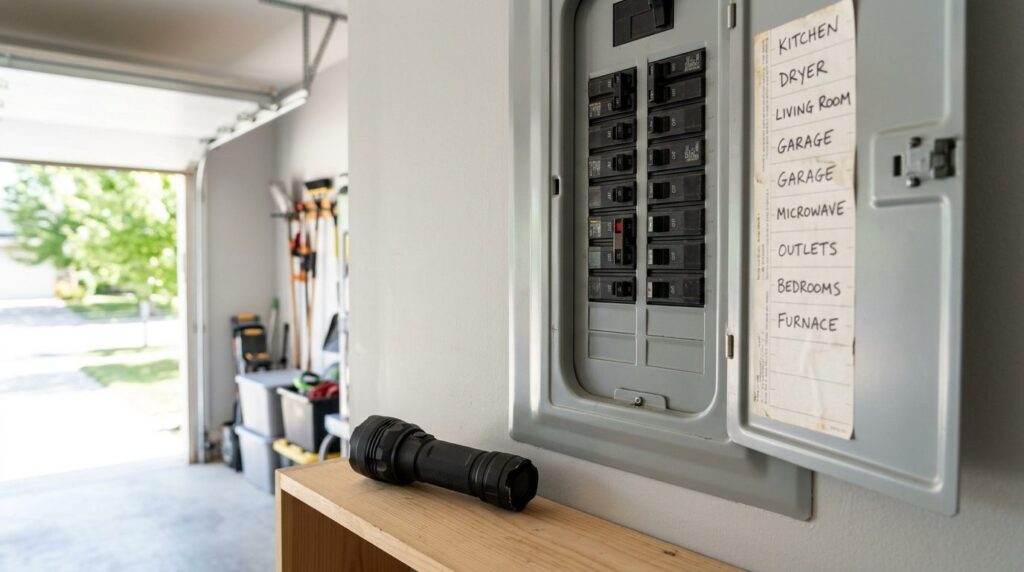
Outages, under-sink leaks and attic checks all happen in the dark. A headlamp leaves both hands free for the wrench, and it’s worth keeping one light near the electrical panel.
10. Safety glasses and hearing protection
Drilling overhead, hammering and cutting all throw debris toward your eyes. Look for glasses marked ANSI Z87.1, the US impact standard, and keep foam earplugs or earmuffs for saws and shop vacuums.
11. Flange plunger
A toilet needs a plunger with a flange, the soft sleeve at the bottom that seals into the drain. A flat cup plunger is for sinks and tubs and won’t seal in a toilet bowl. Buy one before you need it.
Add in the first few months: tools 12 to 17
These tools take on bigger jobs like mounting shelves, hanging heavy mirrors and replacing light fixtures safely.
12. Cordless drill/driver
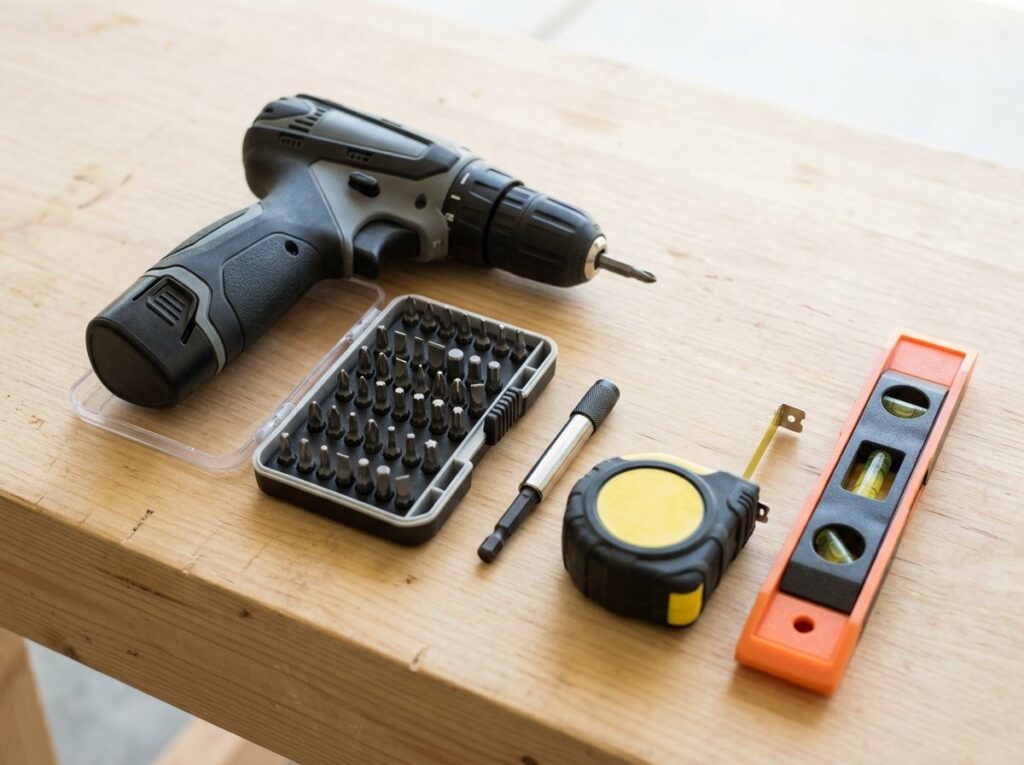
A drill/driver is the power tool homeowners use most. It drills holes and drives screws, and its adjustable clutch stops a screw before it sinks too deep. A light 12V model handles most household tasks, while an 18V or 20V model has more power for long screws and bigger holes. Look for a kit with two batteries.
Pro tip: The battery platform you choose with your first drill decides which tools you’ll buy later, because batteries rarely work across brands. Read our guide to 18V vs 20V batteries before you commit, and see impact driver vs drill if you’re unsure which to buy first.
13. Drill bit set
A basic set of twist bits drills wood, plastic and thin metal, and a few masonry bits handle brick and concrete for anchors. Add specialty bits as projects call for them; our guide to types of drill bits explains which bit matches which material.
14. Driver bit set
Driver bits turn your drill into a power screwdriver. A set with Phillips, square, Torx and hex bits plus a magnetic bit holder covers nearly every screw in the house. Replace bits when the edges look rounded, since worn bits strip screws.
15. Stud finder
Heavy items like TVs, shelves and grab bars belong in a stud, not hollow drywall. An electronic stud finder locates the edges of wood framing, and many also flag metal and live AC wiring. Our guide on how to find a stud covers every method, including a simple magnet.
16. Non-contact voltage tester
This pen-shaped tester beeps near live AC wiring, so you can confirm power is off before you replace a switch, outlet or fixture. Test it on a known live outlet, then on the wires you’ll touch, then on the live outlet again to prove it still works.
17. Stepladder
A 6-foot stepladder reaches most ceiling fixtures and smoke alarms under 8-foot ceilings. Fiberglass costs more than aluminum but doesn’t conduct electricity, which matters for electrical work. Check the duty rating, which includes you plus your tools: Type I is rated for 250 pounds, Type IA for 300 pounds and Type IAA for 375 pounds.
Add as projects come up: tools 18 to 20
18. Putty knife
A flexible 1.5- to 2-inch putty knife fills nail holes and small dents, while a stiffer blade scrapes loose paint and old caulk. For larger drywall patches, add a 6-inch taping knife.
19. Tongue-and-groove pliers
Also called groove-joint or water-pump pliers, these open wide enough to grip the large slip nuts on sink traps. Wrap the jaws in a rag on chrome so you don’t scratch the finish.
20. Jigsaw or handsaw
A handsaw is enough for a few boards a year. A jigsaw cuts straight lines, curves and openings in plywood, trim and shelving, which saves time on bigger projects. Clamp the workpiece and keep both hands clear of the blade path.
Starter kit vs buying tools individually
Boxed kits are cheap and come in a tidy case. The trade-off is quality: piece counts in the hundreds usually include dozens of small bits and sockets, while the tools you use most, like the tape measure, pliers and utility knife, are often the weakest parts of the kit.
When a boxed kit makes sense
A kit is a reasonable buy if you live in an apartment, mostly assemble furniture and hang pictures, or need a little of everything at once on a tight budget. It also keeps everything in one case when storage is limited.
When to buy individually
If you own a house and expect regular repairs and projects, buy the core tools one at a time. You’ll get a hammer, tape measure and screwdrivers that last for years, without paying for duplicates.
The hybrid approach
Many homeowners buy a small, inexpensive kit for its bits, hex keys and sockets, then buy a quality hammer, tape measure, screwdriver set and drill separately. As cheap tools break or frustrate you, replace them with better versions.
Supplies to keep with your tools
Keep these supplies on hand so a small job doesn’t turn into a trip to the store:
- Assorted wood screws, drywall screws and finishing nails
- Wall anchors in a few sizes for hollow drywall
- Painter’s tape, duct tape and electrical tape
- Pencils, sandpaper (120 and 220 grit) and spackle
- Wood glue and a tube of all-purpose caulk
- Work gloves, dust masks and a basic toolbox or tool bag
Safety note: OSHA points out that hand and power tools cause serious injuries when they’re misused or poorly maintained. At home, that means inspecting tools before use, removing the battery before you change a bit or blade, keeping cutting edges sharp and wearing eye protection for every drilling, cutting or hammering job.
Building a tool kit as a gift
A starter kit makes a practical holiday or housewarming gift. Skip the giant boxed set and pick a few quality basics, like a 25-foot tape measure, a 16-ounce hammer, a multi-bit screwdriver, a stud finder and a headlamp in a tool bag. For someone who already owns a drill, a spare battery for their platform is a safe bet.
When to call a pro
A good kit doesn’t make every job a DIY job. Call a licensed professional for any of these:
- Electrical work beyond replacing a like-for-like switch, outlet or fixture, or any scorching, buzzing or warm outlets
- Anything involving gas lines or gas appliance connections
- Roof work, or any job that needs a ladder taller than you can use safely
- Structural changes such as cutting into joists or removing walls
- Projects that need a permit, or an expensive specialty tool you’d use once
For small jobs you’d rather not tackle, a handyman is often the most affordable option. According to Angi, handymen typically charge about $40 to $140 per hour, with an average project running roughly $180 to $700 depending on the work and your location.
Frequently asked questions
Is it better to buy a tool set or individual tools?
For a house, a hybrid usually works best: an inexpensive set for bits, sockets and hex keys, plus better individual versions of the tools you use most. Boxed kits suit apartments and light use.
What is the first power tool a homeowner should buy?
A cordless drill/driver. It drills holes and drives screws for almost every household project, from hanging blinds to assembling furniture. Choose a kit with two batteries from a platform you’d be happy to stay with.
Do I need an impact driver as well as a drill?
Not at first. An impact driver sinks long screws and lag bolts faster with less wrist strain, but a drill/driver handles most household jobs. Add one when you start building decks, fences or larger projects.
Are cheap tools worth buying?
For tools you’ll use rarely, yes. Screwdrivers, pliers and tape measures get frequent use, so buy those in mid-range quality, then upgrade anything else as you wear it out.
What tools make good gifts for a new homeowner?
A quality tape measure, hammer, multi-bit screwdriver, stud finder, headlamp or cordless drill all get used. Skip novelty gadgets and huge kits full of filler pieces, which tend to sit in a closet.
The bottom line
You don’t need a garage full of tools to take care of a home. Start with the 11 day-one tools, add a drill, bits, a stud finder, a voltage tester and a stepladder over the next few months, and buy the rest when a real project calls for them.