You go to check why the house feels warm and find frost on the copper pipe outside, ice on the indoor coil, or water pooling around the furnace. A frozen air conditioner on a hot day seems backward, but it is one of the most common AC problems, and it usually has a simple cause.
This guide explains why AC coils freeze, how to thaw the system without damaging it, and which causes you can fix yourself versus the ones that need a technician. You will also find a prevention checklist and typical repair costs so you know what to expect.
Quick answer: An AC freezes when the indoor coil gets too cold, almost always because of weak airflow (a dirty filter, closed vents or a failing blower) or low refrigerant from a leak. Turn cooling off, set the fan to ON and let the ice melt for several hours, then replace the filter and open every vent. If it freezes again within a day or so, call an HVAC technician.
Signs your AC is frozen
You will not always see ice right away, because the indoor coil is hidden inside the air handler or furnace cabinet. Watch for these clues:
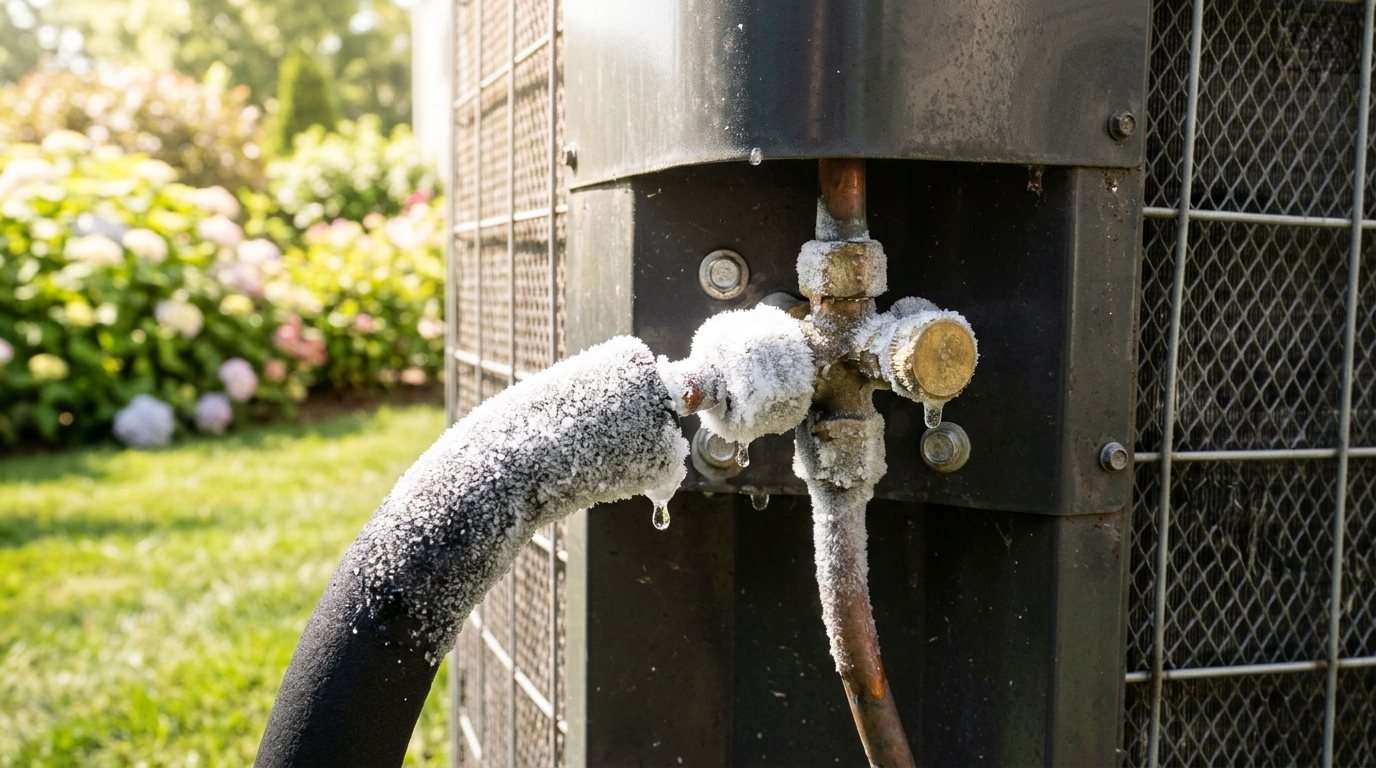
- Frost or ice on the larger insulated copper line at the outdoor unit or where it enters the indoor unit.
- Weak airflow from every vent, even though the blower sounds normal.
- Air from the vents that feels room temperature or only slightly cool.
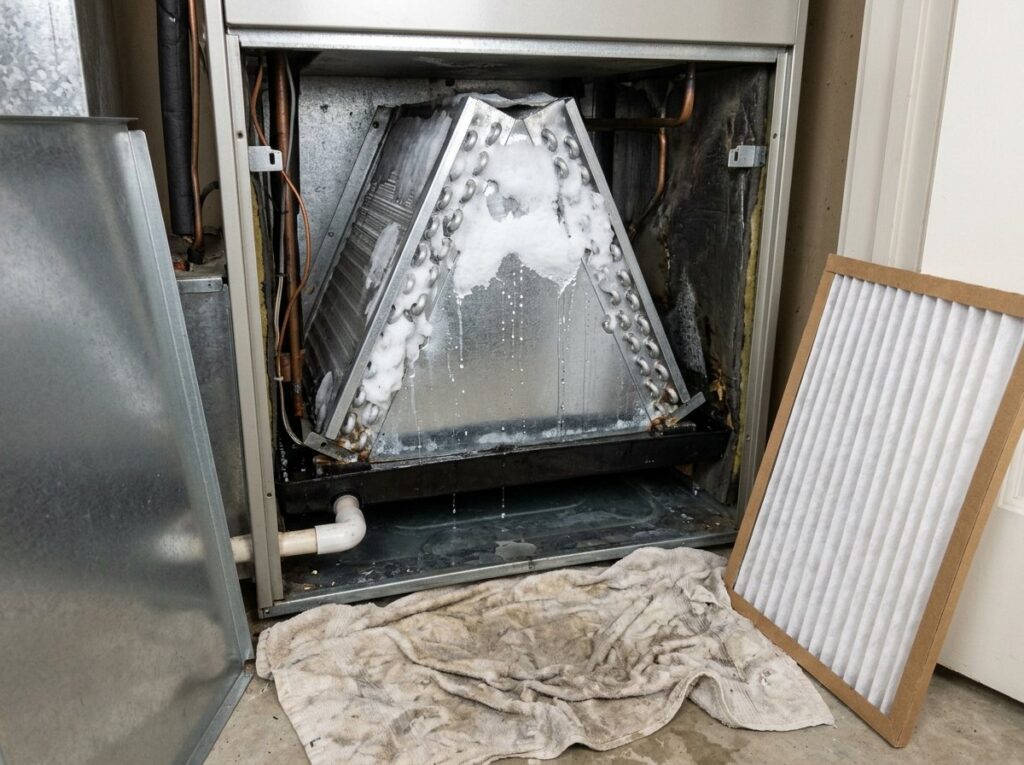
- Water around the indoor unit, especially after the system shuts off and the ice starts to melt.
- The system running constantly while the house gets warmer.
Why AC coils freeze
Your indoor evaporator coil is meant to run cold, just above freezing, while warm house air blows across it. That moving air keeps the coil from dropping below 32°F. When airflow falls or refrigerant pressure drops, the coil gets colder than it should, and moisture from the air freezes on its surface instead of dripping into the drain pan.
Ice then makes everything worse. It blocks even more air, the coil gets colder still, and within hours the frost can spread back along the copper line to the outdoor unit. Lennox sums it up simply: icing signals either an airflow restriction or low refrigerant.
Common causes of a frozen AC
1. A dirty air filter
A clogged filter is the most frequent cause and the cheapest fix, because it starves the coil of warm air. ENERGY STAR recommends inspecting the filter every month and changing it at least every three months, more often with pets or dusty conditions. If yours looks gray and you cannot see light through it, replace it, and see our guide on how to change a furnace filter for sizing and airflow direction.
2. Closed vents or blocked returns
Closing registers in unused rooms seems like a way to save energy, but it reduces total airflow across the coil. Furniture, rugs and curtains over return grilles have the same effect. In attics and crawlspaces, a crushed or disconnected flex duct can choke airflow without you noticing.
3. A dirty evaporator coil
Dust that slips past a cheap or poorly fitted filter sticks to the damp coil and builds a felt-like layer. That layer insulates the coil and blocks air between the fins. ENERGY STAR lists cleaning the evaporator coil as part of an annual pre-season tune-up by a contractor.
4. Blower or fan problems
If the indoor blower runs slowly or not at all, the coil keeps cooling with nothing to warm it. Causes include a failing blower motor, a weak blower capacitor, a dirty blower wheel or, on older units, a loose belt. A blower that hums but does not spin, or airflow that seems weak with a brand-new filter, points here.
5. Low refrigerant from a leak
Refrigerant is not used up during normal operation. If the charge is low, there is a leak, and the lower pressure makes the coil run too cold. Clues include a coil that refreezes soon after you fix the airflow, hissing near the lines and steadily rising bills. Refrigerant work requires a certified technician.
6. A clogged condensate drain
A blocked drain is rarely the root cause, but it makes a freeze-up messier. Meltwater has nowhere to go, so the pan overflows, and on many systems a float switch shuts down cooling. Clearing the line before you restart prevents water damage.
7. Cooling on cool days or nights
Air conditioners are designed for warm weather. Lennox notes that running the AC when it is below about 60°F outside can cause freezing. Very low thermostat setpoints on mild nights can also push the coil below freezing, because the system runs long cycles with little heat to remove.
Troubleshooting at a glance
| Cause | Clue | Fix | Who does it |
|---|---|---|---|
| Dirty filter | Gray, clogged filter | Replace filter | You |
| Closed or blocked vents | Several registers shut or covered | Open and clear them | You |
| Cool weather or low setpoint | Freezes on mild days or overnight | Raise setpoint, switch off on cool days | You |
| Clogged drain | Water in pan or around unit | Vacuum and flush the line | You |
| Dirty evaporator coil | Weak airflow with clean filter | Professional coil cleaning | Pro |
| Blower problem | Little or no air, humming | Repair motor or capacitor | Pro |
| Refrigerant leak | Refreezes after airflow is fixed | Find leak, repair, recharge | Pro |
How to thaw a frozen AC safely
Do not keep running the AC in cooling mode while it is frozen. The compressor is designed to pump refrigerant vapor, and a badly iced coil can send liquid back toward it, which risks expensive damage.
- Turn cooling off. Set the thermostat mode to OFF so the outdoor unit stops.
- Set the fan to ON. Running only the blower moves warm house air across the coil and speeds up melting, as Lennox recommends.
- Protect the area. Lay towels around the indoor unit and check the drain pan. Keep a wet/dry vacuum handy if the pan starts to fill.
- Give it time. Light frost may melt within an hour or two. A coil packed with ice often takes several hours, and a solid block can take most of a day.
- Fix the airflow while you wait. Replace the filter, open every supply register and clear the return grilles.
- Clear the condensate line. With the power off, vacuum the outdoor end of the drain for a minute or two and pour a cup of distilled white vinegar into the access port.
- Restart and watch. Once the copper line and coil are dry, switch back to COOL. Check the copper line after 30 to 60 minutes and again the next day.
Safety note: Never chip ice off the coil with a screwdriver or ice scraper, because the thin fins and copper tubing puncture easily and turn an airflow problem into a refrigerant leak. Avoid heat guns, and keep hair dryers and other electrical devices away from meltwater around the unit.
Tools and materials
- Replacement air filter in the correct size
- Old towels or a shallow tray
- Wet/dry shop vacuum
- Distilled white vinegar and a small funnel
- Flashlight
- Thermometer to compare vent and room air after restart
What about ice on the outdoor unit?
In summer, ice on the outdoor unit of a central AC usually starts indoors. The cold travels back along the suction line, so the same airflow and refrigerant causes apply, and the same thawing steps work.
A heat pump in winter is different. In heating mode, a light layer of frost on the outdoor coil is normal, and the unit runs a defrost cycle that may send up a cloud of steam for a few minutes. A thick block of ice that never clears, or a unit encased in ice after freezing rain, is not normal. Our guide to a heat pump not heating in cold weather covers what to check.
How to prevent your AC from freezing again
- Check the filter monthly during heavy use and replace it on schedule.
- Keep supply registers open and return grilles clear, even in rooms you rarely use.
- Switch cooling off on mild days, rather than letting it run with outdoor temperatures below about 60°F.
- Flush the condensate line with vinegar at the start of each cooling season.
- Book a yearly tune-up so a technician can clean the coil, test the blower and check the refrigerant charge.
When to call a pro
Call a licensed HVAC technician if any of these apply:
- The coil freezes again within a day or two after you replaced the filter and opened the vents.
- The blower does not run, runs weakly or hums.
- You hear hissing or see oily spots on the refrigerant lines or fittings.
- Water keeps overflowing even with a clear drain line.
- The outdoor unit makes grinding or knocking sounds after a freeze-up.
Costs vary by region and system size. These typical ranges come from Fixr’s AC repair cost guide:
| Repair | Typical cost range |
|---|---|
| Clogged condensate line | $75 to $250 |
| Refrigerant recharge | $100 to $600 |
| Thermostat replacement | $150 to $500 |
| Refrigerant leak repair | $200 to $1,500 |
| Blower motor repair | $200 to $900 |
| Blower motor replacement | $300 to $2,000 |
| Evaporator coil replacement | $400 to $2,700 |
A recharge without a leak repair is a short-term fix, because the refrigerant will leak out again. Ask the technician to find and fix the leak first.
Frequently asked questions
Can I run my AC while it is frozen?
No. Running a frozen AC in cooling mode cools the house poorly and can stress the compressor. Switch the thermostat to OFF, run the fan to thaw the coil, and only restart cooling once the ice is gone and the airflow problem is fixed.
How long does it take a frozen AC to thaw?
Light frost may clear in an hour or two with the fan running. A coil covered in thick ice often needs several hours, and a fully encased coil can take most of a day. Leave it off until the copper line is dry to the touch.
Will a frozen AC fix itself?
The ice will melt if you turn cooling off, but the cause will not go away on its own. If a dirty filter was the problem, replacing it is the fix. If the coil keeps refreezing, there is likely a refrigerant leak or blower fault that needs a technician.
Why does my AC freeze up at night?
Cooler night air and a low thermostat setpoint mean the system runs long cycles with little heat to remove, which can drop the coil below freezing. A slightly low refrigerant charge or marginal airflow makes this more likely. Raise the setpoint at night and check the filter.
Can low refrigerant cause an AC to freeze?
Yes. Low refrigerant lowers the pressure in the coil, which lowers its temperature below freezing. Because refrigerant does not get used up, low charge always means a leak that a certified technician should find and repair.
The bottom line
A frozen AC is your system telling you it is not getting enough air or enough refrigerant. Turn cooling off, run the fan until the ice is gone, then replace the filter, open the vents and clear the drain. If it freezes again, stop running it and have a technician check the blower and refrigerant before the compressor is damaged. If the house also struggles to cool, our guide to an AC running but not cooling covers the other causes.