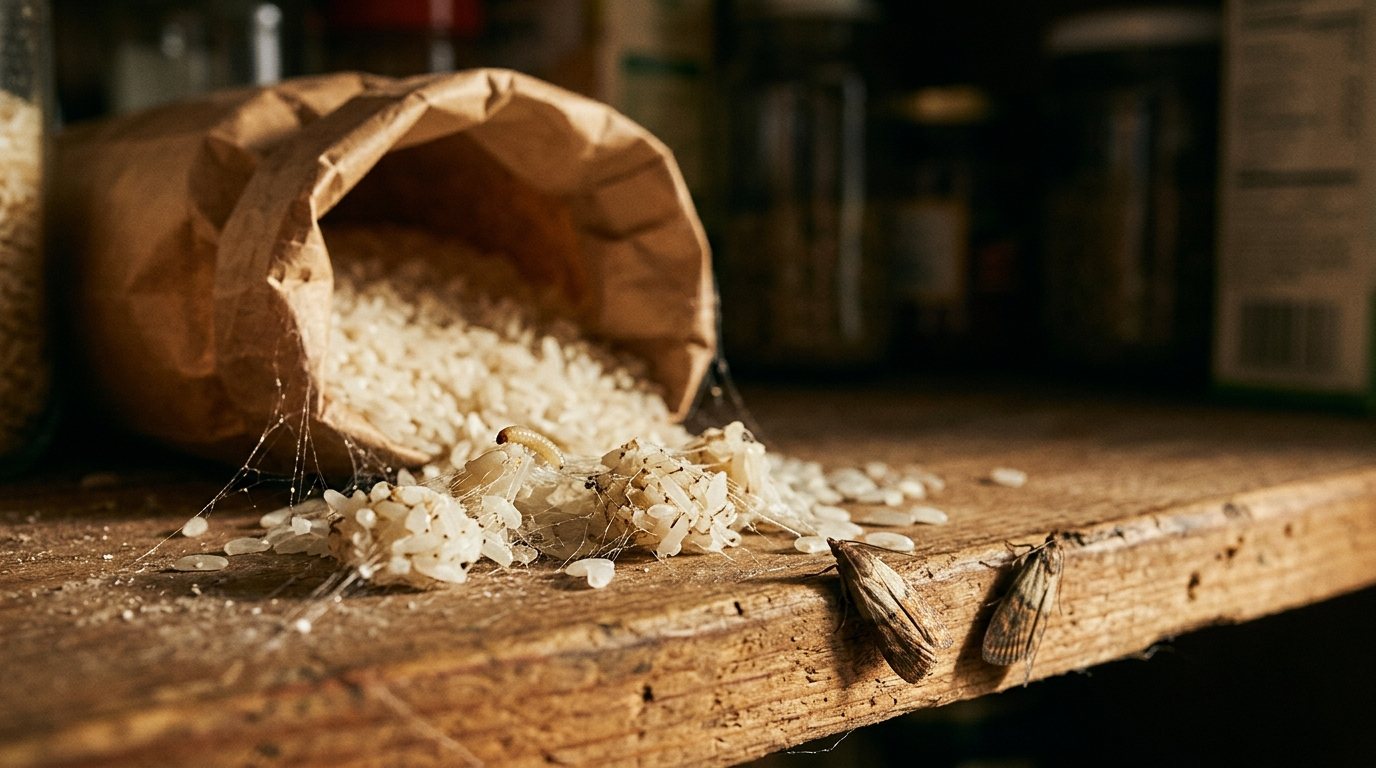
You open a bag of rice and find silky webbing clumping the grains together, or small brownish moths flutter out of the cupboard every time you reach for the cereal. Maybe you have even spotted tiny pale worms crawling across the kitchen ceiling. These are pantry moths, and once they settle in, they can spread through every box and bag on the shelf.
This guide shows you how to identify Indian meal moths, the most common pantry moth in US homes, how to inspect and decide what to throw out, how to deep-clean shelves so eggs and cocoons do not survive, which storage containers actually keep them out, and how to use pheromone traps to confirm they are gone.
Quick answer: Empty the pantry, inspect every package for webbing, larvae and tiny holes, and throw out anything infested in a sealed bag outside. Vacuum shelves, hinges, shelf pin holes and corners, then wash them with soap and water instead of spraying insecticide. Store dry foods in airtight glass or rigid plastic containers, freeze anything you want to save, and use pheromone traps for a few months to catch stragglers and spot new problems early.
How to identify Indian meal moths
According to University of California IPM’s Pest Notes on pantry pests, adult Indian meal moths are about 1/3 to 2/5 inch long. When resting, their wings fold along the body and show a distinctive two-tone pattern: whitish gray near the head and reddish brown with a coppery sheen on the outer two-thirds. They tend to fly in a zigzag pattern, often in the evening.
The adults do not eat your food. The damage comes from the larvae, which are off-white caterpillars up to about 1/2 inch long, sometimes tinted green or pink. As they feed, they spin silk, leaving webbing, clumped food and droppings in packages. When ready to pupate, larvae often leave the food and crawl up walls to spin cocoons in corners, under shelf edges and where the wall meets the ceiling.
Pantry moths vs clothes moths
Clothes moths are smaller, a uniform pale gold or buff color and are usually found near closets, wool and stored fabrics rather than food. They also tend to avoid light and flutter weakly. If you see moths in the kitchen near food, they are almost certainly pantry moths.
Step 1: Inspect every food item
Pantry moth infestations usually start with one forgotten, partly used package at the back of a shelf. The University of Kentucky’s stored product pest fact sheet notes that the more insects you see, the older the infestation usually is, so a thorough check is worth the time.
- Take everything out of the pantry or cabinet and set it on a counter or table.
- Open and check each package, even unopened ones. Look for webbing, clumped food, larvae, cocoons, cast skins and tiny holes in bags or boxes.
- Check foods that people often overlook: pet food, bird seed, nuts, dried fruit, chocolate, powdered milk, spices, dried chili peppers, cornmeal and pasta.
- Look beyond the kitchen. Decorative Indian corn, dried flower arrangements, potpourri and bags of bird seed in the garage can all be the source.
- Inspect the empty shelves, shelf pin holes, cabinet hinges, the underside of shelf edges and the corners where walls meet the ceiling for cocoons.
| Commonly infested item | What to look for | What to do |
|---|---|---|
| Flour, cornmeal, rice, cereal | Clumps held together by silk, larvae in the bag | Discard; store replacements in airtight containers |
| Nuts, dried fruit, chocolate | Webbing between pieces, frass (droppings) | Discard; keep replacements in the fridge or freezer |
| Pet food and bird seed | Moths around the bag, larvae at the bottom | Discard or move outside; use a lidded bin |
| Decorative corn, dried flowers | Moths in rooms far from the kitchen | Discard, or heat or freeze as described below |
| Spices and dried peppers | Webbing in jar threads, larvae under the lid | Discard; buy small quantities |
Step 2: Throw out infested food
UC IPM and the University of Kentucky agree that getting rid of infested food is the most important step. Put anything with webbing, larvae or holes in a sealed plastic bag and take it straight to an outdoor trash can, so larvae cannot crawl back into the house.
Be decisive. Saving half a bag of infested flour almost always restarts the cycle. Eating a few larvae by accident is not known to cause harm, but heavily infested food has an off smell and taste, and the silk and droppings make it unappealing.
Saving food that looks clean
For items you want to keep that show no signs of infestation, kill any hidden eggs before putting them back. The University of Kentucky recommends freezing at 0 degrees F for four days in a freezer that holds that temperature. For decorative items such as dried corn or bird seed, the same fact sheet suggests heating at 155 degrees F for about 20 minutes with the oven door propped open.
Step 3: Deep-clean the shelves
Eggs and cocoons hide in cracks and corners, so a quick wipe is not enough.
- Remove shelf liners and throw them away.
- Vacuum every shelf, corner and crack with a crevice tool, including shelf pin holes, hinges, door tracks and the gap where shelves meet the wall.
- Vacuum the ceiling corners and the top of the cabinet or pantry, where larvae often pupate.
- Wash all surfaces with hot, soapy water and let them dry completely.
- Empty the vacuum canister or bag into a sealed bag and take it outside right away.
Safety note: Do not spray insecticide on pantry shelves or near food. UC IPM warns that insecticides are not recommended for pantry pests and that spraying near food can cause more harm to people than to the insects. If you heat decorative items in the oven, never leave the oven unattended, and keep paper and plastic out of it.
Step 4: Switch to airtight storage
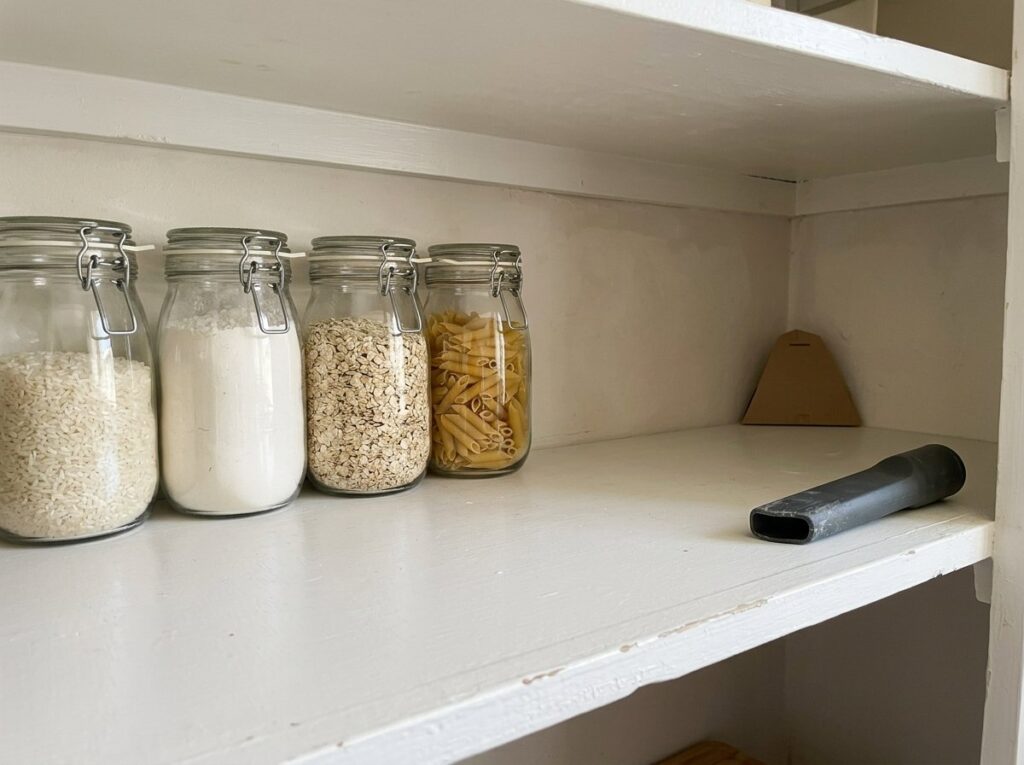
Indian meal moth larvae can chew through thin plastic bags, paper and cardboard, and newly hatched larvae can slip through very small gaps. UC IPM recommends containers with tight-fitting lids rather than plastic bags.
- Use glass jars with gasket lids or rigid plastic containers with locking, sealed lids.
- Do not mix old and new food in the same container. Wash and dry containers before refilling.
- Keep flours, whole grains, nuts and spices you use rarely in the refrigerator or freezer.
- Buy dry goods in amounts you will use within a few months, and do not buy damaged packages.
- Store pet food and bird seed in sealed bins, ideally away from the kitchen.
Step 5: Monitor with pheromone traps
Pheromone traps use the scent of a female moth to attract and catch males. UC IPM notes they do not attract females, so they will not solve an infestation on their own, but catching males can reduce mating and the traps tell you whether moths are still active.
Place traps in or near the pantry, check them weekly and replace them as the package directs, usually about every three months. A sudden new catch after weeks of nothing means it is time to inspect your food again. Because pantry pests can survive for weeks, keep traps out for at least a couple of months after the last moth.
Pro tip: Write the date on each trap when you set it and mark the count each week. A simple log makes it easy to see whether numbers are falling or a new source has appeared.
Tools and materials
- Flashlight for checking corners and the undersides of shelves
- Vacuum with a crevice tool
- Heavy-duty trash bags
- Dish soap, hot water and cloths
- Airtight glass jars or rigid plastic containers with gasket lids
- Indian meal moth pheromone traps
- Freezer space and a freezer thermometer
- Labels or a marker for dating containers and traps
Why pantry moths keep coming back
If moths return weeks after a cleanup, one of these is usually the reason.
- A missed source. Pet food, bird seed, decorations or a forgotten bag in another room keep feeding a new generation.
- Cocoons in cracks. Pupae hidden in shelf pin holes, hinges or ceiling corners hatch after you clean. Vacuum those areas again.
- New infested groceries. Eggs can come home in a new bag of grain or nuts. Freezing new purchases for four days before storing them breaks the cycle.
- The life cycle lag. UC IPM notes the full cycle takes about six to eight weeks in warm weather, so a few late adults can appear even when you did everything right.
Kitchen habits that keep pantry moths away also help with other pests. If you are dealing with small flies around produce, see our guide on how to get rid of fruit flies, and if you find ants in the pantry, read how to get rid of ants in the kitchen.
When to call a pro
Pantry moths are almost always a DIY job, and a pest control company will mostly do what you can do yourself: find the source, remove it and clean. Consider calling a pro if:
- Moths keep appearing for more than two or three months despite thorough cleanups and traps.
- You cannot find any food source, which can mean a hidden one such as an old rodent cache of seeds in a wall. Our guide on how to get rid of mice covers signs of rodent activity.
- Moths and larvae show up in several rooms at once or in a large storage area.
- You also find beetles or weevils and want a professional identification.
According to Bob Vila’s exterminator cost guide, which cites HomeAdvisor data, a typical pest control visit costs $111 to $261, with an average of about $176. Ask the technician to focus on inspection and source removal rather than spraying your kitchen.
Frequently asked questions
Where do pantry moths come from?
Most arrive as eggs or tiny larvae inside dry goods, pet food or bird seed, often from a store or warehouse. Once inside, they spread to other open or poorly sealed packages nearby.
Why are there small worms on my ceiling?
Those are almost always Indian meal moth larvae looking for a place to spin a cocoon. They crawl away from food sources, often up walls to ceiling corners. Vacuum them up and then find and remove the food they came from.
Do pantry moths eat clothes?
No. Indian meal moths feed on dried foods, not fabric. If you find moth damage in wool sweaters or rugs, you are dealing with clothes moths, which need a different approach.
How long does it take to get rid of pantry moths?
Plan on several weeks to a couple of months. After you remove the source and clean, a few adults may still emerge from hidden cocoons, so keep pheromone traps out and recheck your food for at least two months.
Do bay leaves keep pantry moths away?
There is no solid evidence that bay leaves or other herbs prevent pantry moths. Airtight containers, regular cleaning and buying smaller quantities work much better.
The bottom line
Getting rid of pantry moths takes a thorough, one-time effort and a few good habits. Inspect everything, throw out infested food, vacuum and wash every crack and corner, and move dry goods into airtight containers. Use pheromone traps to monitor for a few months, freeze new grains and nuts if moths have been a problem before, and skip the insecticide sprays near your food.