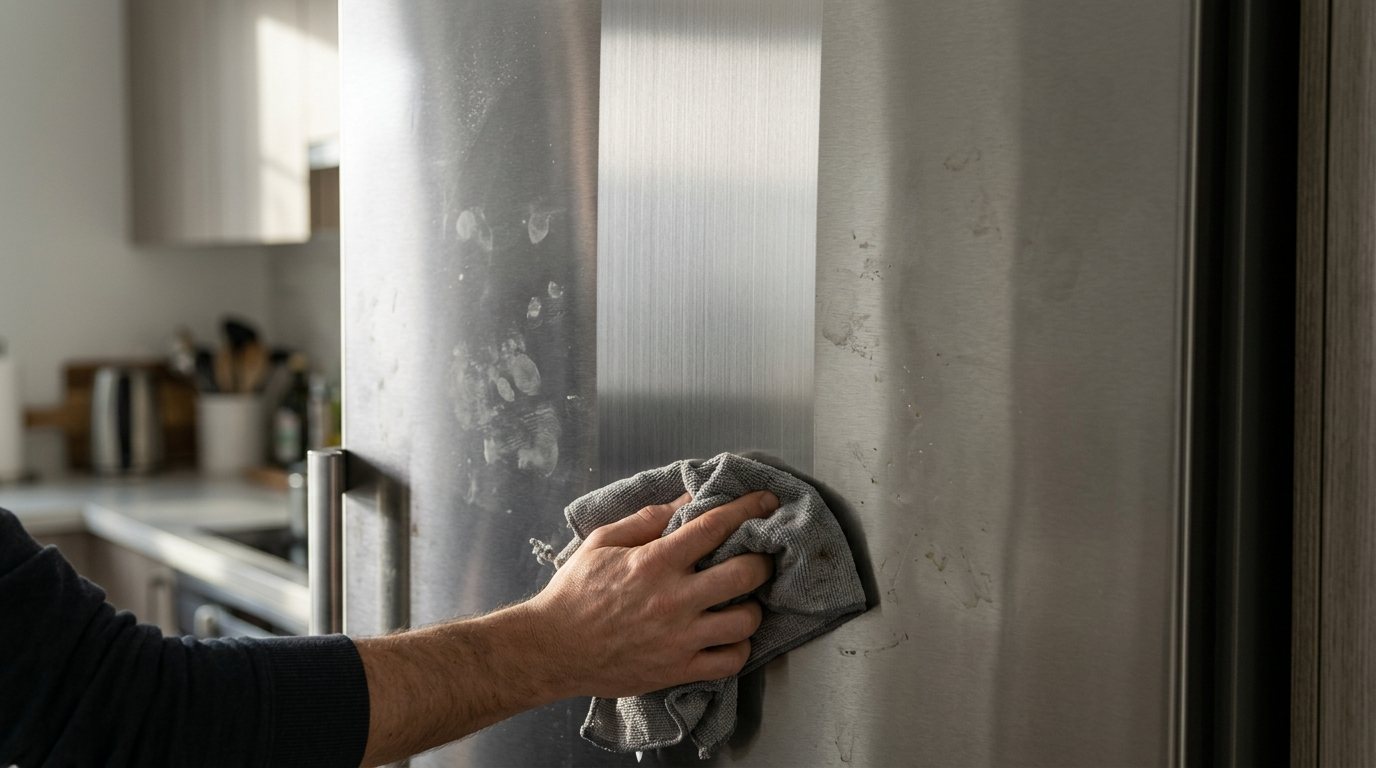
Stainless steel appliances look sleek in the showroom, but at home they show every fingerprint, drip and smear. Wipe them with the wrong cloth or cleaner and you end up with streaks, cloudy patches or fine scratches that never come out.
This guide explains how to clean stainless steel appliances the right way: finding the grain, the everyday mild soap method, the popular vinegar and oil method and when to skip it, and what to avoid. You will also learn how to handle fingerprints, water spots, rust spots and scratches, and how to treat fingerprint-resistant and black stainless finishes.
Quick answer: Wipe the surface with a microfiber cloth dampened in warm water and a drop of dish soap, always moving in the direction of the grain. Wipe again with a cloth dampened in plain water, then dry and buff with a clean, dry microfiber cloth. For extra shine on traditional stainless, buff in a few drops of mineral oil along the grain. Never use steel wool, abrasive powders or chlorine bleach.
Know your finish before you clean
Not all stainless looks or behaves the same. Many newer appliances have a clear protective coating, and products that are fine on plain stainless can dull or scratch it. Check your owner’s manual or the manufacturer’s website if you are not sure which you have.
| Finish | How to tell | Safe to use | Avoid |
|---|---|---|---|
| Traditional brushed stainless | Visible fine grain lines, shows fingerprints easily | Mild soap and water, stainless steel cleaner, a little mineral oil | Abrasives, steel wool, chlorine bleach, harsh chemicals |
| Fingerprint-resistant (coated) | Sold as smudge-proof, prints wipe off easily | Warm water and mild soap, soft cloth | Scouring pads, abrasive cleaners, chlorine bleach, paper towels |
| Black stainless | Dark tinted coating over the steel | Warm water and mild soap, soft cloth | Polishes, abrasives, anything gritty |
Whirlpool warns that scouring pads, abrasive or harsh cleaners, chlorine bleach, steel wool, gritty washcloths and paper towels may scratch or dull the clear coat on its fingerprint-resistant doors. The safest rule for any coated finish is warm water, mild soap and a soft cloth.
Find the grain first
Brushed stainless has fine lines running in one direction, usually horizontal on dishwashers and ovens and vertical on refrigerator doors, though it varies. Look closely under good light or run a fingertip lightly across the surface to see which way the lines go.
Always clean, dry and polish in that direction. Wiping across the grain pushes grime and cleaner residue into the tiny grooves and leaves streaks, and any scratching you cause will stand out instead of blending in. Use long, straight strokes rather than circles.
Tools and materials
- Three or four clean microfiber cloths
- Mild dish soap and a bowl of warm water
- Spray bottle (optional, for the vinegar method)
- Mineral oil or a stainless steel cleaner for polishing
- Baking soda for water spots and light rust
- Soft toothbrush for handles, seams and control panels
How to clean stainless steel appliances with mild soap
This is the everyday method, and it is the one most manufacturers recommend. Whirlpool’s instructions for traditional stainless call for warm soapy water and a nonabrasive sponge, rubbing evenly in the direction of the grain, then drying with a clean microfiber or soft cloth.
- Turn on the control lock if your appliance has touch controls, so you do not start a cycle by accident.
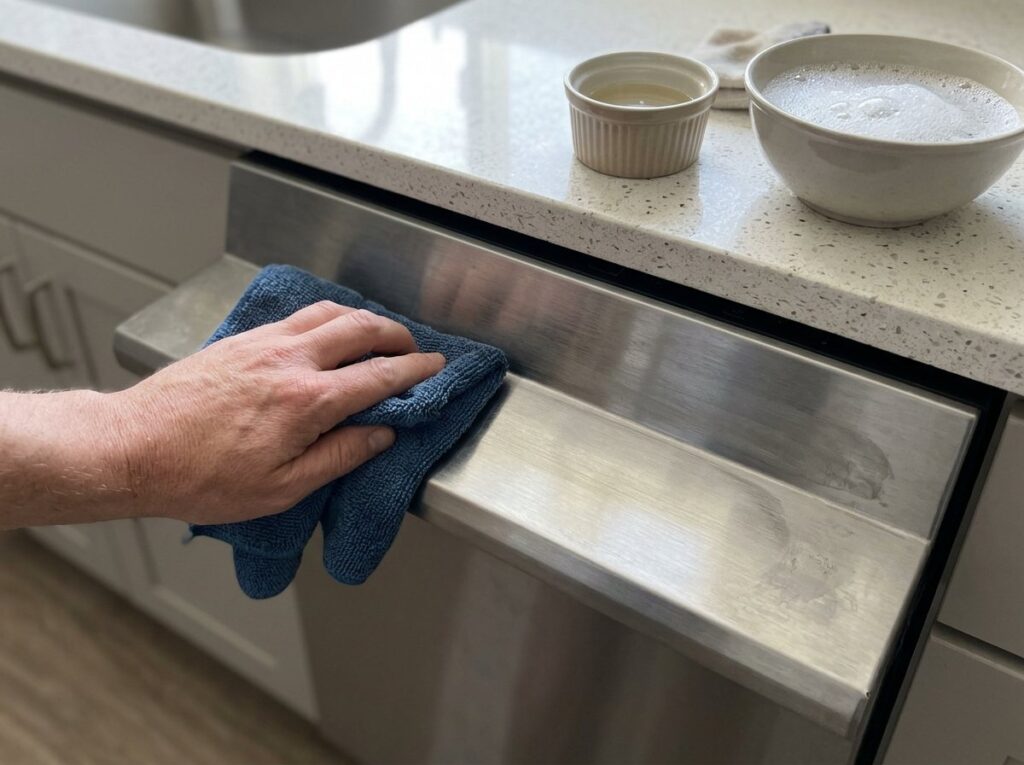
- Add a few drops of dish soap to a bowl of warm water. Dip a microfiber cloth and wring it out until it is just damp.
- Wipe the surface from top to bottom in the direction of the grain, rinsing the cloth as it picks up grime.
- Use a soft toothbrush dipped in the soapy water on handles, seams and around buttons.
- Wipe again with a second cloth dampened in plain water to remove soap residue, which can leave streaks.
- Dry immediately with a clean, dry microfiber cloth, still following the grain. Whirlpool notes that water left to dry can cause discoloration.
The vinegar and oil method (and when to skip it)
Many cleaning guides recommend spraying white vinegar, wiping it off along the grain, then polishing with a little oil. It cuts through fingerprints and leaves a deep shine on traditional stainless. However, Whirlpool lists vinegar-based and citrus-based cleaners among the products to avoid on its traditional stainless refrigerators, so check your manual before using it. If your manufacturer advises against vinegar, use the soap method above and finish with oil.
- Fill a spray bottle with white distilled vinegar, or equal parts vinegar and water for a milder mix.
- Spray it onto a microfiber cloth rather than directly onto the appliance, so it does not drip into seams or controls.
- Wipe the surface along the grain, then wipe again with a cloth dampened in plain water and dry it.
- Put a few drops of mineral oil or olive oil on a clean, dry cloth.
- Buff along the grain with long strokes until the surface looks even. Then go over it with a clean, dry cloth to remove any excess.
Pro tip: Use far less oil than you think. A thin film helps hide fingerprints, but too much feels greasy and attracts dust. Consumer Reports notes that most stainless cleaners contain mineral oil, which helps protect the steel, so mineral oil is a good, inexpensive choice. Skip the oil entirely on fingerprint-resistant and black stainless finishes.
What to avoid on stainless steel
Stainless steel resists rust because chromium forms a thin, invisible protective layer on the surface. Consumer Reports explains that if that layer is damaged, moisture can reach the steel underneath and cause rust. Most of the things on this list damage that layer or scratch the surface.
- Steel wool and steel scrub pads. They scratch the surface, and Consumer Reports notes that steel wool fragments can embed in the steel and rust.
- Abrasive powders and scouring sponges. These leave permanent scratches and dull patches, especially across the grain.
- Chlorine bleach and chloride cleaners. Consumer Reports says cleaners with high amounts of bleach can cause corrosion, especially in crevices. That includes many disinfecting wipes and sprays.
- Ammonia, oven cleaner and harsh chemicals. Whirlpool’s care guide lists ammonia, citrus-based, vinegar-based and oven cleaners among the products that could damage the finish, and says that damage is not covered by the warranty.
- Paper towels and newsprint. Whirlpool lists these too, since their fibers can scratch and leave lint.
- Used dishrags. They can carry food oils and acids onto the steel, so always start with a clean cloth.
- Some grout and tile cleaners. Consumer Reports notes that muriatic acid fumes from certain grout cleaners can damage nearby stainless.
Safety note: Never mix cleaning products, especially bleach with vinegar or ammonia, which releases toxic gases. If you use a heavy-duty oven cleaner inside your oven, protect the stainless front with a towel and wipe away any overspray right away. Our guide on how to clean an oven covers safer options.
How to remove fingerprints and smudges
Fresh fingerprints usually come off with a dry microfiber cloth buffed along the grain. For greasy prints around handles, use a cloth barely dampened with warm soapy water, then dry it. A very thin film of mineral oil or stainless cleaner afterward makes new prints less visible and easier to wipe away.
Keep a dedicated microfiber cloth in the kitchen just for stainless and wash it separately from greasy dish towels. Wash microfiber without fabric softener, which coats the fibers and leaves streaks.
Water spots, grease and rust spots
Water spots and mineral marks
Spots from the ice dispenser or dishwasher steam are usually mineral deposits. Wipe with warm soapy water, rinse and dry. For stubborn spots, make a paste of baking soda and water, rub gently along the grain with a soft cloth, then rinse and dry. Our guide on removing hard water stains explains why these spots form.
Greasy range hoods and oven fronts
Cooking grease needs a little more soap. Use hot water with a degreasing dish soap, let it sit for a minute to soften the grease, then wipe along the grain and rinse. Repeat rather than scrubbing harder.
Small rust spots
Consumer Reports suggests a stainless cleaner or brightener, or a baking soda paste rubbed gently along the grain with a soft cloth. It cites Samsung’s suggestion of 1 tablespoon of baking soda in 2 cups of water and Kenmore’s equal parts baking soda and water. Rinse, dry and keep an eye on the spot, since treated areas are more likely to rust again.
What to do about scratches
Prevention matters most, because scratches cannot be truly erased from most finishes. Always wipe with the grain and use only soft cloths. Light scuffs on traditional stainless often become much less visible after cleaning and a thin coat of mineral oil or stainless polish.
Deeper scratches on uncoated brushed stainless can sometimes be blended with a stainless scratch repair kit used strictly along the grain. Test it in a hidden spot first, because it is easy to make a larger dull patch. Never use a scratch kit or any abrasive on fingerprint-resistant or black stainless, since it will cut through the coating. For coated finishes, contact the manufacturer about touch-up products or a replacement panel.
How often to clean stainless steel appliances
- Daily or as needed: Buff fingerprints off handles and doors with a dry microfiber cloth.
- Weekly: Clean all fronts with warm soapy water, rinse and dry along the grain.
- Monthly: Polish traditional stainless with a little mineral oil or stainless cleaner, and clean the range hood filter.
The same approach works for the exterior of every appliance. When you deep clean the inside of your dishwasher, finish by wiping the stainless door along the grain.
When to call a pro
Cleaning will not fix physical damage. Contact the manufacturer or an appliance repair technician if you see:
- Peeling, bubbling or worn-through coating on black or fingerprint-resistant stainless
- Deep dents or gouges on a door or panel
- Rust that keeps returning, pitting or rust spreading from seams
- Damage near the door edge that stops a refrigerator or dishwasher door from sealing properly
According to HomeAdvisor’s appliance repair cost guide, typical appliance repairs cost $108 to $250, averaging about $179, and a service call fee is usually $50 to $100. HomeAdvisor lists a replacement dishwasher door at around $150 to $250. Check whether the panel is still under warranty first, but remember that damage from harsh cleaners is often excluded.
Frequently asked questions
Can you use glass cleaner on stainless steel?
Most glass cleaners contain ammonia, which Whirlpool and Consumer Reports both list among products to avoid on stainless appliances. They can also leave streaks. Use warm soapy water or a cleaner made for stainless steel instead.
Is vinegar safe for stainless steel appliances?
Vinegar is widely used to cut fingerprints, but some manufacturers, including Whirlpool, list vinegar-based cleaners among products to avoid on their stainless finishes. Check your manual. If vinegar is allowed, dilute it, apply it with a cloth, rinse and dry promptly.
Can you use disinfecting wipes on stainless steel?
Avoid wipes and sprays that contain bleach or chlorine. Consumer Reports says cleaners with high amounts of bleach can corrode stainless, especially in crevices. If you need to disinfect a handle, use a product your appliance maker approves and wipe it with plain water afterward.
Does olive oil damage stainless steel?
A tiny amount of olive oil buffed in and wiped off will not harm traditional stainless, but too much leaves a sticky film that attracts dust. Mineral oil is a cleaner choice and is what most stainless cleaners use. Do not use any oil on coated or black stainless.
Which way do you wipe stainless steel?
Always wipe in the direction of the grain, the fine lines in the metal. Wiping along the grain removes residue from the grooves and prevents streaks, while circles and cross-grain strokes leave smears and make scratches more visible.
The bottom line
To clean stainless steel appliances, wipe along the grain with warm soapy water and a microfiber cloth, rinse, dry completely and polish traditional stainless with a few drops of mineral oil. Skip abrasives, steel wool, chlorine bleach and ammonia, and treat coated or black stainless more gently still. A quick weekly wipe keeps the finish streak-free for years, and the same care works on your microwave and every other stainless front in the kitchen.