You spend roughly a third of your life on your mattress, yet it rarely gets cleaned. Sweat, skin flakes, spills and the occasional accident build up under the sheets, and before long you notice yellow patches, a stale smell or more sneezing at night than during the day.
This guide shows you how to clean a mattress properly: vacuuming, treating stains by type, deodorizing with baking soda and, most important, drying it completely. It also covers dust mites and allergies, mattress protectors, rotating and a simple schedule so the job stays small.
Quick answer: Strip the bed and wash the bedding in hot water, then vacuum the whole mattress with an upholstery tool. Spot-treat stains with a lightly misted cleaner matched to the stain, blotting rather than soaking. Sprinkle baking soda over the surface, leave it for at least an hour (longer is better), vacuum it up and let the mattress dry completely before making the bed.
Tools and materials
- Vacuum with an upholstery attachment and crevice tool, ideally with a HEPA filter
- Baking soda (a 1 pound box covers most queen mattresses)
- 3% hydrogen peroxide, dish soap and laundry detergent
- White vinegar and an enzyme cleaner for urine
- Two spray bottles, clean white cloths and a soft brush
- A fan or dehumidifier for drying
- Rubber gloves, plus a mattress protector or encasement for afterward
How to clean a mattress, step by step
Start in the morning so the mattress has the whole day to air out and dry. Check the care label first, because some foam and hybrid mattresses come with specific cleaning instructions, and the wrong method can affect your warranty.
Step 1: Strip and wash all the bedding
Remove sheets, pillowcases, the mattress pad and any protector. The Asthma and Allergy Foundation of America recommends washing sheets and blankets weekly in water at least 130°F (54°C) to kill dust mites. Check the care labels, and dry everything on high heat if the fabric allows it.
Step 2: Vacuum the entire mattress
Use the upholstery attachment and work slowly over the top in overlapping rows. Switch to the crevice tool for the seams, piping and tufts, where skin flakes and crumbs collect. Vacuum the sides too, and if you have a two-sided mattress, do the underside when you flip it later.
Step 3: Spot-treat stains
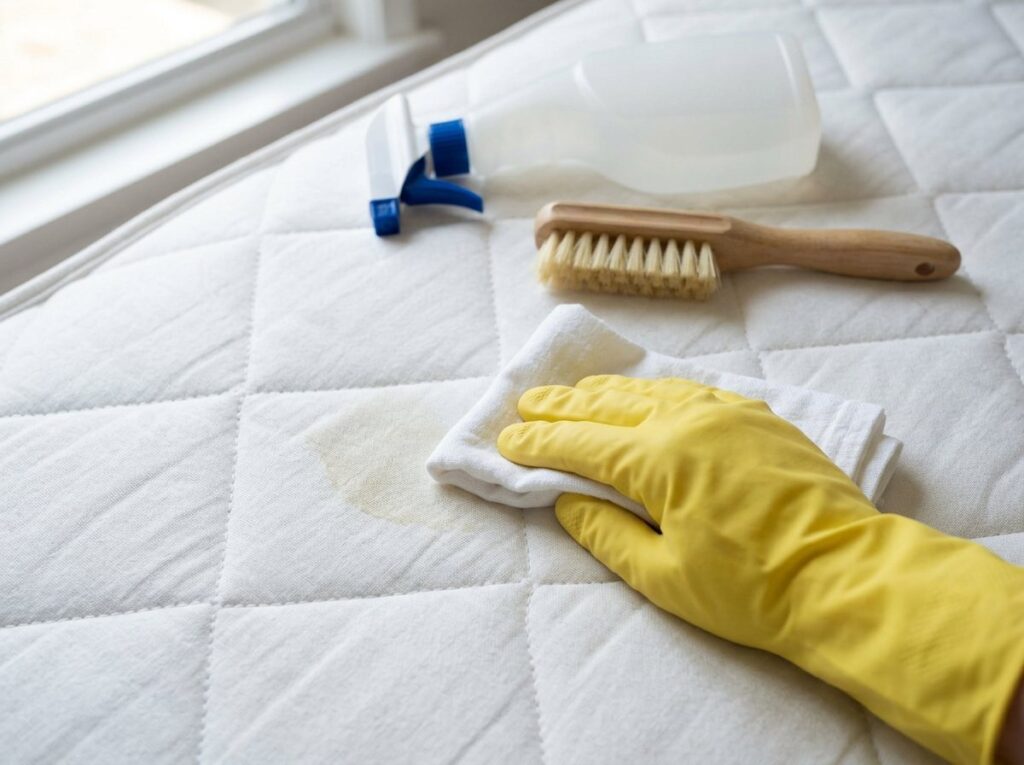
Treat stains now, before deodorizing, using the stain-by-type guide below. Lightly mist or dab the cleaner on, work it in with a cloth or soft brush and blot. Never pour liquid onto a mattress, because moisture that soaks into the foam or fiber layers is slow to dry and can lead to mildew.
Step 4: Deodorize with baking soda
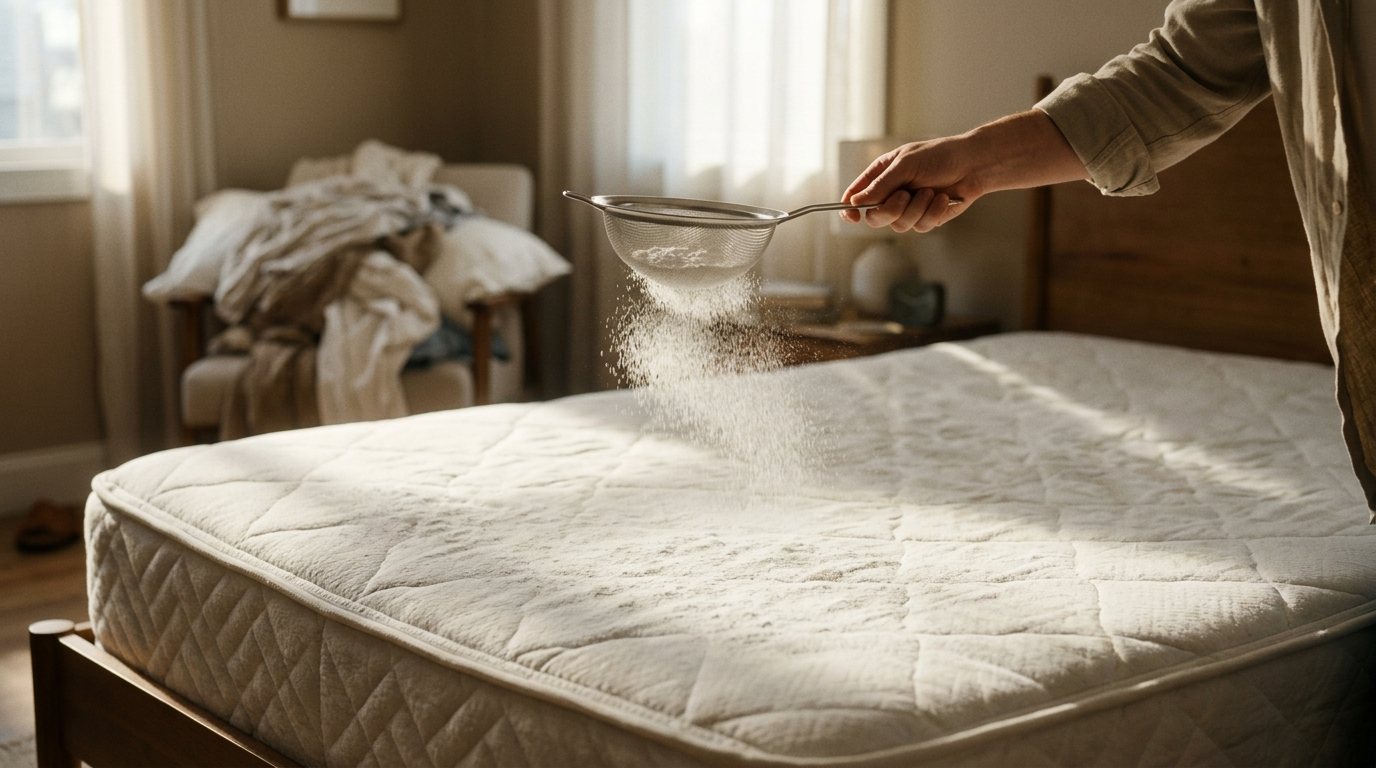
Once the stain spots are just damp rather than wet, sprinkle a thin, even layer of baking soda over the whole surface. A kitchen sieve helps spread it evenly. Home Depot suggests leaving it for at least an hour, and Bob Vila recommends up to 24 hours over treated spots, since baking soda absorbs both odor and leftover moisture. Open a window or let sunlight in while it sits.
Step 5: Vacuum again
Vacuum up all the baking soda with the upholstery tool, going over the surface twice. Empty or check the vacuum bag or bin afterward, because fine powder can clog filters quickly.
Step 6: Dry completely before making the bed
Press a dry paper towel firmly onto each treated spot. If it picks up any moisture, keep drying. A damp mattress covered with a protector and sheets will trap moisture, which is exactly how musty smells and mildew start.
How to remove mattress stains by type
Match the cleaner to the stain and always test it first on a hidden spot, such as the side near the foot. Work from the outside of the stain toward the center so you do not spread it.
| Stain | What to use | Key tip |
|---|---|---|
| Fresh urine | Blot, then enzyme cleaner or peroxide mix | Blot up as much as possible first |
| Dried urine and odor | Enzyme cleaner, then baking soda | Let the enzyme cleaner work as long as the label says |
| Blood | Cold water, then chilled peroxide mix | Never use warm water, which sets the stain |
| Sweat and yellow stains | Peroxide, baking soda and dish soap | May need two or three rounds |
| Vomit | Scrape, then peroxide mix or enzyme cleaner | Remove solids before adding liquid |
| Coffee, wine and food | Detergent, vinegar and water | Let it sit 10 to 15 minutes, then blot |
Urine
For a fresh accident, blot immediately with dry towels, pressing hard to draw liquid out. Then apply an enzyme cleaner made for urine, which breaks down the compounds that cause the lingering smell. For an older stain, Bob Vila suggests misting the area lightly with water, then spraying a mix of 1 cup 3% hydrogen peroxide, 3 tablespoons of baking soda and a few drops of dish soap. Brush gently, mist with plain water and blot dry.
Blood
Blot with cold water first. If the stain remains, use the same peroxide mix, but chill it in the refrigerator for about an hour so heat does not set the protein. Dab it on, wait a few minutes and blot. Older blood stains may need several rounds.
Sweat and yellow stains
Yellowing builds up slowly from sweat and body oils, so it takes patience. Apply the peroxide mix, brush it in lightly, let it work for a few minutes and blot. Repeat after the area dries if needed, and expect old yellow stains to fade rather than disappear completely.
Coffee, wine and food spills
Blot up as much as you can. Mix 1 part laundry detergent, 1 part white vinegar and 10 parts water, mist it on, agitate gently and wait 10 to 15 minutes. Blot with a damp cloth, then press with a dry towel.
Safety note: Mix the peroxide solution fresh, use it right away and never store it in a closed bottle. Do not combine hydrogen peroxide and vinegar in the same container, and never mix bleach with vinegar, ammonia or other cleaners. Hydrogen peroxide can lighten colored fabric, so test it on a hidden spot first.
How to dry a mattress fully
Drying is the step most guides rush, and it is the one that prevents problems. Bob Vila warns that excess moisture invites mold and mildew, so use as little liquid as possible and help it evaporate.
- Point a fan directly at treated areas and open a window for cross-ventilation.
- Run a dehumidifier or the air conditioner in the room to pull moisture from the air.
- Use a hair dryer on the cool setting for small spots; avoid high heat, which can set stains and damage foam.
- Stand the mattress on its side in a sunny spot if you can, so air reaches both faces.
Allow the full day, and longer for large wet areas. If a spot still feels cool or damp to the touch by bedtime, sleep elsewhere for a night rather than covering it up.
Dust mites, allergies and your mattress
Dust mites are microscopic relatives of spiders that feed on the skin flakes people shed. The AAFA notes that bedrooms usually have more dust mites than any other room, and that mites thrive in warm rooms with humidity above 50%. For people with a dust mite allergy, they can cause sneezing, a stuffy or runny nose, itchy eyes and, with asthma, wheezing and coughing at night.
Vacuuming helps, but the AAFA points out it does not remove all mites, because many live deep inside mattress and furniture stuffing. Allergy experts recommend a combination of steps:
- Encase the mattress, box spring and pillows. National Jewish Health recommends zippered, dust-proof encasings on all three.
- Wash bedding weekly in water at least 130°F.
- Vacuum the mattress every 1 to 3 months, according to the AAFA, or more often if it has no allergen-barrier cover. Use a HEPA vacuum.
- Keep humidity low. The AAFA recommends 30% to 50% indoor humidity, and National Jewish Health says 30% to 40% is ideal for controlling mites. Our guide to ideal indoor humidity explains how to measure and adjust it.
- Let someone else vacuum. If you have the allergy, National Jewish Health advises staying out of the room while vacuuming happens. If you must clean, the AAFA suggests wearing an N95 mask and leaving the room for 20 to 30 minutes afterward.
The AAFA also suggests replacing pillows every 2 years and mattresses every 10 years. If allergy symptoms continue despite these steps, talk to your doctor or an allergist.
Mattress protectors: the easiest way to keep it clean
A protector is far easier to wash than a mattress is to clean. It blocks sweat, spills and accidents from reaching the mattress and helps keep stains from affecting your warranty, since Bob Vila notes that visible stains can void many mattress warranties.
| Type | Protects against | Best for |
|---|---|---|
| Waterproof fitted protector | Spills, sweat, accidents | Kids, pets, anyone who drinks in bed |
| Zippered allergen encasement | Dust mites, allergens, some pests | Allergy and asthma sufferers |
| Quilted mattress pad | Light soiling, adds comfort | Use on top of a protector |
Wash the protector every week or two with your sheets, following its care label, since some waterproof backings do not tolerate high dryer heat.
Rotating and flipping your mattress
Rotating spreads wear evenly so you do not develop body-shaped dips. Home Depot recommends flipping or rotating every three to six months. Most modern mattresses are one-sided, so rotate them head to foot instead of flipping them over; check your manufacturer’s guidance before flipping. Doing it right after a cleaning is an easy way to remember.
How often to clean a mattress
- Weekly: Wash sheets and pillowcases in hot water.
- Every 1 to 3 months: Vacuum the mattress, especially if anyone in the home has allergies.
- Every 3 to 6 months: Rotate the mattress and wash the protector and pillows if their labels allow.
- Every 6 months: Do a full deep clean with stain treatment and baking soda, as Home Depot suggests.
Adding these tasks to a monthly home maintenance checklist makes them easy to remember alongside filter changes and other routine jobs.
When to call a pro
Home cleaning handles most stains and smells. Call a professional upholstery or mattress cleaner if you see:
- A large urine soak that has reached the inner layers and still smells after treatment
- Visible mold or a musty smell that returns after drying
- Smoke, flood or sewage contamination, which usually means replacing the mattress
- Signs of bed bugs, such as small rusty spots or shed skins along the seams; see our guide to the signs of bed bugs and call a pest control company
According to Angi’s mattress cleaning cost guide, professional mattress cleaning typically costs $65 to $150, with an average of about $130. Angi lists average regular cleaning costs of around $50 for a twin, $70 for a queen and $120 for a king, and $130 to $200 for a deep clean.
Frequently asked questions
How long should baking soda sit on a mattress?
Leave it for at least an hour, as Home Depot suggests, and up to 24 hours for stronger odors or freshly treated stains. Longer contact gives it more time to absorb smells and moisture. Keep pets and children off the mattress while it sits, then vacuum it up thoroughly.
Can you steam clean a mattress?
Some fabric-covered mattresses tolerate light steam, but it adds moisture and heat that some foams and covers should not get. Check your care label or manufacturer first, keep the steamer moving and dry the mattress fully afterward. For heavy soiling, a professional cleaner is the safer option.
How do you get old yellow stains out of a mattress?
Use a fresh mix of 3% hydrogen peroxide, baking soda and a few drops of dish soap, mist it on lightly, brush and blot. Old sweat stains usually need two or three rounds with drying in between. Very old yellowing may lighten but not disappear entirely.
Does vacuuming a mattress get rid of dust mites?
Vacuuming removes some mites and much of the skin flakes they feed on, but it does not remove all of them, since many live deep in the stuffing. Combining vacuuming with zippered encasements, hot-water washing and humidity control is far more effective.
Can I clean a memory foam mattress the same way?
Yes, but use even less liquid, because foam absorbs moisture and dries slowly. Vacuum, spot-treat with a lightly dampened cloth, deodorize with baking soda and dry with fans. Never soak foam or use high heat on it.
The bottom line
To clean a mattress, wash the bedding hot, vacuum thoroughly, spot-treat stains with the right cleaner and as little liquid as possible, then deodorize with baking soda and dry completely. A protector or allergen encasement, regular vacuuming and rotating every few months keep it fresh, while lower humidity and weekly hot washes keep dust mites in check.