Heat pumps have become one of the most popular ways to heat a home, and for good reason: they’re efficient, they cool in summer, and modern models handle cold weather far better than older ones. But when the temperature drops, many owners start to worry. The air from the vents feels lukewarm, the outdoor unit is steaming or covered in frost, and the house struggles to stay comfortable.
Some of that is completely normal. Some of it is a sign something needs attention. This guide explains how a heat pump behaves in cold weather, how to tell normal from a problem, and the fixes you can safely try yourself before calling an HVAC technician.
Quick answer: Make sure the thermostat is set to Heat (not Emergency Heat), replace the air filter, check both breakers, and clear snow and ice from around the outdoor unit. Steam and a short pause during a defrost cycle are normal. A unit that stays encased in ice, a fan that won’t spin, or a house that can’t stay warm even with backup heat needs a professional.
How a heat pump heats your home
A heat pump doesn’t burn fuel to make heat. It moves heat. Even cold outdoor air contains heat energy, and the outdoor unit uses refrigerant to absorb it and carry it inside, where it’s released through the indoor coil. That’s why heat pumps can deliver more heat energy than the electricity they use.
The catch is that the colder it gets outside, the less heat there is to capture, and the harder the system works. Older and standard heat pumps lose capacity as temperatures fall and often rely on an auxiliary heat source, usually electric heat strips or a furnace in a dual-fuel system, to make up the difference on very cold days. Newer cold-climate heat pumps are designed to keep working efficiently well below freezing.
What’s normal in cold weather
Air that feels lukewarm
Heat pump air usually comes out cooler than furnace air. A gas furnace might blow very hot air in short bursts, while a heat pump delivers warm air for longer, steadier cycles. If your home holds its temperature, lukewarm air at the vent is normal. Holding your hand right up to the vent is less useful than watching whether the house stays comfortable.
Long run times
In cold weather a heat pump may run almost continuously. That’s how it’s designed to work, and it’s often more efficient than frequent starts and stops.
The defrost cycle
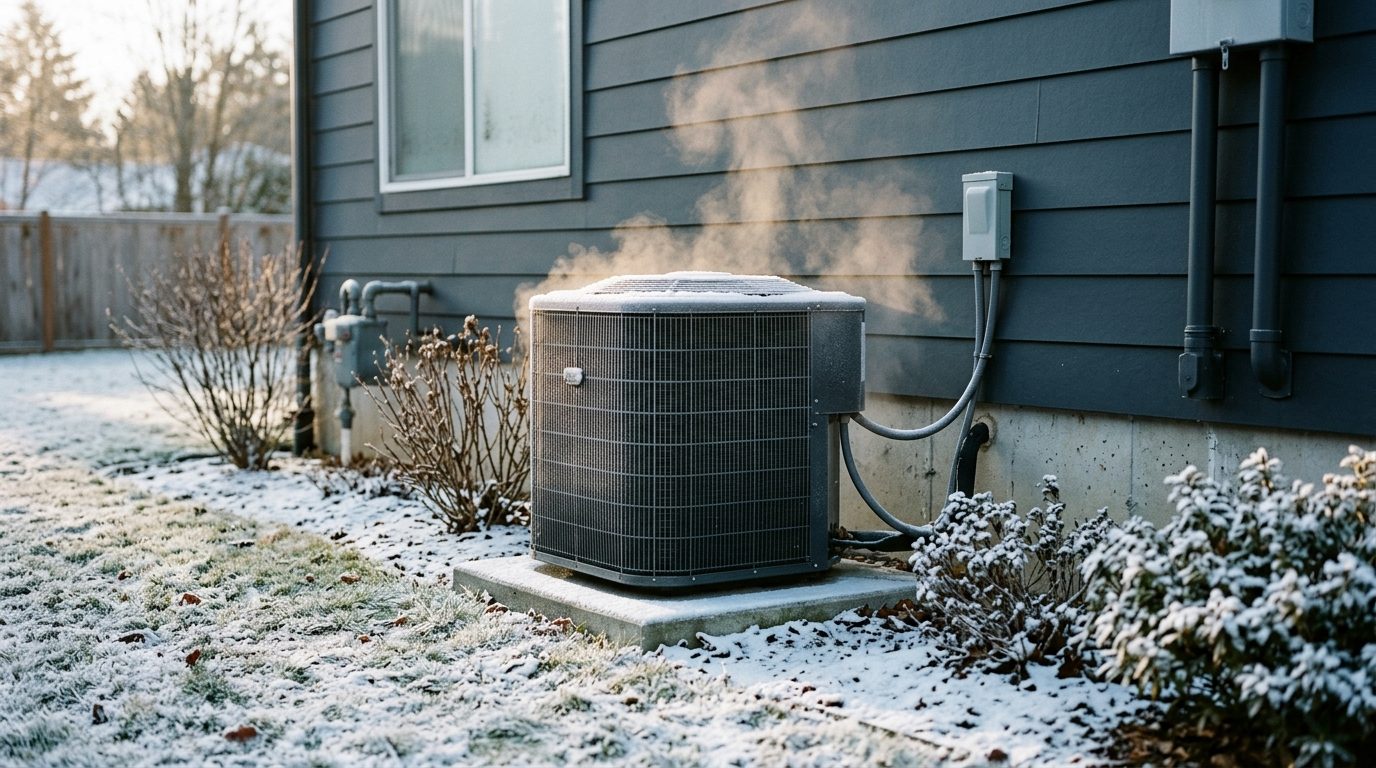
When it’s cold and humid, frost builds up on the outdoor coil. Every so often, the heat pump switches into defrost mode to melt it. During defrost, the outdoor fan usually stops, you may hear a whoosh, and steam rises from the unit. Inside, the air may feel cooler for a few minutes, and auxiliary heat may switch on. A defrost cycle typically lasts several minutes, after which the system returns to normal heating. This is expected behavior, not a malfunction.
“Aux heat” on the thermostat
Seeing “Aux” or “Auxiliary Heat” on your thermostat during defrost, on very cold days, or when you raise the temperature a lot at once is normal. It’s the system’s backup helping out.
Troubleshooting: 9 things to check
1. Thermostat mode and settings
Confirm the thermostat is set to Heat and the setpoint is above the current temperature. Make sure it isn’t set to Emergency Heat (often shown as “Em Heat”). Emergency heat shuts off the heat pump and runs only the backup heat, which works but can be very expensive to run with electric strips. Use it only when the heat pump itself has failed and you’re waiting for a repair.
2. The air filter
A clogged filter restricts airflow, reduces heating output and can make the system overheat or freeze up. Check it monthly in winter and replace it when it’s dirty.
3. Both breakers
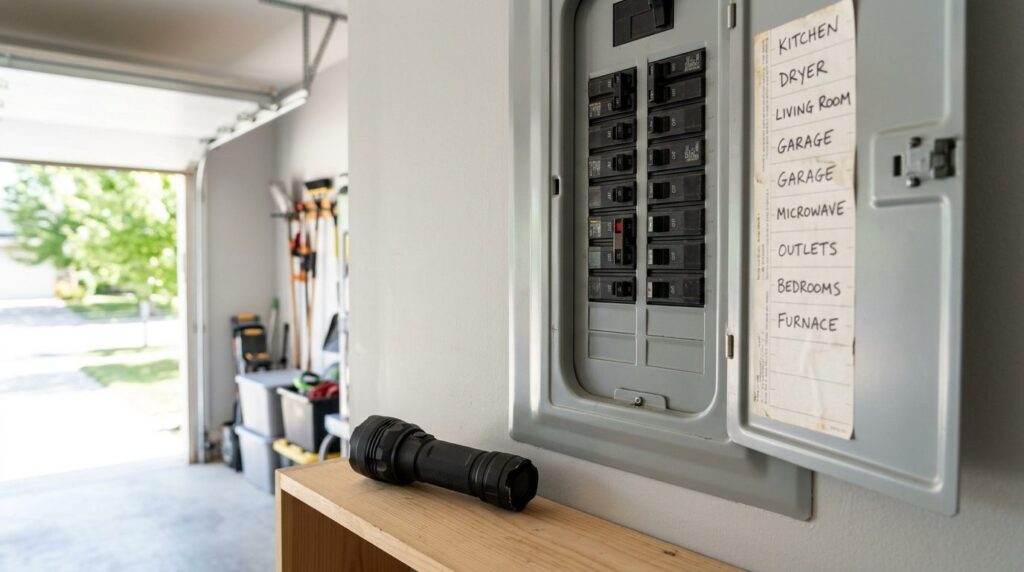
Heat pump systems usually have at least two circuits: one for the outdoor unit and one for the indoor air handler, and sometimes a separate one for the heat strips. Check your panel for tripped breakers and reset any that are off once. If a breaker trips again, stop and call a technician. There may also be a disconnect switch in a box near the outdoor unit; make sure it’s on.
4. Snow, ice and debris around the outdoor unit
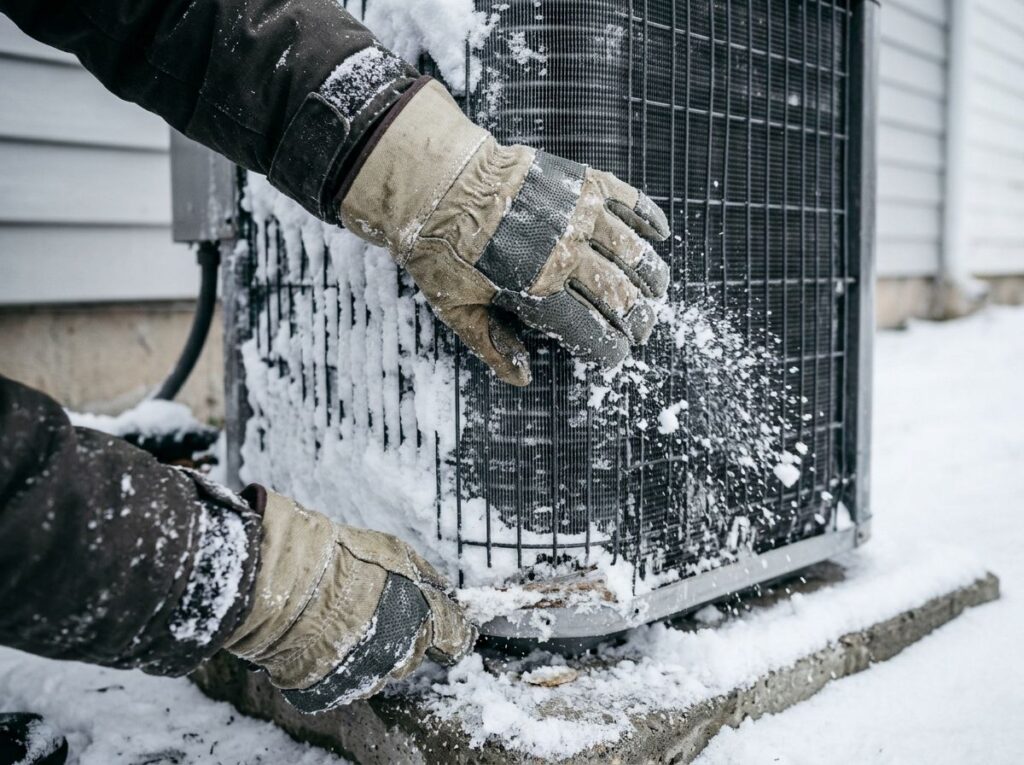
The outdoor unit needs to breathe. Keep at least a couple of feet of clear space around it and make sure snow isn’t piled against the sides or covering the top. Gently brush away loose snow with a soft broom. Don’t chip at ice with a sharp tool, which can puncture the coil.
5. Ice that won’t go away
A light coating of frost that clears after defrost is normal. A unit that stays encased in thick ice for hours, or ice building up on the top of the unit and the fan, is not. To help it, make sure water from the roof isn’t dripping onto the unit, since a gutter overflow can freeze it solid. If ice persists, the defrost control, a sensor or the refrigerant charge may be at fault, and a technician should check it.
6. The outdoor fan
Apart from defrost cycles, the outdoor fan should spin when the system is heating. If the compressor hums but the fan doesn’t turn, or the fan is blocked by ice, turn the system off and call for service. Running it that way can damage the compressor.
7. Supply and return vents
Walk through your home and make sure vents aren’t closed or blocked by furniture, rugs or curtains. Closing vents in unused rooms can actually reduce efficiency and airflow in many systems.
8. Thermostat setbacks
Big temperature setbacks can work against a heat pump. When you raise the temperature by several degrees in the morning, the system may call for expensive auxiliary heat to catch up quickly. If your bills are high, try smaller setbacks of just a couple of degrees, or use a thermostat designed for heat pumps with smart recovery that warms the house gradually.
9. Drafts and insulation
A heat pump that keeps up fine on mild days but falls behind on cold ones may simply be losing heat as fast as it makes it. Sealing air leaks around doors and windows and adding attic insulation help any heating system, but they’re especially helpful with heat pumps.
Normal vs. needs attention
| What you notice | Usually normal? | What to do |
|---|---|---|
| Steam rising from the outdoor unit | Yes, during defrost | Nothing; it should stop in minutes |
| Lukewarm air at the vents | Yes, if the home stays warm | Check filter and vents if rooms are cold |
| “Aux heat” showing in very cold weather | Yes | Avoid large setbacks to reduce use |
| Thick ice that doesn’t clear | No | Check for dripping water, then call a pro |
| Outdoor fan not spinning | No (except in defrost) | Turn system off, call a pro |
| Breaker trips repeatedly | No | Don’t keep resetting; call a pro |
| House can’t stay warm even with aux heat | No | Call a pro |
When to call an HVAC technician
- The outdoor unit stays frozen or the fan won’t run.
- The system blows cold air continuously, not just during defrost.
- You hear grinding, loud buzzing or banging from either unit.
- Breakers trip repeatedly.
- Your energy bills jump sharply without a change in weather or habits, which can signal the system is relying too heavily on backup heat.
- You suspect a refrigerant leak. Refrigerant work requires a certified technician in the US, so this is never a DIY job.
Keep your heat pump healthy all winter
- Replace or clean the filter regularly, every 1 to 3 months depending on your home.
- Schedule a professional checkup, ideally in the fall before heating season.
- Keep the outdoor unit clear of snow, leaves and debris, and keep shrubs trimmed back.
- Make sure gutters don’t drip onto the unit.
- Consider raising the unit slightly on a stand if you live where deep snow is common.
Frequently asked questions
At what temperature does a heat pump stop working well?
It depends on the model. Standard heat pumps lose capacity as temperatures fall and often lean on auxiliary heat in freezing weather. Cold-climate heat pumps are built to keep heating efficiently in much lower temperatures. Check your model’s specifications.
Why is my heat pump blowing cold air?
Short bursts of cooler air during defrost are normal. If cold air blows continuously, check the thermostat mode, filter and breakers. If those are fine, the system may have a reversing valve, defrost or refrigerant problem that needs a technician.
Should I use emergency heat when it’s very cold?
Usually not. The system automatically uses auxiliary heat when it needs help. Emergency heat is meant for when the heat pump is broken, and running it manually can raise your energy bill significantly.
Is it normal for my heat pump to run all the time in winter?
Yes, in cold weather long run times are normal and often efficient. Worry only if the home can’t stay at the temperature you’ve set.
Can I pour hot water on a frozen heat pump?
It’s not recommended as a routine fix. Let the defrost cycle work, remove the cause of the ice (like a dripping gutter), and call a technician if the ice won’t clear.
The bottom line
A heat pump in winter behaves differently from a furnace: cooler-feeling air, long run times, steam and occasional defrost pauses are all part of normal operation. Start with the simple checks, keep the outdoor unit clear, and avoid emergency heat unless the system has truly failed. If the unit stays iced over, the fan stops, or the house can’t stay warm, call a licensed HVAC technician before a small problem turns into a costly repair.