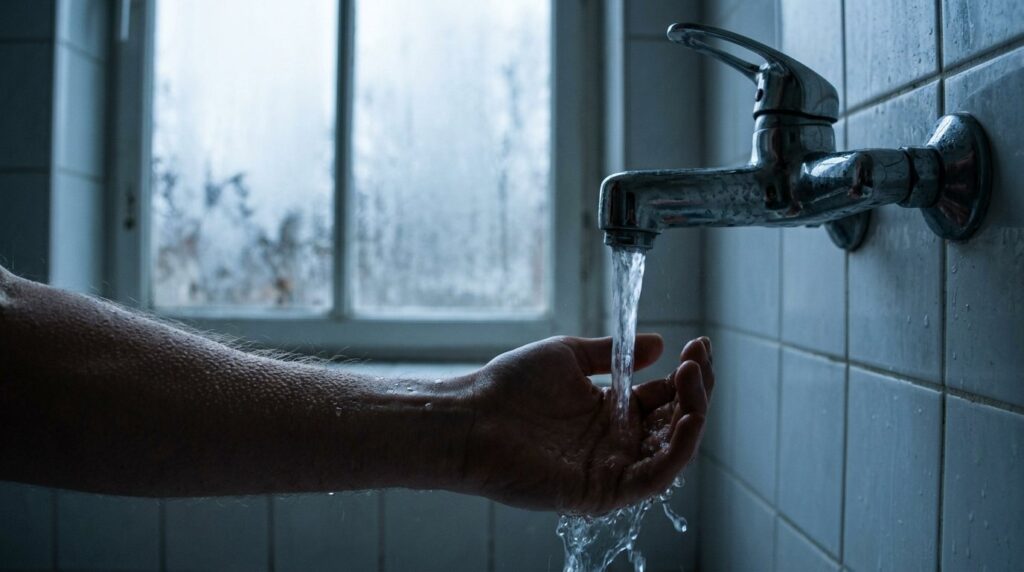
Every winter, frozen pipes turn a cold snap into a flooded basement for thousands of homeowners. The frustrating part is that most of that damage is preventable. A few inexpensive supplies and a handful of habits are usually enough to keep water moving, even when the temperature outside drops well below freezing.
This guide explains why pipes freeze, which pipes in your home are most at risk, exactly what to do before a cold night, and how to safely thaw a pipe that has already frozen. It also covers what to do in the first few minutes if a pipe bursts, because acting fast can save you thousands of dollars in repairs.
Quick answer: Keep your heat at 55°F (13°C) or higher, insulate pipes in unheated spaces, open sink cabinets on exterior walls, disconnect garden hoses, and let a faucet drip on the coldest nights. If a pipe freezes, open the faucet and warm the pipe slowly with a hair dryer or heating pad. Never use an open flame.
Why pipes freeze and burst
Water expands by roughly 9% when it turns to ice. When a section of pipe freezes, that ice acts like a plug. As more water freezes behind it, pressure builds up in the trapped section between the ice and the closed faucet. Surprisingly, the pipe usually does not split where the ice is. It bursts in the section where pressure has nowhere to go, which is why a leak sometimes appears several feet away from the coldest spot.
Pipes are most at risk when the outside temperature falls to around 20°F (-6°C) or lower, especially during long cold spells, windy nights and sudden temperature drops. A single very cold night can be enough to freeze an exposed pipe, but most damage happens after several days of sustained cold, or when a home is left empty with the heat turned down too low.
Which pipes are most at risk?
Not every pipe in your home is equally vulnerable. Pipes inside heated living space rarely freeze. The trouble spots are the places where cold air reaches the plumbing:
- Outdoor hose bibs and sprinkler lines, which sit directly in the cold.
- Pipes in unheated areas such as crawl spaces, attics, garages and unfinished basements.
- Pipes on exterior walls, especially under kitchen and bathroom sinks.
- Pipes near drafts, like those beside dryer vents, cable holes or poorly sealed rim joists.
- Supply lines in cabinets where the doors stay closed and warm room air can’t circulate.
Take ten minutes before winter to walk through your home with a flashlight and note where these pipes are. Knowing your weak spots makes everything else in this guide faster.
How to prevent frozen pipes: 10 steps that work
1. Keep the heat on, even when you’re away
Set your thermostat no lower than 55°F (13°C), day and night, including when you travel. Turning the heat way down to save money can backfire quickly: the cost of one burst pipe dwarfs a few days of heating bills. If you have a smart thermostat, set a minimum temperature alert so you get a notification if your home starts getting too cold.
2. Insulate exposed pipes
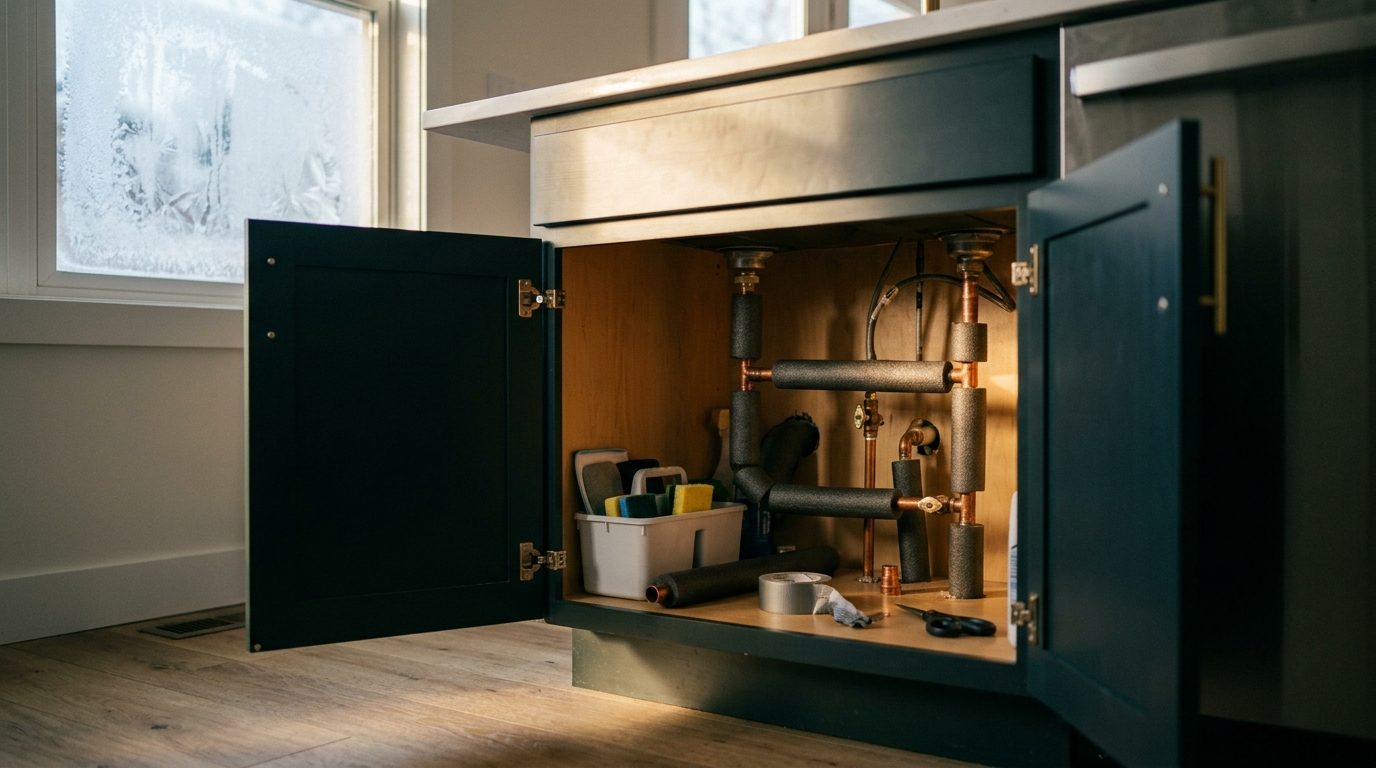
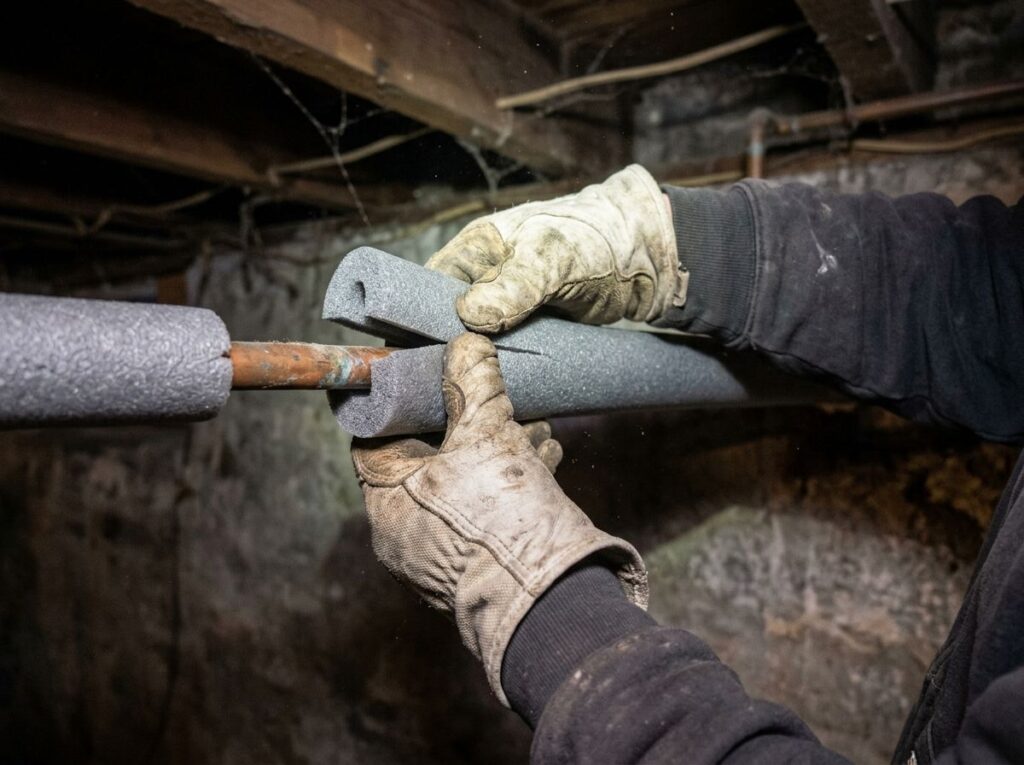
Foam pipe insulation sleeves are cheap, sold in 6-foot lengths at every hardware store, and take minutes to install. Measure the pipe’s diameter, buy the matching size, slip it over the pipe and seal the seam with the built-in adhesive strip or duct tape. Focus on pipes in crawl spaces, attics, garages and along exterior walls. Insulation slows heat loss; it doesn’t generate heat, so it works best combined with the other steps below.
3. Use heat cable for the worst spots
For pipes that freeze year after year, a heat cable (also called heat tape) adds active protection. Look for a UL-listed cable with a built-in thermostat that switches on automatically near freezing. Follow the manufacturer’s instructions exactly: some cables must not overlap themselves, some are not rated for plastic pipe, and most should not be covered by insulation unless the instructions say so. Plug it into a GFCI-protected outlet and inspect it every fall for cracks or damage.
4. Seal air leaks near plumbing
A small gap can blast freezing air directly onto a pipe. Check where pipes and wires enter your home, around the rim joist in the basement, and near dryer vents. Seal small gaps with caulk and larger ones with expanding spray foam. This step also lowers your heating bill, so it pays for itself twice.
5. Open cabinet doors on cold nights
Kitchen and bathroom sinks on exterior walls are classic freeze points. When temperatures drop into the low 20s or below, open those cabinet doors so warm room air can reach the pipes. Move cleaning products out of reach if you have children or pets.
6. Let faucets drip during extreme cold
A slow drip from a faucet served by vulnerable pipes keeps water moving and relieves pressure in the line. If the faucet has separate hot and cold handles, open both slightly. A thin, steady stream is enough. It uses a little water, but far less than you would lose to a burst pipe.
7. Disconnect hoses and shut off outdoor faucets
Before the first hard freeze, disconnect, drain and store garden hoses. A connected hose traps water in the faucet, and that’s one of the most common ways outdoor spigots split. If your home has an indoor shut-off valve for the outside faucet, close it, then open the outdoor faucet to let the remaining water drain. Frost-free sillcocks help, but only if the hose is disconnected.
8. Blow out sprinkler and pool lines
Irrigation systems hold water underground and in valve boxes. Follow your system’s winterizing instructions or hire a lawn care company to blow out the lines with compressed air before the ground freezes.
9. Keep the garage door closed
Many homes have water lines running through the garage, sometimes to a laundry area or a water heater. A garage door left open on a frigid night can freeze them fast. Keep it shut during cold weather.
10. Prepare before you travel
If you’ll be away for more than a few days in winter, keep the heat at 55°F or higher, ask someone to check the house daily, and consider shutting off the main water valve and opening faucets to drain the lines. A Wi-Fi water leak detector and temperature sensor placed near vulnerable pipes can alert your phone before a small problem becomes a flood.
Signs a pipe is already frozen
Catching a frozen pipe early, before it bursts, is the best outcome. Watch for these warning signs on cold mornings:
- You turn on a faucet and only a trickle comes out, or nothing at all.
- You can see frost on an exposed pipe.
- A section of pipe looks bulged or slightly swollen.
- The toilet tank doesn’t refill after a flush.
- You notice an unusual smell from a drain, which can happen when the line is blocked.
How to thaw a frozen pipe safely
If you suspect a frozen pipe, act right away. The goal is to warm the pipe gradually and let melting water flow out.
- Open the faucet. Turn on the faucet the pipe feeds, both hot and cold. Running water helps melt the ice, and an open faucet relieves pressure.
- Find the frozen section. Start near the faucet and work back along the pipe. Frozen sections are usually in the coldest part of the run: an exterior wall, a crawl space or near a draft.
- Apply gentle heat. Use a hair dryer, a heating pad, a portable space heater kept well away from flammable materials, or towels soaked in hot water. Work from the faucet end back toward the blockage so melted water has somewhere to go.
- Keep going until full pressure returns. Once water flows normally, check the entire length of the pipe for leaks or cracks.
- Check other faucets. If one pipe froze, others may be close to freezing too.
Safety note: Never use a propane torch, kerosene heater, charcoal grill or any open flame to thaw a pipe. Open flames can start fires inside walls and can overheat the pipe, and fuel-burning heaters can produce dangerous carbon monoxide indoors. If the frozen section is inside a wall or you can’t reach it, call a licensed plumber.
What to do if a pipe bursts
A burst pipe can release hundreds of gallons of water in a short time. Move quickly and stay calm:
- Shut off the main water valve. It’s usually where the water line enters your home, often in the basement, crawl space, garage or near the water heater. Everyone in your household should know where it is.
- Turn off the water heater. Switch an electric heater off at the breaker, or set a gas heater to its pilot or “vacation” setting.
- Cut power to wet areas. If water is near outlets, appliances or the electrical panel, turn off power at the breaker only if you can do it while standing on a dry surface. Otherwise, call your utility.
- Open faucets to drain the remaining water from the lines.
- Remove water fast. Mop, use a wet/dry vacuum and start fans or a dehumidifier. Mold can begin growing on wet materials within 24 to 48 hours.
- Document everything. Take photos and video of the damage before you clean up, and call your insurance company.
- Call a licensed plumber to repair the pipe and check the rest of the system.
Pipe freeze prevention at a glance
| Task | When to do it | Typical cost |
|---|---|---|
| Foam pipe insulation | Before winter | A few dollars per 6-foot section |
| Seal gaps near pipes | Before winter | Under $20 for caulk and spray foam |
| Disconnect and drain hoses | Before the first hard freeze | Free |
| Thermostat at 55°F or higher | All winter, including when away | Small heating cost |
| Open cabinets and drip faucets | Nights near 20°F or colder | Pennies of water |
| Heat cable on problem pipes | Install in fall, check yearly | Varies by length |
Frequently asked questions
At what temperature do pipes freeze?
Water freezes at 32°F (0°C), but pipes inside a home are usually protected by surrounding heat. The real danger zone is when outside temperatures drop to about 20°F (-6°C) or lower, especially for pipes in unheated spaces or on exterior walls.
Should I drip hot or cold water?
Drip both if your faucet has separate handles. That keeps water moving through both supply lines. A slow, steady drip is enough.
Can PEX pipes freeze?
Yes. PEX is more flexible than copper and handles expansion better, but it can still freeze, and the fittings and connections can fail. Insulate PEX the same way you would any other pipe.
Does homeowners insurance cover frozen pipes?
Many policies cover sudden water damage from a burst pipe, but coverage can be denied if the home wasn’t reasonably heated or maintained. Read your policy and talk to your agent before winter.
How long does it take for pipes to freeze?
It depends on the temperature, wind and how exposed the pipe is. An uninsulated pipe in a cold crawl space can freeze within a few hours on a very cold night, which is why preparing before the cold arrives matters.
The bottom line
Preventing frozen pipes comes down to three things: keep heat around your plumbing, keep cold air away from it, and keep water moving on the coldest nights. Spend an afternoon this fall insulating exposed pipes, sealing drafts and disconnecting your hoses, and you’ll head into winter with far less to worry about. And if a pipe does freeze, thaw it slowly, never with a flame, and know exactly where your main shut-off valve is before you need it.