You flip on the bathroom light and a shiny, wiggling insect darts under the baseboard. Or you pull an old book off the shelf and find ragged little holes and yellowish stains on the pages. Silverfish are harmless to people, but they’re a sign of a damp house and they can slowly damage paper, fabric and stored food.
This guide explains how to identify silverfish and their cousin the firebrat, where they hide, and why moisture control matters more than any spray. You’ll also learn how to trap them, how to use diatomaceous earth and boric acid safely, and when it makes sense to bring in a professional.
Quick answer: Silverfish thrive in damp, warm spots, so the real fix is drying your home out: run a dehumidifier or exhaust fan, fix leaks and aim for indoor humidity between 30 and 50 percent. Clear out clutter, store paper and dry food in sealed plastic containers, and use sticky traps or glass jar traps to catch them and find hot spots. For stubborn cases, apply a thin layer of a labeled insecticide dust into cracks and crevices, following the product label.
How to identify silverfish
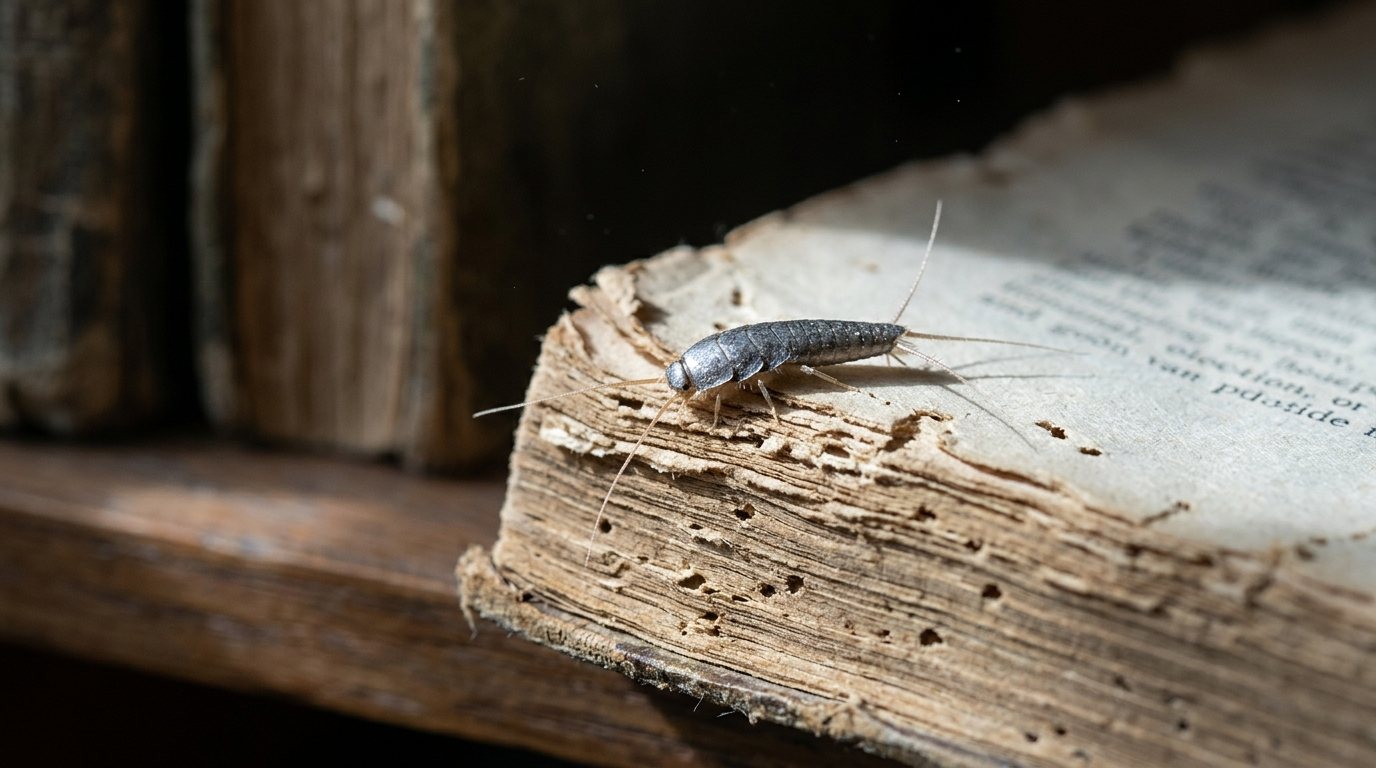
Silverfish are easy to recognize once you know what to look for. According to University of California IPM, common silverfish are about 1/2 inch long (up to 3/4 inch) and covered in shiny silver or pearl gray scales.
- Body: slender, wingless and soft, tapering toward the rear like a tiny fish.
- Tail: three long, thin, tail-like appendages at the back end.
- Antennae: two long antennae at the front.
- Movement: fast and wriggling, mostly at night. They scatter when you turn on a light.
Silverfish or firebrat?
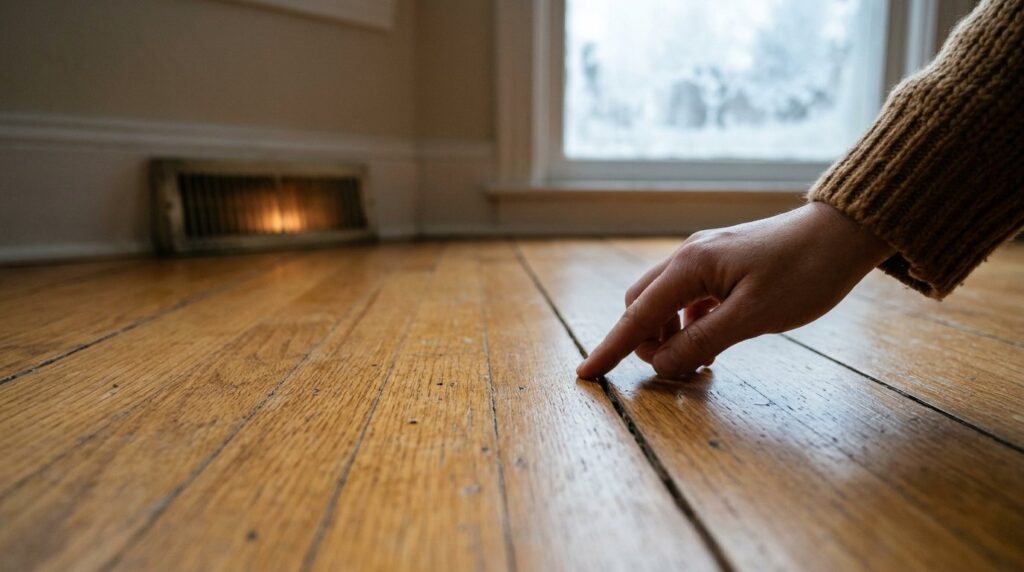
Firebrats look almost identical but are mottled gray or brown. The difference matters because they live in opposite conditions. Silverfish want damp spaces between about 71 and 90 degrees F, while firebrats prefer hot, dry areas near ovens, furnaces, water heaters, fireplaces and hot water pipes. Drying out a room controls silverfish, but firebrats call for sealing and treating hot spots instead.
Signs of silverfish and the damage they cause
Silverfish eat starch and protein. Their diet includes flour, cereal, pasta, pet food, paper with glue or paste, wallpaper paste, book bindings, starched clothing, household dust, dead insects and some molds. They can also survive several months without eating, which is why a short cleanup rarely starves them out.
- Irregular holes or scraped, grayish patches on paper, cardboard, wallpaper and book covers
- Yellowish stains on paper, fabric or stored clothing
- Tiny shed scales or a fine dust near damaged items
- Small, pepper-like droppings in drawers, shelves and cabinets
- Live insects trapped in sinks and bathtubs, since they fall in and can’t climb the slick sides
Where silverfish hide
Silverfish are nocturnal and spend the day in tight, sheltered gaps close to moisture and food. Check these places with a flashlight after dark, when they’re active:
- Bathrooms, especially around tubs, shower stalls and under sinks
- Basements, crawl spaces and laundry rooms
- Kitchen cabinets and pantries with dry goods
- Bookshelves, filing boxes, stacks of magazines and stored photos
- Closets and stored clothing, especially in cardboard boxes
- Gaps behind baseboards, loose wallpaper and window or door trim
- Openings where pipes and conduits pass through walls and floors
They also travel along pipes and through wall voids, so the insect you see in the bathroom may be coming from a damp basement or an adjoining wall.
Step 1: Fix the moisture problem
This is the step that decides whether you win. UC IPM notes that large silverfish populations are almost impossible to control until dripping water and moist surfaces are eliminated. Traps and dusts help, but they can’t keep up with a damp house.
Measure your humidity
Buy an inexpensive hygrometer and check the rooms where you see silverfish. The EPA’s moisture guidance recommends keeping indoor humidity below 60 percent, ideally between 30 and 50 percent. If you’re seeing readings well above that, start there. Our guide to ideal indoor humidity explains how to keep levels in a healthy range as the seasons change.
Dry out problem rooms
- Run a dehumidifier in basements, crawl spaces and closed storage rooms, and empty or drain it regularly.
- Use the bathroom exhaust fan during showers and for a while afterward. If it barely pulls air, see our guide to a bathroom exhaust fan that isn’t working.
- Fix dripping faucets, sweating pipes and slow leaks under sinks.
- Make sure your clothes dryer vents outdoors.
- Outside, keep gutters clear and make sure soil slopes away from the foundation.
Step 2: Remove food and hiding spots
Once the space is drier, take away what silverfish eat and where they shelter.
- Vacuum baseboards, closet floors, shelves and cracks to remove dust, debris, eggs and scales.
- Replace cardboard storage boxes with lidded plastic bins, especially in basements and closets.
- Store flour, cereal, pasta and pet food in airtight containers.
- Recycle piles of old newspapers, magazines and junk mail, and move stored books and papers now and then.
- Seal gaps around pipes, baseboards and trim with caulk to cut off hiding places.
- Wash and dry stored clothing and linens before packing them away.
Step 3: Trap silverfish and find the hot spots
Traps catch silverfish, but their bigger value is showing you where activity is heaviest. Place them in corners and along edges where you’ve seen insects, and check them every morning.
Sticky traps
Sticky traps sold for cockroaches work well for silverfish. Set them flat against walls, under sinks, behind toilets and on closet floors. Replace them when they fill up or get dusty.
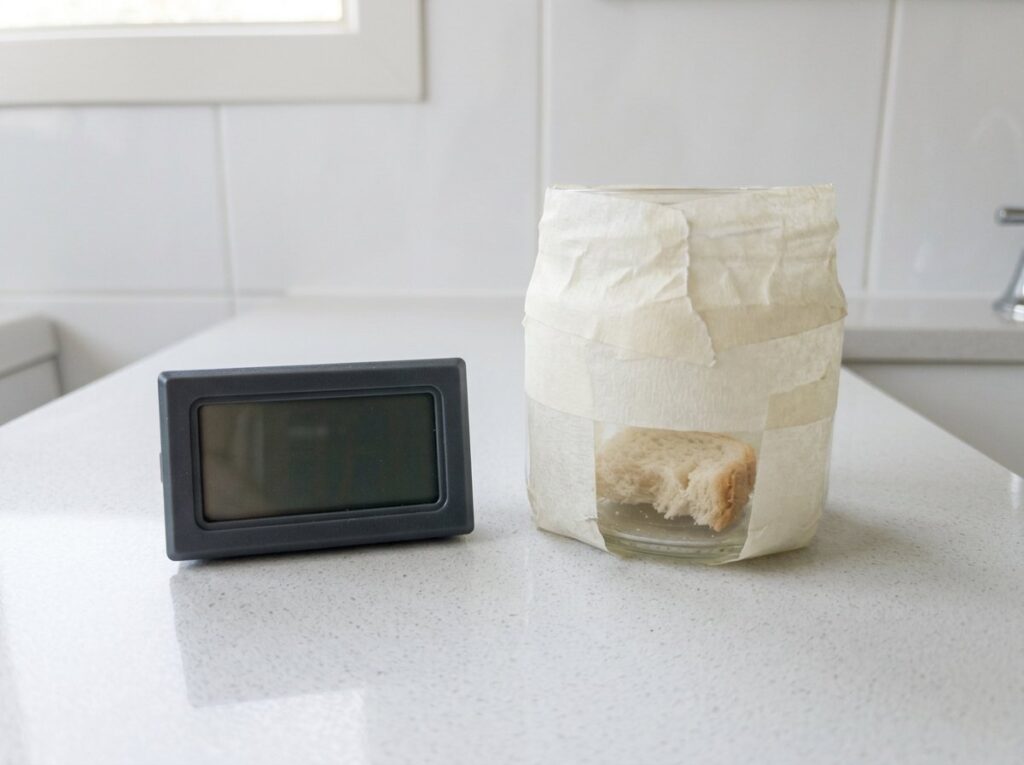
Glass jar trap
- Take a small, clean glass jar and wrap the outside with masking tape so silverfish can climb up.
- Put a small piece of bread or a pinch of flour or oatmeal inside.
- Stand the jar upright in a corner or along a baseboard where you’ve seen activity.
- Check it each morning. Silverfish can’t climb the smooth inside of the glass, so they stay trapped.
- Empty the jar outdoors or into soapy water and reset it.
Pro tip: Number your traps and jot down how many insects each catches over a week. The trap with the highest count points you toward the source, which is usually a damp wall, a leaky pipe or a cluttered storage area.
Step 4: Use dusts and sprays carefully
For light infestations, moisture control, cleaning and trapping are usually enough. If silverfish persist, UC IPM suggests insecticide dusts or sprays applied as targeted crack-and-crevice treatments. Baits generally don’t work well because silverfish tend not to feed on them.
| Option | How it works | Best use | Cautions |
|---|---|---|---|
| Diatomaceous earth (DE) | Dries out insects that crawl through it | Thin layer in dry cracks, wall voids and behind appliances | Stops working once wet; can irritate eyes, nose and lungs |
| Boric acid dust | Stomach poison and abrasive | Dry cracks and voids out of reach of kids and pets | Harmful if swallowed; often ineffective against firebrats |
| Silica gel or pyrethrin dusts | Dry out or kill on contact | Cracks, crevices and wall voids | Follow label limits for open areas |
| Pyrethrin or pyrethroid spray | Kills on contact with some residual effect | Baseboards, closets, pipe gaps | Keep away from food, sinks and gas pilot flames |
| Foggers | Release a mist into the room | Not recommended | Don’t reach the cracks where silverfish hide |
Using diatomaceous earth
DE is a powder that absorbs the waxy coating on an insect’s body so it dries out. The National Pesticide Information Center notes it stays effective only while it’s kept dry and undisturbed, and that breathing the dust can irritate your nose and throat. Buy a DE product labeled for indoor insect control, puff a light, barely visible film into cracks with a bulb duster, and avoid piling it in open areas where it gets kicked into the air.
Using boric acid and sprays
Boric acid dust works best in dry, hidden voids like behind switch plates, under appliances and inside wall gaps, never on counters or open floors. Heavy layers are less effective than a fine dusting, because insects avoid thick piles. For sprays, choose a product labeled for silverfish and apply small amounts into cracks, baseboards and pipe penetrations rather than broadcasting it across a room.
Safety note: Always read and follow the product label, which is the law for pesticide use. Keep children and pets out of treated areas until dust has settled or sprays have dried, wear gloves and a dust mask when applying powders, and store products in their original containers. If someone swallows a pesticide or gets it in their eyes, follow the label’s first aid instructions and call Poison Control at 1-800-222-1222.
Tools and materials
- Digital hygrometer
- Dehumidifier sized for your basement or problem room
- Sticky traps and a few small glass jars with masking tape
- Vacuum with a crevice tool
- Lidded plastic storage bins and airtight food containers
- Caulk and a caulking gun
- Bulb duster plus a labeled DE or insecticide dust, if needed
- Gloves, safety glasses and a dust mask
When to call a pro
Most silverfish problems are solvable on your own. Call a licensed pest control company if:
- You’re still catching lots of silverfish after two or three weeks of moisture control and treatment. UC IPM says that usually means they’re coming from untreated hiding spots.
- You find them in many rooms, or valuable books, documents or fabrics are being damaged.
- You suspect a hidden leak inside a wall, under a floor or in the roof, which may also need a plumber or roofer.
- Someone in your home has asthma, or you’d rather not apply dusts with young children or pets in the house.
According to Fixr’s cost guide, professional silverfish treatment typically costs $200 to $700, with a national average around $400. A single spray visit often runs $150 to $300, and a quarterly service plan typically costs $300 to $700 per year. Many companies offer a free inspection, so ask what’s included before you book.
Frequently asked questions
Are silverfish harmful to people or pets?
No. Silverfish don’t bite, sting or spread disease. The problem is the damage to paper, fabric and food, and the fact that they signal excess moisture that can also feed mold.
Why am I suddenly seeing silverfish?
A sudden increase usually follows a moisture change, such as a new leak, a humid stretch of weather or a basement that stays damp. They can also arrive in cardboard boxes, old books or storage bins brought in from a garage or another home.
Do silverfish mean my house is dirty?
Not necessarily. Clean homes get silverfish too if they have damp bathrooms, basements or leaks. Clutter, dust and stored paper do make an infestation easier to sustain.
Do silverfish come up through drains?
Usually not. They wander into sinks and tubs while searching for moisture and then can’t climb the slippery sides. Finding them there is a clue to look for nearby leaks and gaps around pipes.
How long does it take to get rid of silverfish?
Expect a few weeks. UC IPM says a properly applied insecticide should show results within a few weeks, and lasting control depends on keeping humidity down. Silverfish eggs can take weeks to hatch, so keep traps out for a while after sightings stop.
The bottom line
Silverfish are a moisture problem first and a bug problem second. Bring humidity down, fix leaks, clear out cardboard and paper clutter, and use traps to find where they’re coming from. Save dusts and sprays for stubborn cases, apply them only in cracks and voids as the label directs, and call a pro if numbers stay high after a few weeks.