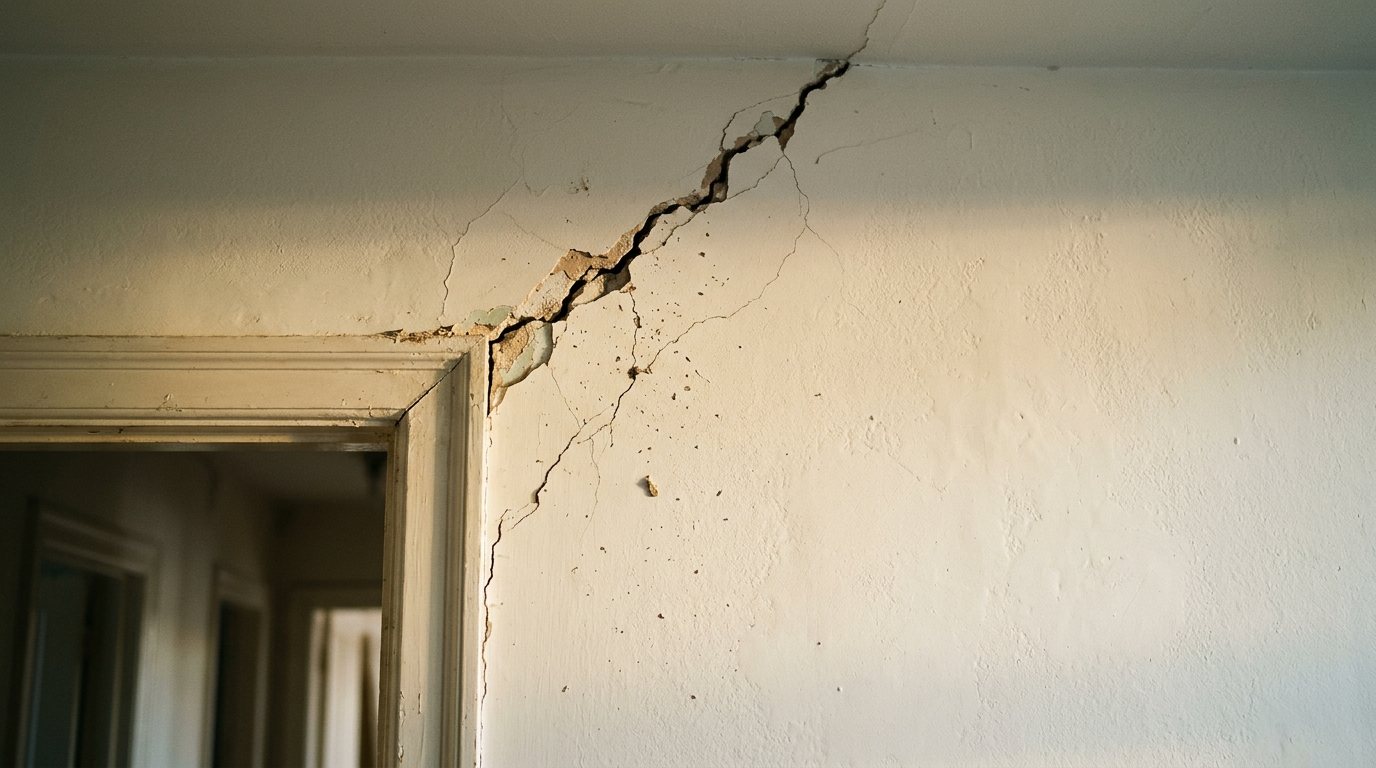
You spot a thin crack running up from the corner of a doorway, or a line across the ceiling that you’re sure wasn’t there last year. It’s natural to jump straight to foundation problems. The good news is that most wall and ceiling cracks are cosmetic, caused by normal settling and seasonal movement, but a few types really do need a professional to look at them.
This guide helps you tell the difference. You’ll learn which cracks are normal, the warning signs that point to structural or water problems, how to monitor a crack, how to repair drywall and plaster cracks with mesh or paper tape so they stay fixed, and when it’s time to call a structural engineer.
Quick answer: Hairline cracks, especially short vertical ones from the corners of doors and windows or along drywall seams, are usually normal settling and can be repaired with tape and joint compound. Call a pro if a crack is wider than about 1/8 inch, keeps growing, runs in a stair-step pattern or horizontally, or comes with sticking doors, sloping floors or a sagging ceiling.
Normal cracks vs warning signs
Where a crack is, which direction it runs and how wide it is tell you far more than its length. Use this table as a first check.
| Crack type | Usually means | What to do |
|---|---|---|
| Hairline vertical crack from a door or window corner | Normal settling or framing shrinkage | Repair with tape and compound |
| Straight crack along a drywall seam | Joint tape that lost its bond, or movement | Cut out loose tape, retape |
| Spiderweb or map cracks in old plaster | Age and shrinkage of the plaster | Patch; check plaster is still attached |
| Ceiling-to-wall crack that opens each winter | Truss uplift or seasonal movement | Flexible fix such as caulk or molding |
| Crack wider than about 1/8 inch or getting wider | Ongoing movement | Monitor and have it inspected |
| Stair-step, horizontal or jagged diagonal cracks | Possible foundation or structural movement | Call a structural engineer |
| Ceiling crack with sagging, bulging or stains | Water damage or failing fasteners | Stay out from under it; call a pro |
Why walls and ceilings crack
Normal settling and lumber shrinkage
Every house moves a little after it’s built. Framing lumber dries and shrinks during the first year or two, and the house settles onto its foundation. The stress concentrates at weak points like the corners of door and window openings, which is why short cracks angling up from those corners are so common. Shrinkage also causes drywall nail pops, which often show up at the same time.
Seasonal humidity and temperature changes
Wood framing swells in humid summers and shrinks in dry winters. Cracks that open in winter and almost disappear in summer are usually seasonal movement rather than a structural problem.
Truss uplift
In homes with roof trusses, the bottom chord of the truss can arch upward slightly in winter as the attic dries out, lifting the ceiling away from interior walls. The result is a straight crack where the ceiling meets the wall that opens and closes with the seasons.
Poor taping or thick compound
Seams taped without enough compound behind the tape, or patches built up too thickly, often crack or blister later. These cracks follow the seam line exactly and usually come with loose tape you can lift with a fingernail.
Water damage
Leaks from a roof, bathroom or plumbing above soften drywall and plaster and break down the joint compound. Cracks with yellow or brown staining, bubbling paint or soft spots point to water, which needs fixing first. If the stain is on a top-floor ceiling, our guide on how to find a roof leak can help you trace it.
Foundation or structural movement
Uneven settling, soil that shrinks and swells, or an overloaded beam can move the structure enough to crack walls. These cracks tend to be wider, jagged or stair-stepped, and they usually show up with other symptoms elsewhere in the house.
Warning signs that need a professional
Any one of these is worth a closer look, and several together are a strong reason to call a structural engineer:
- Width. HomeAdvisor’s foundation repair guide flags cracks wider than 1/8 inch as cause for concern.
- Growth. A crack that gets longer or wider over weeks or months means the movement hasn’t stopped.
- Pattern. Stair-step cracks in brick or block, horizontal cracks in walls, and cracks where one side sits higher than the other.
- Doors and windows. Doors that suddenly stick, won’t latch or show uneven gaps at the top.
- Floors. Sloping or bouncy floors, or gaps opening between the floor and baseboards.
- Ceilings. Sagging, bulging or a crack that runs with a dip in the ceiling line.
- Repeat cracks. Cracks that reappear soon after a careful repair.
How to monitor a crack
If you’re not sure whether a crack is active, make a small pencil mark at each end and write the date next to it, then measure the widest point with a ruler or an inexpensive crack gauge. Take a photo with a coin for scale and check it monthly through a full change of seasons. A crack that stays the same is likely old, stable movement; one that grows past your marks needs an inspection.
Safety note: A ceiling that sags, bulges or feels soft can fall, especially when it is holding water. Keep people and pets out from under it, move valuables, and turn off power to any light fixture near a wet area at the breaker. Don’t poke holes in a bulging, water-filled ceiling while standing beneath it.
Tools and materials
- Utility knife and a 5-in-1 tool or narrow putty knife
- Paper joint tape or self-adhesive fiberglass mesh tape
- Setting-type joint compound (powder you mix) for the first coat, plus lightweight premixed compound for finish coats
- 4 inch, 6 inch and 10 inch taping knives and a mud pan
- Sanding sponge (120 to 150 grit) and a damp cloth
- Paintable flexible caulk for ceiling-to-wall seasonal cracks
- Plaster washers and screws for loose plaster
- Primer, matching paint, dust mask, safety glasses and a stable ladder
How to repair a drywall crack so it stays fixed
Filling a crack with spackle alone almost never lasts, because the crack reopens with the next bit of movement. Bridging it with tape is what holds it together.
Step 1: Open up and clean the crack
Run a utility knife along the crack to cut a shallow V and remove any loose compound, paint or tape. If the crack follows a seam and the tape is loose, cut it out until you reach tape that’s firmly bonded. Brush away the dust.
Step 2: Choose mesh or paper tape
Self-adhesive mesh tape is easy for beginners because it sticks in place, but it should be covered with setting-type compound, which cures harder than premixed mud and keeps the mesh from cracking through. Paper tape is stronger once embedded and is the better choice for inside corners and long seams, but it must be pressed into a bed of compound. Either works on a straight wall crack if applied properly.
Step 3: Embed the tape
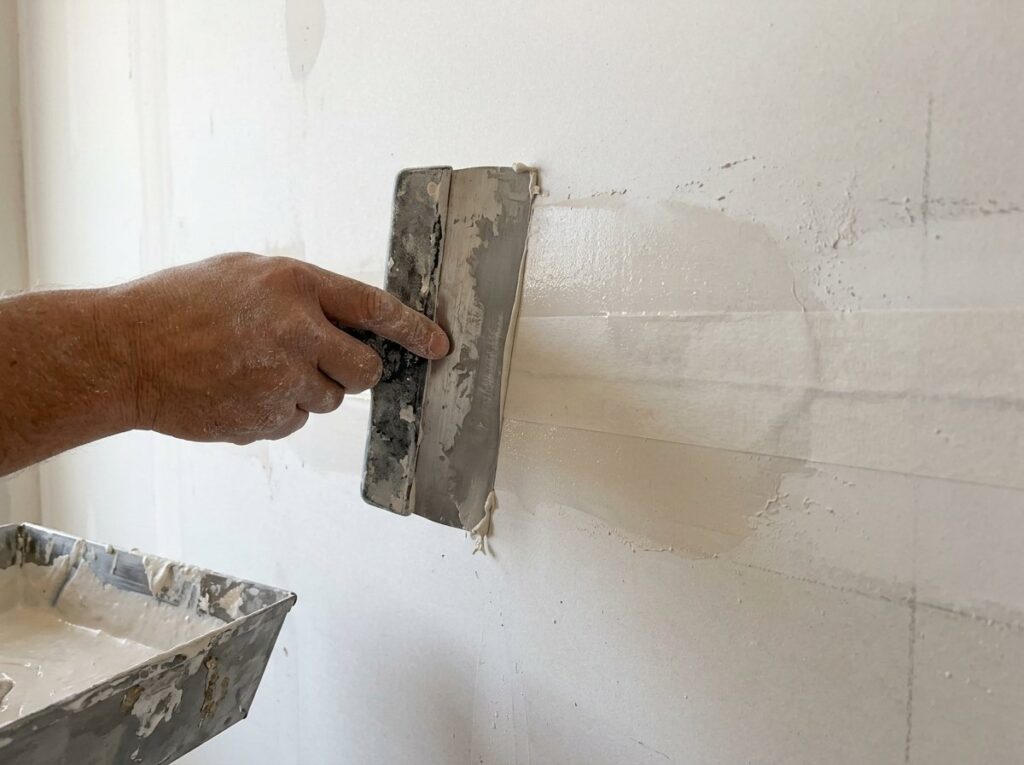
For mesh, center the tape over the crack and press it flat, then cover it with a thin coat of setting compound using a 6 inch knife. For paper, spread a thin bed of compound over the crack, press the tape into it and scrape firmly from the center outward to squeeze out excess mud and air. In both cases, the tape should be fully covered but not buried under a thick layer.
Step 4: Apply finish coats
Once the first coat has set or dried, apply a second coat with a wider knife, feathering it several inches past the edges of the tape. Add a thin third coat with a 10 inch knife if needed. Wider, thinner coats are easier to hide than a narrow ridge.
Step 5: Sand, prime and paint
Sand lightly until the patch is flush, using a flashlight held at a low angle to spot ridges. Wipe off the dust, prime the patch so it doesn’t show through as a dull spot, then paint. For tips on blending the repair into the wall, see our guide on how to paint a room. Holes and broken areas around the crack can be fixed with our guide on how to patch drywall.
Ceiling-to-wall and seasonal cracks
Taping a corner crack caused by truss uplift usually fails, because the ceiling keeps moving. Instead, fill it with a paintable flexible caulk, or install crown molding fastened only to the ceiling or only to the wall so it hides the gap as it opens and closes.
Repairing cracks in plaster walls
Plaster cracks need one extra check: press gently on the plaster on both sides of the crack. If it moves or sounds hollow, the plaster has lost its grip on the lath behind it and needs to be reattached with plaster washers and screws before patching. Then open the crack slightly, fill it with setting-type compound, cover it with mesh tape and skim it smooth. In older homes, assume old paint may contain lead and avoid dry-sanding until you’ve tested it.
When to call a pro
Call a drywall or plaster contractor for widespread cracking, high ceilings or if you want an invisible finish. Call an independent structural engineer, not a repair company, if you see wide or growing cracks, stair-step or horizontal patterns, sticking doors, sloping floors or a sagging ceiling. An engineer’s job is to diagnose the cause, and their report helps you compare repair quotes.
| Service | Typical cost | Source |
|---|---|---|
| Drywall crack and chip repair | $60 to $400 | HomeAdvisor |
| Handyperson for small drywall fixes | $60 to $90 per hour | HomeAdvisor |
| Structural engineer inspection and report | $350 to $700 | Angi |
| Foundation crack repair | $250 to $800 | HomeAdvisor |
| General foundation repair | $2,218 to $8,111 | HomeAdvisor |
Frequently asked questions
Are hairline cracks in walls normal?
Yes, in most cases. Thin cracks from the corners of doors and windows or along drywall seams are a normal result of settling and seasonal wood movement. Repair them with tape and compound and keep an eye out for any that come back quickly.
When should I worry about a crack in my ceiling?
Worry when the crack comes with sagging, bulging, water stains or soft drywall, or when it keeps getting wider. A straight crack along a seam or where the ceiling meets a wall is usually cosmetic.
Why do wall cracks keep coming back after I patch them?
Usually because they were filled with spackle or caulk without tape, so the next bit of movement reopens them. Seasonal cracks at ceiling-to-wall joints also return if they’re taped rigidly. If a properly taped crack returns quickly, have the movement checked.
Do cracks above doors mean foundation problems?
Not by themselves. Short hairline cracks above door corners are very common in sound houses. They become a concern when they’re wider than about 1/8 inch, growing, or appear along with doors that stick or floors that slope.
Should I use mesh or paper tape on wall cracks?
Both work. Mesh is easier for beginners but should be covered with setting-type compound. Paper tape is stronger once embedded and is the better choice for corners and seams.
Can I just caulk a crack in drywall?
Caulk is a good choice only for cracks that open and close with the seasons, such as where a ceiling meets a wall. For flat wall cracks, caulk tends to show through paint and doesn’t reinforce the drywall, so tape and compound is the better fix.
The bottom line
Most wall and ceiling cracks are thin, stable and cosmetic, and a proper tape-and-compound repair will make them disappear. Take cracks seriously when they’re wider than about 1/8 inch, growing, stair-stepped or horizontal, or paired with sticking doors, sloping floors or a sagging ceiling, and have a structural engineer look before you patch.